
1億條數(shù)據(jù)批量插入 MySQL,哪種方式最快?
利用JAVA向Mysql插入一億數(shù)量級(jí)數(shù)據(jù)—效率測(cè)評(píng)
這幾天研究mysql優(yōu)化中查詢效率時(shí),發(fā)現(xiàn)測(cè)試的數(shù)據(jù)太少(10萬級(jí)別),利用 EXPLAIN 比較不同的 SQL 語句,不能夠得到比較有效的測(cè)評(píng)數(shù)據(jù),大多模棱兩可,不敢通過這些數(shù)據(jù)下定論。
所以通過隨機(jī)生成人的姓名、年齡、性別、電話、email、地址 ,向mysql數(shù)據(jù)庫大量插入數(shù)據(jù),便于用大量的數(shù)據(jù)測(cè)試 SQL 語句優(yōu)化效率。、在生成過程中發(fā)現(xiàn)使用不同的方法,效率天差萬別。
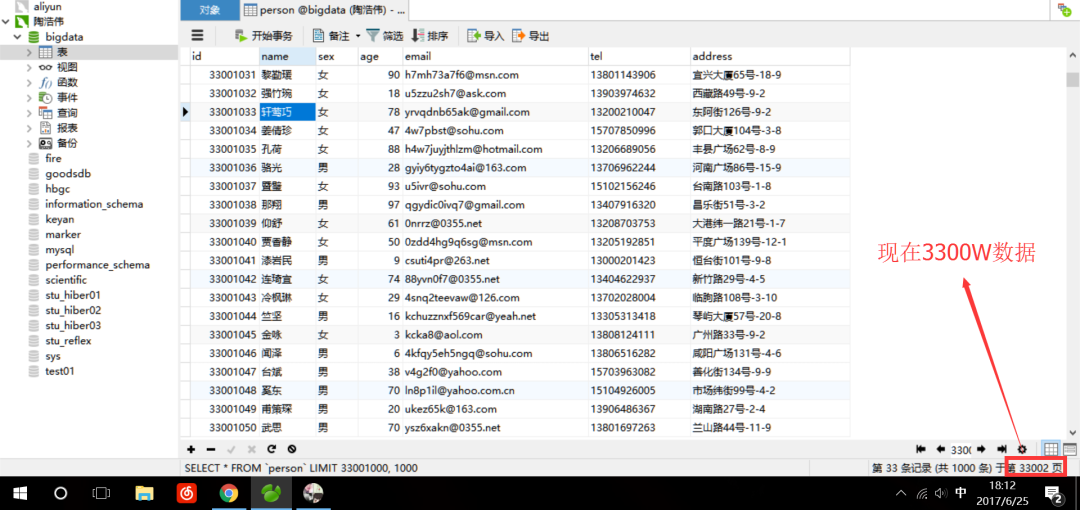
1、先上Mysql數(shù)據(jù)庫,隨機(jī)生成的人員數(shù)據(jù)圖。分別是ID、姓名、性別、年齡、Email、電話、住址。
下圖一共三千三百萬數(shù)據(jù):
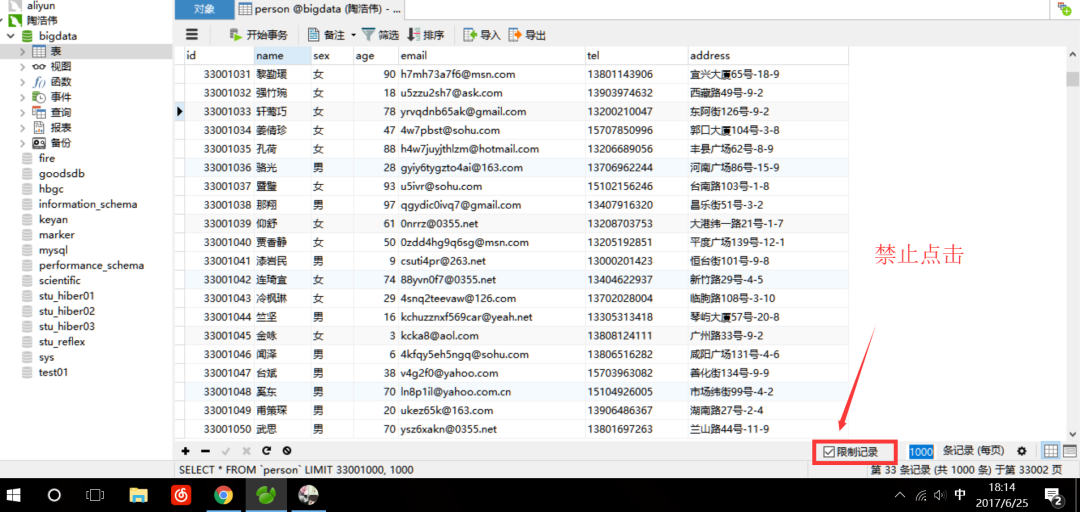
在數(shù)據(jù)量在億級(jí)別時(shí),別點(diǎn)下面按鈕,會(huì)導(dǎo)致Navicat持續(xù)加載這億級(jí)別的數(shù)據(jù),導(dǎo)致電腦死機(jī)。~覺著自己電腦配置不錯(cuò)的可以去試試,可能會(huì)有驚喜
2、本次測(cè)評(píng)一共通過三種策略,五種情況,進(jìn)行大批量數(shù)據(jù)插入測(cè)試
策略分別是:
Mybatis 輕量級(jí)框架插入(無事務(wù)) 采用JDBC直接處理(開啟事務(wù)、無事務(wù)) 采用JDBC批處理(開啟事務(wù)、無事務(wù))
測(cè)試結(jié)果:
Mybatis輕量級(jí)插入 -> JDBC直接處理 -> JDBC 批處理。
JDBC 批處理,效率最高
第一種策略測(cè)試:
2.1 Mybatis 輕量級(jí)框架插入(無事務(wù))
Mybatis是一個(gè)輕量級(jí)框架,它比hibernate輕便、效率高。
但是處理大批量的數(shù)據(jù)插入操作時(shí),需要過程中實(shí)現(xiàn)一個(gè)ORM的轉(zhuǎn)換,本次測(cè)試存在實(shí)例,以及未開啟事務(wù),導(dǎo)致mybatis效率很一般。
這里實(shí)驗(yàn)內(nèi)容是:
利用Spring框架生成mapper實(shí)例、創(chuàng)建人物實(shí)例對(duì)象 循環(huán)更改該實(shí)例對(duì)象屬性、并插入。
//代碼內(nèi)無事務(wù)

 private long begin = 33112001;//起始id
    private long end = begin+100000;//每次循環(huán)插入的數(shù)據(jù)量
    private String url = "jdbc:mysql://localhost:3306/bigdata?useServerPrepStmts=false&rewriteBatchedStatements=true&useUnicode=true&characterEncoding=UTF-8";
    private String user = "root";
    private String password = "0203";


@org.junit.Test
    public void insertBigData2()
    {
        //加載Spring,以及得到PersonMapper實(shí)例對(duì)象。這里創(chuàng)建的時(shí)間并不對(duì)最后結(jié)果產(chǎn)生很大的影響
        ApplicationContext context = new ClassPathXmlApplicationContext("applicationContext.xml");
        PersonMapper pMapper = (PersonMapper) context.getBean("personMapper");
        //創(chuàng)建一個(gè)人實(shí)例
        Person person = new Person();
        //計(jì)開始時(shí)間
        long bTime = System.currentTimeMillis();
        //開始循環(huán),循環(huán)次數(shù)500W次。
        for(int i=0;i<5000000;i++)
        {
            //為person賦值
            person.setId(i);
            person.setName(RandomValue.getChineseName());
            person.setSex(RandomValue.name_sex);
            person.setAge(RandomValue.getNum(1, 100));
            person.setEmail(RandomValue.getEmail(4,15));
            person.setTel(RandomValue.getTel());
            person.setAddress(RandomValue.getRoad());
            //執(zhí)行插入語句
            pMapper.insert(person);
            begin++;
        }
        //計(jì)結(jié)束時(shí)間
        long eTime = System.currentTimeMillis();
        System.out.println("插入500W條數(shù)據(jù)耗時(shí):"+(eTime-bTime));
    }
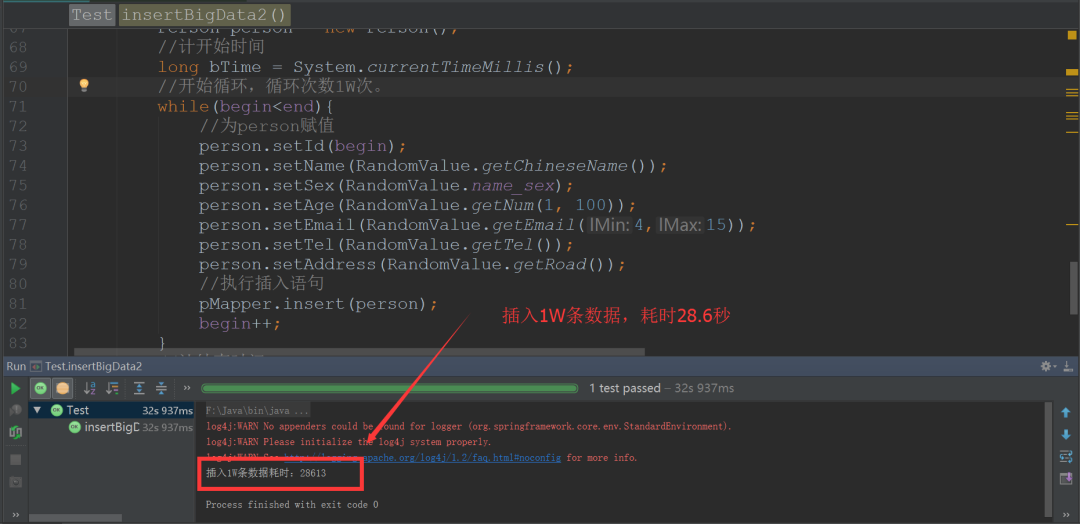
本想測(cè)試插入五百萬條數(shù)據(jù),但是實(shí)際運(yùn)行過程中太慢,中途不得不終止程序。最后得到52W數(shù)據(jù),大約耗時(shí)兩首歌的時(shí)間(7~9分鐘)。隨后,利用mybatis向mysql插入10000數(shù)據(jù)。
結(jié)果如下:
利用mybatis插入 一萬 條數(shù)據(jù)耗時(shí):28613,即28.6秒
第二種策略測(cè)試:
2.2 采用JDBC直接處理(開啟事務(wù)、關(guān)閉事務(wù))
采用JDBC直接處理的策略,這里的實(shí)驗(yàn)內(nèi)容分為開啟事務(wù)、未開啟事務(wù)是兩種,過程均如下:
利用PreparedStatment預(yù)編譯 循環(huán),插入對(duì)應(yīng)數(shù)據(jù),并存入
事務(wù)對(duì)于插入數(shù)據(jù)有多大的影響呢? 看下面的實(shí)驗(yàn)結(jié)果:
//該代碼為開啟事務(wù)
 private long begin = 33112001;//起始id
    private long end = begin+100000;//每次循環(huán)插入的數(shù)據(jù)量
    private String url = "jdbc:mysql://localhost:3306/bigdata?useServerPrepStmts=false&rewriteBatchedStatements=true&useUnicode=true&characterEncoding=UTF-8";
    private String user = "root";
    private String password = "0203";


@org.junit.Test
    public void insertBigData3() {
        //定義連接、statement對(duì)象
        Connection conn = null;
        PreparedStatement pstm = null;
        try {
            //加載jdbc驅(qū)動(dòng)
            Class.forName("com.mysql.jdbc.Driver");
            //連接mysql
            conn = DriverManager.getConnection(url, user, password);
             //將自動(dòng)提交關(guān)閉
             conn.setAutoCommit(false);
            //編寫sql
            String sql = "INSERT INTO person VALUES (?,?,?,?,?,?,?)";
            //預(yù)編譯sql
            pstm = conn.prepareStatement(sql);
            //開始總計(jì)時(shí)
            long bTime1 = System.currentTimeMillis();

            //循環(huán)10次,每次一萬數(shù)據(jù),一共10萬
            for(int i=0;i<10;i++) {
                //開啟分段計(jì)時(shí),計(jì)1W數(shù)據(jù)耗時(shí)
                long bTime = System.currentTimeMillis();
                //開始循環(huán)
                while (begin < end) {
                    //賦值
                    pstm.setLong(1, begin);
                    pstm.setString(2, RandomValue.getChineseName());
                    pstm.setString(3, RandomValue.name_sex);
                    pstm.setInt(4, RandomValue.getNum(1, 100));
                    pstm.setString(5, RandomValue.getEmail(4, 15));
                    pstm.setString(6, RandomValue.getTel());
                    pstm.setString(7, RandomValue.getRoad());
                    //執(zhí)行sql
                    pstm.execute();
                    begin++;
                }
                //提交事務(wù)
                conn.commit();
                //邊界值自增10W
                end += 10000;
                //關(guān)閉分段計(jì)時(shí)
                long eTime = System.currentTimeMillis();
                //輸出
                System.out.println("成功插入1W條數(shù)據(jù)耗時(shí):"+(eTime-bTime));
            }
            //關(guān)閉總計(jì)時(shí)
            long eTime1 = System.currentTimeMillis();
            //輸出
            System.out.println("插入10W數(shù)據(jù)共耗時(shí):"+(eTime1-bTime1));
        } catch (SQLException e) {
            e.printStackTrace();
        } catch (ClassNotFoundException e1) {
            e1.printStackTrace();
        }
    }
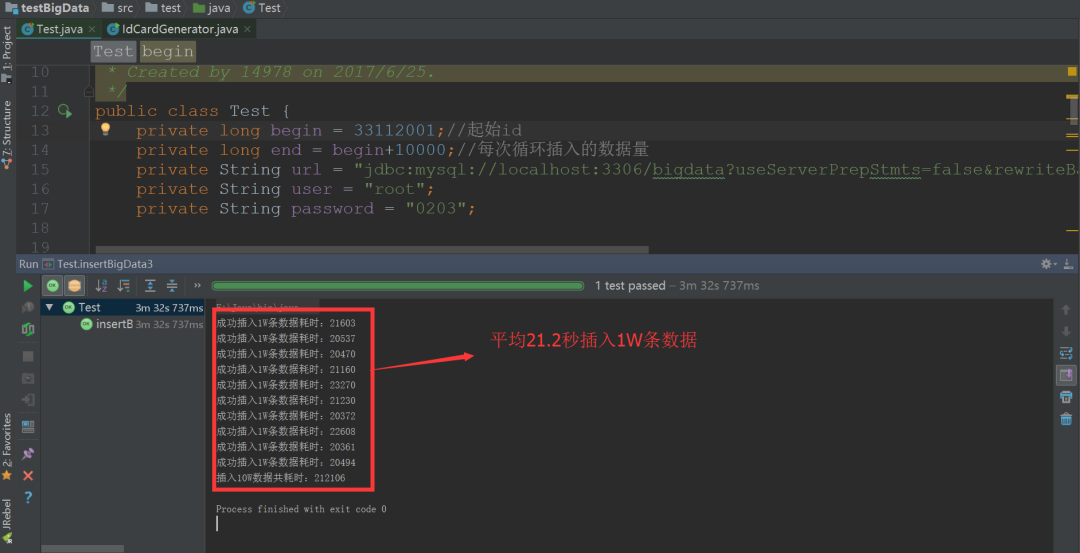
1、我們首先利用上述代碼測(cè)試無事務(wù)狀態(tài)下,插入10W條數(shù)據(jù)需要耗時(shí)多少。
如圖:
成功插入1W條數(shù)據(jù)耗時(shí):21603
成功插入1W條數(shù)據(jù)耗時(shí):20537
成功插入1W條數(shù)據(jù)耗時(shí):20470
成功插入1W條數(shù)據(jù)耗時(shí):21160
成功插入1W條數(shù)據(jù)耗時(shí):23270
成功插入1W條數(shù)據(jù)耗時(shí):21230
成功插入1W條數(shù)據(jù)耗時(shí):20372
成功插入1W條數(shù)據(jù)耗時(shí):22608
成功插入1W條數(shù)據(jù)耗時(shí):20361
成功插入1W條數(shù)據(jù)耗時(shí):20494
插入10W數(shù)據(jù)共耗時(shí):212106
實(shí)驗(yàn)結(jié)論如下:
在未開啟事務(wù)的情況下,平均每 21.2 秒插入 一萬 數(shù)據(jù)。
接著我們測(cè)試開啟事務(wù)后,插入十萬條數(shù)據(jù)耗時(shí),如圖:
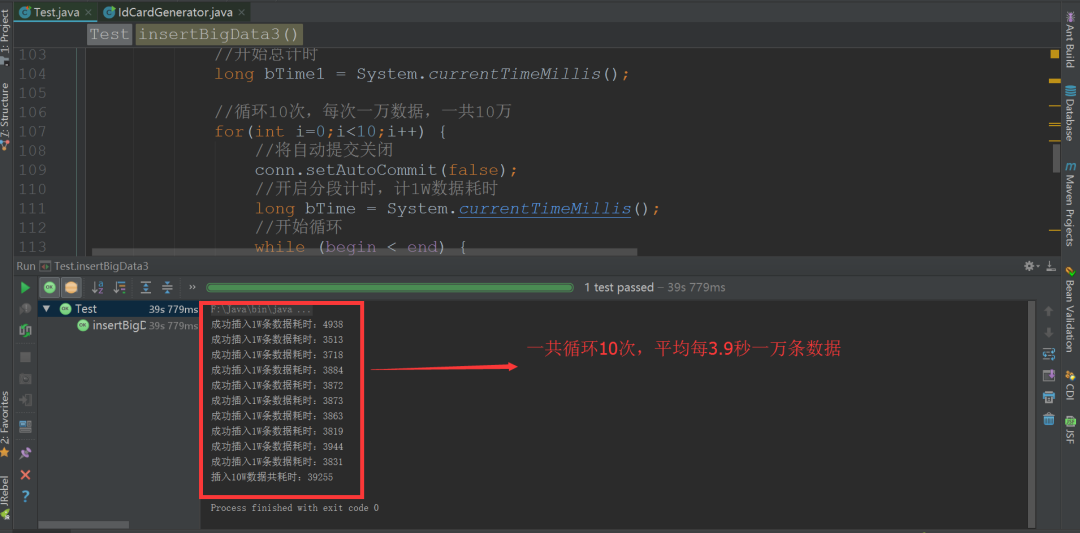
成功插入1W條數(shù)據(jù)耗時(shí):4938
成功插入1W條數(shù)據(jù)耗時(shí):3518
成功插入1W條數(shù)據(jù)耗時(shí):3713
成功插入1W條數(shù)據(jù)耗時(shí):3883
成功插入1W條數(shù)據(jù)耗時(shí):3872
成功插入1W條數(shù)據(jù)耗時(shí):3873
成功插入1W條數(shù)據(jù)耗時(shí):3863
成功插入1W條數(shù)據(jù)耗時(shí):3819
成功插入1W條數(shù)據(jù)耗時(shí):3933
成功插入1W條數(shù)據(jù)耗時(shí):3811
插入10W數(shù)據(jù)共耗時(shí):39255
實(shí)驗(yàn)結(jié)論如下:
開啟事務(wù)后,平均每 3.9 秒插入 一萬 數(shù)據(jù)
第三種策略測(cè)試:
2.3 采用JDBC批處理(開啟事務(wù)、無事務(wù))
采用JDBC批處理時(shí)需要注意一下幾點(diǎn):
1、在URL連接時(shí)需要開啟批處理、以及預(yù)編譯
String url = “jdbc:mysql://localhost:3306/User?rewriteBatched
-Statements=true&useServerPrepStmts=false”;
2、PreparedStatement預(yù)處理sql語句必須放在循環(huán)體外
代碼如下:
private long begin = 33112001;//起始id
private long end = begin+100000;//每次循環(huán)插入的數(shù)據(jù)量
private String url = "jdbc:mysql://localhost:3306/bigdata?useServerPrepStmts=false&rewriteBatchedStatements=true&useUnicode=true&characterEncoding=UTF-8";
private String user = "root";
private String password = "0203";


@org.junit.Test
public void insertBigData() {
    //定義連接、statement對(duì)象
    Connection conn = null;
    PreparedStatement pstm = null;
    try {
        //加載jdbc驅(qū)動(dòng)
        Class.forName("com.mysql.jdbc.Driver");
        //連接mysql
        conn = DriverManager.getConnection(url, user, password);
  //將自動(dòng)提交關(guān)閉
  // conn.setAutoCommit(false);
        //編寫sql
        String sql = "INSERT INTO person VALUES (?,?,?,?,?,?,?)";
        //預(yù)編譯sql
        pstm = conn.prepareStatement(sql);
        //開始總計(jì)時(shí)
        long bTime1 = System.currentTimeMillis();

        //循環(huán)10次,每次十萬數(shù)據(jù),一共1000萬
        for(int i=0;i<10;i++) {

            //開啟分段計(jì)時(shí),計(jì)1W數(shù)據(jù)耗時(shí)
            long bTime = System.currentTimeMillis();
            //開始循環(huán)
            while (begin < end) {
                //賦值
                pstm.setLong(1, begin);
                pstm.setString(2, RandomValue.getChineseName());
                pstm.setString(3, RandomValue.name_sex);
                pstm.setInt(4, RandomValue.getNum(1, 100));
                pstm.setString(5, RandomValue.getEmail(4, 15));
                pstm.setString(6, RandomValue.getTel());
                pstm.setString(7, RandomValue.getRoad());
                //添加到同一個(gè)批處理中
                pstm.addBatch();
                begin++;
            }
            //執(zhí)行批處理
            pstm.executeBatch();
           //提交事務(wù)
  //        conn.commit();
            //邊界值自增10W
            end += 100000;
            //關(guān)閉分段計(jì)時(shí)
            long eTime = System.currentTimeMillis();
            //輸出
            System.out.println("成功插入10W條數(shù)據(jù)耗時(shí):"+(eTime-bTime));
        }
        //關(guān)閉總計(jì)時(shí)
        long eTime1 = System.currentTimeMillis();
        //輸出
        System.out.println("插入100W數(shù)據(jù)共耗時(shí):"+(eTime1-bTime1));
    } catch (SQLException e) {
        e.printStackTrace();
    } catch (ClassNotFoundException e1) {
        e1.printStackTrace();
    }
}
首先開始測(cè)試
無事務(wù),每次循環(huán)插入10W條數(shù)據(jù),循環(huán)10次,一共100W條數(shù)據(jù)。
結(jié)果如下圖:
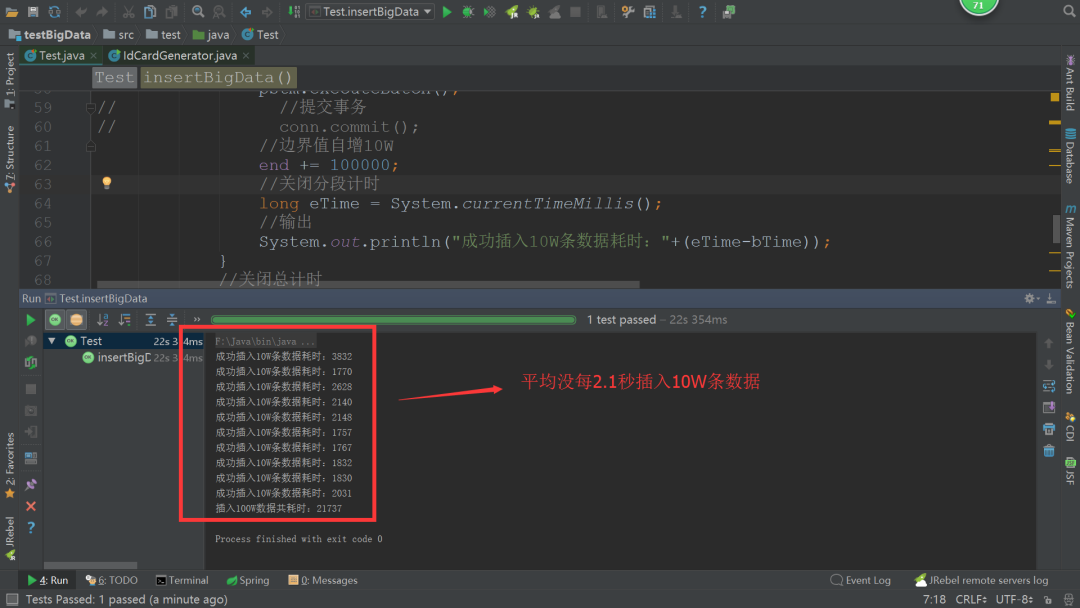
成功插入10W條數(shù)據(jù)耗時(shí):3832
成功插入10W條數(shù)據(jù)耗時(shí):1770
成功插入10W條數(shù)據(jù)耗時(shí):2628
成功插入10W條數(shù)據(jù)耗時(shí):2140
成功插入10W條數(shù)據(jù)耗時(shí):2148
成功插入10W條數(shù)據(jù)耗時(shí):1757
成功插入10W條數(shù)據(jù)耗時(shí):1767
成功插入10W條數(shù)據(jù)耗時(shí):1832
成功插入10W條數(shù)據(jù)耗時(shí):1830
成功插入10W條數(shù)據(jù)耗時(shí):2031
插入100W數(shù)據(jù)共耗時(shí):21737
實(shí)驗(yàn)結(jié)果:
使用JDBC批處理,未開啟事務(wù)下,平均每 2.1 秒插入 十萬 條數(shù)據(jù)
接著測(cè)試
開啟事務(wù),每次循環(huán)插入10W條數(shù)據(jù),循環(huán)10次,一共100W條數(shù)據(jù)。
結(jié)果如下圖:
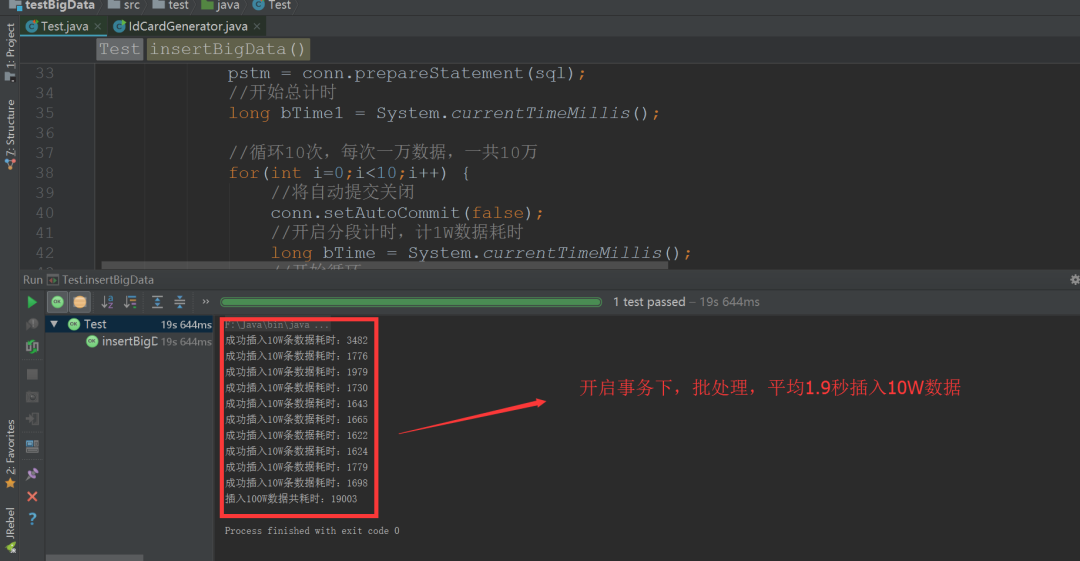
成功插入10W條數(shù)據(jù)耗時(shí):3482
成功插入10W條數(shù)據(jù)耗時(shí):1776
成功插入10W條數(shù)據(jù)耗時(shí):1979
成功插入10W條數(shù)據(jù)耗時(shí):1730
成功插入10W條數(shù)據(jù)耗時(shí):1643
成功插入10W條數(shù)據(jù)耗時(shí):1665
成功插入10W條數(shù)據(jù)耗時(shí):1622
成功插入10W條數(shù)據(jù)耗時(shí):1624
成功插入10W條數(shù)據(jù)耗時(shí):1779
成功插入10W條數(shù)據(jù)耗時(shí):1698
插入100W數(shù)據(jù)共耗時(shí):19003
實(shí)驗(yàn)結(jié)果:
使用JDBC批處理,開啟事務(wù),平均每 1.9 秒插入 十萬 條數(shù)據(jù)
3 總結(jié)
能夠看到,在開啟事務(wù)下 JDBC直接處理 和 JDBC批處理 均耗時(shí)更短。
Mybatis 輕量級(jí)框架插入 , mybatis在我這次實(shí)驗(yàn)被黑的可慘了,哈哈。實(shí)際開啟事務(wù)以后,差距不會(huì)這么大(差距10倍)。大家有興趣的可以接著去測(cè)試
JDBC直接處理,在本次實(shí)驗(yàn),開啟事務(wù)和關(guān)閉事務(wù),耗時(shí)差距5倍左右,并且這個(gè)倍數(shù)會(huì)隨著數(shù)據(jù)量的增大而增大。因?yàn)樵谖撮_啟事務(wù)時(shí),更新10000條數(shù)據(jù),就得訪問數(shù)據(jù)庫10000次。導(dǎo)致每次操作都需要操作一次數(shù)據(jù)庫。
JDBC批處理,在本次實(shí)驗(yàn),開啟事務(wù)與關(guān)閉事務(wù),耗時(shí)差距很微小(后面會(huì)增加測(cè)試,加大這個(gè)數(shù)值的差距)。但是能夠看到開啟事務(wù)以后,速度還是有提升。
結(jié)論:設(shè)計(jì)到大量單條數(shù)據(jù)的插入,使用JDBC批處理和事務(wù)混合速度最快
實(shí)測(cè)使用批處理+事務(wù)混合插入1億條數(shù)據(jù)耗時(shí):174756毫秒
4 補(bǔ)充
JDBC批處理事務(wù),開啟和關(guān)閉事務(wù),測(cè)評(píng)插入20次,一次50W數(shù)據(jù),一共一千萬數(shù)據(jù)耗時(shí):
1、開啟事務(wù)(數(shù)據(jù)太長不全貼了)
插入1000W數(shù)據(jù)共耗時(shí):197654
2、關(guān)閉事務(wù)(數(shù)據(jù)太長不全貼了)
插入1000W數(shù)據(jù)共耗時(shí):200540
還是沒很大的差距~
借用:
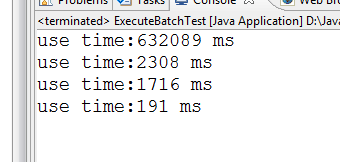
分別是:
不用批處理,不用事務(wù); 只用批處理,不用事務(wù); 只用事務(wù),不用批處理; 既用事務(wù),也用批處理;(很明顯,這個(gè)最快,所以建議在處理大批量的數(shù)據(jù)時(shí),同時(shí)使用批處理和事務(wù))