3種 Springboot 全局時(shí)間格式化方式,別再寫重復(fù)代碼了
時(shí)間格式化在項(xiàng)目中使用頻率是非常高的,當(dāng)我們的 API 接口返回結(jié)果,需要對(duì)其中某一個(gè) date 字段屬性進(jìn)行特殊的格式化處理,通常會(huì)用到 SimpleDateFormat 工具處理。
SimpleDateFormat?dateFormat?=?new?SimpleDateFormat("yyyy-MM-dd");
Date?stationTime?=?dateFormat.parse(dateFormat.format(PayEndTime()));
可一旦處理的地方較多,不僅 CV 操作頻繁,還產(chǎn)生很多重復(fù)臃腫的代碼,而此時(shí)如果能將時(shí)間格式統(tǒng)一配置,就可以省下更多時(shí)間專注于業(yè)務(wù)開發(fā)了。
可能很多人覺得統(tǒng)一格式化時(shí)間很簡(jiǎn)單啊,像下邊這樣配置一下就行了,但事實(shí)上這種方式只對(duì) date 類型生效。
spring.jackson.date-format=yyyy-MM-dd?HH:mm:ss
spring.jackson.time-zone=GMT+8
而很多項(xiàng)目中用到的時(shí)間和日期API 比較混亂, java.util.Date 、 java.util.Calendar 和 java.time LocalDateTime 都存在,所以全局時(shí)間格式化必須要同時(shí)兼容性新舊 API。
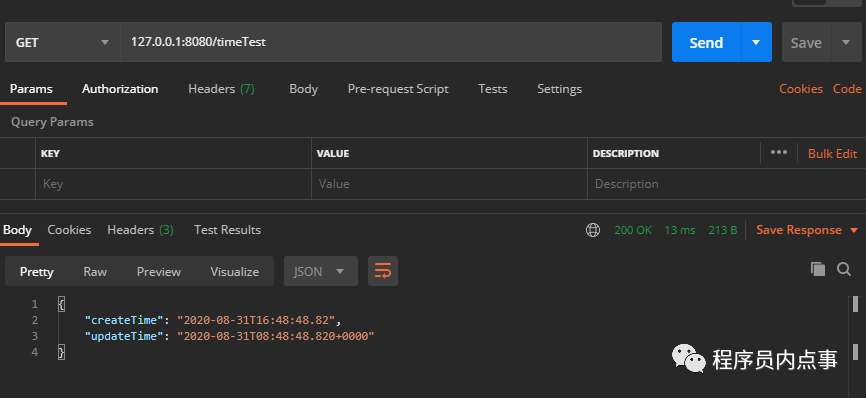
看看配置全局時(shí)間格式化前,接口返回時(shí)間字段的格式。
@Data
public?class?OrderDTO?{

????private?LocalDateTime?createTime;

????private?Date?updateTime;
}
很明顯不符合頁面上的顯示要求(有人抬杠為啥不讓前端解析時(shí)間,我只能說睡服代碼比說服人容易得多~)
一、@JsonFormat 注解
@JsonFormat 注解方式嚴(yán)格意義上不能叫全局時(shí)間格式化,應(yīng)該叫部分格式化,因?yàn)?code style="font-size: 14px;padding: 2px 4px;border-radius: 4px;margin-right: 2px;margin-left: 2px;background-color: rgba(27, 31, 35, 0.05);font-family: "Operator Mono", Consolas, Monaco, Menlo, monospace;word-break: break-all;color: rgb(255, 93, 108);">@JsonFormat 注解需要用在實(shí)體類的時(shí)間字段上,而只有使用相應(yīng)的實(shí)體類,對(duì)應(yīng)的字段才能進(jìn)行格式化。
@Data
public?class?OrderDTO?{

????@JsonFormat(locale?=?"zh",?timezone?=?"GMT+8",?pattern?=?"yyyy-MM-dd")
????private?LocalDateTime?createTime;

????@JsonFormat(locale?=?"zh",?timezone?=?"GMT+8",?pattern?=?"yyyy-MM-dd?HH:mm:ss")
????private?Date?updateTime;
}
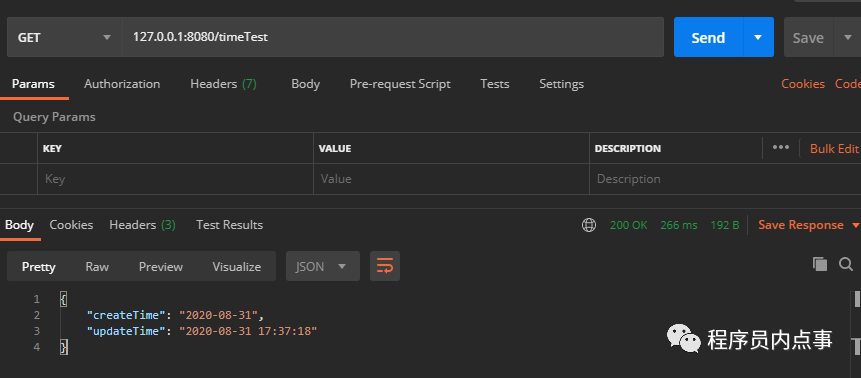
字段加上 @JsonFormat 注解后,LocalDateTime 和 Date 時(shí)間格式化成功。
二、@JsonComponent 注解(推薦)
這是我個(gè)人比較推薦的一種方式,前邊看到使用 @JsonFormat 注解并不能完全做到全局時(shí)間格式化,所以接下來我們使用 @JsonComponent 注解自定義一個(gè)全局格式化類,分別對(duì) Date 和 LocalDate 類型做格式化處理。
@JsonComponent
public?class?DateFormatConfig?{

????@Value("${spring.jackson.date-format:yyyy-MM-dd?HH:mm:ss}")
????private?String?pattern;

????/**
?????*?@author?xiaofu
?????*?@description?date?類型全局時(shí)間格式化
?????*?@date?2020/8/31?18:22
?????*/
????@Bean
????public?Jackson2ObjectMapperBuilderCustomizer?jackson2ObjectMapperBuilder()?{

????????return?builder?->?{
????????????TimeZone?tz?=?TimeZone.getTimeZone("UTC");
????????????DateFormat?df?=?new?SimpleDateFormat(pattern);
????????????df.setTimeZone(tz);
????????????builder.failOnEmptyBeans(false)
????????????????????.failOnUnknownProperties(false)
????????????????????.featuresToDisable(SerializationFeature.WRITE_DATES_AS_TIMESTAMPS)
????????????????????.dateFormat(df);
????????};
????}

????/**
?????*?@author?xiaofu
?????*?@description?LocalDate?類型全局時(shí)間格式化
?????*?@date?2020/8/31?18:22
?????*/
????@Bean
????public?LocalDateTimeSerializer?localDateTimeDeserializer()?{
????????return?new?LocalDateTimeSerializer(DateTimeFormatter.ofPattern(pattern));
????}

????@Bean
????public?Jackson2ObjectMapperBuilderCustomizer?jackson2ObjectMapperBuilderCustomizer()?{
????????return?builder?->?builder.serializerByType(LocalDateTime.class,?localDateTimeDeserializer());
????}
}
看到 Date 和 LocalDate 兩種時(shí)間類型格式化成功,此種方式有效。
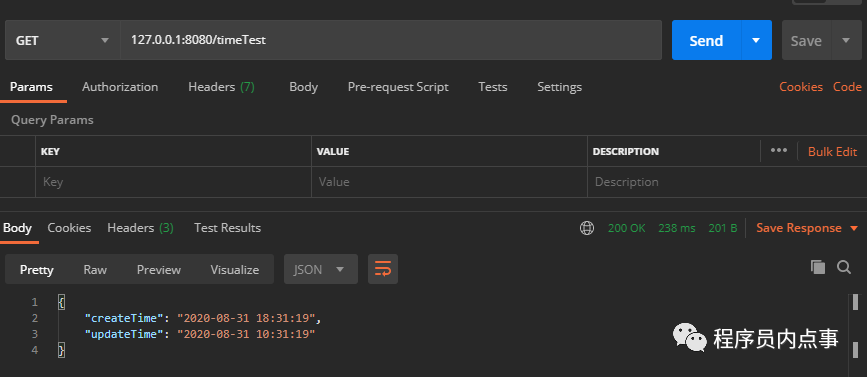
但還有個(gè)問題,實(shí)際開發(fā)中如果我有個(gè)字段不想用全局格式化設(shè)置的時(shí)間樣式,想自定義格式怎么辦?
那就需要和 @JsonFormat 注解配合使用了。
@Data
public?class?OrderDTO?{

????@JsonFormat(locale?=?"zh",?timezone?=?"GMT+8",?pattern?=?"yyyy-MM-dd")
????private?LocalDateTime?createTime;

????@JsonFormat(locale?=?"zh",?timezone?=?"GMT+8",?pattern?=?"yyyy-MM-dd")
????private?Date?updateTime;
}
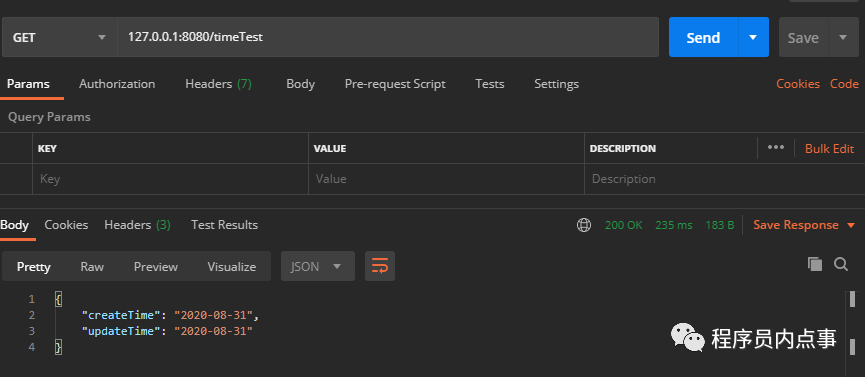
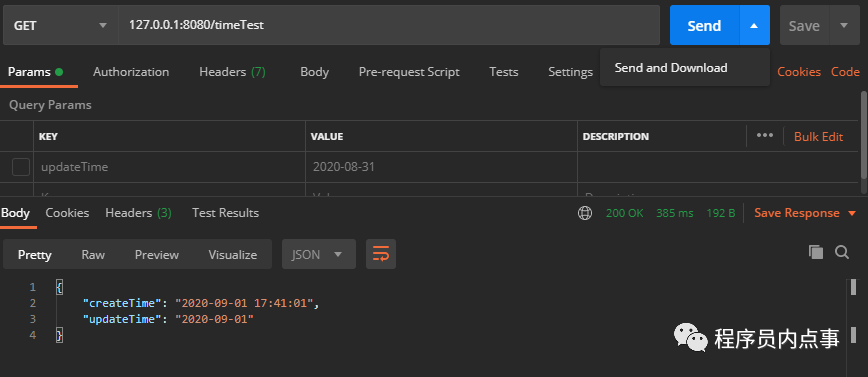
從結(jié)果上我們看到 @JsonFormat 注解的優(yōu)先級(jí)比較高,會(huì)以 @JsonFormat 注解的時(shí)間格式為主。
三、@Configuration 注解
這種全局配置的實(shí)現(xiàn)方式與上邊的效果是一樣的。
“注意:在使用此種配置后,字段手動(dòng)配置
”@JsonFormat注解將不再生效。
@Configuration
public?class?DateFormatConfig2?{

????@Value("${spring.jackson.date-format:yyyy-MM-dd?HH:mm:ss}")
????private?String?pattern;

????public?static?DateFormat?dateFormat?=?new?SimpleDateFormat("yyyy-MM-dd?HH:mm:ss");

????@Bean
????@Primary
????public?ObjectMapper?serializingObjectMapper()?{
????????ObjectMapper?objectMapper?=?new?ObjectMapper();
????????JavaTimeModule?javaTimeModule?=?new?JavaTimeModule();
????????javaTimeModule.addSerializer(LocalDateTime.class,?new?LocalDateTimeSerializer());
????????javaTimeModule.addDeserializer(LocalDateTime.class,?new?LocalDateTimeDeserializer());
????????objectMapper.registerModule(javaTimeModule);
????????return?objectMapper;
????}

????/**
?????*?@author?xiaofu
?????*?@description?Date?時(shí)間類型裝換
?????*?@date?2020/9/1?17:25
?????*/
????@Component
????public?class?DateSerializer?extends?JsonSerializer<Date>?{
????????@Override
????????public?void?serialize(Date?date,?JsonGenerator?gen,?SerializerProvider?provider)?throws?IOException?{
????????????String?formattedDate?=?dateFormat.format(date);
????????????gen.writeString(formattedDate);
????????}
????}

????/**
?????*?@author?xiaofu
?????*?@description?Date?時(shí)間類型裝換
?????*?@date?2020/9/1?17:25
?????*/
????@Component
????public?class?DateDeserializer?extends?JsonDeserializer<Date>?{

????????@Override
????????public?Date?deserialize(JsonParser?jsonParser,?DeserializationContext?deserializationContext)?throws?IOException?{
????????????try?{
????????????????return?dateFormat.parse(jsonParser.getValueAsString());
????????????}?catch?(ParseException?e)?{
????????????????throw?new?RuntimeException("Could?not?parse?date",?e);
????????????}
????????}
????}

????/**
?????*?@author?xiaofu
?????*?@description?LocalDate?時(shí)間類型裝換
?????*?@date?2020/9/1?17:25
?????*/
????public?class?LocalDateTimeSerializer?extends?JsonSerializer<LocalDateTime>?{
????????@Override
????????public?void?serialize(LocalDateTime?value,?JsonGenerator?gen,?SerializerProvider?serializers)?throws?IOException?{
????????????gen.writeString(value.format(DateTimeFormatter.ofPattern(pattern)));
????????}
????}

????/**
?????*?@author?xiaofu
?????*?@description?LocalDate?時(shí)間類型裝換
?????*?@date?2020/9/1?17:25
?????*/
????public?class?LocalDateTimeDeserializer?extends?JsonDeserializer<LocalDateTime>?{
????????@Override
????????public?LocalDateTime?deserialize(JsonParser?p,?DeserializationContext?deserializationContext)?throws?IOException?{
????????????return?LocalDateTime.parse(p.getValueAsString(),?DateTimeFormatter.ofPattern(pattern));
????????}
????}
}
總結(jié)
分享了一個(gè)簡(jiǎn)單卻又很實(shí)用的 Springboot 開發(fā)技巧,其實(shí)所謂的開發(fā)效率,不過是一個(gè)又一個(gè)開發(fā)技巧堆砌而來,聰明的程序員總是能用最少的代碼完成任務(wù)。
如果對(duì)你有用,歡迎 在看、點(diǎn)贊、轉(zhuǎn)發(fā) ,您的認(rèn)可是我最大的動(dòng)力。

原創(chuàng)不易,燃燒秀發(fā)輸出內(nèi)容,如果有一丟丟收獲,點(diǎn)個(gè)贊鼓勵(lì)一下吧!
整理了幾百本各類技術(shù)電子書,送給小伙伴們。關(guān)注公號(hào)回復(fù)【666】自行領(lǐng)取。和一些小伙伴們建了一個(gè)技術(shù)交流群,一起探討技術(shù)、分享技術(shù)資料,旨在共同學(xué)習(xí)進(jìn)步,如果感興趣就加入我們吧!