
基于角色訪問控制RBAC權(quán)限模型的動態(tài)資源訪問權(quán)限管理實現(xiàn)
RBAC權(quán)限模型(Role-Based Access Control)
前面主要介紹了元數(shù)據(jù)管理和業(yè)務(wù)數(shù)據(jù)的處理,通常一個系統(tǒng)都會有多個用戶,不同用戶具有不同的權(quán)限,本文主要介紹基于RBAC動態(tài)權(quán)限管理在crudapi中的實現(xiàn)。
概要
RBAC簡介
RBAC權(quán)限模型(Role-Based Access Control)即:基于角色的權(quán)限控制。模型中有幾個關(guān)鍵的術(shù)語:
用戶:系統(tǒng)接口及訪問的操作者
權(quán)限:能夠訪問某接口或者做某操作的授權(quán)資格
角色:具有一類相同操作權(quán)限的用戶的總稱
用戶角色權(quán)限關(guān)系
一個用戶有一個或多個角色
一個角色包含多個用戶
一個角色有多種權(quán)限
一個權(quán)限屬于多個角色
Spring security
Spring Security是Spring項目組中用來提供安全認證服務(wù)的框架,可以很方便的實現(xiàn)動態(tài)權(quán)限管理。
表單配置
系統(tǒng)內(nèi)置5個表單,這些表單和權(quán)限相關(guān),和具體業(yè)務(wù)無關(guān)
資源resource
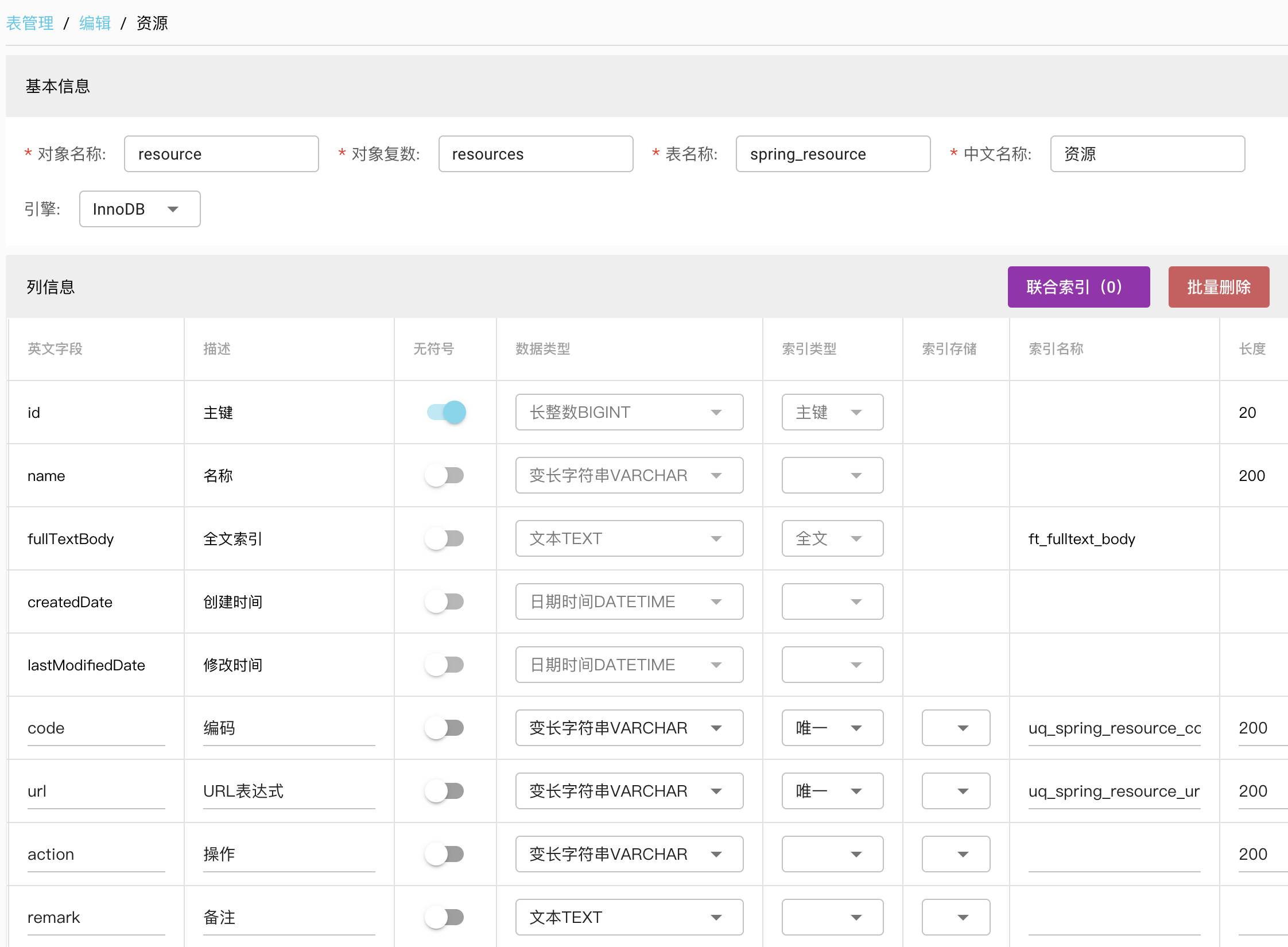 ?其中url是ANT格式表達式,用于配置url來確定是否擁有某個資源的權(quán)限。
用戶user
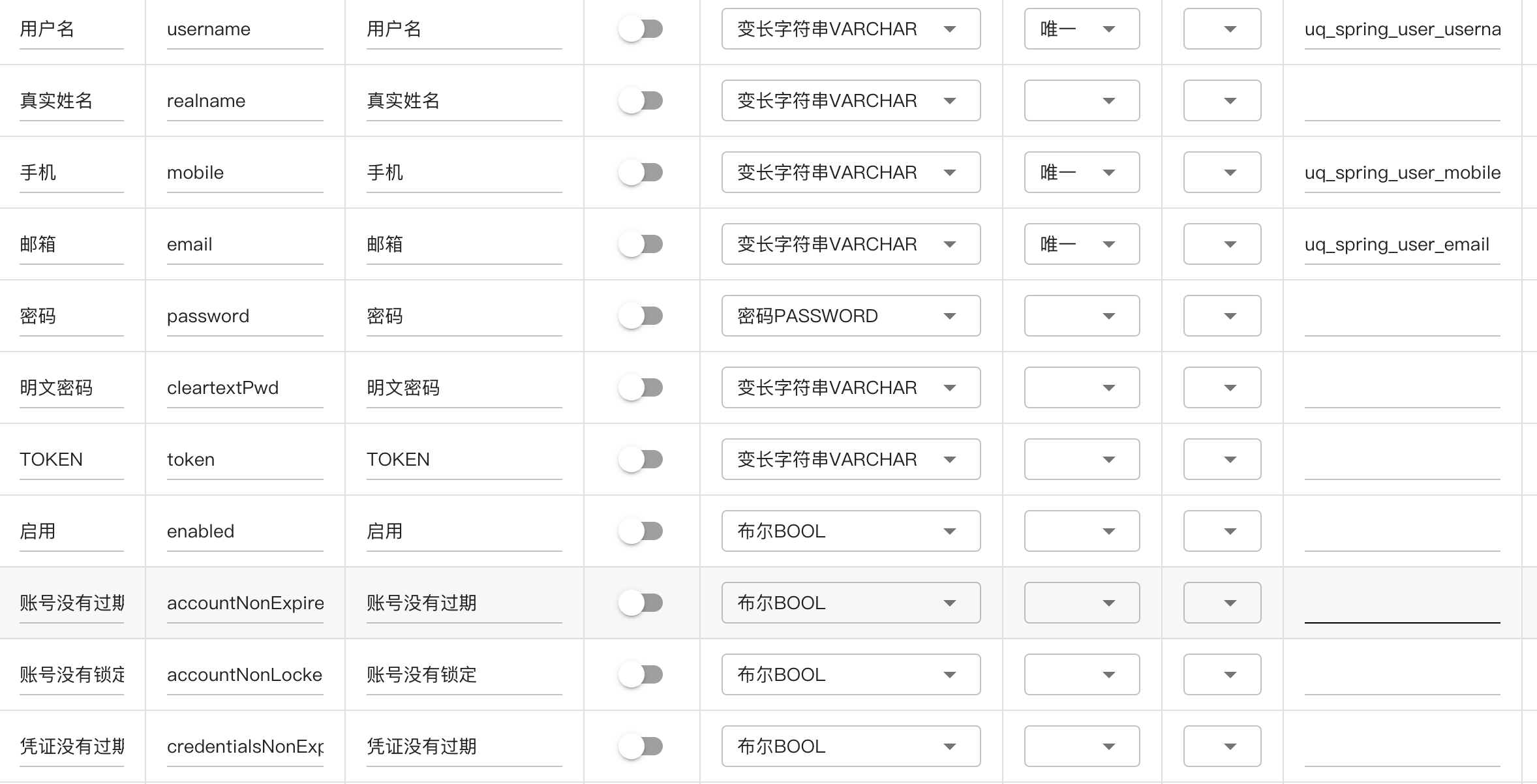 ?用戶表記錄登錄用戶信息
角色role
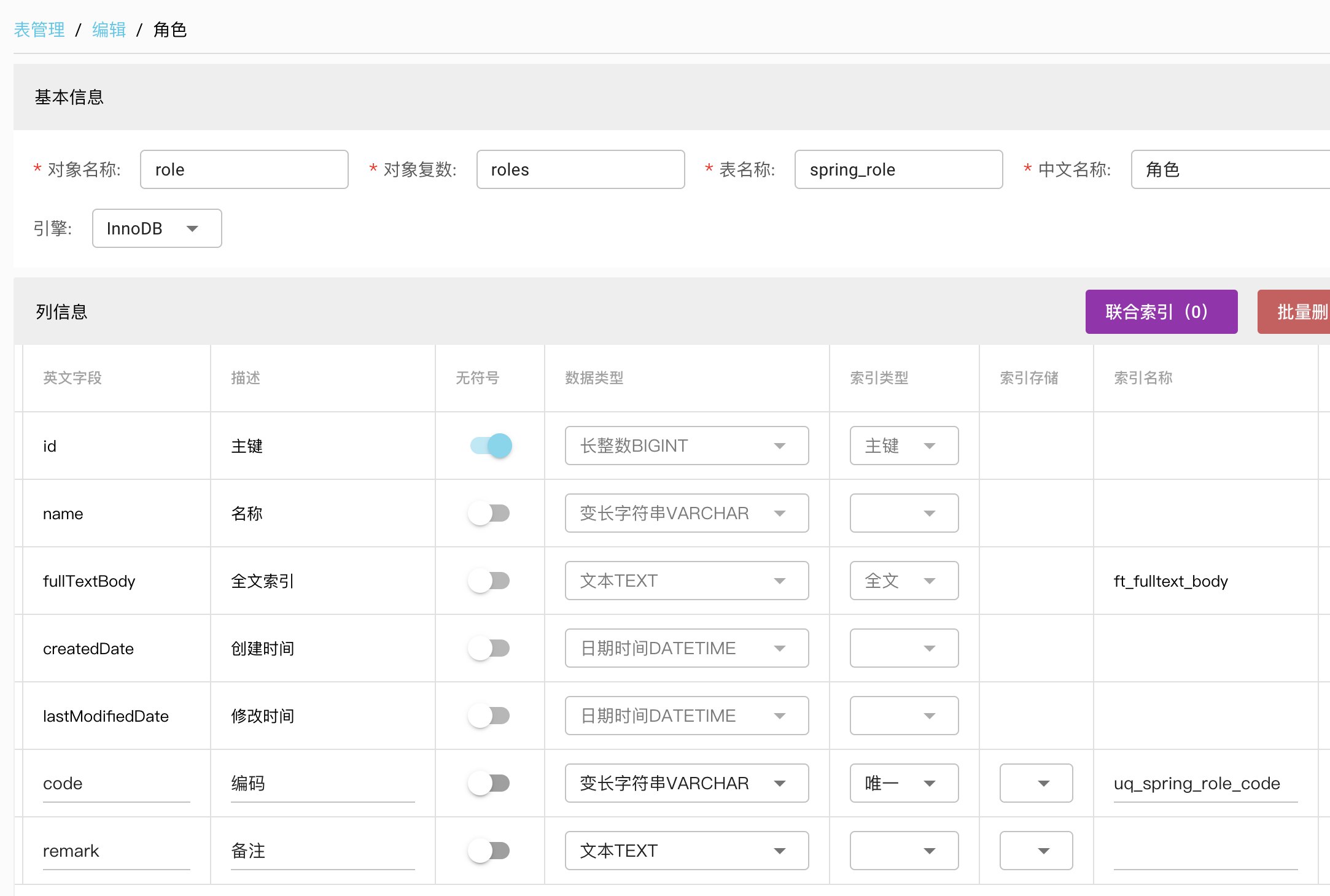 ?角色
?角色
用戶角色行userRoleLine
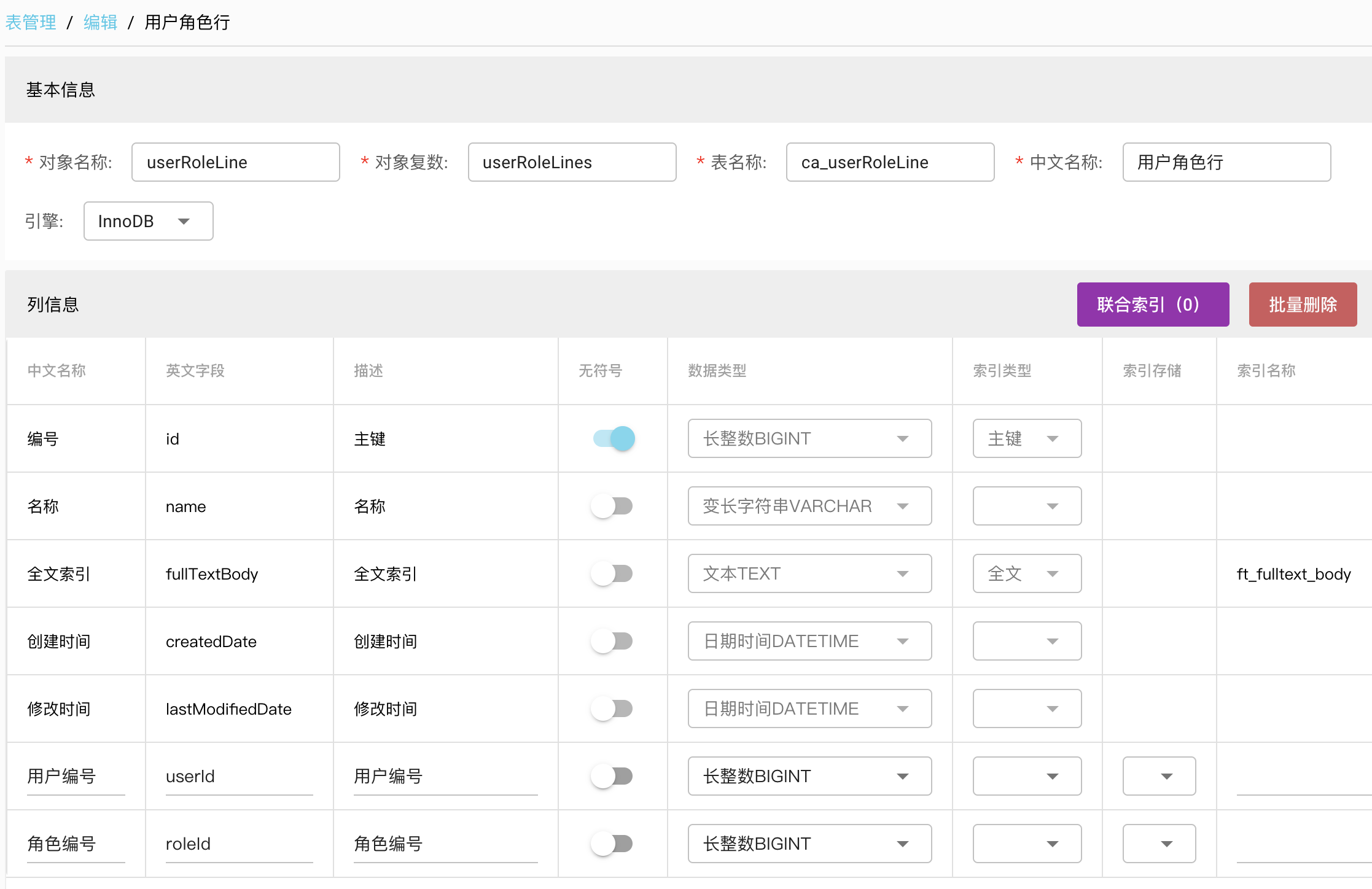 ?用戶和角色的中間表,參考之前表關(guān)系管理,利用兩個一對多建立多對多關(guān)系,
角色資源行roleResourceLine
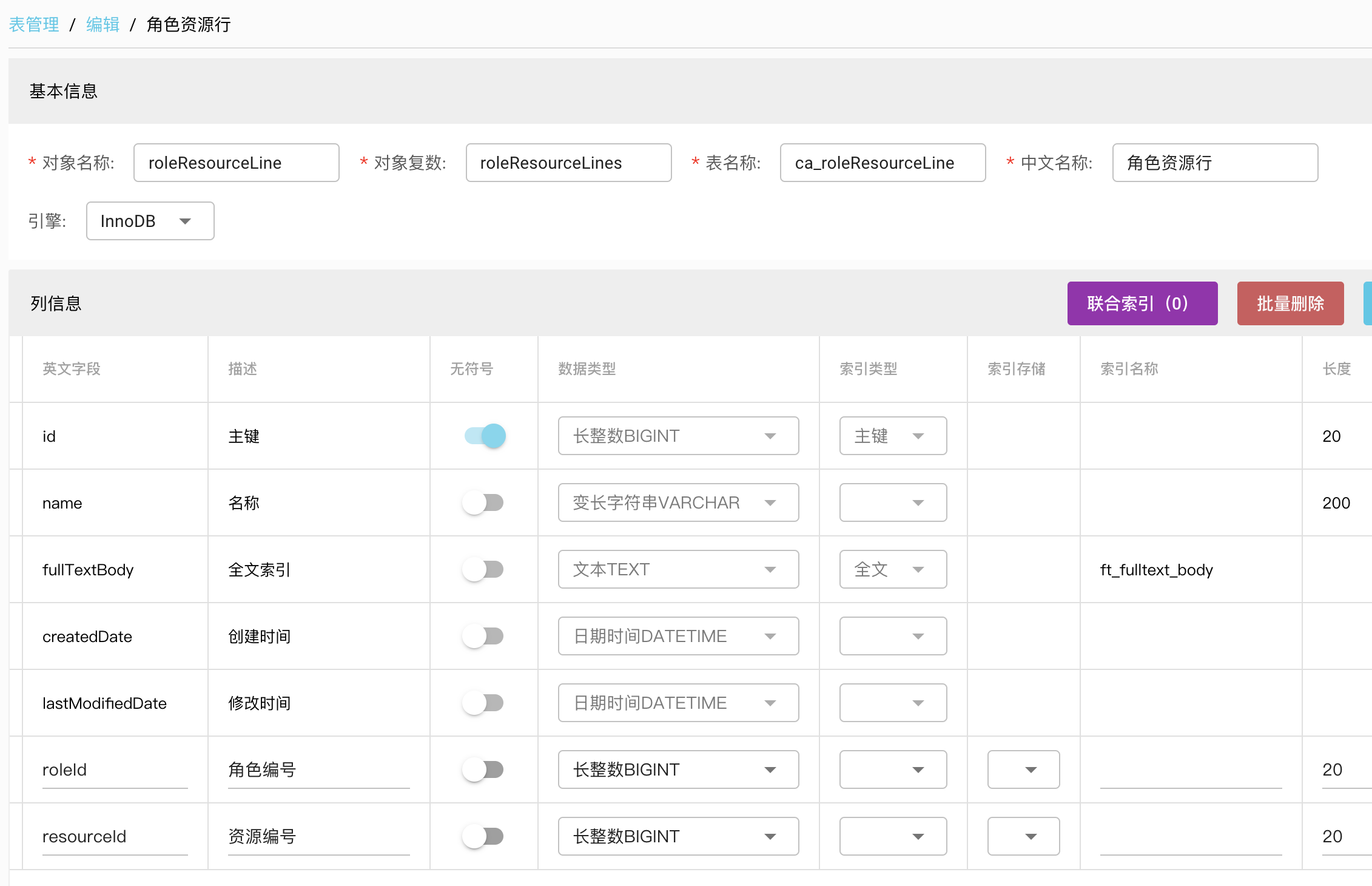 ?角色和資源的中間表,同樣的利用兩個一對多建立多對多關(guān)系
表關(guān)系
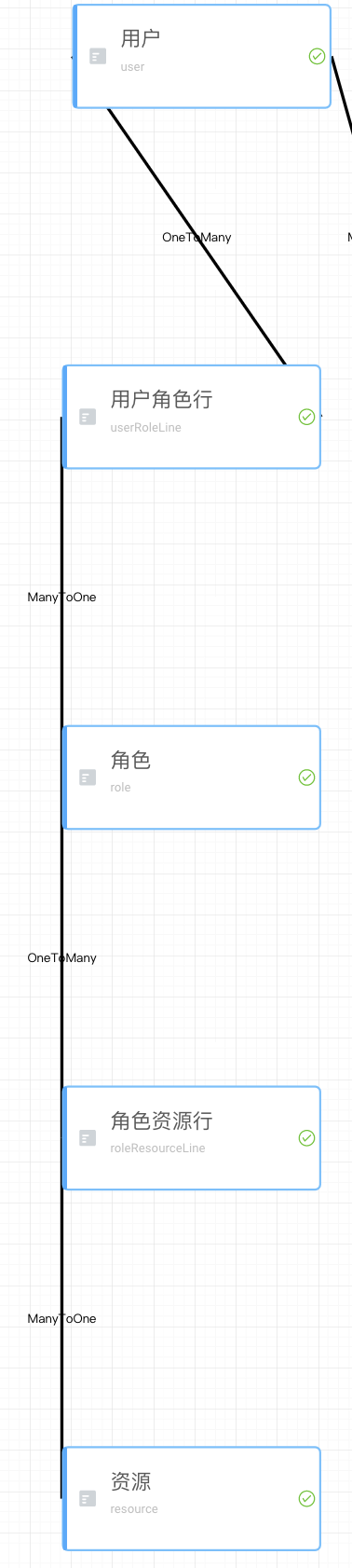
原表目標表關(guān)系useruserRoleLine一對多userRoleLinerole多對一roleroleResourceLine一對多roleResourceLineresource多對一
權(quán)限控制原理
根據(jù)登錄用戶首選獲取角色列表,每個角色對應(yīng)多個資源,最終用戶的權(quán)限為多個角色對應(yīng)的資源疊加。如果擁有某個資源權(quán)限就返回數(shù)據(jù),否則提示無權(quán)限。
默認如果沒有匹配任何資源,表示該資源無需特別權(quán)限,只需要登錄用戶即可。
驗證
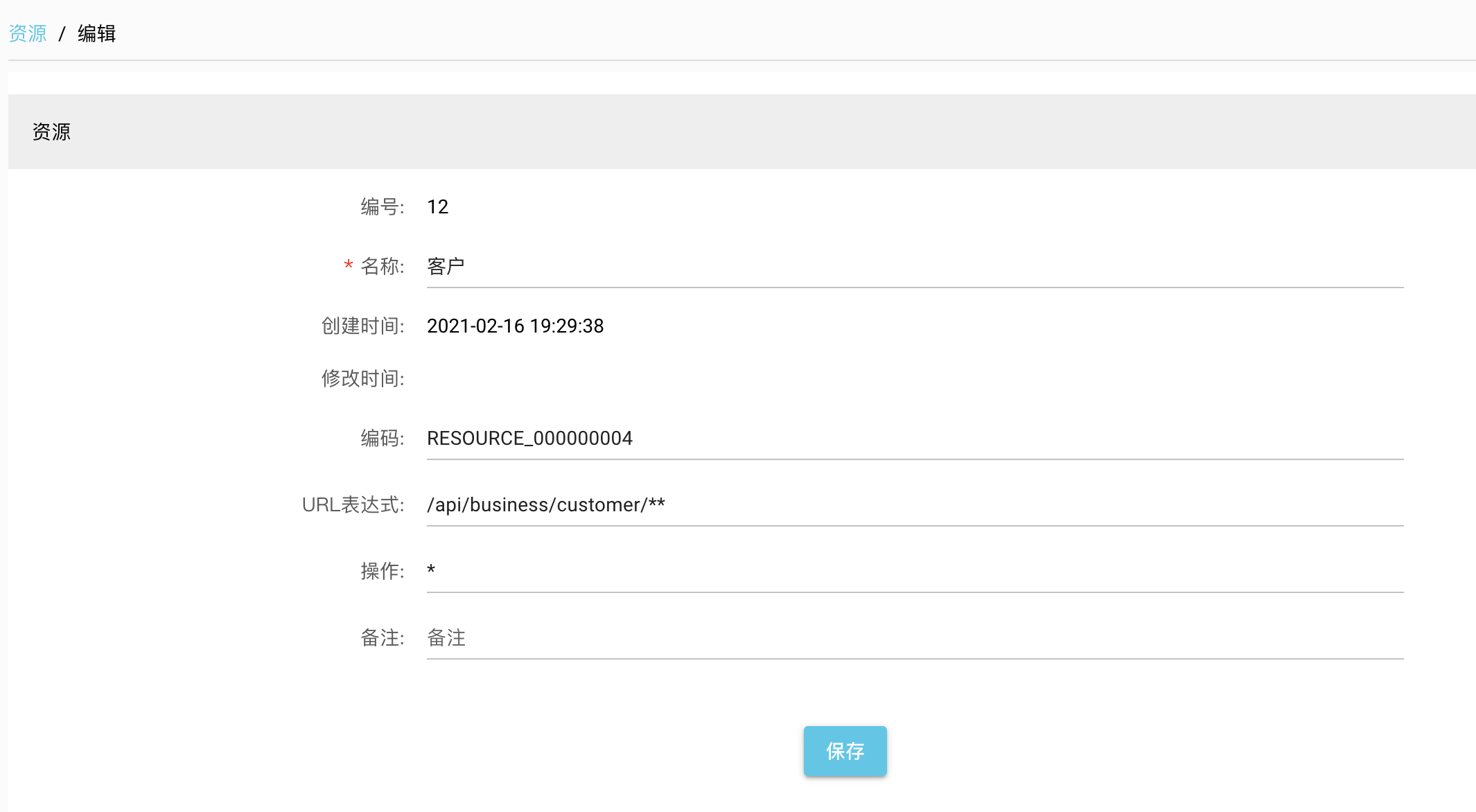 ?添加客戶資源,ANT url為/api/business/customer/**,操作為*,表示GET,PATCH,DELETE,POST都需要授權(quán)。 如果操作為DELETE,表示值控制DELETE操作,其它操作不限制。
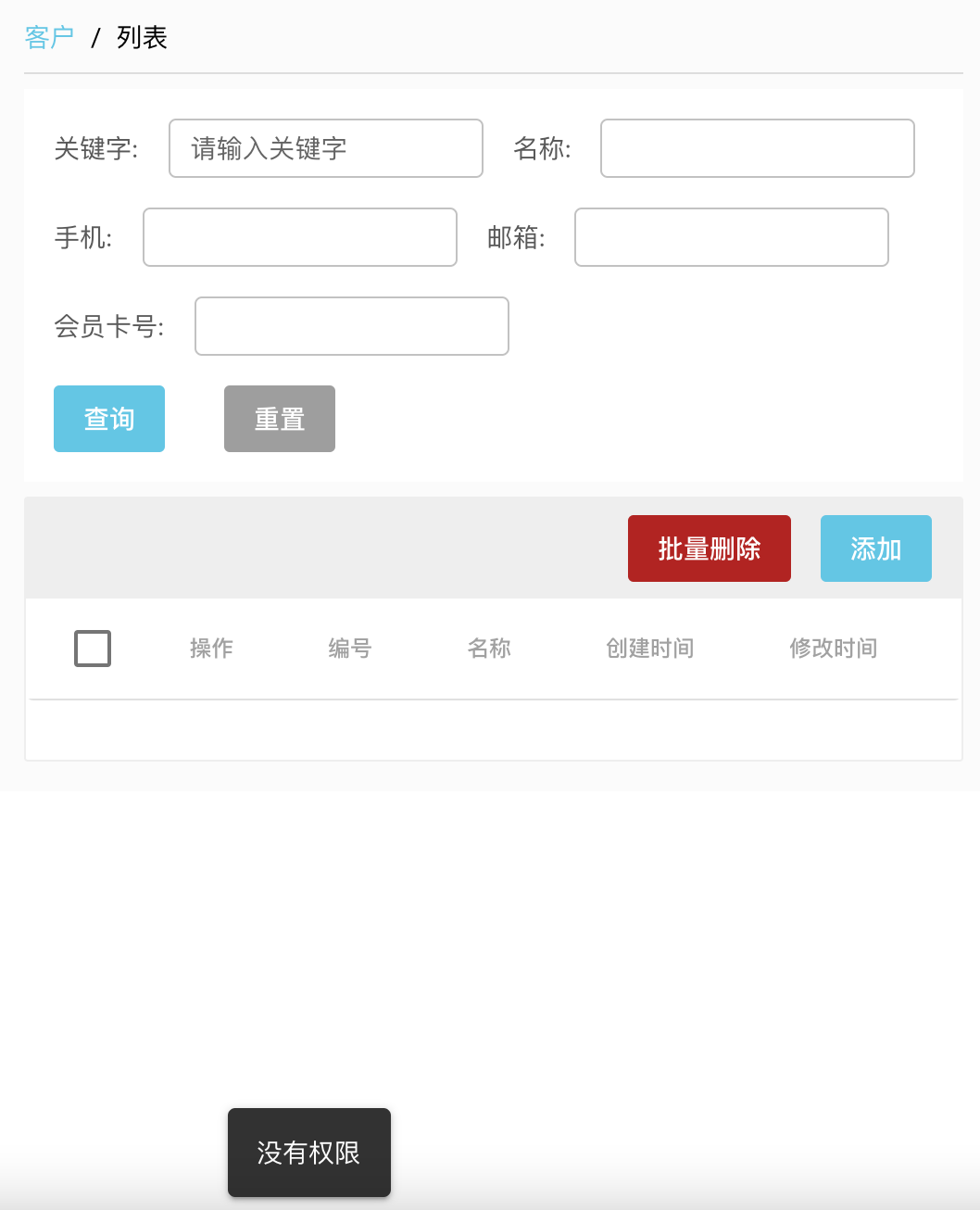 ?通過UI訪問客戶時候提示沒有權(quán)限,和期望的效果一致
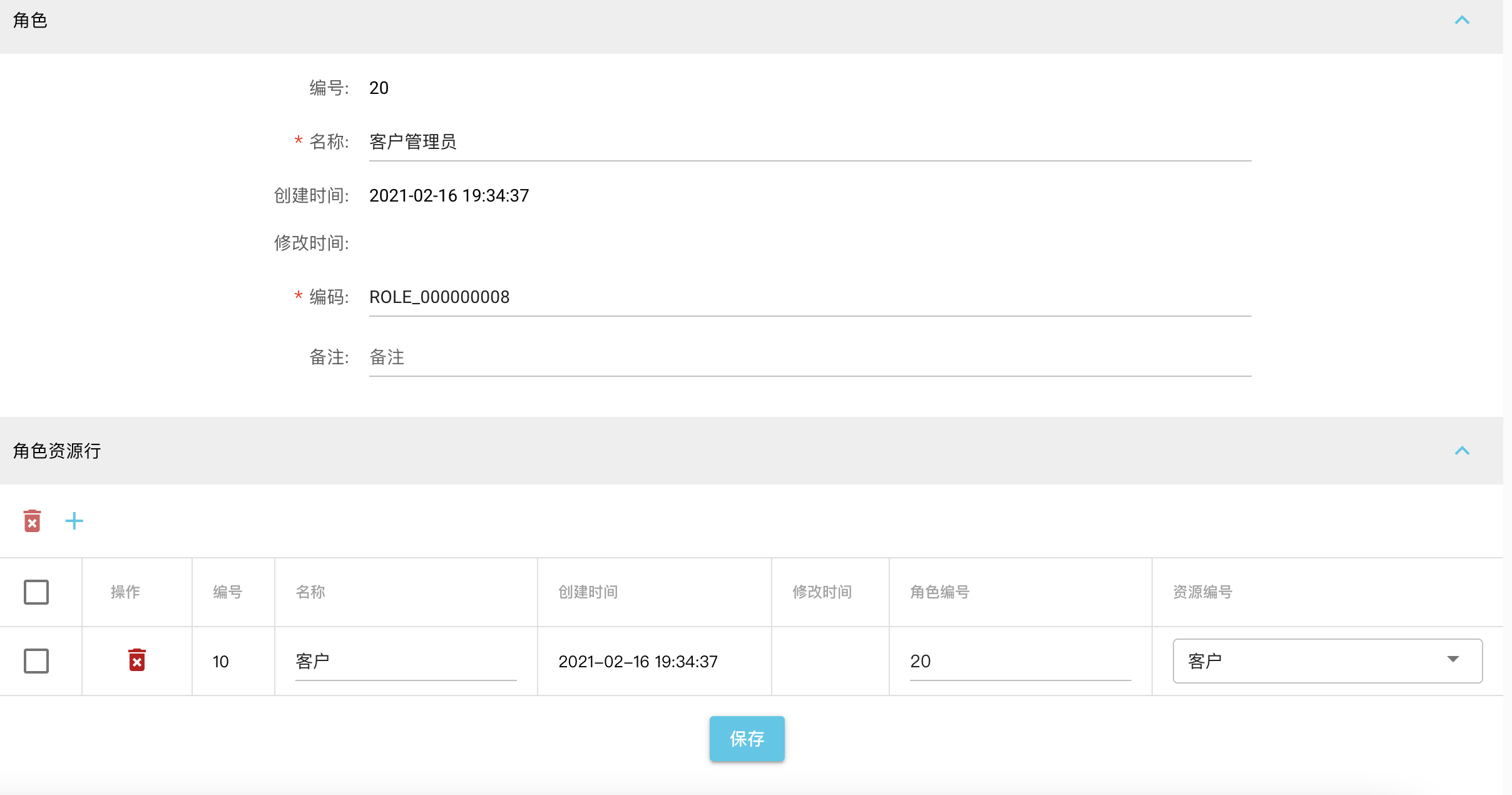 ?添加角色“客戶管理員”,該角色擁有客戶訪問權(quán)限
 ?給“超級管理員”添加“客戶管理員”角色,這樣“超級管理員”就擁有了客戶訪問權(quán)限
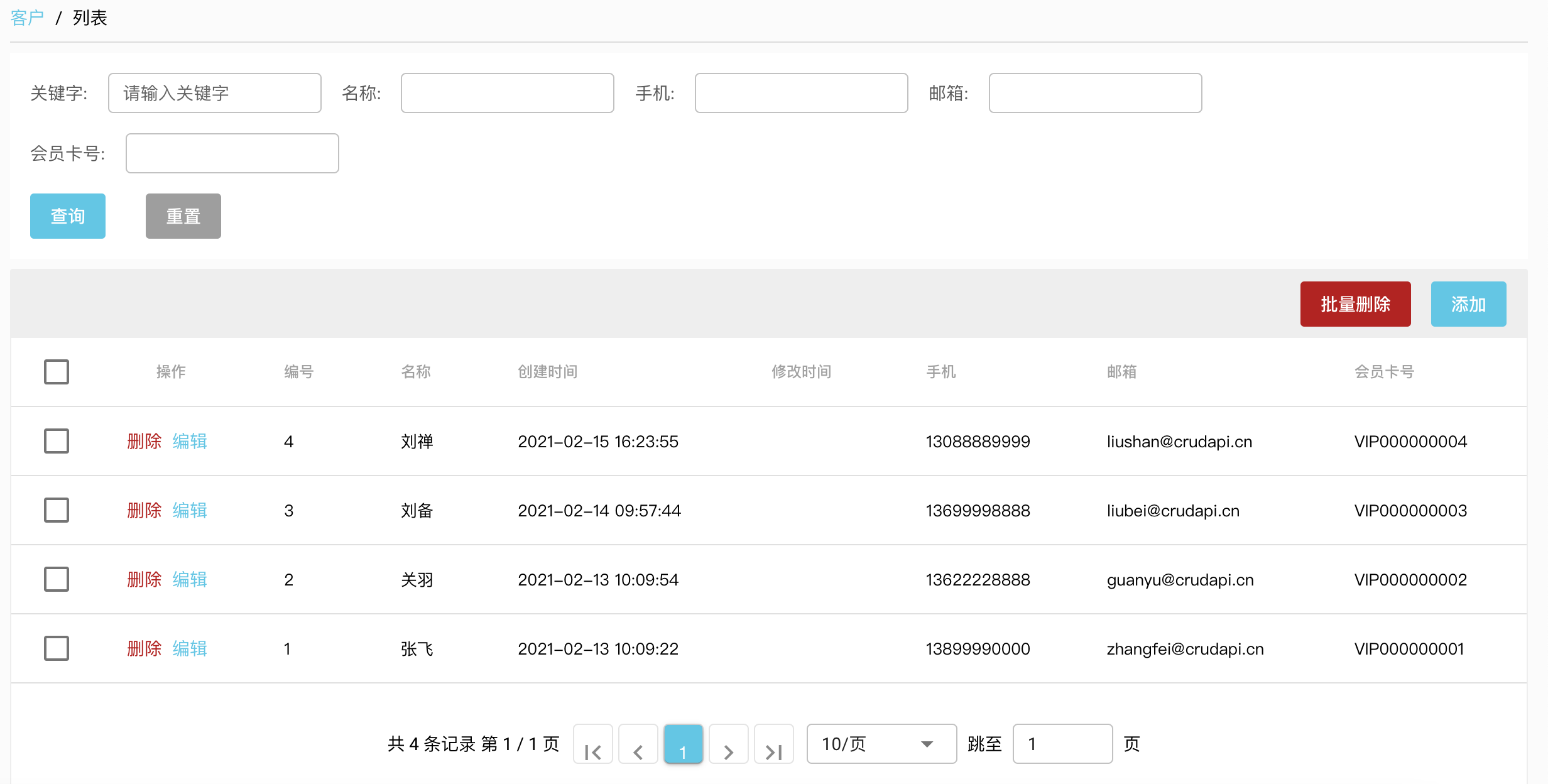 ?因為用戶重新分配了角色,需要需要注銷重新登錄,登錄之后又可以正常訪問客戶資源了。
核心源碼
@Slf4j
@Component
public class DynamicSecurityMetadataSource implements FilterInvocationSecurityMetadataSource {

    private static Map<String, ConfigAttribute> configAttributeMap = null;

    @Autowired
    private DynamicSecurityService dynamicSecurityService;

    @PostConstruct
    public void loadDataSource() {
        configAttributeMap = dynamicSecurityService.loadDataSource();
    }

    public void clearDataSource() {
        log.info("DynamicSecurityMetadataSource clearDataSource");
        configAttributeMap.clear();
        configAttributeMap = null;
    }

    @Override
    public Collection<ConfigAttribute> getAttributes(Object o) throws IllegalArgumentException {
        if (configAttributeMap == null)  {
            this.loadDataSource();
        }
        List<ConfigAttribute>  configAttributes = new ArrayList<>();

        FilterInvocation fi = (FilterInvocation) o;

        String method = fi.getRequest().getMethod();
        log.info("getAttributes method = " + method);

        //獲取當前訪問的路徑
        String url = fi.getRequestUrl();
        String path = URLUtil.getPath(url) + "_"+ method;

        log.info("getAttributes url = " + url);
        log.info("getAttributes path = " + path);

        PathMatcher pathMatcher = new AntPathMatcher();
        Iterator<String> iterator = configAttributeMap.keySet().iterator();
        //獲取訪問該路徑所需資源
        while (iterator.hasNext()) {
            String pattern = iterator.next();
            if (pathMatcher.match(pattern, path)) {
                log.info("match success = " + pattern + ", " + path);
                configAttributes.add(configAttributeMap.get(pattern));
            }
        }
        // 未設(shè)置操作請求權(quán)限,返回空集合
        return configAttributes;
    }

    @Override
    public Collection<ConfigAttribute> getAllConfigAttributes() {
        return null;
    }

    @Override
    public boolean supports(Class<?> aClass) {
        return true;
    }

}
繼承FilterInvocationSecurityMetadataSource,實現(xiàn)getAttributes接口,通過http url加http method進行匹配
@Slf4j
@Component
public class DynamicAccessDecisionManager implements AccessDecisionManager {

    @Override
    public void decide(Authentication authentication, Object object,
                       Collection<ConfigAttribute> configAttributes) throws AccessDeniedException, InsufficientAuthenticationException {
        // 當接口未被配置資源時直接放行
        if (CollUtil.isEmpty(configAttributes)) {
            log.info("empty configAttributes decide passed!");
            return;
        }

        FilterInvocation fi = (FilterInvocation) object;

        String method = fi.getRequest().getMethod();
        log.info("decide method = " + method);

        List<String> needAuthorityList = new ArrayList<String>();

        Iterator<ConfigAttribute> iterator = configAttributes.iterator();
        while (iterator.hasNext()) {
            ConfigAttribute configAttribute = iterator.next();
            //將訪問所需資源或用戶擁有資源進行比對
            String needAuthority = configAttribute.getAttribute();
            needAuthorityList.add(needAuthority);
            for (GrantedAuthority grantedAuthority : authentication.getAuthorities()) {
                if (needAuthority.trim().equals(grantedAuthority.getAuthority())) {
                    return;
                }
            }
        }
        throw new AccessDeniedException("對不起,您沒有資源:" + String.join(",", needAuthorityList) +"的訪問權(quán)限!");
    }

    @Override
    public boolean supports(ConfigAttribute configAttribute) {
        return true;
    }

    @Override
    public boolean supports(Class<?> aClass) {
        return true;
    }
}
繼承AccessDecisionManager,實現(xiàn)decide接口,將訪問所需資源或用戶擁有資源進行比對,如果擁有權(quán)限則放行,否則提示無權(quán)限。
小結(jié)
本文介紹了RBAC在crudapi中的實現(xiàn)原理,首先引入Spring security框架,然后利用配置生成用戶,角色,資源等表單,通過配置實現(xiàn)基本的CRUD功能,最終實現(xiàn)了動態(tài)權(quán)限精細化管理。因為用戶,角色等表與業(yè)務(wù)無關(guān),所以會作為系統(tǒng)內(nèi)置表單。
附demo演示
本系統(tǒng)屬于產(chǎn)品級的零代碼平臺,不同于自動代碼生成器,不需要生成Controller、Service、Repository、Entity等業(yè)務(wù)代碼,程序運行起來就可以使用,真正0代碼,可以覆蓋基本的和業(yè)務(wù)無關(guān)的CRUD RESTful API。
官網(wǎng)地址:https://crudapi.cn(opens new window)
測試地址:https://demo.crudapi.cn/crudapi/login(opens new window)