
Spring Boot 實(shí)現(xiàn)限制賬戶(hù)登錄數(shù)

關(guān)注“泥瓦匠”,回復(fù)“1024”,領(lǐng)取精選技術(shù)資料
作者:殷天文?www.jianshu.com/p/b6f5ec98d790
通常系統(tǒng)都會(huì)限制同一個(gè)賬號(hào)的登錄人數(shù),多人登錄要么限制后者登錄,要么踢出前者,Spring Security 提供了這樣的功能,本文講解一下在沒(méi)有使用Security的時(shí)候如何手動(dòng)實(shí)現(xiàn)這個(gè)功能
如果你是使用 Shiro + Session 的模式,可以閱讀此文
demo 技術(shù)選型
SpringBoot
JWT
Filter
Redis + Redisson
JWT(token)存儲(chǔ)在Redis中,類(lèi)似 JSessionId-Session的關(guān)系,用戶(hù)登錄后每次請(qǐng)求在Header中攜帶jwt
如果你是使用session的話(huà),也完全可以借鑒本文的思路,只是代碼上需要加些改動(dòng)
兩種實(shí)現(xiàn)思路
比較時(shí)間戳
維護(hù)一個(gè) username: jwtToken 這樣的一個(gè) key-value 在Reids中, Filter邏輯如下
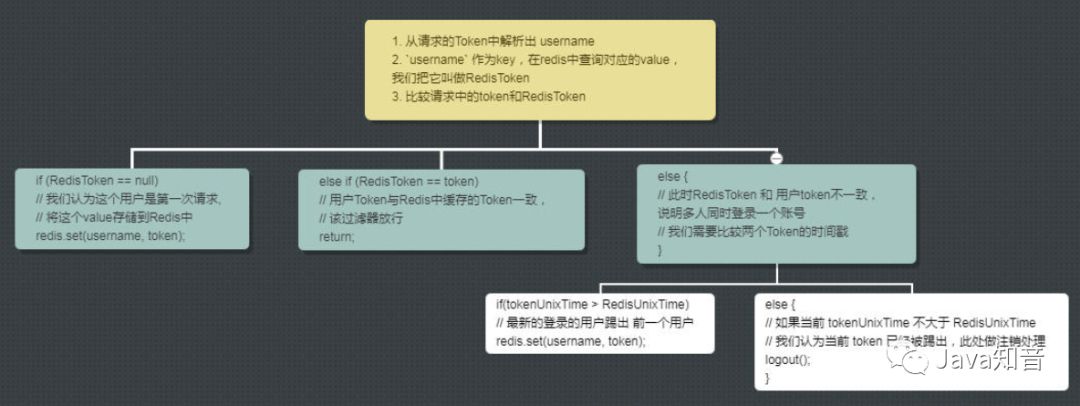
圖片不清可點(diǎn)開(kāi)放大
public?class?CompareKickOutFilter?extends?KickOutFilter?{

????@Autowired
????private?UserService?userService;

????@Override
????public?boolean?isAccessAllowed(HttpServletRequest?request,?HttpServletResponse?response)?{
????????String?token?=?request.getHeader("Authorization");
????????String?username?=?JWTUtil.getUsername(token);
????????String?userKey?=?PREFIX?+?username;

????????RBucket?bucket?=?redissonClient.getBucket(userKey);
????????String?redisToken?=?bucket.get();

????????if?(token.equals(redisToken))?{
????????????return?true;

????????}?else?if?(StringUtils.isBlank(redisToken))?{
????????????bucket.set(token);

????????}?else?{
????????????Long?redisTokenUnixTime?=?JWTUtil.getClaim(redisToken,?"createTime").asLong();
????????????Long?tokenUnixTime?=?JWTUtil.getClaim(token,?"createTime").asLong();

????????????//?token?>?redisToken?則覆蓋
????????????if?(tokenUnixTime.compareTo(redisTokenUnixTime)?>?0)?{
????????????????bucket.set(token);

????????????}?else?{
????????????????//?注銷(xiāo)當(dāng)前token
????????????????userService.logout(token);
????????????????sendJsonResponse(response,?4001,?"您的賬號(hào)已在其他設(shè)備登錄");
????????????????return?false;

????????????}

????????}

????????return?true;

????}
}
隊(duì)列踢出
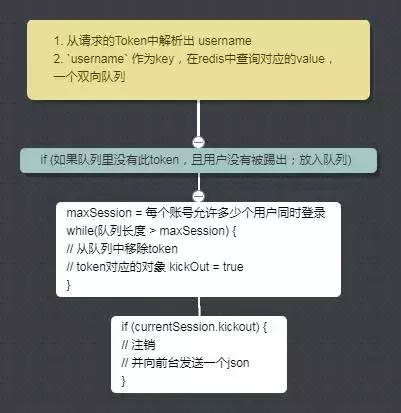
public?class?QueueKickOutFilter?extends?KickOutFilter?{
????/**
?????*?踢出之前登錄的/之后登錄的用戶(hù)?默認(rèn)踢出之前登錄的用戶(hù)
?????*/
????private?boolean?kickoutAfter?=?false;
????/**
?????*?同一個(gè)帳號(hào)最大會(huì)話(huà)數(shù)?默認(rèn)1
?????*/
????private?int?maxSession?=?1;

????public?void?setKickoutAfter(boolean?kickoutAfter)?{
????????this.kickoutAfter?=?kickoutAfter;
????}

????public?void?setMaxSession(int?maxSession)?{
????????this.maxSession?=?maxSession;
????}

????@Override
????public?boolean?isAccessAllowed(HttpServletRequest?request,?HttpServletResponse?response)?throws?Exception?{
????????String?token?=?request.getHeader("Authorization");
????????UserBO?currentSession?=?CurrentUser.get();
????????Assert.notNull(currentSession,?"currentSession?cannot?null");
????????String?username?=?currentSession.getUsername();
????????String?userKey?=?PREFIX?+?"deque_"?+?username;
????????String?lockKey?=?PREFIX_LOCK?+?username;

????????RLock?lock?=?redissonClient.getLock(lockKey);

????????lock.lock(2,?TimeUnit.SECONDS);

????????try?{
????????????RDeque?deque?=?redissonClient.getDeque(userKey);

????????????//?如果隊(duì)列里沒(méi)有此token,且用戶(hù)沒(méi)有被踢出;放入隊(duì)列
????????????if?(!deque.contains(token)?&&?currentSession.isKickout()?==?false)?{
????????????????deque.push(token);
????????????}

????????????//?如果隊(duì)列里的sessionId數(shù)超出最大會(huì)話(huà)數(shù),開(kāi)始踢人
????????????while?(deque.size()?>?maxSession)?{
????????????????String?kickoutSessionId;
????????????????if?(kickoutAfter)?{?//?如果踢出后者
????????????????????kickoutSessionId?=?deque.removeFirst();
????????????????}?else?{?//?否則踢出前者
????????????????????kickoutSessionId?=?deque.removeLast();
????????????????}

????????????????try?{
????????????????????RBucket?bucket?=?redissonClient.getBucket(kickoutSessionId);
????????????????????UserBO?kickoutSession?=?bucket.get();

????????????????????if?(kickoutSession?!=?null)?{
????????????????????????//?設(shè)置會(huì)話(huà)的kickout屬性表示踢出了
????????????????????????kickoutSession.setKickout(true);
????????????????????????bucket.set(kickoutSession);
????????????????????}

????????????????}?catch?(Exception?e)?{
????????????????}

????????????}

????????????//?如果被踢出了,直接退出,重定向到踢出后的地址
????????????if?(currentSession.isKickout())?{
????????????????//?會(huì)話(huà)被踢出了
????????????????try?{
????????????????????//?注銷(xiāo)
????????????????????userService.logout(token);
????????????????????sendJsonResponse(response,?4001,?"您的賬號(hào)已在其他設(shè)備登錄");

????????????????}?catch?(Exception?e)?{
????????????????}

????????????????return?false;

????????????}

????????}?finally?{
????????????if?(lock.isHeldByCurrentThread())?{
????????????????lock.unlock();
????????????????LOGGER.info(Thread.currentThread().getName()?+?"?unlock");

????????????}?else?{
????????????????LOGGER.info(Thread.currentThread().getName()?+?"?already?automatically?release?lock");
????????????}
????????}

????????return?true;
????}

}
比較兩種方法
第一種方法邏輯簡(jiǎn)單粗暴, 只維護(hù)一個(gè)key-value 不需要使用鎖,非要說(shuō)缺點(diǎn)的話(huà)沒(méi)有第二種方法靈活。
第二種方法我很喜歡,代碼很優(yōu)雅靈活,但是邏輯相對(duì)麻煩一些,而且為了保證線(xiàn)程安全地操作隊(duì)列,要使用分布式鎖。目前我們項(xiàng)目中使用的是第一種方法
- 墻裂推薦?-
下方二維碼關(guān)注我

互聯(lián)網(wǎng)草根,堅(jiān)持分享技術(shù)、創(chuàng)業(yè)、產(chǎn)品等心得和總結(jié)~
點(diǎn)擊“閱讀原文”,領(lǐng)取 2020 年最新免費(fèi)技術(shù)資料大全