
Condition實(shí)現(xiàn)原理
點(diǎn)擊上方藍(lán)色字體,選擇“標(biāo)星公眾號(hào)”
優(yōu)質(zhì)文章,第一時(shí)間送達(dá)
Condition接口提供了與Object阻塞(wait())與喚醒(notify()或notifyAll())相似的功能,只不過Condition接口提供了更為豐富的功能,如:限定等待時(shí)長(zhǎng)等。Condition需要與Lock結(jié)合使用,需要通過鎖對(duì)象獲取Condition。
一、基本使用
基于Condition實(shí)現(xiàn)生產(chǎn)者、消費(fèi)者模式。代碼基本與Object#wait()和Object#notify()類似,只不過我們使用Lock替換了synchronized關(guān)鍵字。
生產(chǎn)者
public class Producer implements Runnable {
    private Lock lock;
    private Condition condition;
    private Queue<String> queue;
    private int maxSize;

    public Producer(Lock lock, Condition condition, Queue<String> queue, int maxSize) {
        this.lock = lock;
        this.condition = condition;
        this.queue = queue;
        this.maxSize = maxSize;
    }

    @Override
    public void run() {
        int i = 0;
        for (; ; ) {
            lock.lock();
            // 如果滿了,則阻塞
            while (queue.size() == maxSize) {
                System.out.println("生產(chǎn)者隊(duì)列滿了,等待...");
                try {
                    condition.await();
                } catch (InterruptedException e) {
                    e.printStackTrace();
                }
            }
            try {
                TimeUnit.SECONDS.sleep(2);
            } catch (InterruptedException e) {
                e.printStackTrace();
            }
            queue.add("一個(gè)消息:" + ++i);
            System.out.printf("生產(chǎn)者%s生產(chǎn)了一個(gè)消息:%s\n", Thread.currentThread().getName(), i);
            condition.signal();
            lock.unlock();
        }
    }
}
消費(fèi)者
public class Consumer implements Runnable {
    private Lock lock;
    private Condition condition;
    private Queue<String> queue;
    private int maxSize;

    public Consumer(Lock lock, Condition condition, Queue<String> queue, int maxSize) {
        this.lock = lock;
        this.condition = condition;
        this.queue = queue;
        this.maxSize = maxSize;
    }

    @Override
    public void run() {
        for (; ; ) {
            lock.lock();
            while (queue.isEmpty()) {
                System.out.println("消費(fèi)者隊(duì)列為空,等待...");
                try {
                    condition.await();
                } catch (InterruptedException e) {
                    e.printStackTrace();
                }
            }
            try {
                TimeUnit.SECONDS.sleep(1);
            } catch (InterruptedException e) {
                e.printStackTrace();
            }
            String obj = queue.remove();
            System.out.printf("消費(fèi)者%s消費(fèi)一個(gè)消息:%s\n", Thread.currentThread().getName(), obj);
            condition.signal();
            lock.unlock();
        }
    }
}
測(cè)試類
public class ConditionProducerConsumer {
    public static void main(String[] args) {
        Lock lock = new ReentrantLock();
        Condition condition = lock.newCondition();
        Queue<String> queue = new LinkedBlockingQueue<>();
        int maxSize = 10;

        Producer producer = new Producer(lock, condition, queue, maxSize);
        Consumer consumer = new Consumer(lock, condition, queue, maxSize);

        new Thread(producer).start();
        new Thread(consumer).start();

    }
}
二、源碼分析
上述示例中使用的Lock是ReentrantLock,關(guān)于它的lock方法與unlock方法的原理詳見ReentrantLock實(shí)現(xiàn)原理。上述示例中的Condition對(duì)象是調(diào)用了Lock#newCondition()方法,源碼如下:
public class ReentrantLock implements Lock, java.io.Serializable {
 ...
 public Condition newCondition() {
        return sync.newCondition();
    }

 abstract static class Sync extends AbstractQueuedSynchronizer {
  ...
  final ConditionObject newCondition() {
            return new ConditionObject();
        }
  ...
 }
 ...
}
上述的ConditionObject定義在AQS中,如下:
public abstract class AbstractQueuedSynchronizer
    extends AbstractOwnableSynchronizer
    implements java.io.Serializable {
 ...
 public class ConditionObject implements Condition, java.io.Serializable {
  ...
 }
 ...
}
首先來分析下Condition#await()方法
public final void await() throws InterruptedException {
 if (Thread.interrupted())
  throw new InterruptedException();
 Node node = addConditionWaiter();
 int savedState = fullyRelease(node);
 int interruptMode = 0;
 while (!isOnSyncQueue(node)) {
  LockSupport.park(this);
  if ((interruptMode = checkInterruptWhileWaiting(node)) != 0)
   break;
 }
 if (acquireQueued(node, savedState) && interruptMode != THROW_IE)
  interruptMode = REINTERRUPT;
 if (node.nextWaiter != null) // clean up if cancelled
  unlinkCancelledWaiters();
 if (interruptMode != 0)
  reportInterruptAfterWait(interruptMode);
}

private Node addConditionWaiter() {
 Node t = lastWaiter;
 // If lastWaiter is cancelled, clean out.
 if (t != null && t.waitStatus != Node.CONDITION) {
  unlinkCancelledWaiters();
  t = lastWaiter;
 }
 Node node = new Node(Thread.currentThread(), Node.CONDITION);
 if (t == null)
  firstWaiter = node;
 else
  t.nextWaiter = node;
 lastWaiter = node;
 return node;
}
根據(jù)AQS隊(duì)列的特性,若有多個(gè)線程執(zhí)行lock#lock()方法,會(huì)將處于阻塞狀態(tài)的線程維護(hù)到一個(gè)雙向鏈表中,如下: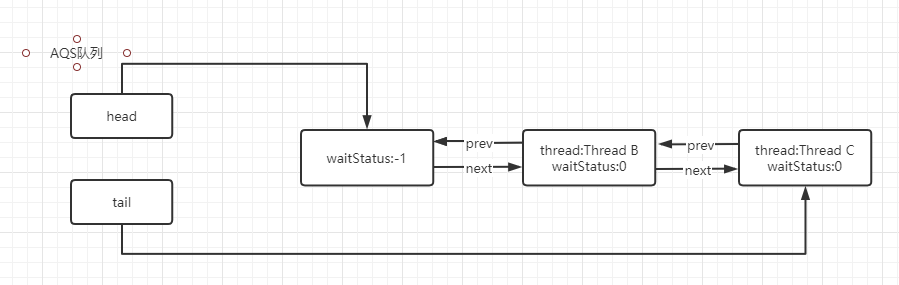
假設(shè)當(dāng)前是線程A獲取到鎖,其他線程執(zhí)行lock#lock()方法時(shí),將會(huì)構(gòu)建成一個(gè)上述鏈表。
若獲取鎖的線程(線程A)執(zhí)行Condition#await()方法,則會(huì)將當(dāng)前線程添加至Condition隊(duì)列中,如下: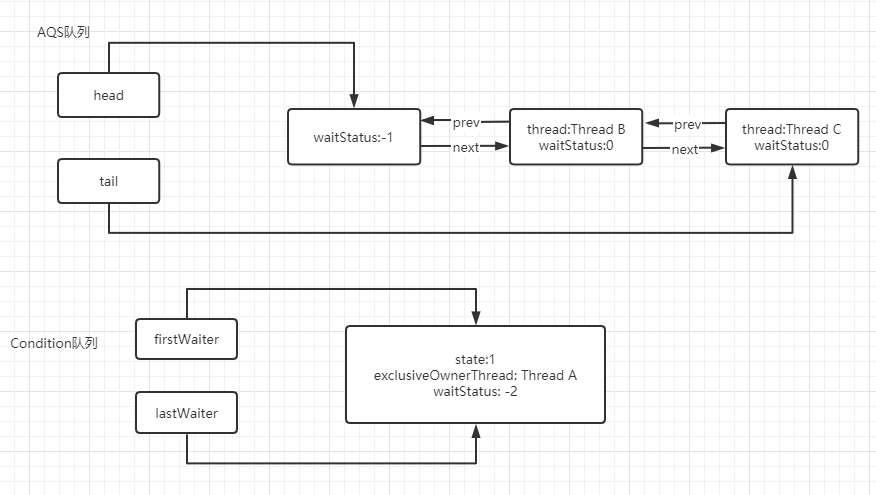
然后在調(diào)用fullyRelease()方法時(shí)會(huì)釋放當(dāng)前線程的鎖,然后喚醒處于阻塞隊(duì)列中的下一個(gè)線程: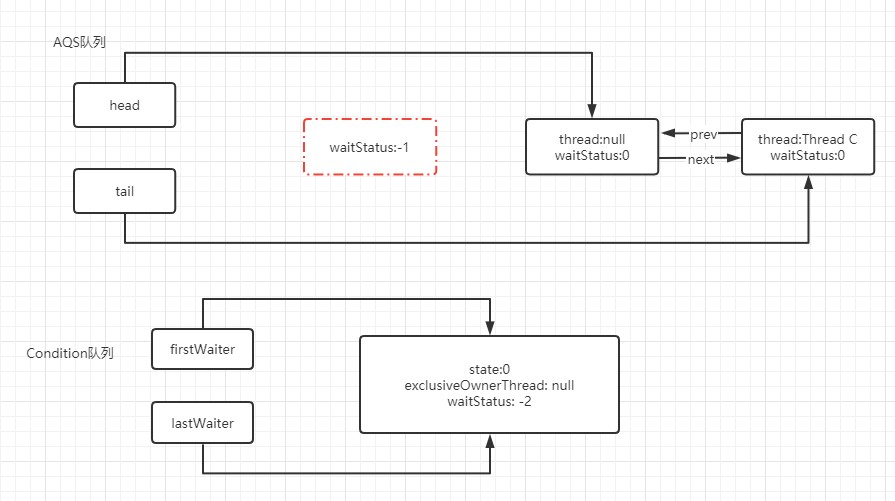
在調(diào)用isOnSyncQueue()方法時(shí)會(huì)檢查當(dāng)前節(jié)點(diǎn)是否在同步隊(duì)列中,若不存在,則會(huì)調(diào)用LockSupport.park()進(jìn)行阻塞。
假設(shè)當(dāng)前線程A是生產(chǎn)者線程,調(diào)用await()方法后,會(huì)釋放鎖,并且將當(dāng)前線程加入到Condition隊(duì)列中。此時(shí),消費(fèi)者能獲取到鎖資源,然后繼續(xù)執(zhí)行。假設(shè)線程B是消費(fèi)者線程,當(dāng)添加一個(gè)元素后會(huì)調(diào)用condition#signal()方法,定義如下:
public final void signal() {
 if (!isHeldExclusively())
  throw new IllegalMonitorStateException();
 Node first = firstWaiter;
 if (first != null)
  doSignal(first);
}

private void doSignal(Node first) {
       do {
           if ( (firstWaiter = first.nextWaiter) == null)
                lastWaiter = null;
           first.nextWaiter = null;
           } while (!transferForSignal(first) &&
                (first = firstWaiter) != null);
}

final boolean transferForSignal(Node node) {
        /*
         * If cannot change waitStatus, the node has been cancelled.
         */
        if (!compareAndSetWaitStatus(node, Node.CONDITION, 0))
            return false;

        /*
         * Splice onto queue and try to set waitStatus of predecessor to
         * indicate that thread is (probably) waiting. If cancelled or
         * attempt to set waitStatus fails, wake up to resync (in which
         * case the waitStatus can be transiently and harmlessly wrong).
         */
        Node p = enq(node);
        int ws = p.waitStatus;
        if (ws > 0 || !compareAndSetWaitStatus(p, ws, Node.SIGNAL))
            LockSupport.unpark(node.thread);
        return true;
}
執(zhí)行signal()方法,會(huì)將Condition隊(duì)列中的第一個(gè)節(jié)點(diǎn)移除,將其變?yōu)橥疥?duì)列中的尾結(jié)點(diǎn),如下:
至此,完成了Condition隊(duì)列轉(zhuǎn)換為同步隊(duì)列的過程。后續(xù)流程基本就是重復(fù)以上操作。
本文詳細(xì)介紹了單個(gè)Condition隊(duì)列的執(zhí)行流程,其實(shí)一個(gè)Lock中可以有多個(gè)Condition隊(duì)列,比如:JUC中提供的LinkedBlockingDeque、ArrayBlockingQueue等
作者 | 生活咖啡
來源 | cnblogs.com/vielat/p/15022895.html
