
都在建議你不要直接使用 @Async 注解,為什么?
來源:cnblogs.com/wlandwl/p/async.html
本文講述@Async注解,在Spring體系中的應(yīng)用。本文僅說明@Async注解的應(yīng)用規(guī)則,對(duì)于原理,調(diào)用邏輯,源碼分析,暫不介紹。對(duì)于異步方法調(diào)用,從Spring3開始提供了@Async注解,該注解可以被標(biāo)注在方法上,以便異步地調(diào)用該方法。調(diào)用者將在調(diào)用時(shí)立即返回,方法的實(shí)際執(zhí)行將提交給Spring TaskExecutor的任務(wù)中,由指定的線程池中的線程執(zhí)行。
在項(xiàng)目應(yīng)用中,@Async調(diào)用線程池,推薦使用自定義線程池的模式。自定義線程池常用方案:重新實(shí)現(xiàn)接口AsyncConfigurer。
簡(jiǎn)介
應(yīng)用場(chǎng)景
同步: 同步就是整個(gè)處理過程順序執(zhí)行,當(dāng)各個(gè)過程都執(zhí)行完畢,并返回結(jié)果。
異步: 異步調(diào)用則是只是發(fā)送了調(diào)用的指令,調(diào)用者無需等待被調(diào)用的方法完全執(zhí)行完畢;而是繼續(xù)執(zhí)行下面的流程。
例如, 在某個(gè)調(diào)用中,需要順序調(diào)用 A, B, C三個(gè)過程方法;如他們都是同步調(diào)用,則需要將他們都順序執(zhí)行完畢之后,方算作過程執(zhí)行完畢;如B為一個(gè)異步的調(diào)用方法,則在執(zhí)行完A之后,調(diào)用B,并不等待B完成,而是執(zhí)行開始調(diào)用C,待C執(zhí)行完畢之后,就意味著這個(gè)過程執(zhí)行完畢了。
在Java中,一般在處理類似的場(chǎng)景之時(shí),都是基于創(chuàng)建獨(dú)立的線程去完成相應(yīng)的異步調(diào)用邏輯,通過主線程和不同的業(yè)務(wù)子線程之間的執(zhí)行流程,從而在啟動(dòng)獨(dú)立的線程之后,主線程繼續(xù)執(zhí)行而不會(huì)產(chǎn)生停滯等待的情況。
Spring 已經(jīng)實(shí)現(xiàn)的線程池
SimpleAsyncTaskExecutor:不是真的線程池,這個(gè)類不重用線程,默認(rèn)每次調(diào)用都會(huì)創(chuàng)建一個(gè)新的線程。SyncTaskExecutor:這個(gè)類沒有實(shí)現(xiàn)異步調(diào)用,只是一個(gè)同步操作。只適用于不需要多線程的地方。ConcurrentTaskExecutor:Executor的適配類,不推薦使用。如果ThreadPoolTaskExecutor不滿足要求時(shí),才用考慮使用這個(gè)類。SimpleThreadPoolTaskExecutor:是Quartz的SimpleThreadPool的類。線程池同時(shí)被quartz和非quartz使用,才需要使用此類。ThreadPoolTaskExecutor:最常使用,推薦。其實(shí)質(zhì)是對(duì)java.util.concurrent.ThreadPoolExecutor的包裝。
異步的方法有:
最簡(jiǎn)單的異步調(diào)用,返回值為void 帶參數(shù)的異步調(diào)用,異步方法可以傳入?yún)?shù) 存在返回值,常調(diào)用返回Future
Spring中啟用@Async
//?基于Java配置的啟用方式:
@Configuration
@EnableAsync
public?class?SpringAsyncConfig?{?...?}

// Spring boot啟用:
@EnableAsync
@EnableTransactionManagement
public?class?SettlementApplication?{
????public?static?void?main(String[]?args)?{
????????SpringApplication.run(SettlementApplication.class,?args);
????}
}
@Async應(yīng)用默認(rèn)線程池
Spring應(yīng)用默認(rèn)的線程池,指在@Async注解在使用時(shí),不指定線程池的名稱。查看源碼,@Async的默認(rèn)線程池為SimpleAsyncTaskExecutor。
無返回值調(diào)用
基于@Async無返回值調(diào)用,直接在使用類,使用方法(建議在使用方法)上,加上注解。若需要拋出異常,需手動(dòng)new一個(gè)異常拋出。
/**
?????*?帶參數(shù)的異步調(diào)用?異步方法可以傳入?yún)?shù)
?????*??對(duì)于返回值是void,異常會(huì)被AsyncUncaughtExceptionHandler處理掉
?????*?@param?s
?????*/
????@Async
????public?void?asyncInvokeWithException(String?s)?{
????????log.info("asyncInvokeWithParameter,?parementer={}",?s);
????????throw?new?IllegalArgumentException(s);
????}
有返回值Future調(diào)用
/**
?????*?異常調(diào)用返回Future
?????*??對(duì)于返回值是Future,不會(huì)被AsyncUncaughtExceptionHandler處理,需要我們?cè)诜椒ㄖ胁东@異常并處理
?????*??或者在調(diào)用方在調(diào)用Futrue.get時(shí)捕獲異常進(jìn)行處理
?????*
?????*?@param?i
?????*?@return
?????*/
????@Async
????public?Future?asyncInvokeReturnFuture(int?i)? {
????????log.info("asyncInvokeReturnFuture,?parementer={}",?i);
????????Future?future;
????????try?{
????????????Thread.sleep(1000?*?1);
????????????future?=?new?AsyncResult("success:"?+?i);
????????????throw?new?IllegalArgumentException("a");
????????}?catch?(InterruptedException?e)?{
????????????future?=?new?AsyncResult("error");
????????}?catch(IllegalArgumentException?e){
????????????future?=?new?AsyncResult("error-IllegalArgumentException");
????????}
????????return?future;
????}
有返回值CompletableFuture調(diào)用
CompletableFuture 并不使用@Async注解,可達(dá)到調(diào)用系統(tǒng)線程池處理業(yè)務(wù)的功能。
JDK5新增了Future接口,用于描述一個(gè)異步計(jì)算的結(jié)果。雖然 Future 以及相關(guān)使用方法提供了異步執(zhí)行任務(wù)的能力,但是對(duì)于結(jié)果的獲取卻是很不方便,只能通過阻塞或者輪詢的方式得到任務(wù)的結(jié)果。阻塞的方式顯然和我們的異步編程的初衷相違背,輪詢的方式又會(huì)耗費(fèi)無謂的 CPU 資源,而且也不能及時(shí)地得到計(jì)算結(jié)果。
CompletionStage代表異步計(jì)算過程中的某一個(gè)階段,一個(gè)階段完成以后可能會(huì)觸發(fā)另外一個(gè)階段 一個(gè)階段的計(jì)算執(zhí)行可以是一個(gè)Function,Consumer或者Runnable。比如: stage.thenApply(x -> square(x)).thenAccept(x -> System.out.print(x)).thenRun(() -> System.out.println())一個(gè)階段的執(zhí)行可能是被單個(gè)階段的完成觸發(fā),也可能是由多個(gè)階段一起觸發(fā)
在Java8中,CompletableFuture提供了非常強(qiáng)大的Future的擴(kuò)展功能,可以幫助我們簡(jiǎn)化異步編程的復(fù)雜性,并且提供了函數(shù)式編程的能力,可以通過回調(diào)的方式處理計(jì)算結(jié)果,也提供了轉(zhuǎn)換和組合 CompletableFuture 的方法。
它可能代表一個(gè)明確完成的Future,也有可能代表一個(gè)完成階段( CompletionStage ),它支持在計(jì)算完成以后觸發(fā)一些函數(shù)或執(zhí)行某些動(dòng)作。 它實(shí)現(xiàn)了Future和CompletionStage接口
/**
?????*?數(shù)據(jù)查詢線程池
?????*/
????private?static?final?ThreadPoolExecutor?SELECT_POOL_EXECUTOR?=?new?ThreadPoolExecutor(10,?20,?5000,
????????????TimeUnit.MILLISECONDS,?new?LinkedBlockingQueue<>(1024),?new?ThreadFactoryBuilder().setNameFormat("selectThreadPoolExecutor-%d").build());

//?tradeMapper.countTradeLog(tradeSearchBean)方法表示,獲取數(shù)量,返回值為int
?//?獲取總條數(shù)
????????CompletableFuture?countFuture?=?CompletableFuture
????????????????.supplyAsync(()?->?tradeMapper.countTradeLog(tradeSearchBean),?SELECT_POOL_EXECUTOR);
//?同步阻塞
????CompletableFuture.allOf(countFuture).join();
//?獲取結(jié)果
?int?count?=?countFuture.get();
默認(rèn)線程池的弊端
在線程池應(yīng)用中,參考阿里巴巴java開發(fā)規(guī)范:線程池不允許使用Executors去創(chuàng)建,不允許使用系統(tǒng)默認(rèn)的線程池,推薦通過ThreadPoolExecutor的方式,這樣的處理方式讓開發(fā)的工程師更加明確線程池的運(yùn)行規(guī)則,規(guī)避資源耗盡的風(fēng)險(xiǎn)。Executors各個(gè)方法的弊端:
newFixedThreadPool和newSingleThreadExecutor:主要問題是堆積的請(qǐng)求處理隊(duì)列可能會(huì)耗費(fèi)非常大的內(nèi)存,甚至OOM。 newCachedThreadPool和newScheduledThreadPool:要問題是線程數(shù)最大數(shù)是 Integer.MAX_VALUE,可能會(huì)創(chuàng)建數(shù)量非常多的線程,甚至OOM。
@Async默認(rèn)異步配置使用的是SimpleAsyncTaskExecutor,該線程池默認(rèn)來一個(gè)任務(wù)創(chuàng)建一個(gè)線程,若系統(tǒng)中不斷的創(chuàng)建線程,最終會(huì)導(dǎo)致系統(tǒng)占用內(nèi)存過高,引發(fā)OutOfMemoryError錯(cuò)誤。
針對(duì)線程創(chuàng)建問題,SimpleAsyncTaskExecutor提供了限流機(jī)制,通過concurrencyLimit屬性來控制開關(guān),當(dāng)concurrencyLimit>=0時(shí)開啟限流機(jī)制,默認(rèn)關(guān)閉限流機(jī)制即concurrencyLimit=-1,當(dāng)關(guān)閉情況下,會(huì)不斷創(chuàng)建新的線程來處理任務(wù)。基于默認(rèn)配置,SimpleAsyncTaskExecutor并不是嚴(yán)格意義的線程池,達(dá)不到線程復(fù)用的功能。
@Async應(yīng)用自定義線程池
自定義線程池,可對(duì)系統(tǒng)中線程池更加細(xì)粒度的控制,方便調(diào)整線程池大小配置,線程執(zhí)行異常控制和處理。在設(shè)置系統(tǒng)自定義線程池代替默認(rèn)線程池時(shí),雖可通過多種模式設(shè)置,但替換默認(rèn)線程池最終產(chǎn)生的線程池有且只能設(shè)置一個(gè)(不能設(shè)置多個(gè)類繼承AsyncConfigurer)。自定義線程池有如下模式:
重新實(shí)現(xiàn)接口AsyncConfigurer 繼承AsyncConfigurerSupport 配置由自定義的TaskExecutor替代內(nèi)置的任務(wù)執(zhí)行器
通過查看Spring源碼關(guān)于@Async的默認(rèn)調(diào)用規(guī)則,會(huì)優(yōu)先查詢?cè)创a中實(shí)現(xiàn)AsyncConfigurer這個(gè)接口的類,實(shí)現(xiàn)這個(gè)接口的類為AsyncConfigurerSupport。但默認(rèn)配置的線程池和異步處理方法均為空,所以,無論是繼承或者重新實(shí)現(xiàn)接口,都需指定一個(gè)線程池。且重新實(shí)現(xiàn) public Executor getAsyncExecutor()方法。
實(shí)現(xiàn)接口AsyncConfigurer
@Configuration
?public?class?AsyncConfiguration?implements?AsyncConfigurer?{
?????@Bean("kingAsyncExecutor")
?????public?ThreadPoolTaskExecutor?executor()?{
?????????ThreadPoolTaskExecutor?executor?=?new?ThreadPoolTaskExecutor();
?????????int?corePoolSize?=?10;
?????????executor.setCorePoolSize(corePoolSize);
?????????int?maxPoolSize?=?50;
?????????executor.setMaxPoolSize(maxPoolSize);
?????????int?queueCapacity?=?10;
?????????executor.setQueueCapacity(queueCapacity);
?????????executor.setRejectedExecutionHandler(new?ThreadPoolExecutor.CallerRunsPolicy());
?????????String?threadNamePrefix?=?"kingDeeAsyncExecutor-";
?????????executor.setThreadNamePrefix(threadNamePrefix);
?????????executor.setWaitForTasksToCompleteOnShutdown(true);
?????????//?使用自定義的跨線程的請(qǐng)求級(jí)別線程工廠類19?????????int?awaitTerminationSeconds?=?5;
?????????executor.setAwaitTerminationSeconds(awaitTerminationSeconds);
?????????executor.initialize();
?????????return?executor;
?????}
?
?????@Override
?????public?Executor?getAsyncExecutor()?{
?????????return?executor();
?????}
?
?????@Override
?????public?AsyncUncaughtExceptionHandler?getAsyncUncaughtExceptionHandler()?{
?????????return?(ex,?method,?params)?->?ErrorLogger.getInstance().log(String.format("執(zhí)行異步任務(wù)'%s'",?method),?ex);
?????}
?}
繼承AsyncConfigurerSupport
@Configuration??
@EnableAsync??
class?SpringAsyncConfigurer?extends?AsyncConfigurerSupport?{??
??
????@Bean??
????public?ThreadPoolTaskExecutor?asyncExecutor()?{??
????????ThreadPoolTaskExecutor?threadPool?=?new?ThreadPoolTaskExecutor();??
????????threadPool.setCorePoolSize(3);??
????????threadPool.setMaxPoolSize(3);??
????????threadPool.setWaitForTasksToCompleteOnShutdown(true);??
????????threadPool.setAwaitTerminationSeconds(60?*?15);??
????????return?threadPool;??
????}??
??
????@Override??
????public?Executor?getAsyncExecutor()?{??
????????return?asyncExecutor;??
}??

??@Override??
????public?AsyncUncaughtExceptionHandler?getAsyncUncaughtExceptionHandler()?{
????return?(ex,?method,?params)?->?ErrorLogger.getInstance().log(String.format("執(zhí)行異步任務(wù)'%s'",?method),?ex);
}
}
配置自定義的TaskExecutor
由于AsyncConfigurer的默認(rèn)線程池在源碼中為空,Spring通過beanFactory.getBean(TaskExecutor.class)先查看是否有線程池,未配置時(shí),通過beanFactory.getBean(DEFAULT_TASK_EXECUTOR_BEAN_NAME, Executor.class),又查詢是否存在默認(rèn)名稱為TaskExecutor的線程池。
所以可以在項(xiàng)目中,定義名稱為TaskExecutor的bean生成一個(gè)默認(rèn)線程池。也可不指定線程池的名稱,申明一個(gè)線程池,本身底層是基于TaskExecutor.class便可。
比如:
Executor.class:ThreadPoolExecutorAdapter->ThreadPoolExecutor->AbstractExecutorService->ExecutorService->Executor
這樣的模式,最終底層為Executor.class,在替換默認(rèn)的線程池時(shí),需設(shè)置默認(rèn)的線程池名稱為TaskExecutor
TaskExecutor.class:ThreadPoolTaskExecutor->SchedulingTaskExecutor->AsyncTaskExecutor->TaskExecutor
這樣的模式,最終底層為TaskExecutor.class,在替換默認(rèn)的線程池時(shí),可不指定線程池名稱。
@EnableAsync
?@Configuration
?public?class?TaskPoolConfig?{
?????@Bean(name?=?AsyncExecutionAspectSupport.DEFAULT_TASK_EXECUTOR_BEAN_NAME)
?????public?Executor?taskExecutor()?{
?????????ThreadPoolTaskExecutor?executor?=?new?ThreadPoolTaskExecutor();
??????????//核心線程池大小
?????????executor.setCorePoolSize(10);
?????????//最大線程數(shù)
?????????executor.setMaxPoolSize(20);
?????????//隊(duì)列容量
?????????executor.setQueueCapacity(200);
?????????//活躍時(shí)間
?????????executor.setKeepAliveSeconds(60);
?????????//線程名字前綴
?????????executor.setThreadNamePrefix("taskExecutor-");
?????????executor.setRejectedExecutionHandler(new?ThreadPoolExecutor.CallerRunsPolicy());
?????????return?executor;
?????}
????@Bean(name?=?"new_task")
?????public?Executor?taskExecutor()?{
?????????ThreadPoolTaskExecutor?executor?=?new?ThreadPoolTaskExecutor();
??????????//核心線程池大小
?????????executor.setCorePoolSize(10);
?????????//最大線程數(shù)
?????????executor.setMaxPoolSize(20);
?????????//隊(duì)列容量
?????????executor.setQueueCapacity(200);
?????????//活躍時(shí)間
?????????executor.setKeepAliveSeconds(60);
?????????//線程名字前綴
?????????executor.setThreadNamePrefix("taskExecutor-");
?????????executor.setRejectedExecutionHandler(new?ThreadPoolExecutor.CallerRunsPolicy());
?????????return?executor;
?????}
?}
多個(gè)線程池
@Async注解,使用系統(tǒng)默認(rèn)或者自定義的線程池(代替默認(rèn)線程池)。可在項(xiàng)目中設(shè)置多個(gè)線程池,在異步調(diào)用時(shí),指明需要調(diào)用的線程池名稱,如@Async("new_task")。
@Async部分重要源碼解析
源碼-獲取線程池方法
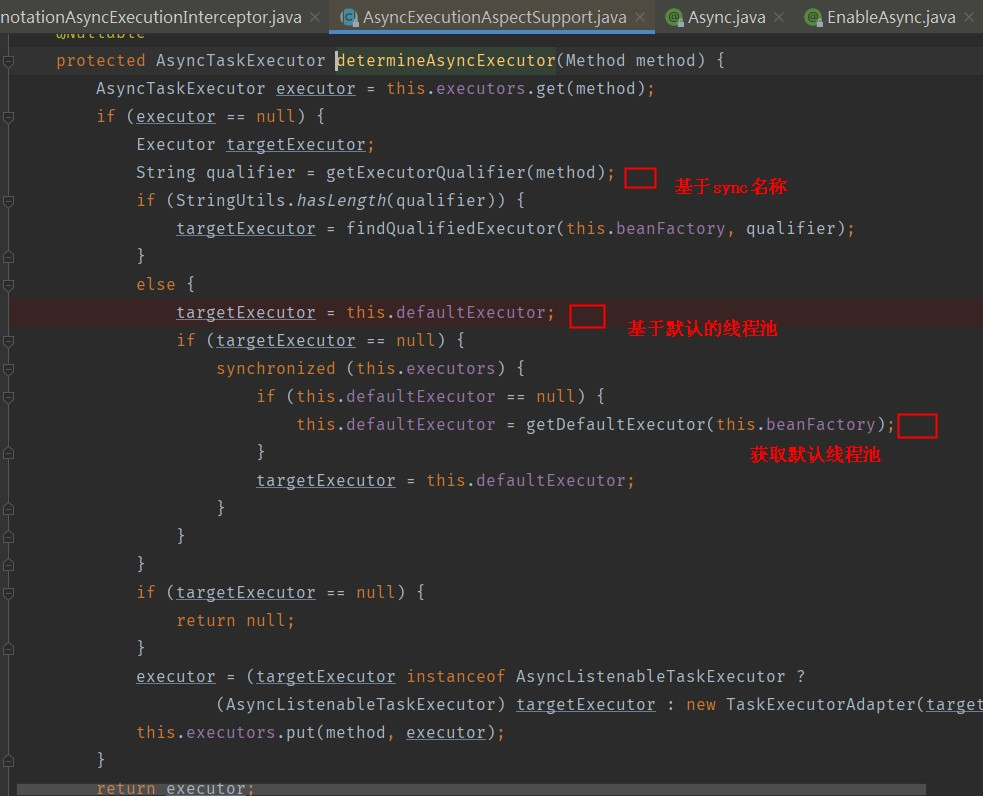
源碼-設(shè)置默認(rèn)線程池defaultExecutor,默認(rèn)是空的,當(dāng)重新實(shí)現(xiàn)接口AsyncConfigurer的getAsyncExecutor()時(shí),可以設(shè)置默認(rèn)的線程池。
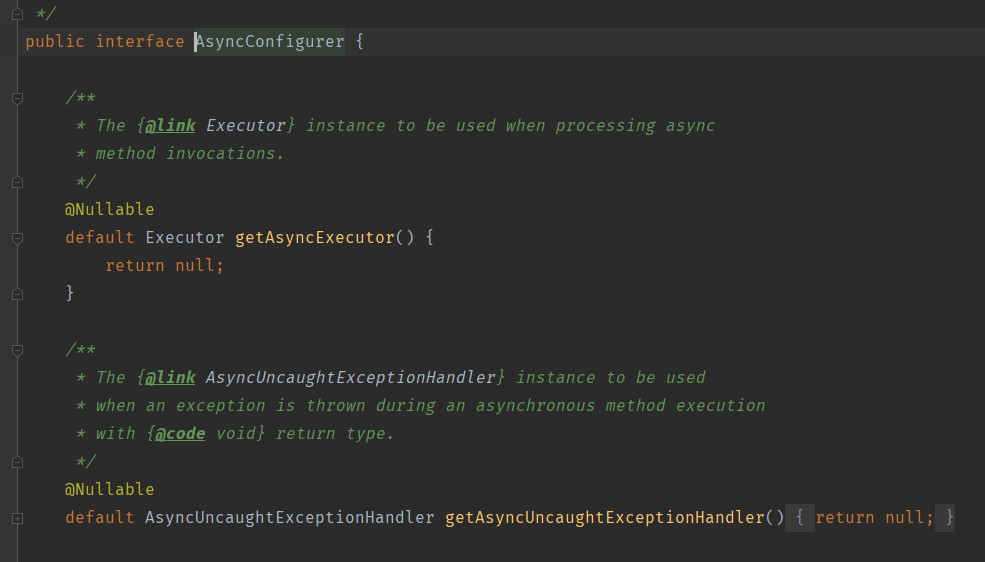
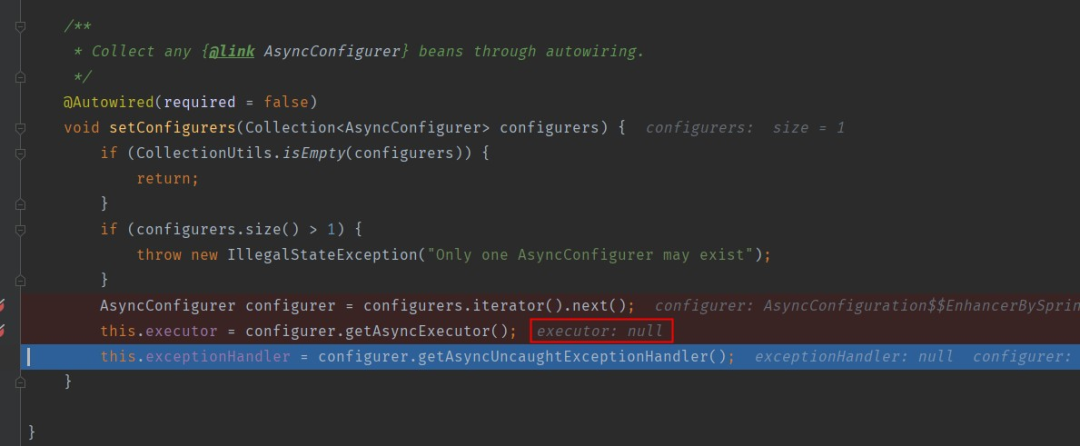
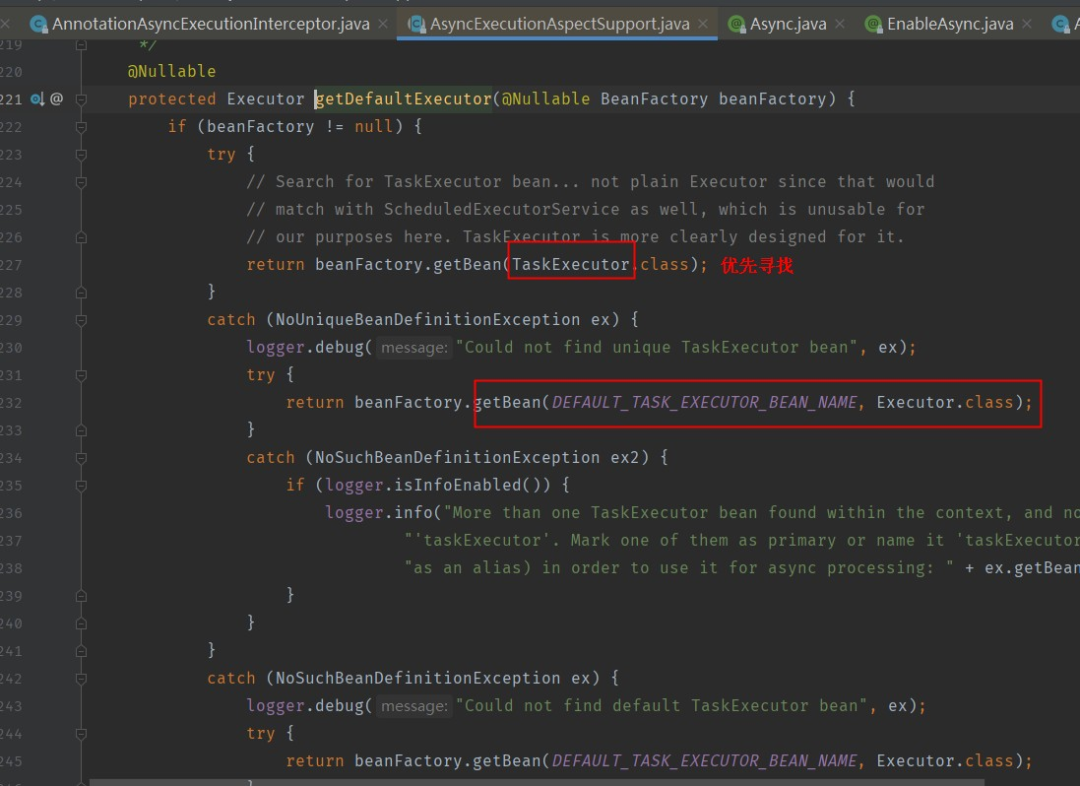
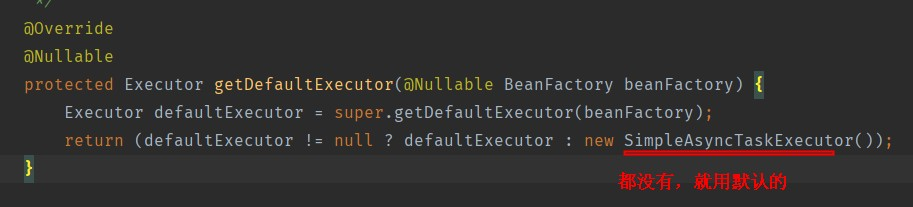
源碼-都沒有找到項(xiàng)目中設(shè)置的默認(rèn)線程池時(shí),采用spring 默認(rèn)的線程池
程序汪資料鏈接
程序汪接的7個(gè)私活都在這里,經(jīng)驗(yàn)整理
Java項(xiàng)目分享 最新整理全集,找項(xiàng)目不累啦 06版
堪稱神級(jí)的Spring Boot手冊(cè),從基礎(chǔ)入門到實(shí)戰(zhàn)進(jìn)階
臥槽!字節(jié)跳動(dòng)《算法中文手冊(cè)》火了,完整版 PDF 開放下載!
臥槽!阿里大佬總結(jié)的《圖解Java》火了,完整版PDF開放下載!
字節(jié)跳動(dòng)總結(jié)的設(shè)計(jì)模式 PDF 火了,完整版開放下載!
歡迎添加程序汪個(gè)人微信 itwang009? 進(jìn)粉絲群或圍觀朋友圈!