
Mybatis-Plus學(xué)習(xí)總結(jié)(超詳細整理)

原文鏈接: https://blog.csdn.net/Lzy410992/article/details/115750291
MyBatis-Plus(簡稱 MP)是一個 MyBatis 的增強工具,在 MyBatis 的基礎(chǔ)上只做增強不做改變,為簡化開發(fā)、提高效率而生。
基本特性
無侵入:只做增強不做改變,引入它不會對現(xiàn)有工程產(chǎn)生影響,如絲般順滑
損耗小:啟動即會自動注入基本 CURD,性能基本無損耗,直接面向?qū)ο蟛僮?/span>
強大的 CRUD 操作:內(nèi)置通用 Mapper、通用 Service,僅僅通過少量配置即可實現(xiàn)單表大部分 CRUD 操作,更有強大的條件構(gòu)造器,滿足各類使用需求
支持 Lambda 形式調(diào)用:通過 Lambda 表達式,方便的編寫各類查詢條件,無需再擔心字段寫錯
支持主鍵自動生成:支持多達 4 種主鍵策略(內(nèi)含分布式唯一 ID 生成器 - Sequence),可自由配置,完美解決主鍵問題
支持 ActiveRecord 模式:支持 ActiveRecord 形式調(diào)用,實體類只需繼承 Model 類即可進行強大的 CRUD 操作
支持自定義全局通用操作:支持全局通用方法注入( Write once, use anywhere )
內(nèi)置代碼生成器:采用代碼或者 Maven 插件可快速生成 Mapper 、 Model 、 Service 、 Controller 層代碼,支持模板引擎,更有超多自定義配置等您來使用
內(nèi)置分頁插件:基于 MyBatis 物理分頁,開發(fā)者無需關(guān)心具體操作,配置好插件之后,寫分頁等同于普通 List 查詢
分頁插件支持多種數(shù)據(jù)庫:支持 MySQL、MariaDB、Oracle、DB2、H2、HSQL、SQLite、Postgre、SQLServer 等多種數(shù)據(jù)庫
內(nèi)置性能分析插件:可輸出 Sql 語句以及其執(zhí)行時間,建議開發(fā)測試時啟用該功能,能快速揪出慢查詢
內(nèi)置全局攔截插件:提供全表 delete 、 update 操作智能分析阻斷,也可自定義攔截規(guī)則,預(yù)防誤操作
快速入門
1、創(chuàng)建數(shù)據(jù)庫 mybatis_plus
現(xiàn)有一張 User 表,其表結(jié)構(gòu)如下:
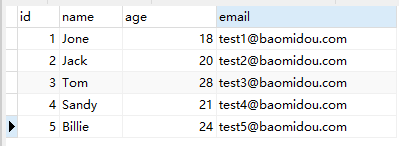
其對應(yīng)的數(shù)據(jù)庫 Schema 腳本,數(shù)據(jù)庫 Data 腳本如下:
DROP TABLE IF EXISTS user;

CREATE TABLE user
(
 id BIGINT(20) NOT NULL COMMENT '主鍵ID',
 name VARCHAR(30) NULL DEFAULT NULL COMMENT '姓名',
 age INT(11) NULL DEFAULT NULL COMMENT '年齡',
 email VARCHAR(50) NULL DEFAULT NULL COMMENT '郵箱',
 PRIMARY KEY (id)
);
-- 真實開發(fā)中,version(樂觀鎖),deleted(邏輯刪除)、gmt_create、gem_mo


DELETE FROM user;

INSERT INTO user (id, name, age, email) VALUES
(1, 'Jone', 18, '[email protected]'),
(2, 'Jack', 20, '[email protected]'),
(3, 'Tom', 28, '[email protected]'),
(4, 'Sandy', 21, '[email protected]'),
(5, 'Billie', 24, '[email protected]');
2、新建Maven工程
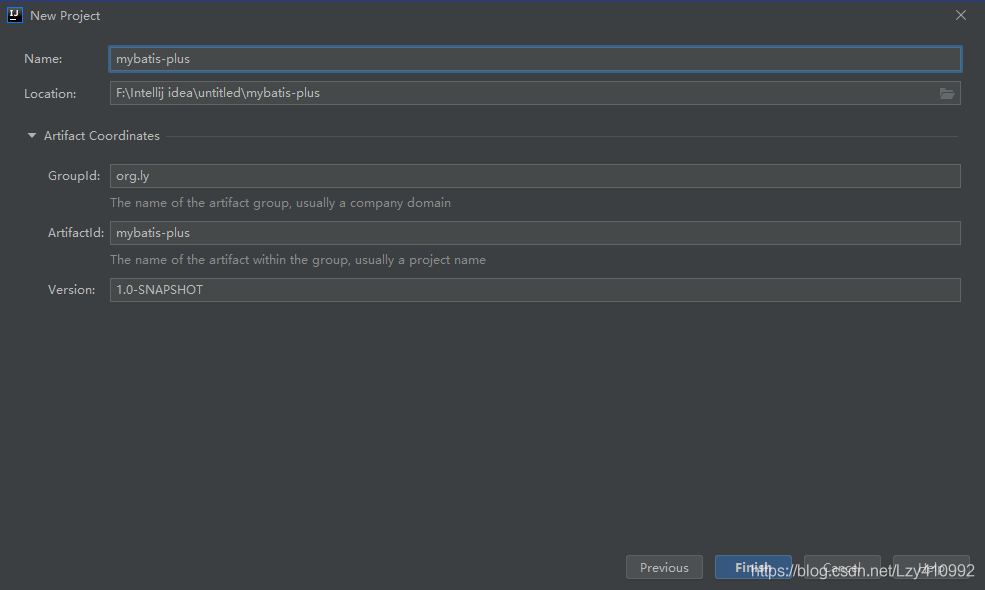
導(dǎo)入相關(guān)依賴
<?xml version="1.0" encoding="UTF-8"?>
<project xmlns="http://maven.apache.org/POM/4.0.0"
         xmlns:xsi="http://www.w3.org/2001/XMLSchema-instance"
         xsi:schemaLocation="http://maven.apache.org/POM/4.0.0 http://maven.apache.org/xsd/maven-4.0.0.xsd">
    <modelVersion>4.0.0</modelVersion>

    <parent>
        <groupId>org.springframework.boot</groupId>
        <artifactId>spring-boot-starter-parent</artifactId>
        <version>2.3.4.RELEASE</version>
        <relativePath/> <!-- lookup parent from repository -->
    </parent>

    <groupId>com.ly</groupId>
    <artifactId>mybatis-plus</artifactId>
    <version>1.0-SNAPSHOT</version>
    <name>mybatis-plus</name>
    <description>Demo project for Spring Boot</description>

    <properties>
        <project.build.sourceEncoding>UTF-8</project.build.sourceEncoding>
        <project.reporting.outputEncoding>UTF-8</project.reporting.outputEncoding>
        <java.version>1.8</java.version>
    </properties>

    <dependencies>

        <!--mybatis-plus 是自己開發(fā)的,非官方的!-->
        <dependency>
            <groupId>com.baomidou</groupId>
            <artifactId>mybatis-plus-boot-starter</artifactId>
            <version>3.3.1.tmp</version>
        </dependency>

        <dependency>
            <groupId>org.springframework.boot</groupId>
            <artifactId>spring-boot-starter-web</artifactId>
        </dependency>

        <dependency>
            <groupId>mysql</groupId>
            <artifactId>mysql-connector-java</artifactId>
            <scope>runtime</scope>
        </dependency>

        <dependency>
            <groupId>org.projectlombok</groupId>
            <artifactId>lombok</artifactId>
        </dependency>

        <dependency>
            <groupId>org.springframework.boot</groupId>
            <artifactId>spring-boot-starter-test</artifactId>
            <scope>test</scope>
            <exclusions>
                <exclusion>
                    <groupId>org.junit.vintage</groupId>
                    <artifactId>junit-vintage-engine</artifactId>
                </exclusion>
            </exclusions>
        </dependency>

    </dependencies>

    <build>
        <plugins>
            <plugin>
                <groupId>org.springframework.boot</groupId>
                <artifactId>spring-boot-maven-plugin</artifactId>
            </plugin>
        </plugins>
    </build>

</project>
說明:我們使用mybatis-plus可以節(jié)省我們大量的代碼,盡量不要同時導(dǎo)入mybatis和mybatis-plus!版本的差異!
3、配置文件application.yml
spring:
  #配置數(shù)據(jù)源
  datasource:
    driver-class-name: com.mysql.cj.jdbc.Driver
    url: jdbc:mysql://localhost:3306/mybatis_plus?useSSL=false&serverTimezone=GMT%2B8&useUnicode=true&characterEncoding=utf-8
    username: root
    password: 123456

#配置日志,我們所用的sql現(xiàn)在是不可見的,我們希望知道他是怎么執(zhí)行的,所以我們必須要查看日志!
mybatis-plus:
  configuration:
    log-impl: org.apache.ibatis.logging.stdout.StdOutImpl
4、編寫代碼
mybatis-plus的使用步驟:引入依賴 -> 創(chuàng)建pojo -> 實現(xiàn)dao接口(不用寫mapper.xml文件,只需要在啟動器上配置 mapper 掃描路徑即可)-> 基本使用
編寫實體類 User.java,這里使用了Lombok插件
@Data
@AllArgsConstructor
@NoArgsConstructor
public class User {
    private Long id;
    private String name;
    private Integer age;
    private String email;
}
編寫Mapper類 UserMapper.java
//在對應(yīng)的Mapper上繼承基本的類baseMapper
public interface UserMapper extends BaseMapper<User> {
    //所有的CRUD已經(jīng)編寫完成
    //不需要像以前的配置一些xml

}
新建 Spring Boot 啟動類中添加 @MapperScan 注解,掃描 Mapper 文件夾:
@SpringBootApplication
@MapperScan("com.ly.mapper")//掃描mapper文件夾
public class MybatisPlusApplication {

    public static void main(String[] args) {
        SpringApplication.run(MybatisPlusApplication.class, args);
    }

}
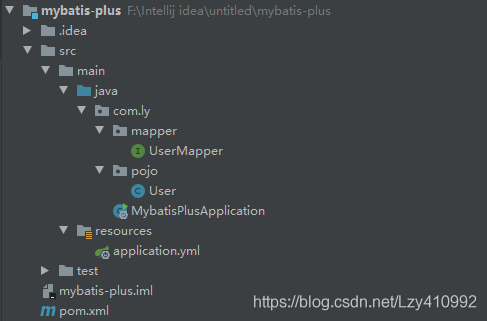
工程目錄:
添加測試類,進行功能測試:
@RunWith(SpringRunner.class)
@SpringBootTest
public class MybatisPlusTest {

    //繼承了BaseMapper,所有方法都來自父類
    //我們可以編寫自己的拓展方法
    @Autowired
    private UserMapper userMapper;

    @Test
    public void testSelect() {
        System.out.println(("----- selectAll method test ------"));
        //參數(shù)是一個Wrapper,條件結(jié)構(gòu)器,這里先不用 填null
        //查詢所有的用戶
        List<User> userList = userMapper.selectList(null);
        userList.forEach(System.out::println);
    }

}
UserMapper 中的 selectList() 方法的參數(shù)為 MP 內(nèi)置的條件封裝器 Wrapper,所以不填寫就是無任何條件
控制臺輸出:

實現(xiàn)CRUD
插入操作:
插入一條記錄: int insert(T entity);
插入類型T:實體對象
舉例測試:
@Test
public void testInsert() {

    User user = new User();
    user.setName("LY");
    user.setAge(100);
    user.setEmail("[email protected]");

    int result = userMapper.insert(user);  //幫我們生成id
    System.out.println(result);      //受影響的行數(shù)
    System.out.println(user);       //發(fā)現(xiàn)id會自動回填
}
運行結(jié)果:mybatis-plus實現(xiàn)了主鍵自動生成

主鍵生成策略:
數(shù)據(jù)庫插入的id為全局默認的id(ID_WORKER),我們需要配置主鍵自增,在實體類字段上添加注解:@TableId(type =IdType.AUTO),數(shù)據(jù)庫字段一定要是自增的。
public enum IdType {
    AUTO(0),   //數(shù)據(jù)可id自增
    NONE(1),   //未設(shè)置主鍵
    INPUT(2),   //手動輸入
    ID_WORKER(3), //默認的全局唯一id
    UUID(4),  //全局唯一id uuid
    ID_WORKER_STR(5); // ID_WORKEK 字符串表示法

    private int key;

    private IdType(int key) {
        this.key = key;
    }

    public int getKey() {
        return this.key;
    }
}
添加過注解,并將數(shù)據(jù)庫id字段設(shè)置為自增后,測試插入數(shù)據(jù):

雪花算法:
SnowFlake 算法,是 Twitter 開源的分布式 id 生成算法。其核心思想就是:使用一個 64 bit 的 long 型的數(shù)字作為全局唯一 id。在分布式系統(tǒng)中的應(yīng)用十分廣泛,且ID 引入了時間戳,基本上保持自增的。
這 64 個 bit 中,其中 1 個 bit 是不用的,然后用其中的 41 bit 作為毫秒數(shù),用 10 bit 作為工作機器 id,12 bit 作為序列號。
更新操作
// 根據(jù) whereEntity 條件,更新記錄
int update(@Param(Constants.ENTITY) T entity, @Param(Constants.WRAPPER) Wrapper<T> updateWrapper);
// 根據(jù) ID 修改
int updateById(@Param(Constants.ENTITY) T entity);


#參數(shù)說明
類型     參數(shù)名         描述
T     entity         實體對象 (set 條件值,可為 null)
Wrapper updateWrapper 實體對象封裝操作類(可以為 null,里面的 entity 用于生成 where 語句)
舉例測試:
@Test
public void testUpdate() {
    //sql自動動態(tài)配置
    User user = new User();
    user.setName=("ZZ");
    user.setId(3L);
    user.setAge("50");

    //注意:updateById的參數(shù)是一個對象
    userMapper.updateById(user);
}
運行結(jié)果:

自動填充
創(chuàng)建時間、修改時間!這些個操作一般都是自動化完成,我們不希望手動更新!
阿里巴巴開發(fā)手冊:所有的數(shù)據(jù)庫表:gmt_create\gmt_modified幾乎所有的表都要配置上!而且需要自動化
方式一:數(shù)據(jù)庫級別 (工作中不允許)
在表中新增字段 create_time 、update_time,設(shè)為默認CURRENT_TIMESIAMP
方式二:代碼級別
在表中新增字段 create_time 、update_time:
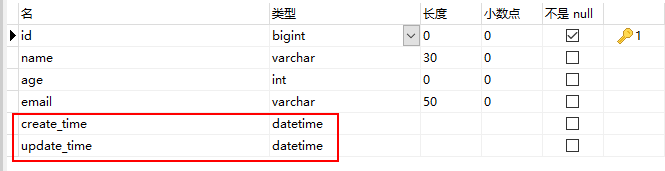
實體類上的屬性需要增加注解 @TableField
@Data
@AllArgsConstructor
@NoArgsConstructor
public class User {
    @TableId(type = IdType.AUTO)
    private Long id;
    private String name;
    private Integer age;
    private String email;

 //創(chuàng)建時間,插入數(shù)據(jù)時操作
 @TableField(fill = FieldFill.INSERT)
 private Date createTime;
 //更新時間,插入和更新是操作
 @TableField(fill = FieldFill.INSERT_UPDATE)
 private Date updateTime;
}
編寫處理器來處理這個注釋:
@Slf4j
@Component //不要忘記吧處理器加到IOC容器中
public class MyMetaObjectHandler implements MetaObjectHandler {

    //插入時候的填充策略
    @Override
    public void insertFill(MetaObject metaObject) {
        log.info("start insert fill ....");  //日志
        //設(shè)置字段的值(String fieldName字段名,Object fieldVal要傳遞的值,MetaObject metaObject)
        this.setFieldValByName("createTime",new Date(),metaObject);
        this.setFieldValByName("updateTime",new Date(),metaObject);

    }

    //更新時間的填充策略
    @Override
    public void updateFill(MetaObject metaObject) {
        log.info("start update fill ....");
        this.setFieldValByName("updateTime",new Date(),metaObject);

    }
}
測試插入一條數(shù)據(jù):

數(shù)據(jù)庫中的數(shù)據(jù):

樂觀鎖
樂觀鎖:顧名思義十分樂觀,它總是被認為不會出現(xiàn)問題,無論干什么都不去上鎖!如果出現(xiàn)了問題,再次更新測試
悲觀鎖:顧名思義十分悲觀,它總是出現(xiàn)問題,無論干什么都會上鎖!再去操作!
樂觀鎖實現(xiàn)方式:
取出記錄時,獲取當前version
更新時,帶上這個version
執(zhí)行更新事,set version=newVersion where version =oldVersion
如果version不對,就更新失敗
樂觀鎖:1、先查詢,獲得版本號 version=1
--A
update user set name ="shuishui" ,version =version+1
where id =2 and version=1

--B 如果線程搶先完成,這個時候version=2,會導(dǎo)致A修改失敗
update user set name ="shuishui" ,version =version+1
where id =2 and version=1
測試樂觀鎖:
1、表中創(chuàng)建樂觀鎖字段version 默認值為1
2、同步實體類
@Version //樂觀鎖Version注解
private Integer version;
3、注冊組件 (config包下)
@EnableTransactionManagement
@MapperScan("com.ly.mapper")
@Configuration//配置類
public class MyBatisPlusConfig{
    //注冊樂觀鎖插件
    @Bean
 public OptimisticLockerInterceptor optimisticLockerInterceptor() {
     return new OptimisticLockerInterceptor();
 }
}
測試樂觀鎖成功:
//測試樂觀鎖成功
@Test
public void testOptimisticLocker(){
    //1、查詢用戶信息
    User user = userMapper.selectById(1L);
    //2、修改用戶信息
    user.setName("LZY");
    user.setEmail("[email protected]");
    //執(zhí)行更新操作
    userMapper.updateById(user);
}

模擬樂觀鎖失敗:
//測試樂觀鎖失敗
@Test
public void testOptimisticLocker2(){
    //1、查詢用戶信息
    User user = userMapper.selectById(1L);
    //2、修改用戶信息
    user.setName("LZY1");
    user.setEmail("[email protected]");

    //1、模擬另一個線程執(zhí)行了插隊操作
    User user2 = userMapper.selectById(1L);
    //2、修改用戶信息
    user2.setName("LZY2");
    user2.setEmail("[email protected]");

    //執(zhí)行更新操作
    userMapper.updateById(user2);

    //執(zhí)行更新操作
    userMapper.updateById(user); //如果沒有樂觀鎖就會覆蓋插隊線程的值
}

查詢操作
根據(jù) ID 查詢:T selectById(Serializable id);
根據(jù) entity 條件,查詢一條記錄:T selectOne(@Param(Constants.WRAPPER) Wrapper queryWrapper);
查詢(根據(jù)ID 批量查詢):List selectBatchIds(@Param(Constants.COLLECTION) Collection<? extends Serializable> idList);
根據(jù) entity 條件,查詢?nèi)坑涗洠?/span>List selectList(@Param(Constants.WRAPPER) Wrapper queryWrapper);
查詢(根據(jù) columnMap 條件):List selectByMap(@Param(Constants.COLUMN_MAP) Map<String, Object> columnMap);
根據(jù) Wrapper 條件,查詢?nèi)坑涗洠?/span>List<Map<String, Object>> selectMaps(@Param(Constants.WRAPPER) Wrapper queryWrapper);
根據(jù) Wrapper 條件,查詢?nèi)坑涗洝W⒁猓?/span>只返回第一個字段的值:List selectObjs(@Param(Constants.WRAPPER) Wrapper queryWrapper);
根據(jù) entity 條件,查詢?nèi)坑涗洠ú⒎摚?/span>IPage selectPage(IPage page, @Param(Constants.WRAPPER) Wrapper queryWrapper);
根據(jù) Wrapper 條件,查詢?nèi)坑涗洠ú⒎摚?/span>IPage<Map<String, Object>> selectMapsPage(IPage page, @Param(Constants.WRAPPER) Wrapper queryWrapper);
根據(jù) Wrapper 條件,查詢總記錄數(shù):Integer selectCount(@Param(Constants.WRAPPER) Wrapper queryWrapper);
參數(shù)類型說明:
Serializable:主鍵ID
Wrapper :實體對象封裝操作類(可以為 null)
Collection<? extends Serializable>:主鍵ID列表(不能為 null 以及 empty)
Map<String, Object>:表字段 map 對象
IPage:分頁查詢條件(可以為 RowBounds.DEFAULT)
實例測試:
@Test
public void testSelectById(){
    User user =userMapper.selectById(1);
    System.out.println(user);
}

//測試批量查詢
@Test
public void testSelectByBatchId(){
    List<User> users =userMapper.selectBatchIds(Arrays.asList(1,2,3));
    users.forEach(System.out::println);
}

//條件查詢
public void testSelectByBatchIds(){
    HashMap<String,Object> map=new HashMap<>();
    //自定義查詢
    map.put("name","LZY");
    map.put("age",18);

    List<User> users = userMapper.selectByMap(map);
    users.forEach(System.out::println);
}
分頁查詢
Mybatis-Plus中內(nèi)置了分頁插件,配置攔截器組件即可:
@EnableTransactionManagement
@Configuration
@MapperScan("com.ly.mapper")
public class MybatisPlusConfig {

    @Bean
    public PaginationInterceptor paginationInterceptor() {
        PaginationInterceptor paginationInterceptor = new PaginationInterceptor();
        // 設(shè)置請求的頁面大于最大頁后操作, true調(diào)回到首頁,false 繼續(xù)請求  默認false
        // paginationInterceptor.setOverflow(false);
        // 設(shè)置最大單頁限制數(shù)量,默認 500 條,-1 不受限制
        // paginationInterceptor.setLimit(500);
        // 開啟 count 的 join 優(yōu)化,只針對部分 left join
        paginationInterceptor.setCountSqlParser(new JsqlParserCountOptimize(true));
        return paginationInterceptor;
    }
}
測試分頁:
//測試分頁查詢
@Test
public void testPage(){
    // 參數(shù)一:當前頁
    // 參數(shù)二:頁面大小
    // 使用了分頁插件之后,所有的分頁操作也變得簡單了
    Page<User> page =new Page<>(2,5);
    userMapper.selectPage(page,null);

    page.getRecords().forEach(System.out::println);
    //獲取總數(shù)
    page.getTotal();
}
刪除操作
根據(jù) entity 條件,刪除記錄:int delete(@Param(Constants.WRAPPER) Wrapper wrapper);
刪除(根據(jù)ID 批量刪除):int deleteBatchIds(@Param(Constants.COLLECTION) Collection<? extends Serializable> idList);
根據(jù) ID 刪除:int deleteById(Serializable id);
根據(jù) columnMap 條件,刪除記錄:int deleteByMap(@Param(Constants.COLUMN_MAP) Map<String, Object> columnMap);
參數(shù)類型說明:
Wrapper:實體對象封裝操作類(可以為 null)
Collection<? extends Serializable>:主鍵ID列表(不能為 null 以及 empty)
Serializable:主鍵ID
Map<String, Object>:表字段 map 對象
測試刪除:
@Test
public void testDeleteById(){
    userMapper.deleteById(1);
}

//批量刪除
@Test
public void testDeleteBatchId(){
    userMapper.deleteBatchIds(Arrays.asList(1,2));
}

//條件刪除
@Test
public void testDeleteMap(){
    HashMap<String,Object> map = new HashMap<>();
    map.put("name","LZY");
    userMapper.deleteByMap(map);
}
邏輯刪除
物理刪除 :從數(shù)據(jù)庫中直接移出
邏輯刪除:方便數(shù)據(jù)恢復(fù)和保護數(shù)據(jù)本身價值的一種方案,在數(shù)據(jù)庫中沒有被移出,而是通過一個變量來讓他失效!deleted=0 ==>deleted =1(失效)
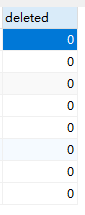
在數(shù)據(jù)庫中增加deleted字段:
實體類中增加屬性,并添加@TableLogic注解:
@TableLogic  //3.1.1開始可以不用這一步,但如果實體類上有 @TableLogic 則以實體上的為準,忽略全局
private Integer deleted;
application.yml 加入配置:
mybatis-plus:
  global-config:
    db-config:
      logic-delete-field: flag  #全局邏輯刪除字段值 3.3.0開始支持,詳情看下面。
      logic-delete-value: 1     # 邏輯已刪除值(默認為 1)
      logic-not-delete-value: 0 # 邏輯未刪除值(默認為 0)
效果: 使用mp自帶方法刪除和查找都會附帶邏輯刪除功能 (自己寫的xml不會)

條件構(gòu)造器Wrapper
1.查詢name不為null的用戶,并且郵箱不為null的永不,年齡大于等于35的用戶
@Test
public void findByAgeLessThan(){
    // 查詢name不為null的用戶,并且郵箱不為null的永不,年齡大于等于35的用戶
    QueryWrapper<User> wrapper =new QueryWrapper<>();
    wrapper.isNotNull("name");
    wrapper.isNotNull("email");
    wrapper.ge("age",35);
    userMapper.selectList(wrapper).forEach(System.out::println);
}
執(zhí)行結(jié)果:

2.查詢name為LY的用戶
@Test
public void findByName(){
    // 查詢name為LZY的用戶
    QueryWrapper<User> wrapper =new QueryWrapper<>();
    wrapper.eq("name","LY");
    User user=userMapper.selectOne(wrapper);
    System.out.println(user);
}
執(zhí)行結(jié)果:

3.查詢年齡在10~30歲之間的用戶
@Test
public void findByAgeBetween(){
    // 查詢年齡在10~30歲之間的用戶
    QueryWrapper<User> wrapper =new QueryWrapper<>();
    wrapper.between("age",10,30);
    Integer count =userMapper.selectCount(wrapper);//查詢結(jié)果數(shù)
    System.out.println(count);
}
執(zhí)行結(jié)果:

4.測試模糊查詢
//模糊查詢
@Test
public void findByLink(){
    QueryWrapper<User> wrapper =new QueryWrapper<>();

    wrapper.notLike("name","Z");//相當于NOT LIKE '%Z%'
    wrapper.likeLeft("email","@qq.com");//相當于LIKE '%@qq.com'
    List<Map<String,Object>> maps =userMapper.selectMaps(wrapper);//查詢結(jié)果數(shù)
    maps.forEach(System.out::println);
}
測試結(jié)果:

5.測試子查詢
@Test
public void findById() {
    QueryWrapper<User> wrapper = new QueryWrapper<>();
    //子查詢
    wrapper.inSql("id", "select id from user where id<5");
    List<Object> objects = userMapper.selectObjs(wrapper);
    objects.forEach(System.out::println);
}
測試結(jié)果:

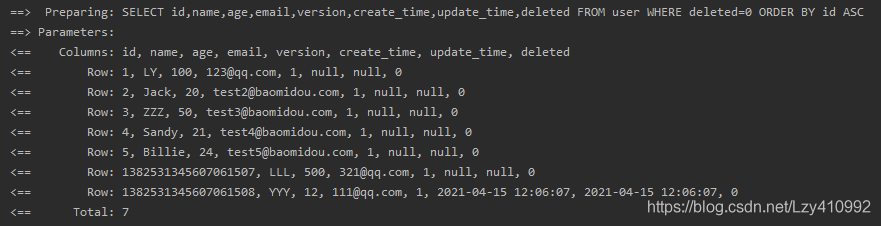
6.通過id進行排序
@Test
public void findByIdOrderByIdAsc(){
    QueryWrapper<User> wrapper =new QueryWrapper<>();
    //通過id進行排序
    wrapper.orderByAsc("id");
    List<User> users =userMapper.selectList(wrapper);
    users.forEach(System.out::println);
}
執(zhí)行結(jié)果:
代碼自動生成器
AutoGenerator 是 MyBatis-Plus 的代碼生成器,通過 AutoGenerator 可以快速生成 Entity、 Mapper、Mapper XML、Service、Controller 等各個模塊的代碼,極大的提升了開發(fā)效率。
基本使用:
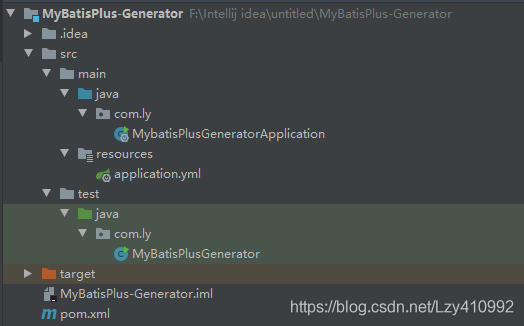
新建一個springboot工程:
在pom.xml中添加相關(guān)依賴:
<!--在之前pom.xml文件的基礎(chǔ)上添加-->
<!--代碼生成器依賴.3.0.3以后需要添加該依賴-->
<dependency>
    <groupId>com.baomidou</groupId>
    <artifactId>mybatis-plus-generator</artifactId>
    <version>3.3.1</version>
</dependency>
<!--默認的模板引擎velocity-->
<dependency>
    <groupId>org.apache.velocity</groupId>
    <artifactId>velocity-engine-core</artifactId>
    <version>2.3</version>
</dependency>
編寫yml文件,直接使用之前的即可:
spring:
  #配置數(shù)據(jù)源
  datasource:
    driver-class-name: com.mysql.cj.jdbc.Driver
    url: jdbc:mysql://localhost:3306/mybatis_plus?useSSL=false&serverTimezone=GMT%2B8&useUnicode=true&characterEncoding=utf-8
    username: root
    password: 123456
  #設(shè)置開發(fā)環(huán)境
  profiles:
    active: dev
#配置日志,我們所用的sql現(xiàn)在是不可見的,我們希望知道他是怎么執(zhí)行的,所以我們必須要查看日志!
mybatis-plus:
  configuration:
    log-impl: org.apache.ibatis.logging.stdout.StdOutImpl
  global-config:
    db-config:
      logic-delete-field: flag  # 全局邏輯刪除的實體字段名(since 3.3.0,配置后可以忽略不配置步驟2)
      logic-delete-value: 1 # 邏輯已刪除值(默認為 1)
      logic-not-delete-value: 0 # 邏輯未刪除值(默認為 0)
server:
  port: 8010
編寫代碼生成器:
/**
 * @Author: Ly
 * @Date: 2021-04-16 09:06
 */
import com.baomidou.mybatisplus.annotation.DbType;
import com.baomidou.mybatisplus.annotation.FieldFill;
import com.baomidou.mybatisplus.annotation.IdType;

import com.baomidou.mybatisplus.generator.AutoGenerator;
import com.baomidou.mybatisplus.generator.config.DataSourceConfig;
import com.baomidou.mybatisplus.generator.config.GlobalConfig;
import com.baomidou.mybatisplus.generator.config.PackageConfig;
import com.baomidou.mybatisplus.generator.config.StrategyConfig;
import com.baomidou.mybatisplus.generator.config.po.TableFill;
import com.baomidou.mybatisplus.generator.config.rules.DateType;
import com.baomidou.mybatisplus.generator.config.rules.NamingStrategy;
import java.util.ArrayList;

// 代碼自動生成器
public class MyBatisPlusGenerator {
    public static void main(String[] args) {
        // 需要構(gòu)建一個 代碼自動生成器 對象
        AutoGenerator mpg = new AutoGenerator();
        // 配置策略
        // 1、全局配置
        GlobalConfig gc = new GlobalConfig();
        //獲取當前項目路徑
        String projectPath = System.getProperty("user.dir");
        gc.setOutputDir(projectPath+"/src/main/java");
        gc.setAuthor("龍源lll");
        gc.setOpen(false);
        gc.setFileOverride(false);  // 是否覆蓋
        gc.setServiceName("%sService"); // 去Service的I前綴
        gc.setIdType(IdType.AUTO);
        gc.setDateType(DateType.ONLY_DATE);
        gc.setSwagger2(true);
        mpg.setGlobalConfig(gc);

        //2、設(shè)置數(shù)據(jù)源
        DataSourceConfig dsc = new DataSourceConfig();
        dsc.setUrl("jdbc:mysql://localhost:3306/mybatis_plus?useSSL=false&serverTimezone=GMT%2B8&useUnicode=true&characterEncoding=utf-8");
        dsc.setDriverName("com.mysql.cj.jdbc.Driver");
        dsc.setUsername("root");
        dsc.setPassword("520992");
        dsc.setDbType(DbType.MYSQL);
        mpg.setDataSource(dsc);

        //3、包的配置
        PackageConfig pc = new PackageConfig();
        pc.setModuleName("blog");
        pc.setParent("com.ly");
        pc.setEntity("entity");
        pc.setMapper("mapper");
        pc.setService("service");
        pc.setController("controller");
        mpg.setPackageInfo(pc);

        //4、策略配置
        StrategyConfig strategy = new StrategyConfig();
        //strategy.setInclude("table1","table2",...); // 設(shè)置要映射的表名
        strategy.setInclude("user"); // 設(shè)置要映射的表名
        strategy.setNaming(NamingStrategy.underline_to_camel);
        strategy.setColumnNaming(NamingStrategy.underline_to_camel);
        // 自動lombok
        strategy.setEntityLombokModel(true);
        strategy.setLogicDeleteFieldName("deleted");
        // 自動填充配置
        TableFill gmtCreate = new TableFill("gmt_create", FieldFill.INSERT);
        TableFill gmtModified = new TableFill("gmt_modified", FieldFill.INSERT_UPDATE);
        ArrayList<TableFill> tableFills = new ArrayList<>();
        tableFills.add(gmtCreate);
        tableFills.add(gmtModified);
        strategy.setTableFillList(tableFills);
        // 樂觀鎖
        strategy.setVersionFieldName("version");
        strategy.setRestControllerStyle(true);
        strategy.setControllerMappingHyphenStyle(true);
        // localhost:8080/hello_id_2
        mpg.setStrategy(strategy);
        mpg.execute();
        //執(zhí)行
    }
}
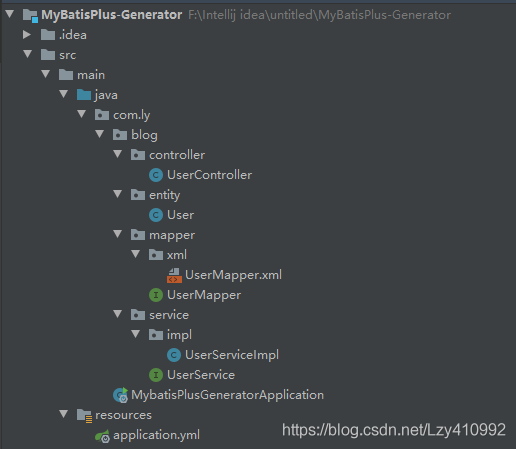
運行后的效果圖:
Shiro + JWT + Spring Boot Restful 簡易教程 吊炸天的 Docker 圖形化工具:Portainer,必須推薦給你! 請謹慎使用Arrays.asList、ArrayList的subList 19張圖帶你梳理SpringCloud體系中的重要技術(shù)點! Spring Boot 整合 Spring Security 實戰(zhàn)! Java + Vue 實現(xiàn)的在線考試系統(tǒng) 日志采集系統(tǒng)都用到哪些技術(shù)? 點擊閱讀全文前往微服務(wù)電商教程
