
用 Go 語言異常機制模擬 TryCatch 異常捕捉
? ? ? 有的同學看到Go和TryCatch一起出現,心里可能會說,難道Go語言升級了,加入了try...catch語句。哈哈,其實Go語言從創(chuàng)建之初就沒打算加入try...catch語句,因為創(chuàng)建Go的那幫大爺認為try...catch挺煩人的,如果濫用,會造成程序混亂,所以就不打算加入try...catch(以后加不加入不好說)。
? ? ? 既然Go語言中并沒有try...catch語句,那么為何文章標題說要使用TryCatch呢?其實Go語言中只是沒有try...catch語句,并不是沒有異常處理機制。Go語言中的異常處理機制就是著名的異常三劍客:panic、defer和recover。通過這3個家伙,是完全可以模擬出try...catch語句效果的,對了,后面還應該有個finally。在正式模擬try...catch語句之前,先來回顧下Go語言中的異常處理機制是如何玩的。
Go語言中的異常處理機制
在前面提到,Go語言通過panic、defer和recover來處理異常的,那么這3個東西是什么呢?
不管是什么異常處理機制,核心的原理都是一樣的,通常來講,一個完善的異常處理機制需要由下面3部分組成。
- 拋出異常
- 處理異常的代碼段
- 獲取異常信息
下面先用Java的異常處理機制來說明這一點。
?
| 1 2 3 4 5 6 7 8 9 10 11 12 13 14 15 16 17 18 19 20 21 22 23 24 25 26 | import?java.io.IOException; ? public?class?Main { ? ????public?static?void?main(String[] args) { ????????try ????????{ ????????????boolean?ioException =?false; ????????????if?(ioException) { ????????????????throw?new?IOException("ioexception"); ????????????}?else?{ ????????????????throw?new?Exception("exception"); ????????????} ????????} ????????catch?(IOException e) { ????????????System.err.println(e); ????????} ????????catch?(Exception e) { ????????????System.out.println(e); ????????} ????????finally ????????{ ????????????System.out.println("finally"); ????????} ????} } |
? ? ? 上面的代碼是標準的Java異常處理機制,try部分的throw用于拋出異常,而catch部分的代碼段用于處理特定的異常,通過catch子句的參數e可以獲取異常信息。所以對于Java來說,上述的3個異常重要的組成部分都有。
? ? ? 對于Go語言來說,panic、defer和recover也分別對應了這3部分。其中panic是一個函數,用于拋出異常,相當于Java中的throw函數。defer是一個關鍵字,用于修飾函數,用defer修飾的函數,在拋出異常時會自動調用。recover是一個函數,用于獲取異常信息,通常在用defer修飾的函數中使用。
? ? ?下面是一段用Go語言處理異常的代碼。
?
| 1 2 3 4 5 6 7 8 9 10 11 12 13 14 15 16 17 18 19 20 21 22 23 | package?main ? import?"fmt" ? func?main(){ ????//? 處理異常的函數 ????defer?func(){ ????????fmt.Println("開始處理異常") ????????// 獲取異常信息 ????????if?err:=recover();err!=nil{ ????????????//? 輸出異常信息 ????????????fmt.Println("error:",err) ????????} ????????fmt.Println("結束異常處理") ????}() ????exceptionFun() } ? func?exceptionFun(){ ????fmt.Println("exceptionFun開始執(zhí)行") ????panic("異常信息") ????fmt.Println("exceptionFun執(zhí)行結束") } |
實現Go版的TryCatch
現在已經了解了Go語言的異常處理機制,那么接下來使用異常處理機制來模擬try...catch...finally語句。
現在來分析一下如果模擬。模擬的過程需要完成下面的工作。
- try、catch和finally這3部分都有各自的代碼段,所以為了模擬try...catch...finally,需要用3個Go函數來分別模擬try、catch和finally部分的代碼段。這3個Go函數是Try、Catch和Finally。
- 要確定這3個函數在什么地方調用。Try是正常執(zhí)行的代碼,所以在要首先調用Try函數。而Catch函數只有在拋出異常時調用,所以應該在用defer修飾的函數中調用,而且需要在Catch函數中獲取異常信息,所以應該在使用cover函數獲取異常信息后再調用Catch函數,通常會將異常信息直接作為參數傳遞給Catch函數。不管是否拋出異常,Finally函數都必須調用,所以應該用defer修飾Finally函數,而且是第1個用defer修飾的函數。這樣,在當前函數結束之前一定剛回調用Finally函數。
- 觸發(fā)異常,這就非常簡單了,直接用panic函數即可。
上面清楚地描述了用Go語言的異常處理機制模擬try...catch...finally語句的基本原理,下面給出完整的實現代碼。
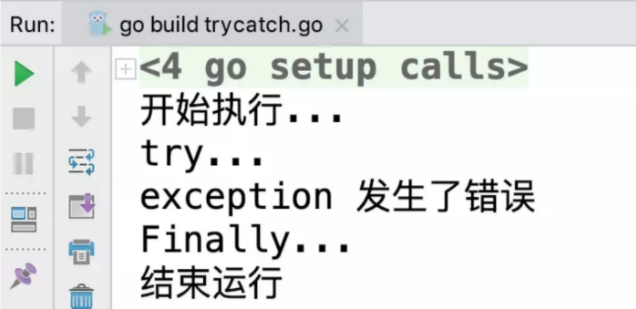
| 1 2 3 4 5 6 7 8 9 10 11 12 13 14 15 16 17 18 19 20 21 22 23 24 25 26 27 28 29 30 31 32 33 34 35 36 37 38 39 40 41 42 43 44 | package?main import?( "fmt" ) type?ExceptionStruct?struct?{ ????Try?????func() ????Catch???func(Exception) ????Finally?func() } type?Exception?interface{} func?Throw(up Exception) { ????panic(up) } func?(this ExceptionStruct) Do() { ????if?this.Finally != nil { ? ????????defer?this.Finally() ????} ????if?this.Catch != nil { ????????defer?func() { ????????????if?e := recover(); e != nil { ????????????????this.Catch(e) ????????????} ????????}() ????} ????this.Try() } ? func?main() { ????fmt.Println("開始執(zhí)行...") ????ExceptionStruct{ ????????Try:?func() { ????????????fmt.Println("try...") ????????????Throw("發(fā)生了錯誤") ????????}, ????????Catch:?func(e Exception) { ????????????fmt.Printf("exception %v\n", e) ????????}, ????????Finally:?func() { ????????????fmt.Println("Finally...") ????????}, ????}.Do() ????fmt.Println("結束運行") } |
上面的代碼將Try、Catch、Finally函數都封裝在了ExceptionStruct結構體中。然后調用方式就與前面的描述的一致了。執(zhí)行這段代碼,會輸出如下圖的信息。
?
 ?
?
增強版的TryCatch
? ? ? ?到現在為止,其實已經完整地實現了try...catch...finally語句,但細心的同學會發(fā)現,這個實現有一點小問題。通常的try...catch...finally語句,try部分有且只有1個,finally部分是可選的,但最多只能有1個,而catch部分也是可選的,可以有0到n個,也就是catch部分可以有任意多個。但前面的實現,Catch函數只能指定一個,如果要指定任意多個應該如何做呢?其實很簡單,用一個Catch函數集合保存所有指定的Catch函數即可。不過需要快速定位某一個Catch函數。在Java中,是通過異常類型(如IOException、Exception等)定位特定的catch子句的,我們也可以模擬這一過程,通過特定的異常來定位與該異常對應的Catch函數,為了方便,可以用int類型的異常代碼。那么在調用Catch函數之前,就需要通過異常代碼先定位到某一個Catch函數,然后再調用。下面就是完整的實現代碼。
?
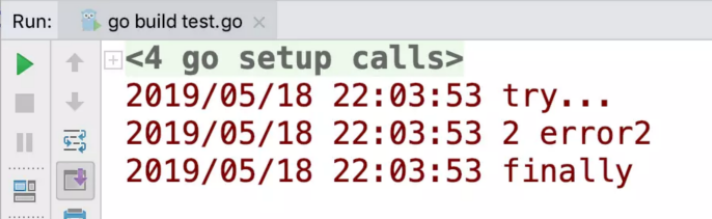
| 1 2 3 4 5 6 7 8 9 10 11 12 13 14 15 16 17 18 19 20 21 22 23 24 25 26 27 28 29 30 31 32 33 34 35 36 37 38 39 40 41 42 43 44 45 46 47 48 49 50 51 52 53 54 55 56 57 58 59 60 61 62 63 64 65 66 67 | package?main ? import?( ????"log" ) ? type?Exception?struct?{ ????Id int???????// exception id ????Msg string???// exception msg } ? type?TryStruct?struct?{ ????catches?map[int]ExceptionHandler ????try???func() } ? func?Try(tryHandler?func()) *TryStruct { ????tryStruct := TryStruct{ ????????catches: make(map[int]ExceptionHandler), ????????try: tryHandler, ????} ????return?&tryStruct } ? ? type?ExceptionHandler?func(Exception) ? func?(this *TryStruct) Catch(exceptionId int, catch?func(Exception)) *TryStruct { ????this.catches[exceptionId] = catch ????return?this } ? func?(this *TryStruct) Finally(finally?func()) { ????defer?func() { ????????if?e := recover(); nil != e { ? ????????????exception := e.(Exception) ? ????????????if?catch, ok := this.catches[exception.Id]; ok {??????????? ????????????????catch(exception) ????????????} ????????????? ????????????finally() ????????} ????}() ????? ????this.try() } ? func?Throw(id int, msg string) Exception { ????panic(Exception{id,msg}) } ? func?main() { ? ????exception.Try(func() { ????????log.Println("try...") ???????????????//? 指定了異常代碼為2,錯誤信息為error2 ????????exception.Throw(2,"error2") ????}).Catch(1,?func(e exception.Exception) { ????????log.Println(e.Id,e.Msg) ????}).Catch(2,?func(e exception.Exception) { ????????log.Println(e.Id,e.Msg) ????}).Finally(func() { ????????log.Println("finally") ????}) } |
執(zhí)行結果如下圖所示。
?
?
這個實現與Java中的try...catch...finally的唯一區(qū)別就是必須要調用Finally函數,因為處理異常的代碼都在Finally函數中。不過這并不影響使用,如果finally部分沒什么需要處理的,那么就設置一個空函數即可。
為了方便大家,我已經將該實現封裝成了函數庫,調用代碼如下:
?
| 1 2 3 4 5 6 7 8 9 10 11 12 13 14 15 16 17 18 19 | package?main import?( ????"exception" ????"log" ) ? func?main() { ? ????exception.Try(func() { ????????log.Println("try...") ????????exception.Throw(2,"error2") ????}).Catch(1,?func(e exception.Exception) { ????????log.Println(e.Id,e.Msg) ????}).Catch(2,?func(e exception.Exception) { ????????log.Println(e.Id,e.Msg) ????}).Finally(func() { ????????log.Println("finally") ????}) } |
作者:李寧
原文鏈接:https://www.cnblogs.com/nokiaguy/p/10892183.html
本文轉自博客園網,版權歸原作者所有。