
事務注解 @Transactional 失效的3種場景及解決辦法

作者:向北
blog.csdn.net/qq_20597727/article/details/84900994
Transactional失效場景介紹
第一種
Transactional注解標注方法修飾符為非public時,@Transactional注解將會不起作用。例如以下代碼。
定義一個錯誤的@Transactional標注實現(xiàn),修飾一個默認訪問符的方法
/**
 * @author zhoujy
 * @date 2018年12月06日
 **/
@Component
public class TestServiceImpl {
    @Resource
    TestMapper testMapper;

    @Transactional
    void insertTestWrongModifier() {
        int re = testMapper.insert(new Test(10,20,30));
        if (re > 0) {
            throw new NeedToInterceptException("need intercept");
        }
        testMapper.insert(new Test(210,20,30));
    }

}
在同一個包內,新建調用對象,進行訪問。
@Component
public class InvokcationService {
    @Resource
    private TestServiceImpl testService;
    public void invokeInsertTestWrongModifier(){
        //調用@Transactional標注的默認訪問符方法
        testService.insertTestWrongModifier();
    }
}
測試用例
@RunWith(SpringRunner.class)
@SpringBootTest
public class DemoApplicationTests {
   @Resource
   InvokcationService invokcationService;

   @Test
   public void  testInvoke(){
      invokcationService.invokeInsertTestWrongModifier();
   }
}
以上的訪問方式,導致事務沒開啟,因此在方法拋出異常時,testMapper.insert(new Test(10,20,30));操作不會進行回滾。如果TestServiceImpl#insertTestWrongModifier方法改為public的話將會正常開啟事務,testMapper.insert(new Test(10,20,30));將會進行回滾。
第二種
在類內部調用調用類內部@Transactional標注的方法。這種情況下也會導致事務不開啟。示例代碼如下。
設置一個內部調用
/**
 * @author zhoujy
 * @date 2018年12月06日
 **/
@Component
public class TestServiceImpl implements TestService {
    @Resource
    TestMapper testMapper;

    @Transactional
    public void insertTestInnerInvoke() {
        //正常public修飾符的事務方法
        int re = testMapper.insert(new Test(10,20,30));
        if (re > 0) {
            throw new NeedToInterceptException("need intercept");
        }
        testMapper.insert(new Test(210,20,30));
    }


    public void testInnerInvoke(){
        //類內部調用@Transactional標注的方法。
        insertTestInnerInvoke();
    }

}
測試用例。
@RunWith(SpringRunner.class)
@SpringBootTest
public class DemoApplicationTests {

   @Resource
   TestServiceImpl testService;

   /**
    * 測試內部調用@Transactional標注方法
    */
   @Test
   public void  testInnerInvoke(){
       //測試外部調用事務方法是否正常
      //testService.insertTestInnerInvoke();
       //測試內部調用事務方法是否正常
      testService.testInnerInvoke();
   }
}
上面就是使用的測試代碼,運行測試知道,外部調用事務方法能夠征程開啟事務,testMapper.insert(new Test(10,20,30))操作將會被回滾;
然后運行另外一個測試用例,調用一個方法在類內部調用內部被@Transactional標注的事務方法,運行結果是事務不會正常開啟,testMapper.insert(new Test(10,20,30))操作將會保存到數(shù)據(jù)庫不會進行回滾。
第三種
事務方法內部捕捉了異常,沒有拋出新的異常,導致事務操作不會進行回滾。示例代碼如下。
/**
 * @author zhoujy
 * @date 2018年12月06日
 **/
@Component
public class TestServiceImpl implements TestService {
    @Resource
    TestMapper testMapper;

    @Transactional
    public void insertTestCatchException() {
        try {
            int re = testMapper.insert(new Test(10,20,30));
            if (re > 0) {
                //運行期間拋異常
                throw new NeedToInterceptException("need intercept");
            }
            testMapper.insert(new Test(210,20,30));
        }catch (Exception e){
            System.out.println("i catch exception");
        }
    }

}
測試用例代碼如下。
@RunWith(SpringRunner.class)
@SpringBootTest
public class DemoApplicationTests {

   @Resource
   TestServiceImpl testService;

   @Test
   public void testCatchException(){
      testService.insertTestCatchException();
   }
}
運行測試用例發(fā)現(xiàn),雖然拋出異常,但是異常被捕捉了,沒有拋出到方法 外, testMapper.insert(new Test(210,20,30))操作并沒有回滾。
以上三種就是@Transactional注解不起作用,@Transactional注解失效的主要原因。下面結合spring中對于@Transactional的注解實現(xiàn)源碼分析為何導致@Transactional注解不起作用。
@Transactional注解不起作用原理分析
首先不了解@Transactional注解實現(xiàn)原理的可以看一下另一篇文章,@Transactional注解實現(xiàn)原理,然后下面開始結合源碼分析下面三種情況。
第一種
@Transactional注解標注方法修飾符為非public時,@Transactional注解將會不起作用。這里分析 的原因是,@Transactional是基于動態(tài)代理實現(xiàn)的,@Transactional注解實現(xiàn)原理中分析了實現(xiàn)方法,在bean初始化過程中,對含有@Transactional標注的bean實例創(chuàng)建代理對象,這里就存在一個spring掃描@Transactional注解信息的過程,不幸的是源碼中體現(xiàn),標注@Transactional的方法如果修飾符不是public,那么就默認方法的@Transactional信息為空,那么將不會對bean進行代理對象創(chuàng)建或者不會對方法進行代理調用
@Transactional注解實現(xiàn)原理中,介紹了如何判定一個bean是否創(chuàng)建代理對象,大概邏輯是。根據(jù)spring創(chuàng)建好一個aop切點BeanFactoryTransactionAttributeSourceAdvisor實例,遍歷當前bean的class的方法對象,判斷方法上面的注解信息是否包含@Transactional,如果bean任何一個方法包含@Transactional注解信息,那么就是適配這個BeanFactoryTransactionAttributeSourceAdvisor切點。則需要創(chuàng)建代理對象,然后代理邏輯為我們管理事務開閉邏輯。
spring源碼中,在攔截bean的創(chuàng)建過程,尋找bean適配的切點時,運用到下面的方法,目的就是尋找方法上面的@Transactional信息,如果有,就表示切點BeanFactoryTransactionAttributeSourceAdvisor能狗應用(canApply)到bean中,
AopUtils#canApply(org.springframework.aop.Pointcut, java.lang.Class<?>, boolean)
public static boolean canApply(Pointcut pc, Class<?> targetClass, boolean hasIntroductions) {
   Assert.notNull(pc, "Pointcut must not be null");
   if (!pc.getClassFilter().matches(targetClass)) {
      return false;
   }

   MethodMatcher methodMatcher = pc.getMethodMatcher();
   if (methodMatcher == MethodMatcher.TRUE) {
      // No need to iterate the methods if we're matching any method anyway...
      return true;
   }

   IntroductionAwareMethodMatcher introductionAwareMethodMatcher = null;
   if (methodMatcher instanceof IntroductionAwareMethodMatcher) {
      introductionAwareMethodMatcher = (IntroductionAwareMethodMatcher) methodMatcher;
   }

    //遍歷class的方法對象
   Set<Class<?>> classes = new LinkedHashSet<Class<?>>(ClassUtils.getAllInterfacesForClassAsSet(targetClass));
   classes.add(targetClass);
   for (Class<?> clazz : classes) {
      Method[] methods = ReflectionUtils.getAllDeclaredMethods(clazz);
      for (Method method : methods) {
         if ((introductionAwareMethodMatcher != null &&
               introductionAwareMethodMatcher.matches(method, targetClass, hasIntroductions)) ||
             //適配查詢方法上的@Transactional注解信息
             methodMatcher.matches(method, targetClass)) {
            return true;
         }
      }
   }

   return false;
}
我們可以在上面的方法打斷點,一步一步調試跟蹤代碼,最終上面的代碼還會調用如下方法來判斷。在下面的方法上斷點,回頭看看方法調用堆棧也是不錯的方式跟蹤。
AbstractFallbackTransactionAttributeSource#getTransactionAttribute
AbstractFallbackTransactionAttributeSource#computeTransactionAttribute
protected TransactionAttribute computeTransactionAttribute(Method method, Class<?> targetClass) {
   // Don't allow no-public methods as required.
   //非public 方法,返回@Transactional信息一律是null
   if (allowPublicMethodsOnly() && !Modifier.isPublic(method.getModifiers())) {
      return null;
   }
   //后面省略.......
 }
不創(chuàng)建代理對象
所以,如果所有方法上的修飾符都是非public的時候,那么將不會創(chuàng)建代理對象。以一開始的測試代碼為例,如果正常的修飾符的testService是下面圖片中的,經過cglib創(chuàng)建的代理對象。
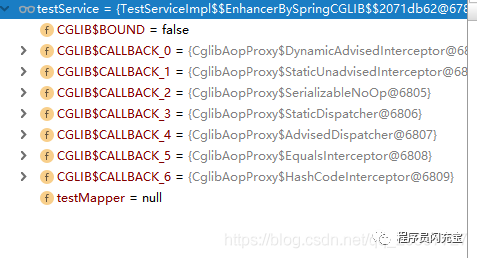
如果class中的方法都是非public的那么將不是代理對象。
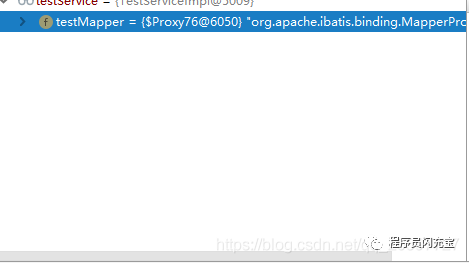
不進行代理調用
考慮一種情況,如下面代碼所示。兩個方法都被@Transactional注解標注,但是一個有public修飾符一個沒有,那么這種情況我們可以預見的話,一定會創(chuàng)建代理對象,因為至少有一個public修飾符的@Transactional注解標注方法。
創(chuàng)建了代理對象,insertTestWrongModifier就會開啟事務嗎?答案是不會。
/**
 * @author zhoujy
 * @date 2018年12月06日
 **/
@Component
public class TestServiceImpl implements TestService {
    @Resource
    TestMapper testMapper;

    @Override
    @Transactional
    public void insertTest() {
        int re = testMapper.insert(new Test(10,20,30));
        if (re > 0) {
            throw new NeedToInterceptException("need intercept");
        }
        testMapper.insert(new Test(210,20,30));
    }

    @Transactional
    void insertTestWrongModifier() {
        int re = testMapper.insert(new Test(10,20,30));
        if (re > 0) {
            throw new NeedToInterceptException("need intercept");
        }
        testMapper.insert(new Test(210,20,30));
    }


}
原因是在動態(tài)代理對象進行代理邏輯調用時,在cglib創(chuàng)建的代理對象的攔截函數(shù)中CglibAopProxy.DynamicAdvisedInterceptor#intercept,有一個邏輯如下,目的是獲取當前被代理對象的當前需要執(zhí)行的method適配的aop邏輯。
List<Object> chain = this.advised.getInterceptorsAndDynamicInterceptionAdvice(method, targetClass);
而針對@Transactional注解查找aop邏輯過程,相似地,也是執(zhí)行一次
AbstractFallbackTransactionAttributeSource#getTransactionAttribute AbstractFallbackTransactionAttributeSource#computeTransactionAttribute
也就是說還需要找一個方法上的@Transactional注解信息,沒有的話就不執(zhí)行代理@Transactional對應的代理邏輯,直接執(zhí)行方法。沒有了@Transactional注解代理邏輯,就無法開啟事務,這也是上一篇已經講到的。
第二種
在類內部調用調用類內部@Transactional標注的方法。這種情況下也會導致事務不開啟。
經過對第一種的詳細分析,對這種情況為何不開啟事務管理,原因應該也能猜到;
既然事務管理是基于動態(tài)代理對象的代理邏輯實現(xiàn)的,那么如果在類內部調用類內部的事務方法,這個調用事務方法的過程并不是通過代理對象來調用的,而是直接通過this對象來調用方法,繞過的代理對象,肯定就是沒有代理邏輯了。
其實我們可以這樣玩,內部調用也能實現(xiàn)開啟事務,代碼如下。
/**
 * @author zhoujy
 * @date 2018年12月06日
 **/
@Component
public class TestServiceImpl implements TestService {
    @Resource
    TestMapper testMapper;

    @Resource
    TestServiceImpl testServiceImpl;


    @Transactional
    public void insertTestInnerInvoke() {
        int re = testMapper.insert(new Test(10,20,30));
        if (re > 0) {
            throw new NeedToInterceptException("need intercept");
        }
        testMapper.insert(new Test(210,20,30));
    }


    public void testInnerInvoke(){
        //內部調用事務方法
        testServiceImpl.insertTestInnerInvoke();
    }

}
上面就是使用了代理對象進行事務調用,所以能夠開啟事務管理,但是實際操作中,沒人會閑的蛋疼這樣子玩~
第三種
事務方法內部捕捉了異常,沒有拋出新的異常,導致事務操作不會進行回滾。
這種的話,可能我們比較常見,問題就出在代理邏輯中,我們先看看源碼里賣弄動態(tài)代理邏輯是如何為我們管理事務的,這個過程在我的另一篇文章有提到。
TransactionAspectSupport#invokeWithinTransaction
代碼如下。
protected Object invokeWithinTransaction(Method method, Class<?> targetClass, final InvocationCallback invocation)
      throws Throwable {

   // If the transaction attribute is null, the method is non-transactional.
   final TransactionAttribute txAttr = getTransactionAttributeSource().getTransactionAttribute(method, targetClass);
   final PlatformTransactionManager tm = determineTransactionManager(txAttr);
   final String joinpointIdentification = methodIdentification(method, targetClass);

   if (txAttr == null || !(tm instanceof CallbackPreferringPlatformTransactionManager)) {
      // Standard transaction demarcation with getTransaction and commit/rollback calls.
       //開啟事務
      TransactionInfo txInfo = createTransactionIfNecessary(tm, txAttr, joinpointIdentification);
      Object retVal = null;
      try {
         // This is an around advice: Invoke the next interceptor in the chain.
         // This will normally result in a target object being invoked.
          //反射調用業(yè)務方法
         retVal = invocation.proceedWithInvocation();
      }
      catch (Throwable ex) {
         // target invocation exception
          //異常時,在catch邏輯中回滾事務
         completeTransactionAfterThrowing(txInfo, ex);
         throw ex;
      }
      finally {
         cleanupTransactionInfo(txInfo);
      }
       //提交事務
      commitTransactionAfterReturning(txInfo);
      return retVal;
   }

   else {
     //....................
   }
}
所以看了上面的代碼就一目了然了,事務想要回滾,必須能夠在這里捕捉到異常才行,如果異常中途被捕捉掉,那么事務將不會回滾。
總結了以上幾種情況
