
<kbd id="afajh"><form id="afajh"></form></kbd>
<strong id="afajh"><dl id="afajh"></dl></strong>
    <del id="afajh"><form id="afajh"></form></del>
        1. <th id="afajh"><progress id="afajh"></progress></th>
          <b id="afajh"><abbr id="afajh"></abbr></b>
          <th id="afajh"><progress id="afajh"></progress></th>

          數(shù)據(jù)庫允許空值(null),往往是悲劇的開始(1分鐘系列)

          共 1751字,需瀏覽 4分鐘

           ·

          2022-07-12 23:49

          很多小知識點,我以為自己懂了,實際沒搞透。


          數(shù)據(jù)庫字段允許空值(null)的問題,你遇到過嗎?


          實驗過程

          create table user (

          id int,

          name varchar(20),

          index(id)

          )engine=innodb;

          【說明:id為索引,非唯一(non unique),允許空(null)】


          insert into user values(1,'shenjian');

          insert into user values(2,'zhangsan');

          insert into user values(3,'lisi');


          【問題一:以下select返回什么?】

          select * from user where id!=1;


          【插入一行,id會出現(xiàn)空值(null)】

          insert into user(name) values('wangwu');


          【問題二:再次select,會返回什么?】

          select * from user where id!=1;


          一起來看一下,這個小實驗,涉及哪些知識點呢?


          知識點1(熱身):負向查詢不能命中索引,會導(dǎo)致全表掃描。
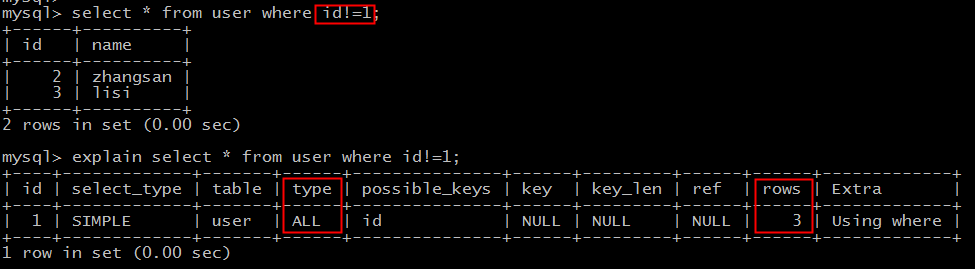
          explain select * from user where id!=1;

          索引字段id上的不等于查詢,如上圖所示:

          (1)type=ALL,全表掃描;

          (2)rows=3,全表只有3行;

          畫外音:第一次select的結(jié)果。


          知識點2(劃重點):允許空值,不等于(!=)查詢,可能導(dǎo)致不符合預(yù)期的結(jié)果。
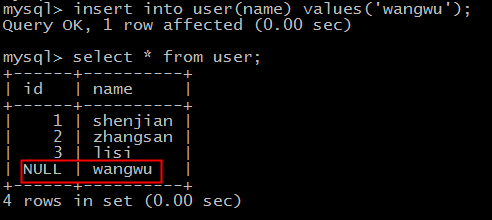
          insert into user(name) values('wangwu');

          先構(gòu)造一條id為NULL的數(shù)據(jù),可以看到共有4條記錄


          select * from user where id!=1;

          再次執(zhí)行不等于查詢。

          你猜結(jié)果集有幾條記錄(共4條,不等于排除1條)?

          錯了!

          結(jié)果集只有2條記錄,空值記錄并未出現(xiàn)在結(jié)果集里。

          畫外音:第二次select的結(jié)果,意不意外?
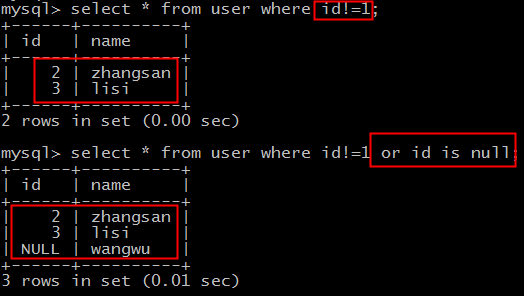

          此時,如果想到得到符合預(yù)期的結(jié)果集,必須加上一個or條件

          select * from user where id!=1 or id is null;

          畫外音:惡心不惡心,這個大坑你踩過沒有?


          知識點3(附加):某些or條件,又可能導(dǎo)致全表掃描,此時應(yīng)該優(yōu)化為union。
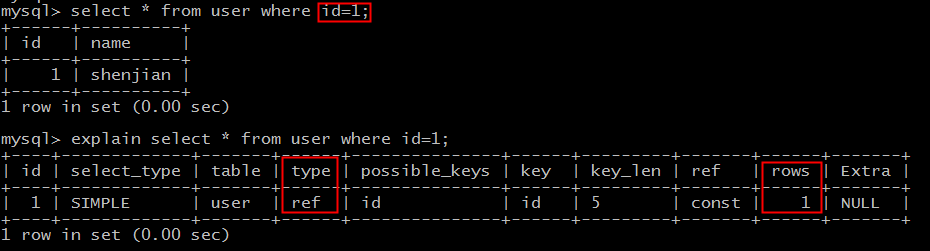
          explain select * from user where id=1;

          索引字段id上的等值查詢命中索引,如上圖所示:

          (1)type=ref,走非唯一索引;

          (2)rows=1,預(yù)估掃描1行;
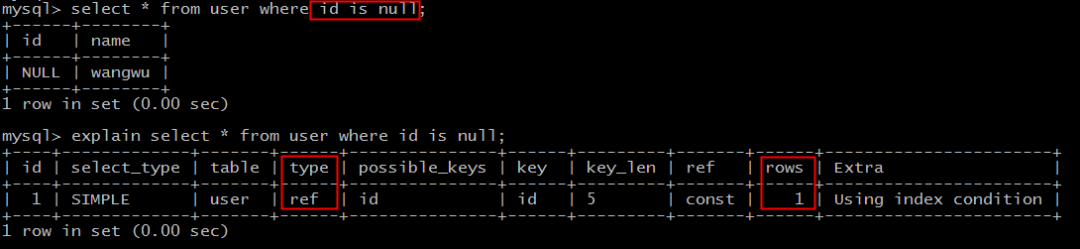

          explain select * from user where id is null;

          索引字段id上的null查詢,也命中索引,如上圖所示:

          (1)type=ref,走非唯一索引;

          (2)rows=1,預(yù)估掃描1行;
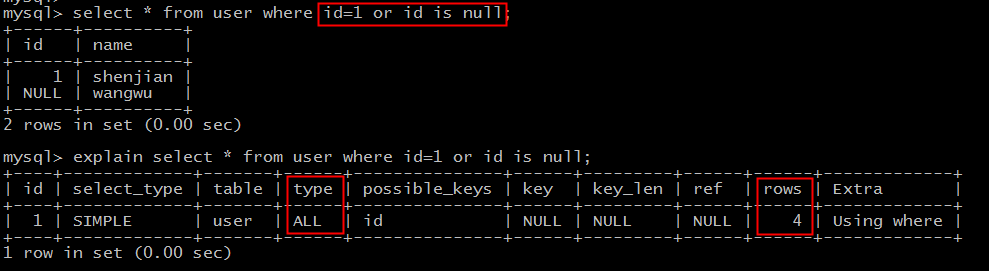

          explain select * from user where id=1 or id is null;

          如果放到一個SQL語句里用or查詢,則會全表掃描,如上圖所示:

          (1)type=ALL,全表掃描;

          (2)rows=4,全表只有4行;
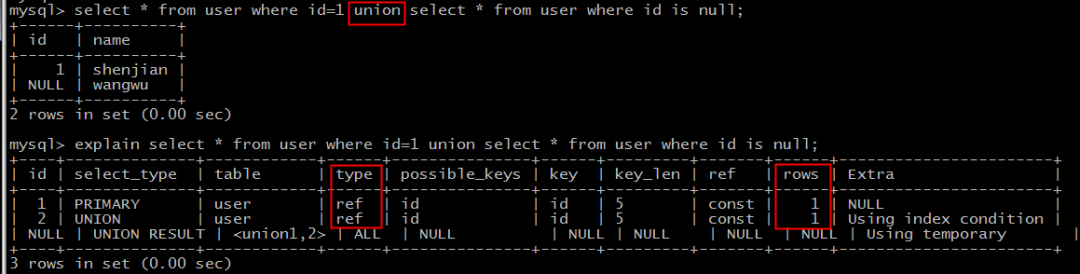

          explain select * from user where id=1 

          union

          select * from user where id is null;

          此時應(yīng)該優(yōu)化為union查詢,又能夠命中索引了,如上圖所示:

          (1)type=ref,走非唯一索引;

          (2)rows=1,預(yù)估掃描1行;

          畫外音:第三行臨時表的ALL,是兩次結(jié)果集的合并。


          總結(jié)

          (1)負向比較(例如:!=)會引發(fā)全表掃描

          (2)如果允許空值,不等于(!=)的查詢,不會將空值行(row)包含進來,此時的結(jié)果集往往是不符合預(yù)期的,此時往往要加上一個or條件,把空值(is null)結(jié)果包含進來;

          (3)or可能會導(dǎo)致全表掃描,此時可以優(yōu)化為union查詢;

          (4)建表時加上默認(default),這樣能避免空值的坑;

          (5)explain工具是一個好東西;


          希望大家有收獲!

          畫外音:本文測試于MySQL5.6。

          架構(gòu)師之路-分享技術(shù)思路

          相關(guān)推薦:
          必須知道的RPC內(nèi)核細節(jié)(收藏)
          誰家的加密密鑰,寫死在代碼里?
          每秒10W次分詞搜索,如何滿足(收藏)
          瀏覽 51
          點贊
          評論
          收藏
          分享

          手機掃一掃分享

          分享
          舉報
          評論
          圖片
          表情
          推薦
          點贊
          評論
          收藏
          分享

          手機掃一掃分享

          分享
          舉報
          <kbd id="afajh"><form id="afajh"></form></kbd>
          <strong id="afajh"><dl id="afajh"></dl></strong>
            <del id="afajh"><form id="afajh"></form></del>
                1. <th id="afajh"><progress id="afajh"></progress></th>
                  <b id="afajh"><abbr id="afajh"></abbr></b>
                  <th id="afajh"><progress id="afajh"></progress></th>
                  成人黄色做爱网站 | AⅤ视频在线观看 | 黄片日逼 | 中文字幕在线观看一区二区 | 【乱子伦】国产精品www |