
Neo4j入門(四)批量更新節(jié)點屬性
??本文將用于介紹如何使用py2neo來實現(xiàn)Neo4j的批量更新節(jié)點屬性。
單節(jié)點屬性更新
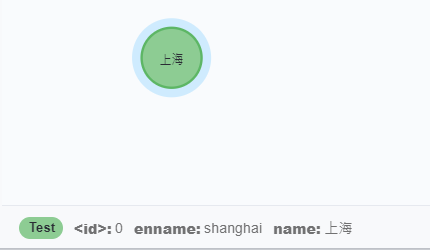
??首先我們先來看單個節(jié)點如何實現(xiàn)節(jié)點的屬性,比如現(xiàn)有Neo4j圖數(shù)據(jù)庫中存在節(jié)點,其label為Test,屬性有name=上海,我們需要為該節(jié)點增加屬性enname=shanghai。
??以下為Python示例代碼:
# -*- coding: utf-8 -*-
from py2neo import Graph
from py2neo import NodeMatcher

# 連接Neo4j
url = "http://localhost:7474"
username = "neo4j"
password = "******"
graph = Graph(url, auth=(username, password))
print("neo4j info: {}".format(str(graph)))

# 查詢節(jié)點
node_matcher = NodeMatcher(graph)
node = node_matcher.match('Test', name="上海").first()
# 新增enname屬性
node["enname"] = "shanghai"
graph.push(node)
此時Neo4j圖數(shù)據(jù)庫中的該節(jié)點屬性已經(jīng)更新,見下圖:
多節(jié)點單次更新
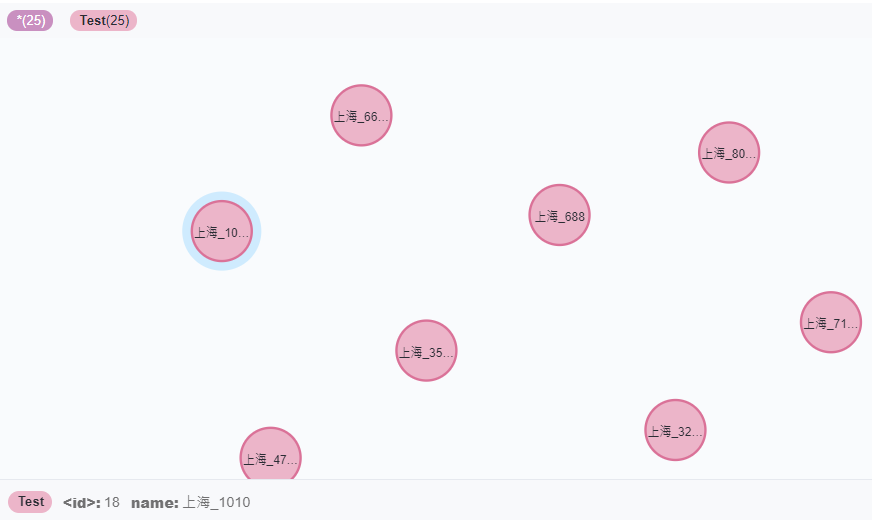
??我們先利用Python代碼,在Neo4j圖數(shù)據(jù)庫中創(chuàng)建10000個節(jié)點,代碼如下:
# -*- coding: utf-8 -*-
from py2neo import Graph, Node, Subgraph

# 連接Neo4j
url = "http://localhost:7474"
username = "neo4j"
password = "******"
graph = Graph(url, auth=(username, password))
print("neo4j info: {}".format(str(graph)))

# 創(chuàng)建10000個節(jié)點
node_list = [Node("Test", name=f"上海_{i}") for i in range(10000)]
graph.create(Subgraph(nodes=node_list))
如下圖所示:
??我們對每個節(jié)點進行查詢,再一個個為其新增
no屬性,記錄下10000個節(jié)點的屬性更新的耗時。Python代碼如下:# -*- coding: utf-8 -*-
import time
from py2neo import Graph, NodeMatcher
# 連接Neo4j
url = "http://localhost:7474"
username = "neo4j"
password = "******"
graph = Graph(url, auth=(username, password))
print("neo4j info: {}".format(str(graph)))
# 查詢節(jié)點
node_list = []
for i in range(10000):
node_matcher = NodeMatcher(graph)
node = node_matcher.match('Test', name=f"上海_{i}").first()
node_list.append(node)
print("find nodes.")
# 一個個為節(jié)點新增no數(shù)據(jù)
s_time = time.time()
for i, node in enumerate(node_list):
node["no"] = i * 2
graph.push(node)
e_time = time.time()
print("cost time: {}".format(e_time - s_time))
運行結果如下:
cost time: 55.00530457496643
多節(jié)點批量更新
??接下來,我們將節(jié)點屬性進行批量更新。
# -*- coding: utf-8 -*-
import time
from py2neo import Graph, NodeMatcher, Subgraph

# 連接Neo4j
url = "http://localhost:7474"
username = "neo4j"
password = "******"
graph = Graph(url, auth=(username, password))
print("neo4j info: {}".format(str(graph)))

# 查詢節(jié)點
node_list = []
for i in range(10000):
    node_matcher = NodeMatcher(graph)
    node = node_matcher.match('Test', name=f"上海_{i}").first()
    node_list.append(node)
print("find nodes.")
print(len(node_list))


# 列表劃分
def chunks(lst, n):
    for i in range(0, len(lst), n):
        yield lst[i:i + n]


# 批量更新
s_time = time.time()
for i, node in enumerate(node_list):
    node["no"] = i * 2
for _ in chunks(node_list, 1000):
    graph.push(Subgraph(nodes=_))
e_time = time.time()
print("cost time: {}".format(e_time - s_time))
運行結果是:
cost time: 15.243977546691895
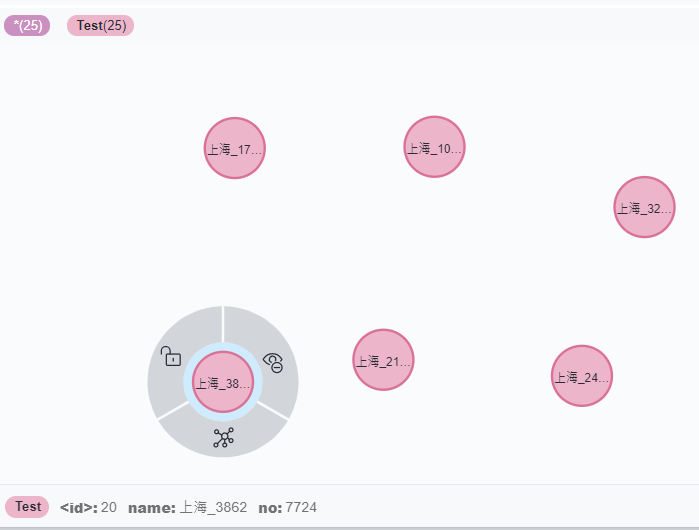
??可以看到,批量更新節(jié)點屬性效率會高很多!當然,如果需要更新的批數(shù)比較多,還可以借助多線程或多進程來進一步提升性能。
評論
圖片
表情