
Linux社區(qū)關(guān)于鏈表的bug討論我們要看一下
最近在Linux社區(qū)看到一個(gè)關(guān)于內(nèi)核鏈表的討論
原文討論鏈接:
https://lwn.net/SubscriberLink/885941/01fdc39df2ecc25f/

先用例子說(shuō)明怎么使用內(nèi)核鏈表
list.h
/* SPDX-License-Identifier: GPL-2.0 */
#ifndef LIST_H
#define?LIST_H

/*
?* Copied from include/linux/...
?*/

#undef?offsetof
#define?offsetof(TYPE, MEMBER) ((size_t) &((TYPE *)0)->MEMBER)

/**
?* container_of - cast a member of a structure out to the containing structure
?* @ptr: the pointer to the member.
?* @type: the type of the container struct this is embedded in.
?* @member: the name of the member within the struct.
?*
?*/
#define?container_of(ptr, type, member) ({ \
??const?typeof(?((type *)0)->member ) *__mptr = (ptr); \
??(type *)( (char?*)__mptr - offsetof(type,member) );})


struct?list_head {
??struct?list_head *next, *prev;
};


#define?LIST_HEAD_INIT(name) { &(name), &(name) }

#define?LIST_HEAD(name) \
??struct?list_head name = LIST_HEAD_INIT(name)

/**
?* list_entry - get the struct for this entry
?* @ptr: the &struct list_head pointer.
?* @type: the type of the struct this is embedded in.
?* @member: the name of the list_head within the struct.
?*/
#define?list_entry(ptr, type, member) \
??container_of(ptr, type, member)

/**
?* list_for_each_entry - iterate over list of given type
?* @pos: the type * to use as a loop cursor.
?* @head: the head for your list.
?* @member: the name of the list_head within the struct.
?*/
#define?list_for_each_entry(pos, head, member) \
??for?(pos = list_entry((head)->next, typeof(*pos), member); \
???????&pos->member != (head); \
???????pos = list_entry(pos->member.next, typeof(*pos), member))

/**
?* list_for_each_entry_safe - iterate over list of given type safe against removal of list entry
?* @pos: the type * to use as a loop cursor.
?* @n: another type * to use as temporary storage
?* @head: the head for your list.
?* @member: the name of the list_head within the struct.
?*/
#define?list_for_each_entry_safe(pos, n, head, member) \
??for?(pos = list_entry((head)->next, typeof(*pos), member), \
????n = list_entry(pos->member.next, typeof(*pos), member); \
???????&pos->member != (head); \
???????pos = n, n = list_entry(n->member.next, typeof(*n), member))

/**
?* list_empty - tests whether a list is empty
?* @head: the list to test.
?*/
static?inline int?list_empty(const?struct?list_head *head)
{
??return?head->next == head;
}

/*
?* Insert a new entry between two known consecutive entries.
?*
?* This is only for internal list manipulation where we know
?* the prev/next entries already!
?*/
static?inline void?__list_add(struct?list_head *_new,
????????????struct?list_head *prev,
????????????struct?list_head *next)
{
??next->prev = _new;
??_new->next = next;
??_new->prev = prev;
??prev->next = _new;
}

/**
?* list_add_tail - add a new entry
?* @new: new entry to be added
?* @head: list head to add it before
?*
?* Insert a new entry before the specified head.
?* This is useful for implementing queues.
?*/
static?inline void?list_add_tail(struct?list_head *_new, struct?list_head *head)
{
??__list_add(_new, head->prev, head);
}

/*
?* Delete a list entry by making the prev/next entries
?* point to each other.
?*
?* This is only for internal list manipulation where we know
?* the prev/next entries already!
?*/
static?inline void?__list_del(struct?list_head *prev, struct?list_head *next)
{
??next->prev = prev;
??prev->next = next;
}

#define?LIST_POISON1 ((void *) 0x00100100)
#define?LIST_POISON2 ((void *) 0x00200200)
/**
?* list_del - deletes entry from list.
?* @entry: the element to delete from the list.
?* Note:?list_empty() on entry does not return true after this, the entry is
?* in an undefined state.
?*/
static?inline void?list_del(struct?list_head *entry)
{
??__list_del(entry->prev, entry->next);
??entry->next = (struct?list_head*)LIST_POISON1;
??entry->prev = (struct?list_head*)LIST_POISON2;
}
#endif
test.c
#include?
#include?
#include?
#include?"list.h"

struct?stu_example?{
??struct?list_head?of_node;
??int?age;
};

static?LIST_HEAD(stu_list_head);
#define?LIST_LEN 10

int?main( )
{
??int?i = 0;
??/*初始化鏈表*/
??struct?stu_example?stu_list[LIST_LEN];
??struct?stu_example?*tmp?= NULL;
??
??for??(i=0; i < LIST_LEN; i++) {
????list_add_tail(&stu_list[i],&stu_list_head);
????stu_list[i].age = i + 20;
??}
??
??/*遍歷鏈表*/?
??list_for_each_entry(tmp, &stu_list_head, of_node) {
????printf("age=%d\n",tmp->age);
??}
??
??/*刪除鏈表*/
??list_del(&stu_list_head);
??
??printf("Hello,world\n");
??return?0;
}
代碼輸出
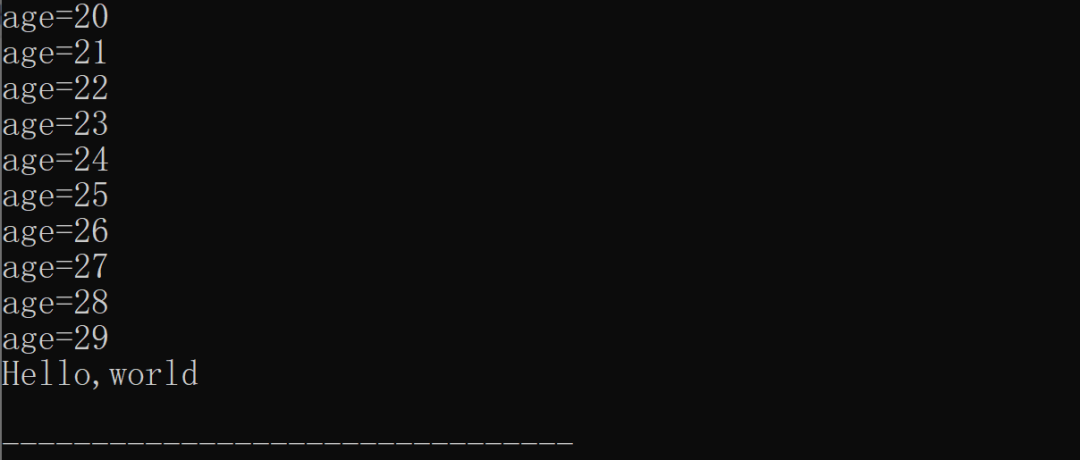
討論的重點(diǎn)是?
如下圖
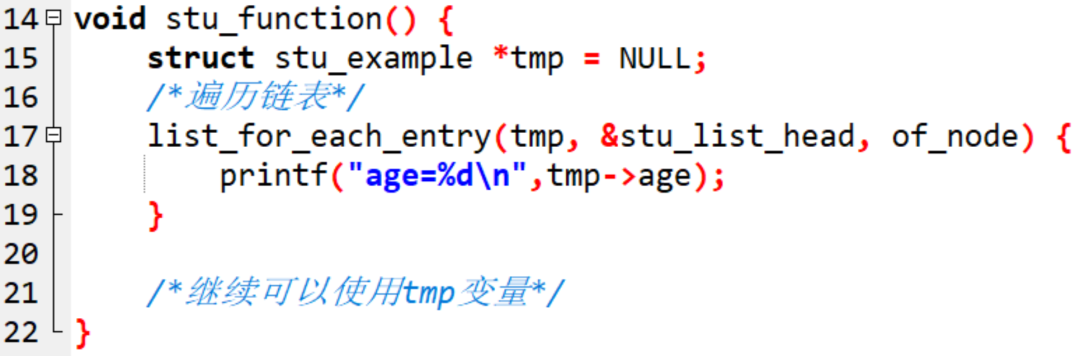
因?yàn)長(zhǎng)inux內(nèi)核用的是C89標(biāo)準(zhǔn),不能在for循環(huán)里面聲明變量,所以導(dǎo)致tmp變量在使用之后的代碼中還可以繼續(xù)使用。
繼續(xù)使用并不是大問(wèn)題,大問(wèn)題是因?yàn)槔^續(xù)使用導(dǎo)致了一個(gè)USB的BUG,當(dāng)然,從代碼的結(jié)構(gòu)性上來(lái)說(shuō),我覺(jué)得也應(yīng)該做好封裝。
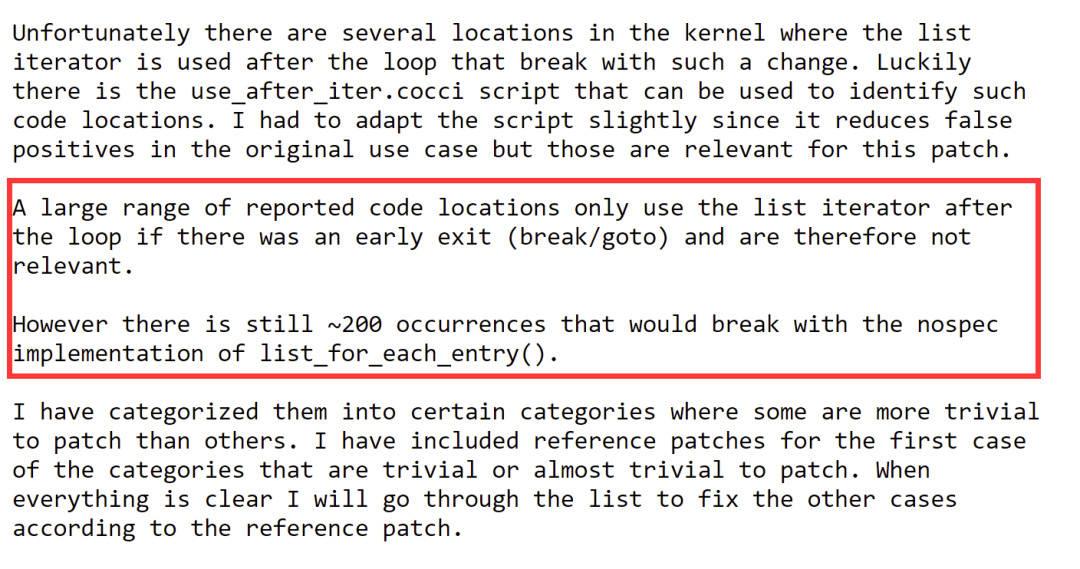
根據(jù)這個(gè)機(jī)制,有可能會(huì)被程序攻擊到內(nèi)核代碼
具體可以查看這個(gè)網(wǎng)址
https://www.vusec.net/projects/kasper/
里面的描述和補(bǔ)丁說(shuō)明差不多,都是因?yàn)闆](méi)有遍歷結(jié)束退出的原因。
修改后的部分補(bǔ)丁
+/* Override the default implementation from linux/nospec.h. */
+#define select_nospec(cond, exptrue, expfalse) \
+({ \
+ typeof(exptrue) _out?= (exptrue); \
+ \
+ asm?volatile("test %1, %1\n\t"??????????\
+ "cmove %2, %0"????????????\
+ : "+r"?(_out) \
+ : "r"?(cond), "r"?(expfalse)); \
+ _out; \
+})
+
?/* Prevent speculative execution past this barrier. */
?#define barrier_nospec() alternative("", "lfence", X86_FEATURE_LFENCE_RDTSC)
?
diff --git a/include/linux/list.h b/include/linux/list.h
index dd6c2041d09c..1a1b39fdd122 100644
--- a/include/linux/list.h
+++ b/include/linux/list.h
@@ -636,7?+636,8?@@ static?inline?void?list_splice_tail_init(struct?list_head *list,
??*/
?#define list_for_each_entry(pos, head, member) \
???for?(pos = list_first_entry(head, typeof(*pos), member); \
- !list_entry_is_head(pos, head, member); \
+ ({ bool?_cond = !list_entry_is_head(pos, head, member); \
+ pos = select_nospec(_cond, pos, NULL); _cond; }); \
????????pos = list_next_entry(pos, member))
具體網(wǎng)址:
https://lwn.net/ml/linux-kernel/[email protected]/
評(píng)論
圖片
表情