
pandas中使用 Merge、Join 、Concat 合并數(shù)據(jù)效率對(duì)比
↓推薦關(guān)注↓
來源:Deephub Imba
在 Pandas 中有很多種方法可以進(jìn)行dataframe(數(shù)據(jù)框)的合并。
本文將研究這些不同的方法,以及如何將它們執(zhí)行速度的對(duì)比。
合并DF
import pandas as pd

# a dictionary to convert to a dataframe
data1 = {'identification': ['a', 'b', 'c', 'd'],
      'Customer_Name':['King', 'West', 'Adams', 'Mercy'],         'Category':['furniture', 'Office Supplies', 'Technology', 'R_materials'],}

# our second dictionary to convert to a dataframe
data2 = {'identification': ['a', 'b', 'c', 'd'],
      'Class':['First_Class', 'Second_Class', 'Same_day', 'Standard Class'],
      'Age':[60, 30, 40, 50]}

# Convert the dictionary into DataFrame
df1 = pd.DataFrame(data1)
df2 = pd.DataFrame(data2)
identification Customer_Name         Category
0             a         King       furniture
1             b         West Office Supplies
2             c         Adams       Technology
3             d         Mercy     R_materials

identification           Class Age
0             a     First_Class   60
1             b   Second_Class   30
2             c       Same_day   40
3             d Standard Class   50
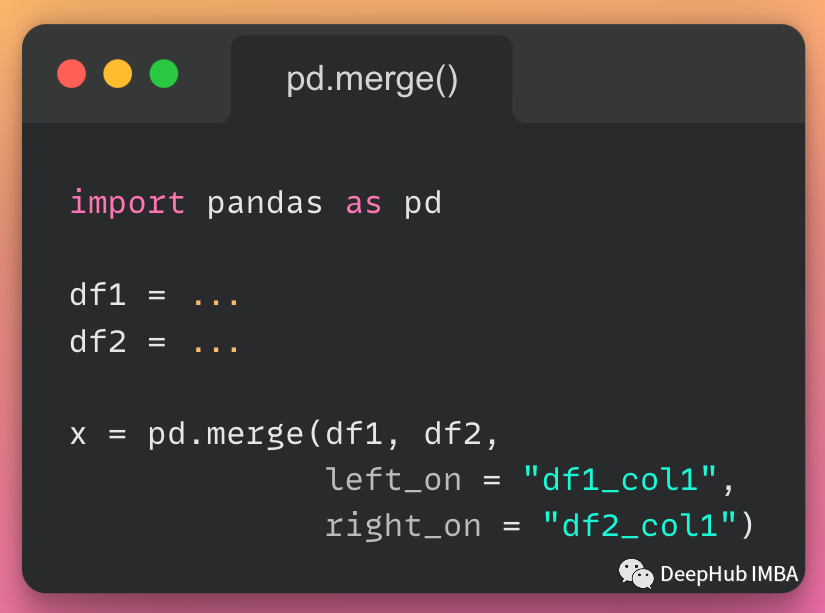
# using .merge() function
new_data = pd.merge(df1, df2, on='identification')
identification Customer_Name Category     Class           Age
0     a           King         furniture     First_Class     60
1     b           West         Office Supplies Second_Class   30
2     c           Adams         Technology     Same_day     40
3     d           Mercy         R_materials Standard Class   50
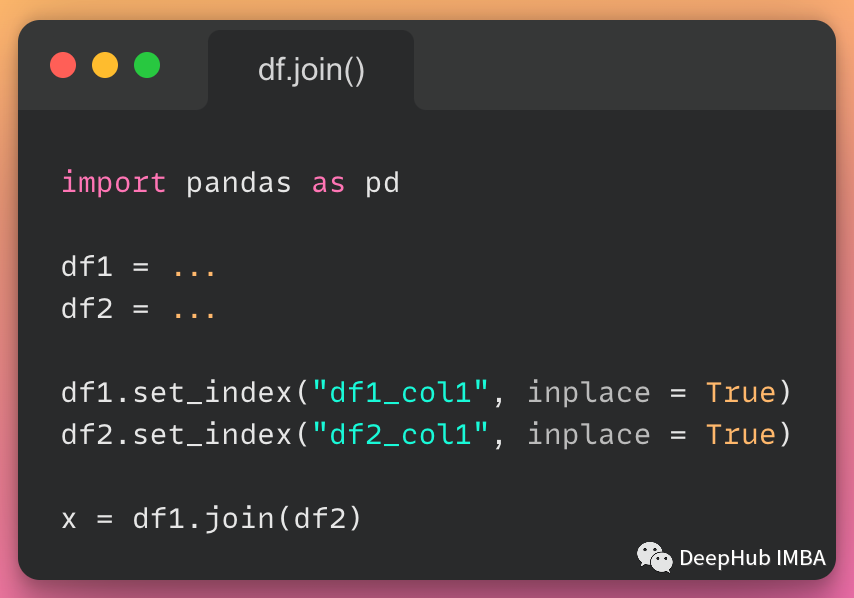
import pandas as pd

# a dictionary to convert to a dataframe
data1 = {
      'Customer_Name':['King', 'West', 'Adams'],
    'Category':['furniture', 'Office Supplies', 'Technology'],} 7
# our second dictionary to convert to a dataframe
data2 = {
      'Class':['First_Class', 'Second_Class', 'Same_day', 'Standard Class'],
    'Age':[60, 30, 40, 50]}

# Convert the dictionary into DataFrame
Ndata = pd.DataFrame(data1, index=pd.Index(['a', 'b', 'c'], name='identification'))

index = pd.MultiIndex.from_tuples([('a', 'x0'), ('b', 'x1'),
                                ('c', 'x2'), ('c', 'x3')],
                                names=['identification', 'x']) 19
# Convert the dictionary into DataFrame
Ndata2 = pd.DataFrame(data2, index= index)

print(Ndata, "\n\n", Ndata2)


# joining singly indexed with
# multi indexed
result = Ndata.join(Ndata2, how='inner')
       Customer_Name       Category     Class       Age
identification x                                                     3 a         x0       King       furniture     First_Class     60
b         x1       West     Office Supplies   Second_Class   30
c         x2       Adams       Technology       Same_day     40
        x3       Adams       Technology Standard Class     50
連接DF
import pandas as pd

# a dictionary to convert to a dataframe
data1 = {'identification': ['a', 'b', 'c', 'd'],
      'Customer_Name':['King', 'West', 'Adams', 'Mercy'],
      'Category':['furniture', 'Office Supplies', 'Technology', 'R_materials'],}

# our second dictionary to convert to a dataframe
data2 = {'identification': ['a', 'b', 'c', 'd'],
      'Class':['First_Class', 'Second_Class', 'Same_day', 'Standard Class'],
      'Age':[60, 30, 40, 50]}

# Convert the dictionary into DataFrame
df1 = pd.DataFrame(data1)
df2 = pd.DataFrame(data2)
#perform concatenation here based on horizontal axis
new_data = pd.concat([df1, df2], axis=1)
print(new_data)
identification Customer_Name         Category identification \
0             a         King       furniture             a   3 1             b         West Office Supplies             b   4 2             c         Adams       Technology             c   5 3             d         Mercy     R_materials             d

        Class       Age
0     First_Class   60
1   Second_Class   30
2       Same_day   40
3 Standard Class   50
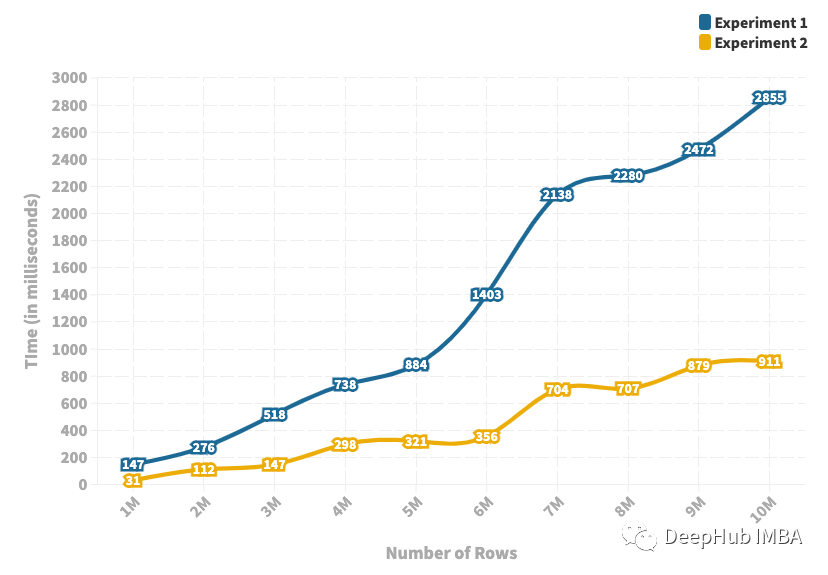
Merge和Join的效率對(duì)比
長(zhǎng)按或掃描下方二維碼,后臺(tái)回復(fù):加群,即可申請(qǐng)入群。一定要備注:來源+研究方向+學(xué)校/公司,否則不拉入群中,見諒!
(長(zhǎng)按三秒,進(jìn)入后臺(tái))
推薦閱讀
