
Python隨身聽-源碼分析-經(jīng)典小游戲?-pacman
周六了,讓我們按照老規(guī)矩,一起讀點(diǎn)代碼放松一下吧!
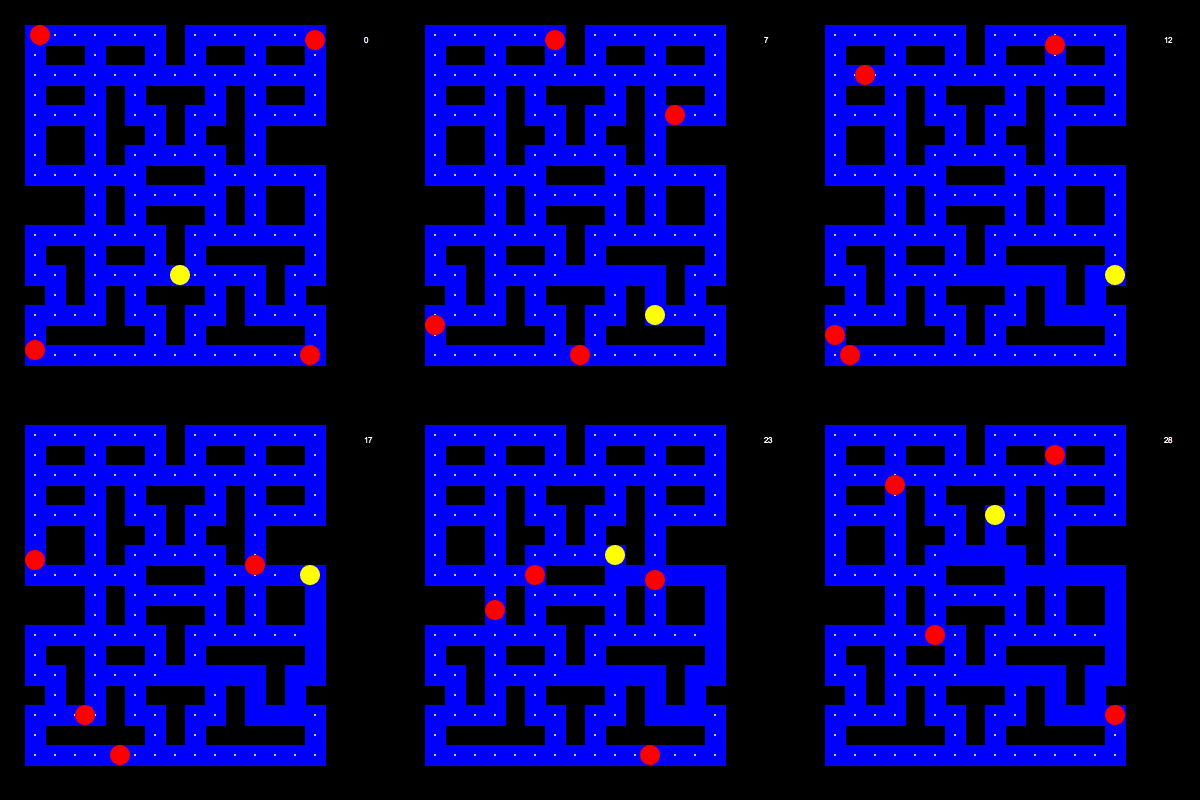
今天要給大家看的代碼是一段游戲的代碼,這一次是一個(gè) 1980 年就誕生的經(jīng)典游戲:pacman,中文翻譯好像是吃豆人。其實(shí)就是一個(gè)迷宮,擺滿了各種小豆子,一個(gè)小黃人去邊走邊吃,里面會(huì)有幾個(gè)游蕩的鬼魂,撞到了會(huì)讓小黃人死翹翹,所以走起路來要小心啊!
游戲動(dòng)圖:
源碼
建議先仔細(xì)閱讀一下,然后再往后看 DE8UG 對(duì)源碼的分析。
from random import choice
from turtle import *
from freegames import floor, vector

state = {'score': 0}
path = Turtle(visible=False)
writer = Turtle(visible=False)
aim = vector(5, 0)
pacman = vector(-40, -80)
ghosts = [
    [vector(-180, 160), vector(5, 0)],
    [vector(-180, -160), vector(0, 5)],
    [vector(100, 160), vector(0, -5)],
    [vector(100, -160), vector(-5, 0)],
]
tiles = [
    0, 0, 0, 0, 0, 0, 0, 0, 0, 0, 0, 0, 0, 0, 0, 0, 0, 0, 0, 0,
    0, 1, 1, 1, 1, 1, 1, 1, 0, 1, 1, 1, 1, 1, 1, 1, 0, 0, 0, 0,
    0, 1, 0, 0, 1, 0, 0, 1, 0, 1, 0, 0, 1, 0, 0, 1, 0, 0, 0, 0,
    0, 1, 1, 1, 1, 1, 1, 1, 1, 1, 1, 1, 1, 1, 1, 1, 0, 0, 0, 0,
    0, 1, 0, 0, 1, 0, 1, 0, 0, 0, 1, 0, 1, 0, 0, 1, 0, 0, 0, 0,
    0, 1, 1, 1, 1, 0, 1, 1, 0, 1, 1, 0, 1, 1, 1, 1, 0, 0, 0, 0,
    0, 1, 0, 0, 1, 0, 0, 1, 0, 1, 0, 0, 1, 0, 0, 0, 0, 0, 0, 0,
    0, 1, 0, 0, 1, 0, 1, 1, 1, 1, 1, 0, 1, 0, 0, 0, 0, 0, 0, 0,
    0, 1, 1, 1, 1, 1, 1, 0, 0, 0, 1, 1, 1, 1, 1, 1, 0, 0, 0, 0,
    0, 0, 0, 0, 1, 0, 1, 1, 1, 1, 1, 0, 1, 0, 0, 1, 0, 0, 0, 0,
    0, 0, 0, 0, 1, 0, 1, 0, 0, 0, 1, 0, 1, 0, 0, 1, 0, 0, 0, 0,
    0, 1, 1, 1, 1, 1, 1, 1, 0, 1, 1, 1, 1, 1, 1, 1, 0, 0, 0, 0,
    0, 1, 0, 0, 1, 0, 0, 1, 0, 1, 0, 0, 0, 0, 0, 1, 0, 0, 0, 0,
    0, 1, 1, 0, 1, 1, 1, 1, 1, 1, 1, 1, 1, 0, 1, 1, 0, 0, 0, 0,
    0, 0, 1, 0, 1, 0, 1, 0, 0, 0, 1, 0, 1, 0, 1, 0, 0, 0, 0, 0,
    0, 1, 1, 1, 1, 0, 1, 1, 0, 1, 1, 0, 1, 1, 1, 1, 0, 0, 0, 0,
    0, 1, 0, 0, 0, 0, 0, 1, 0, 1, 0, 0, 0, 0, 0, 1, 0, 0, 0, 0,
    0, 1, 1, 1, 1, 1, 1, 1, 1, 1, 1, 1, 1, 1, 1, 1, 0, 0, 0, 0,
    0, 0, 0, 0, 0, 0, 0, 0, 0, 0, 0, 0, 0, 0, 0, 0, 0, 0, 0, 0,
    0, 0, 0, 0, 0, 0, 0, 0, 0, 0, 0, 0, 0, 0, 0, 0, 0, 0, 0, 0,
]

def square(x, y):
    "Draw square using path at (x, y)."
    path.up()
    path.goto(x, y)
    path.down()
    path.begin_fill()

    for count in range(4):
        path.forward(20)
        path.left(90)

    path.end_fill()

def offset(point):
    "Return offset of point in tiles."
    x = (floor(point.x, 20) + 200) / 20
    y = (180 - floor(point.y, 20)) / 20
    index = int(x + y * 20)
    return index

def valid(point):
    "Return True if point is valid in tiles."
    index = offset(point)

    if tiles[index] == 0:
        return False

    index = offset(point + 19)

    if tiles[index] == 0:
        return False

    return point.x % 20 == 0 or point.y % 20 == 0

def world():
    "Draw world using path."
    bgcolor('black')
    path.color('blue')

    for index in range(len(tiles)):
        tile = tiles[index]

        if tile > 0:
            x = (index % 20) * 20 - 200
            y = 180 - (index // 20) * 20
            square(x, y)

            if tile == 1:
                path.up()
                path.goto(x + 10, y + 10)
                path.dot(2, 'white')

def move():
    "Move pacman and all ghosts."
    writer.undo()
    writer.write(state['score'])

    clear()

    if valid(pacman + aim):
        pacman.move(aim)

    index = offset(pacman)

    if tiles[index] == 1:
        tiles[index] = 2
        state['score'] += 1
        x = (index % 20) * 20 - 200
        y = 180 - (index // 20) * 20
        square(x, y)

    up()
    goto(pacman.x + 10, pacman.y + 10)
    dot(20, 'yellow')

    for point, course in ghosts:
        if valid(point + course):
            point.move(course)
        else:
            options = [
                vector(5, 0),
                vector(-5, 0),
                vector(0, 5),
                vector(0, -5),
            ]
            plan = choice(options)
            course.x = plan.x
            course.y = plan.y

        up()
        goto(point.x + 10, point.y + 10)
        dot(20, 'red')

    update()

    for point, course in ghosts:
        if abs(pacman - point) < 20:
            return

    ontimer(move, 100)

def change(x, y):
    "Change pacman aim if valid."
    if valid(pacman + vector(x, y)):
        aim.x = x
        aim.y = y

setup(420, 420, 370, 0)
hideturtle()
tracer(False)
writer.goto(160, 160)
writer.color('white')
writer.write(state['score'])
listen()
onkey(lambda: change(5, 0), 'Right')
onkey(lambda: change(-5, 0), 'Left')
onkey(lambda: change(0, 5), 'Up')
onkey(lambda: change(0, -5), 'Down')
world()
move()
done()
運(yùn)行
復(fù)制上述代碼到一個(gè) py 為后綴的文件,命名 pacman.py.
在文件所在目錄打開控制臺(tái):運(yùn)行pip install freegames,然后運(yùn)行python pacman.py
分析
這個(gè)游戲代碼里面有很多和之前給大家解說的代碼(直接給公號(hào)后天回復(fù)搜索,然后搜游戲代碼即可)類似的地方,這里就直接略過了。我們只看看和之前不一樣的地方。
整體布局
這里是一個(gè)迷宮地圖,左上角還需要顯示分?jǐn)?shù),所以最開始的全局變量新建了兩個(gè) Turtle 對(duì)象,相當(dāng)于兩個(gè)畫筆,一個(gè)畫具體路徑,一個(gè)更新分?jǐn)?shù)。
整體布局是采用 world 函數(shù)完成的。最開始定義的 tiles 列表,里面用 0 和 1 指代了每一塊瓦片的位置和是否有食物。繪制的時(shí)候,用 x,y 換算為從左上角開始的坐標(biāo)位置,然后開始調(diào)用 square 函數(shù)開始繪制地圖。注意這里整體偏左,因?yàn)橛疑辖且舫鑫恢糜涗浄謹(jǐn)?shù)。
移動(dòng)與碰撞
在 move 函數(shù)中,還是如之前一樣是一個(gè)定時(shí)循環(huán)。繪制每一次的動(dòng)作。
最開始是分?jǐn)?shù)的統(tǒng)計(jì),采用重繪來進(jìn)行。然后清理屏幕,判斷小黃人的移動(dòng)是否合法。接下來用 offset 函數(shù)把小黃人坐標(biāo)映射回 tiles 列表的索引,去判斷是否吃到食物,如果吃到,則重繪當(dāng)前的方塊,注意這時(shí)候其實(shí)和繪制整體地圖時(shí)候一樣,只是不再繪制中間的食物。
然后移動(dòng)小黃人,繪制為黃色。
地圖里面的小幽靈們是一直移動(dòng)的,其實(shí)是循環(huán)每個(gè)的坐標(biāo)位置,判斷是否合法,合法就移動(dòng),不合法就給出一個(gè)設(shè)定好的坐標(biāo)。
然后就判斷小黃人是否和幽靈碰撞,即 abs(pacman - point) < 20,撞到也就 game over 了!
play!
接下來就是啟動(dòng)游戲,開始玩了 ??
ok,這就是本周六的源碼分析了,祝你閱讀愉快。目前在 Python 隨身聽的微信欄目里,已經(jīng)從周一到周日安排了:技術(shù)精選,基礎(chǔ)學(xué)習(xí),Python 練習(xí),項(xiàng)目連載,難點(diǎn)問答,源碼分析,DE8UG 雜談這些欄目,歡迎圍觀。有任何想法建議疑問歡迎留言,明天見~