
巧妙使用 Decorator 裝飾 Typescript?
前言
原創(chuàng)文章匯總:github/Nealyang
正在著手寫 THE LAST TIME 系列的 Typescript 篇,而Decorator 一直是我個人看來一個非常不錯的切面方案。所謂的切面方案就是我們常說的切面編程 AOP。一種編程思想,簡單直白的解釋就是,一種在運行時,動態(tài)的將代碼切入到類的指定方法、指定位置上的編程思想就是 AOP。AOP 和我們熟悉的 OOP 一樣,只是一個編程范式,AOP 沒有說什么規(guī)定要使用什么代碼協(xié)議,必須要用什么方式去實現(xiàn),這只是一個范式。而 Decorator 也就是AOP 的一種形式。
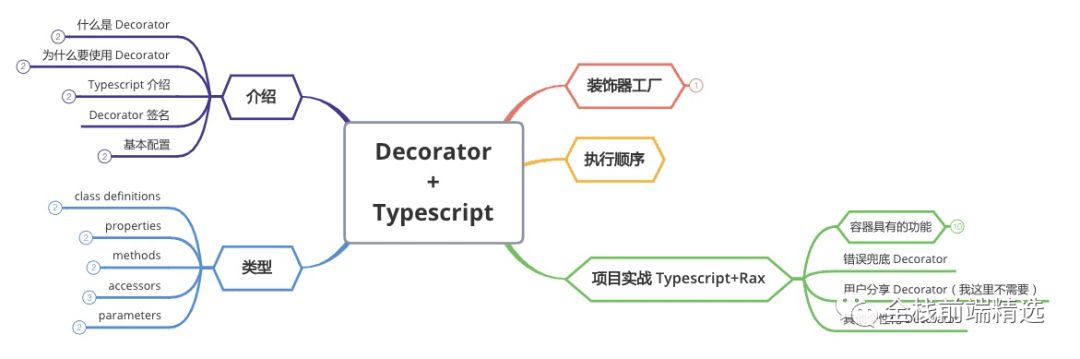
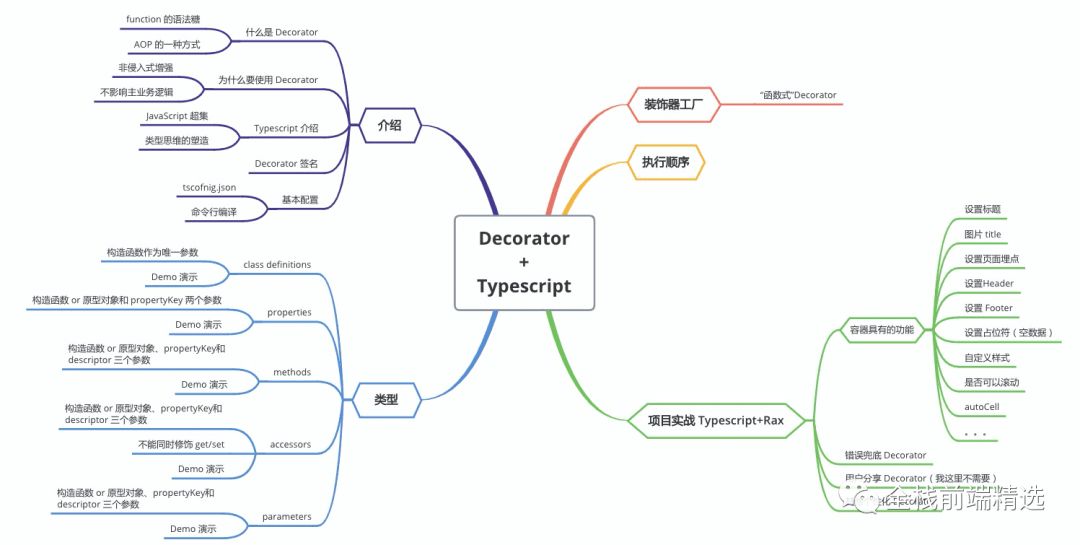
而本文重點不在于討論編程范式,主要介紹 Typescript+Decorator 下圖的一些知識講解,其中包括最近筆者在寫項目的一些應(yīng)用。
介紹
什么是 Decorator
貌似在去年的時候在公眾號:【全棧前端精選】中,有分享過關(guān)于 Decorator 的基本介紹:Decorator 從原理到實戰(zhàn),里面有對Decorator 非常詳細的介紹。
本質(zhì)上,它也就是個函數(shù)的語法糖。
Decorator 是 ES7 添加的新特性,當(dāng)然,在 Typescript 很早就有了。早在此之前,就有提出與 Decorator 思想非常相近的設(shè)計模式:裝飾者模式。
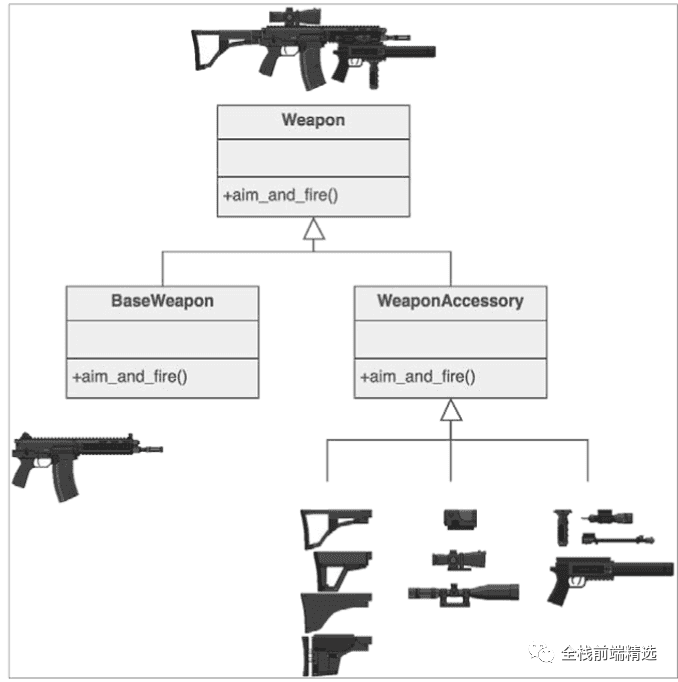
上圖的WeaponAccessory就是一個Decorator,他們添加額外的功能到基類上。讓其能夠滿足你的需求。

簡單的理解 Decorator,可以認(rèn)為它是一種包裝,對 對象,方法,屬性的包裝。就像 Decorator 俠,一身盔甲,只是裝飾,以滿足需求,未改變是人類的本質(zhì)。
為什么要使用 Decorator
為什么要使用 Decorator,其實就是介紹到 AOP 范式的最大特點了:非侵入式增強。
比如筆者正在寫的一個頁面容器,叫 PageContainer.tsx,基本功能包括滾動、autoCell、事件注入與解綁、placeHolder Container 的添加等基本功能。
      class PageContainer extends Components{
 xxx
}
這時候我正使用這個容器,想接入微信分享功能。或者錯誤兜底功能。但是使用這個容器的人非常多。分享不一定都是微信分享、錯誤兜底不一定都是張著我想要的樣子。所以我必定要對容器進行改造和增強。
從功能點劃分,這些的確屬于容器的能力。所以在無侵入式的增強方案中,裝飾者模式是一個非常好的選擇。也就是話落到我們所說的 Decorator。(對于 React 或者 Rax,HOC 也是一種很好的方案,當(dāng)然,其思想是一致的。)
      + @withError
+ @withWxShare
class PageContainer extends Components{
 xxx
}
我們添加 Decorator,這樣的做法,對原有代碼毫無入侵性,這就是AOP的好處了,把和主業(yè)務(wù)無關(guān)的事情,放到代碼外面去做。
關(guān)于 Typescript

JavaScript 毋庸置疑是一門非常好的語言,但是其也有很多的弊端,其中不乏是作者設(shè)計之處留下的一些 “bug”。當(dāng)然,瑕不掩瑜~
話說回來,JavaScript 畢竟是一門弱類型語言,與強類型語言相比,其最大的編程陋習(xí)就是可能會造成我們類型思維的缺失(高級詞匯,我從極客時間學(xué)到的)。而思維方式?jīng)Q定了編程習(xí)慣,編程習(xí)慣奠定了編程質(zhì)量,工程質(zhì)量劃定了能力邊界,而學(xué)習(xí) Typescript,最重要的就是我們類型思維的重塑。
那么其實,Typescript 在我個人理解,并不能算是一個編程語言,它只是 JavaScript 的一層殼。當(dāng)然,我們完全可以將它作為一門語言去學(xué)習(xí)。網(wǎng)上有很多推薦 or 不推薦 Typescript 之類的文章這里我們不做任何討論,學(xué)與不學(xué),用或不用,利與弊。各自拿捏~
再說說 typescript,其實對于 ts 相比大家已經(jīng)不陌生了。更多關(guān)于 ts 入門文章和文檔也是已經(jīng)爛大街了。此文不去翻譯或者搬運各種 api或者教程章節(jié)。只是總結(jié)羅列和解惑,筆者在學(xué)習(xí) ts 過程中曾疑惑的地方。道不到的地方,歡迎大家評論區(qū)積極討論。
首先推薦下各自 ts 的編譯環(huán)境:typescriptlang.org
再推薦筆者收藏的兩個網(wǎng)站:
- Typescript 中文網(wǎng)
- 深入理解 Typescript
- TypeScript Handbook
- TypeScript 精通指南
Typescript 中的 Decorator 簽名
      interface TypedPropertyDescriptor<T> {
    enumerable?: boolean;
    configurable?: boolean;
    writable?: boolean;
    value?: T;
get?: () => T;
set?: (value: T) => void;
}

declare type ClassDecorator = <TFunction extends Function>(target: TFunction) => TFunction | void;
declare type PropertyDecorator = (target: Object, propertyKey: string | symbol) => void;
declare type MethodDecorator = <T>(target: Object, propertyKey: string | symbol, descriptor: TypedPropertyDescriptor<T>) => TypedPropertyDescriptor<T> | void;
declare type ParameterDecorator = (target: Object, propertyKey: string | symbol, parameterIndex: number) => void;
如上是 ClassDecorator、PropertyDecorator以及 MethodDecorator 的三個類型簽名。
基本配置
由于 Decorator 在 Typescript 中還是一項實驗性的給予支持,所以在 ts 的配置配置文件中,我們指明編譯器對 Decorator 的支持。
在命令行或tsconfig.json里啟用experimentalDecorators編譯器選項:
- 命令行:
tsc --target ES5 --experimentalDecorators
- tsconfig.json
      {
"compilerOptions": {
"target": "ES5",
"experimentalDecorators": true
    }
}
類型
在 Typescript 中,Decorator 可以修飾五種語句:類、屬性、方法、訪問器和方法參數(shù)。
class definitions
類裝飾器應(yīng)用于構(gòu)造函數(shù)之上,會在運行時當(dāng)作函數(shù)被調(diào)用,類的構(gòu)造函數(shù)作為其唯一的參數(shù)。
注意,在 Typescript 中的class 關(guān)鍵字只是 JavaScript 構(gòu)造函數(shù)的一個語法糖。由于類裝飾器的參數(shù)是一個構(gòu)造函數(shù),其也應(yīng)該返回一個構(gòu)造函數(shù)。
我們先看一下官網(wǎng)的例子:
          function classDecorator<T extends { new (...args: any[]): {} }>(
constructor: T
    ) {
return class extends constructor {
        newProperty = "new property";
        hello = "override";
      };
    }

    @classDecorator
class Greeter {
      property = "property";
      hello: string;
constructor(m: string) {
this.hello = m;
      }
    }
const greeter: Greeter = new Greeter("world");
console.log({ greeter }, greeter.hello);
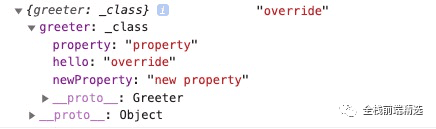
{ new (...args: any[]): {} }表示一個構(gòu)造函數(shù),為了看起來清晰一些,我們也可以將其聲明到外面:
      /**
 *構(gòu)造函數(shù)類型
 *
 * @export
 * @interface Constructable
 */
export interface IConstructable {
new (...args:any[]):any
}
properties
屬性裝飾器有兩個參數(shù):
- 對于靜態(tài)成員來說是類的構(gòu)造函數(shù),對于實例成員是類的原型對象。
- 成員的key。
descriptor不會做為參數(shù)傳入屬性裝飾器,這與TypeScript是如何初始化屬性裝飾器的有關(guān)。因為目前沒有辦法在定義一個原型對象的成員時描述一個實例屬性,并且沒辦法監(jiān)視或修改一個屬性的初始化方法。返回值也會被忽略。因此,屬性描述符只能用來監(jiān)視類中是否聲明了某個名字的屬性。
          function setDefaultValue(target: Object, propertyName: string) {
      target[propertyName] = "Nealayng";
    }

class Person {
      @setDefaultValue
      name: string;
    }

console.log(new Person().name); // 輸出: Nealayng
將上面的代碼修改一下,我們給靜態(tài)成員添加一個 Decorator
          function setDefaultValue(target: Object, propertyName: string) {
console.log(target === Person);

      target[propertyName] = "Nealayng";
    }

class Person {
      @setDefaultValue
static displayName = 'PersonClass'

      name: string;

constructor(name:string){
this.name = name;
      }
    }

console.log(Person.prototype);
console.log(new Person('全棧前端精選').name); // 輸出: 全棧前端精選
console.log(Person.displayName); // 輸出: Nealayng
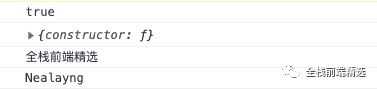
以此可以驗證,上面我們說的:Decorator 的第一個參數(shù),對于靜態(tài)成員來說是類的構(gòu)造函數(shù),對于實例成員是類的原型對象
methods
方法裝飾器表達式會在運行時當(dāng)作函數(shù)被調(diào)用,傳入下列3個參數(shù):
- 對于靜態(tài)成員來說是類的構(gòu)造函數(shù),對于實例成員是類的原型對象。
- 成員的名字。
- 成員的屬性描述符
descriptor。
注意: 如果代碼輸出目標(biāo)版本小于ES5,descriptor將會是undefined。
          function log(
      target: Object,
      propertyName: string,
      descriptor: TypedPropertyDescriptor<(...args: any[]) => any>
    ) {
const method = descriptor.value;
      descriptor.value = function(...args: any[]) {
// 將參數(shù)轉(zhuǎn)為字符串
const params: string = args.map(a => JSON.stringify(a)).join();

const result = method!.apply(this, args);

// 將結(jié)果轉(zhuǎn)為字符串
const resultString: string = JSON.stringify(result);

console.log(`Call:${propertyName}(${params}) => ${resultString}`);

return result;
      };
    }

class Author {
constructor(private firstName: string, private lastName: string) {}

      @log
      say(message: string): string {
return `${message} by: ${this.lastName}${this.firstName}`;
      }
    }

const author:Author = new Author('Yang','Neal');
    author.say('《全站前端精選》');//Call:say("全站前端精選") => "全站前端精選 by: NealYang"
上述的代碼比較簡單,也就不做過多解釋了。其中需要注意的是屬性描述符 descriptor 的類型和許多文章寫的類型有些不同:propertyDescriptor: PropertyDescriptor。

從官方的聲明文件可以看出,descriptor 設(shè)置為TypedPropertyDescriptor加上泛型約束感覺更加的嚴(yán)謹(jǐn)一些。
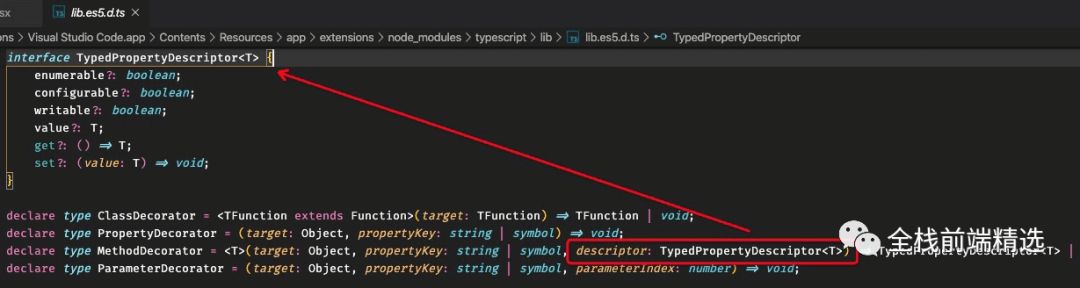
當(dāng)然,官網(wǎng)也是直接聲明為類型PropertyDescriptor的。這個,仁者見仁。
accessors
訪問器,不過是類聲明中屬性的讀取訪問器和寫入訪問器。訪問器裝飾器表達式會在運行時當(dāng)作函數(shù)被調(diào)用,傳入下列3個參數(shù):
- 對于靜態(tài)成員來說是類的構(gòu)造函數(shù),對于實例成員是類的原型對象。
- 成員的名字。
- 成員的屬性描述符。
如果代碼輸出目標(biāo)版本小于ES5,Property Descriptor將會是undefined。同時 TypeScript 不允許同時裝飾一個成員的get和set訪問器
          function Enumerable(
      target: any,
      propertyKey: string,
      descriptor: PropertyDescriptor
) {
//make the method enumerable
      descriptor.enumerable = true;
    }

class Person {
      _name: string;

constructor(name: string) {
this._name = name;
      }

      @Enumerable
get name() {
return this._name;
      }
    }

console.log("-- creating instance --");
let person = new Person("Diana");
console.log("-- looping --");
for (let key in person) {
console.log(key + " = " + person[key]);
    }
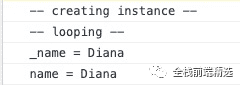
如果上面 get 不添加Enumerable的話,那么 for in 只能出來_name _name = Diana
parameters
參數(shù)裝飾器表達式會在運行時當(dāng)作函數(shù)被調(diào)用,傳入下列3個參數(shù):
- 對于靜態(tài)成員來說是類的構(gòu)造函數(shù),對于實例成員是類的原型對象。
- 成員的名字。
- 參數(shù)在函數(shù)參數(shù)列表中的索引。
參數(shù)裝飾器只能用來監(jiān)視一個方法的參數(shù)是否被傳入。
在下面的示例中,我們將使用參數(shù)裝飾器@notNull來注冊目標(biāo)參數(shù)以進行非空驗證,但是由于僅在加載期間調(diào)用此裝飾器(而不是在調(diào)用方法時),因此我們還需要方法裝飾器@validate,它將攔截方法調(diào)用并執(zhí)行所需的驗證。
      function notNull(target: any, propertyKey: string, parameterIndex: number) {
console.log("param decorator notNull function invoked ");
    Validator.registerNotNull(target, propertyKey, parameterIndex);
}

function validate(target: any, propertyKey: string, descriptor: PropertyDescriptor) {
console.log("method decorator validate function invoked ");
let originalMethod = descriptor.value;
//wrapping the original method
    descriptor.value = function (...args: any[]) {//wrapper function
if (!Validator.performValidation(target, propertyKey, args)) {
console.log("validation failed, method call aborted: " + propertyKey);
return;
        }
let result = originalMethod.apply(this, args);
return result;
    }
}

class Validator {
    private static notNullValidatorMap: Map<any, Map<string, number[]>> = new Map();

//todo add more validator maps
static registerNotNull(target: any, methodName: string, paramIndex: number): void {
let paramMap: Map<string, number[]> = this.notNullValidatorMap.get(target);
if (!paramMap) {
            paramMap = new Map();
this.notNullValidatorMap.set(target, paramMap);
        }
let paramIndexes: number[] = paramMap.get(methodName);
if (!paramIndexes) {
            paramIndexes = [];
            paramMap.set(methodName, paramIndexes);
        }
        paramIndexes.push(paramIndex);
    }

static performValidation(target: any, methodName: string, paramValues: any[]): boolean {
let notNullMethodMap: Map<string, number[]> = this.notNullValidatorMap.get(target);
if (!notNullMethodMap) {
return true;
        }
let paramIndexes: number[] = notNullMethodMap.get(methodName);
if (!paramIndexes) {
return true;
        }
let hasErrors: boolean = false;
for (const [index, paramValue] of paramValues.entries()) {
if (paramIndexes.indexOf(index) != -1) {
if (!paramValue) {
console.error("method param at index " + index + " cannot be null");
                    hasErrors = true;
                }
            }
        }
return !hasErrors;
    }
}

class Task {
    @validate
    run(@notNull name: string): void {
console.log("running task, name: " + name);
    }
}

console.log("-- creating instance --");
let task: Task = new Task();
console.log("-- calling Task#run(null) --");
task.run(null);
console.log("----------------");
console.log("-- calling Task#run('test') --");
task.run("test");
對應(yīng)的輸出位:
      param decorator notNull function invoked
method decorator validate function invoked
-- creating instance --
-- calling Task#run(null) --
method param at index 0 cannot be null
validation failed, method call aborted: run
----------------
-- calling Task#run('test') --
running task, name: test
@validate裝飾器把run方法包裹在一個函數(shù)里在調(diào)用原先的函數(shù)前驗證函數(shù)參數(shù).
裝飾器工廠
裝飾器工廠真的也就是一個噱頭(造名詞)而已,其實也是工廠的概念哈,畢竟官方也是這么號稱的。在實際項目開發(fā)中,我們使用的也還是挺多的
**裝飾器工廠就是一個簡單的函數(shù),它返回一個表達式,以供裝飾器在運行時調(diào)用。**其實說白了,就是一個函數(shù) return 一個 Decorator。非常像 JavaScript 函數(shù)柯里化,個人稱之為“函數(shù)式Decorator”~

      import { logClass } from './class-decorator';
import { logMethod } from './method-decorator';
import { logProperty } from './property-decorator';
import { logParameter } from './parameter-decorator';

// 裝飾器工廠,根據(jù)傳入的參數(shù)調(diào)用相應(yīng)的裝飾器
export function log(...args) {
switch (args.length) {
case 3: // 可能是方法裝飾器或參數(shù)裝飾器
// 如果第三個參數(shù)是數(shù)字,那么它是索引,所以這是參數(shù)裝飾器
if typeof args[2] === "number") {
return logParameter.apply(this, args);
            }
return logMethod.apply(this, args);
case 2: // 屬性裝飾器
return logProperty.apply(this, args);
case 1: // 類裝飾器
return logClass.apply(this, args);
default: // 參數(shù)數(shù)目不合法
throw new Error('Not a valid decorator');
    }
}

@log
class Employee {
    @log
    private name: string;

constructor(name: string) {
this.name = name;
    }

    @log
    greet(@log message: string): string {
return `${this.name} says: ${message}`;
    }
}
加載順序
一個類中,不同位置聲明的裝飾器,按照以下規(guī)定的順序應(yīng)用:
- 有多個參數(shù)裝飾器(
parameterDecorator)時,從最后一個參數(shù)依次向前執(zhí)行 - 方法(
methodDecorator)和方法參數(shù)裝飾器(parameterDecorator)中,參數(shù)裝飾器先執(zhí)行 - 類裝飾器(
classDecorator)總是最后執(zhí)行。 - 方法(
methodDecorator)和屬性裝飾器(propertyDecorator),誰在前面誰先執(zhí)行。因為參數(shù)屬于方法一部分,所以參數(shù)會一直緊緊挨著方法執(zhí)行。
      function ClassDecorator() {
return function (target) {
console.log("I am class decorator");
    }
}
function MethodDecorator() {
return function (target, methodName: string, descriptor: PropertyDescriptor) {
console.log("I am method decorator");
    }
}
function Param1Decorator() {
return function (target, methodName: string, paramIndex: number) {
console.log("I am parameter1 decorator");
    }
}
function Param2Decorator() {
return function (target, methodName: string, paramIndex: number) {
console.log("I am parameter2 decorator");
    }
}
function PropertyDecorator() {
return function (target, propertyName: string) {
console.log("I am property decorator");
    }
}

@ClassDecorator()
class Hello {
    @PropertyDecorator()
    greeting: string;


    @MethodDecorator()
    greet( @Param1Decorator() p1: string, @Param2Decorator() p2: string) { }
}
輸出為:
      I am parameter2 decorator
I am parameter1 decorator
I am method decorator
I am property decorator
I am class decorator
實戰(zhàn)
由于是業(yè)務(wù)代碼,與技術(shù)無關(guān)瑣碎,只截取部分代碼示意,非 Decorator 代碼,以截圖形式
這應(yīng)該也是整理這篇文章最開始的原因了。直接說說項目(rax1.0+Decorator)吧。
需求很簡單,就是是編寫一個頁面的容器。
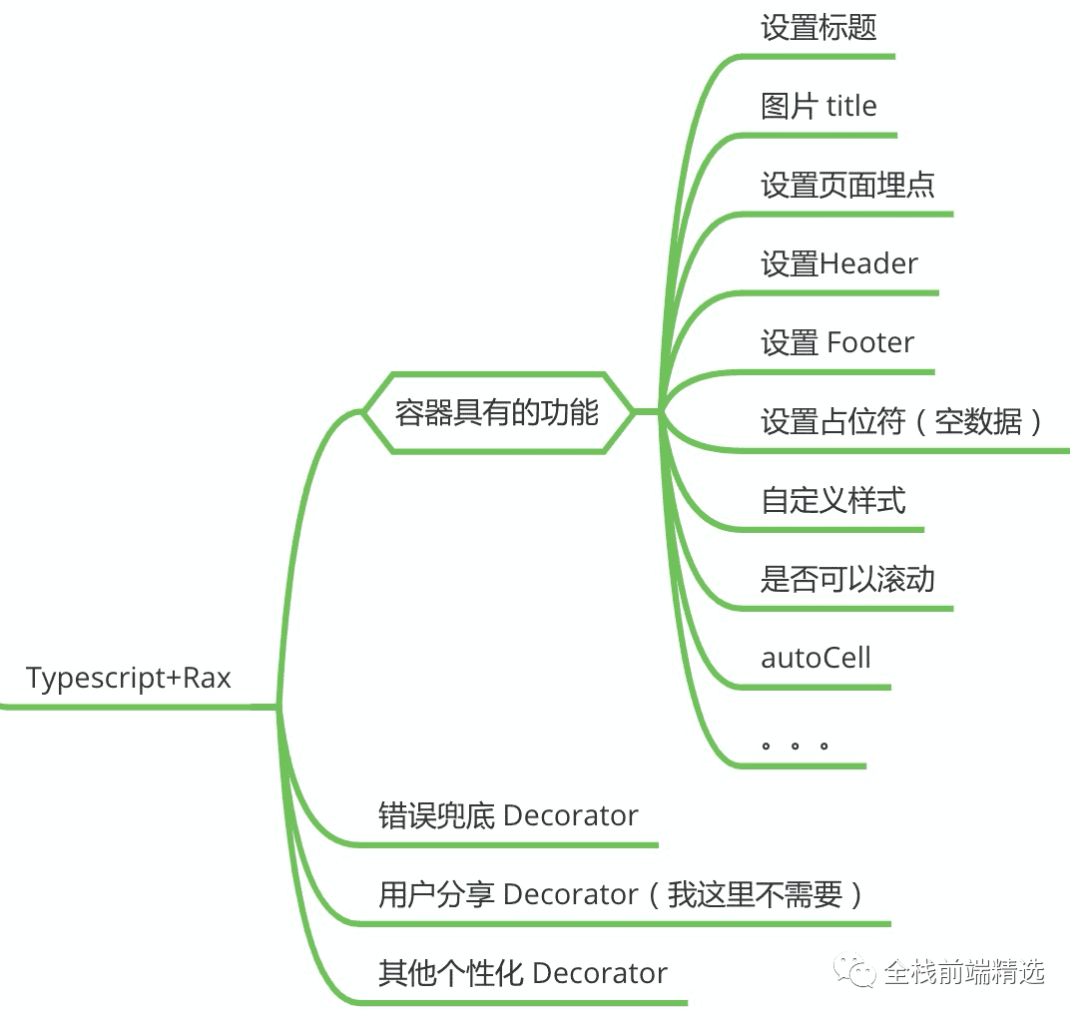
部分項目結(jié)構(gòu):
      pm-detail
├─ constants
│    └─ index.ts  //常量
├─ index.css
├─ index.tsx  // 入口文件
└─ modules  // 模塊
       └─ page-container  // 容器組件
              ├─ base   //容器基礎(chǔ)組件
              ├─ decorator  // 裝飾器
              ├─ index.tsx
              ├─ lib  // 工具
              └─ style.ts
重點看下如下幾個文件
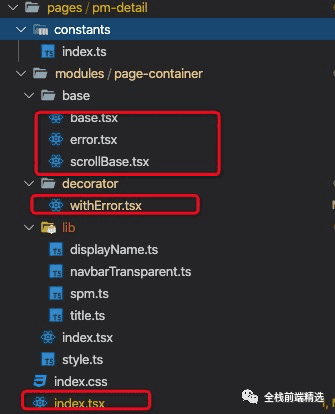
- base.tsx
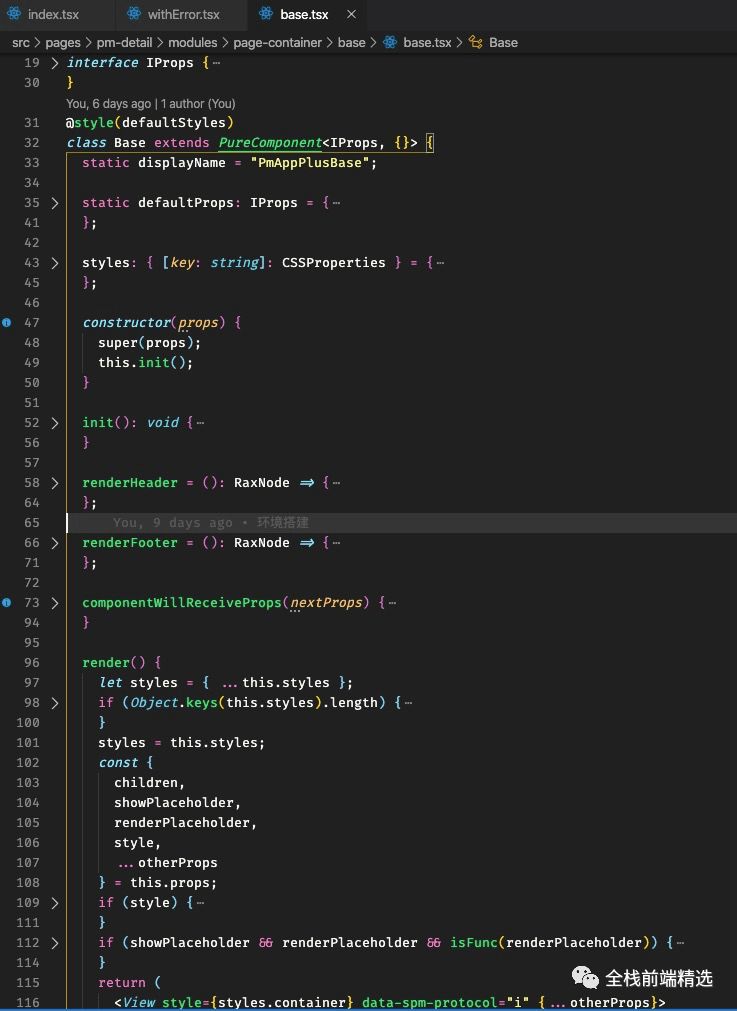
其實是基礎(chǔ)功能的封裝
在此基礎(chǔ)上,我們需要個能滾動的容器
- scrollbase.tsx
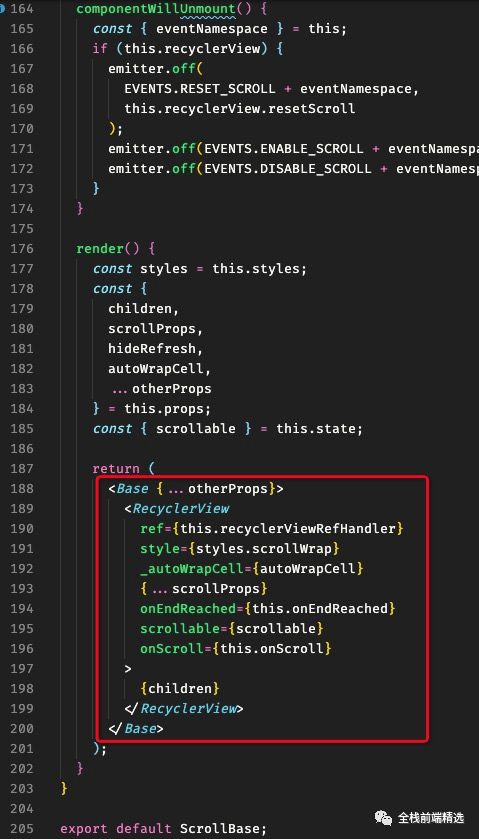
也是基于 Base.tsx 基礎(chǔ)上,封裝一些滾動容器具有的功能
- style decorator
      import is from './util/is';
import map from './util/map';

const isObject = is(Object);
const isFunction = is(Function);

class Style {
static factory = (...args) => new Style(...args);

  analyze(styles, props, state) {
return map(v => {
if (isFunction(v)) {
const r = v.call(this.component, props, state);
return isObject(r) ? this.analyze(r, props, state) : r;
      }
if (isObject(v)) return this.analyze(v, props, state);
return v;
    })(styles);
  }

  generateStyles(props, state) {
const { styles: customStyles } = props;
const mergedStyles = this.analyze(this.defaultStyles, props, state);
if (customStyles) {
Object.keys(customStyles).forEach(key => {
if (mergedStyles[key]) {
if (isObject(mergedStyles[key])) {
Object.assign(mergedStyles[key], customStyles[key]);
          } else {
            mergedStyles[key] = customStyles[key];
          }
        } else {
          mergedStyles[key] = customStyles[key];
        }
      });
    }
return {
styles: mergedStyles,
    };
  }

constructor(defaultStyles = {}, { vary = true } = {}) {
const manager = this;

this.defaultStyles = defaultStyles;

return BaseComponent => {
const componentWillMount = BaseComponent.prototype.componentWillMount;
const componentWillUpdate = BaseComponent.prototype.componentWillUpdate;

      BaseComponent.prototype.componentWillMount = function() {
        manager.component = this;
Object.assign(this, manager.generateStyles(this.props, this.state));
return componentWillMount && componentWillMount.apply(this, arguments);
      };

if (vary) {
        BaseComponent.prototype.componentWillUpdate = function(nextProps, nextState) {
Object.assign(this, manager.generateStyles(nextProps, nextState));
return componentWillUpdate && componentWillUpdate.apply(this, arguments);
        };
      }

return BaseComponent;
    };
  }
}

export default Style.factory;
然后我們需要一個錯誤的兜底功能,但是這個本身應(yīng)該不屬于容器的功能。所以我們封裝一個 errorDecorator
- withError.txs
      function withError<T extends IConstructable>(Wrapped: T) {
const willReceiveProps = Wrapped.prototype.componentWillReceiveProps;
const didMount = Wrapped.prototype.componentDidMount;
const willUnmount = Wrapped.prototype.componentWillUnmount;

return class extends Wrapped {
static displayName: string = `WithError${getDisplayName(Wrapped)}·`;

static defaultProps: IProps = {
isOffline: false,
isError: false,
errorRefresh: () => {
window.location.reload(true);
      }
    };

    private state: StateType;
    private eventNamespace: string = "";

constructor(...args: any[]) {
super(...args);
const { isOffline, isError, errorRefresh, tabPanelIndex } = this.props;
this.state = {
        isOffline,
        isError,
        errorRefresh
      };
if (tabPanelIndex > -1) {
this.eventNamespace = `.${tabPanelIndex}`;
      }
    }

    triggerErrorHandler = e => {...};

    componentWillReceiveProps(...args) {
if (willReceiveProps) {
        willReceiveProps.apply(this, args);
      }
const [nextProps] = args;
const { isOffline, isError, errorRefresh } = nextProps;
this.setState({
        isOffline,
        isError,
        errorRefresh
      });
    }

    componentDidMount(...args) {
if (didMount) {
        didMount.apply(this, args);
      }
const { eventNamespace } = this;
      emitter.on(
        EVENTS.TRIGGER_ERROR + eventNamespace,
this.triggerErrorHandler
      );
    }

    componentWillUnmount(...args) {
if (willUnmount) {
        willUnmount.apply(this, args);
      }
const { eventNamespace } = this;
      emitter.off(
        EVENTS.TRIGGER_ERROR + eventNamespace,
this.triggerErrorHandler
      );
    }

    render() {
const { isOffline, isError, errorRefresh } = this.state;

if (isOffline || isError) {
let errorType = "system";
if (isOffline) {
          errorType = "offline";
        }
return <Error errorType={errorType} refresh={errorRefresh} />;
      }

      return super.render();
    }
  };
}
然后我們進行整合導(dǎo)出
      import { createElement, PureComponent, RaxNode } from 'rax';
import ScrollBase from "./base/scrollBase";
import withError from "./decorator/withError";

interface IScrollContainerProps {
spmA:string;
  spmB:string;
  renderHeader?:()=>RaxNode;
  renderFooter?:()=>RaxNode;
  [key:string]:any;
}
@withError
class ScrollContainer extends PureComponent<IScrollContainerProps,{}> {

  render() {
return <ScrollBase {...this.props} />;
  }
}

export default ScrollContainer;
使用如下:
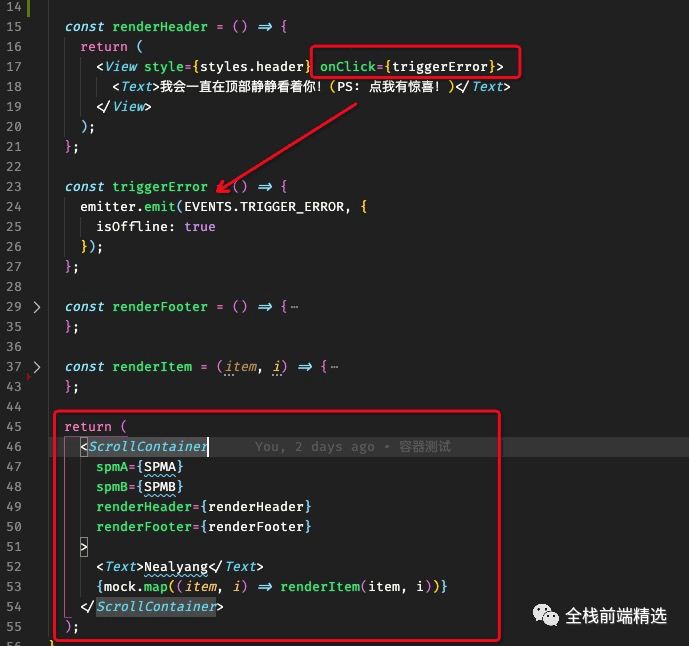
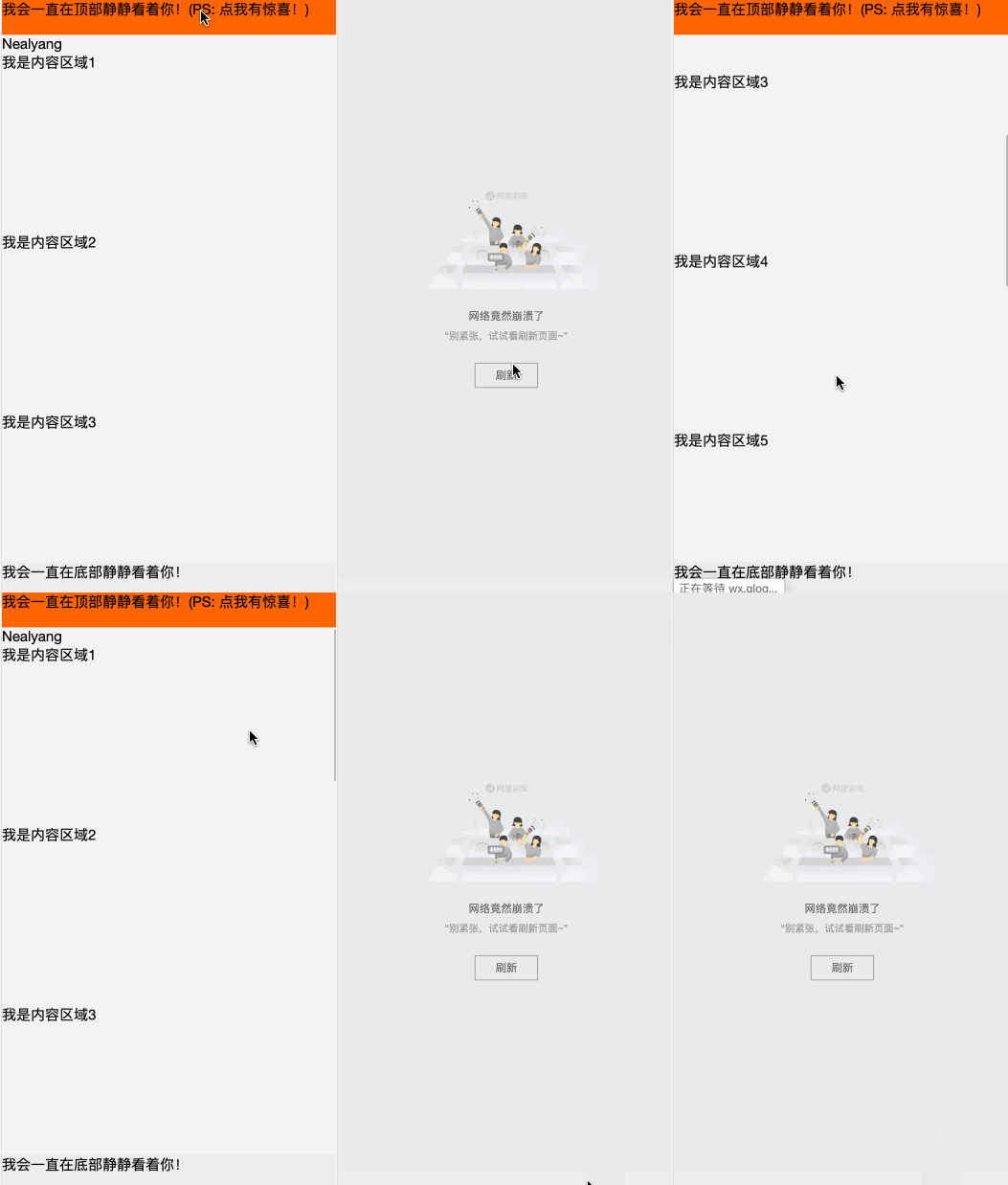
思維導(dǎo)圖
最后附一張,本文思維導(dǎo)圖。
公眾號回復(fù):【xmind1】 獲取思維導(dǎo)圖源文件
參考文獻
- TypeScript裝飾器(decorators)
- 文檔
- TypeScript - Class Decorators
完
?? 看 完 三 件 事
如 果 你 覺 得 這 篇 內(nèi) 容 對 你 挺 有 啟 發(fā) , 我 想 邀 請 你 幫 我 三 個 小 忙 :
- 點 贊 , 讓 更 多 的 人 也 能 看 到 這 篇 內(nèi) 容 ( 收 藏 不 點 贊 , 都 是 耍 流 氓 ) 。
- 關(guān) 注 公 眾 號 「 入 坑 互 聯(lián) 網(wǎng) 」 , 不 定 期 分 享 原 創(chuàng) 知 識 。
- 也 看 看 其 它 文 章
超 實 用 面 試 題 - - 真 實 面 試 經(jīng) 驗 歸 納 ! ! !
- E N D -
結(jié) 伴 同 行 前 端 路
