
如何使用 C# 中的 HashSet
譯文鏈接:https://www.infoworld.com/article/3586972/how-to-use-hashset-in-csharp.html
HashSet 是一個優(yōu)化過的無序集合,提供對元素的高速查找和高性能的set集合操作,而且 HashSet 是在 .NET 3.5 中被引入的,在 System.Collection.Generic 命名空間下,這篇就來討論一下如何使用這個 HashSet。
要運行本篇文章的案例代碼,你需要安裝一下 Visual Studio 2019,如果沒有的話可以到官網(wǎng)下載一下。
使用 VS 創(chuàng)建一個 .NET Core 控制臺程序
首先,我通過 VS2019 創(chuàng)建一個 .NET Core 控制臺程序,創(chuàng)建可以參考下面步驟:
打開 Visual Studio IDE
點擊創(chuàng)建
Create new project在
Create new project窗口上,從模板列表中選擇:Console App (.NET Core)點擊下一步
在
Configure your new project界面填好你的項目名稱和存放路徑
這樣我們就創(chuàng)建好了一個新項目,本文的后面部分就會在這個項目里來給大家分享 HashSet 的一些必備知識。
HashSet 到底是什么
所謂的HashSet,指的就是 System.Collections.Generic 命名空間下的 HashSet 類,它是一個高性能,無序的集合,因此HashSet它并不能做排序操作,也不能包含任何重復(fù)的元素,Hashset 也不能像數(shù)組那樣使用索引,所以在 HashSet 上你無法使用 for 循環(huán),只能使用 foreach 進行迭代,HashSet 通常用在處理元素的唯一性上有著超高的性能。
HashSet 實現(xiàn)了如下幾個接口:
public?class?HashSet<T>?:?System.Collections.Generic.ICollection<T>,
System.Collections.Generic.IEnumerable<T>,?
System.Collections.Generic.IReadOnlyCollection<T>,
System.Collections.Generic.ISet<T>,
System.Runtime.Serialization.IDeserializationCallback,
System.Runtime.Serialization.ISerializable
{
}
HashSet 只能包含唯一的元素,它的內(nèi)部結(jié)構(gòu)也為此做了專門的優(yōu)化,值得注意的是,HashSet 也可以存放單個的 null 值,可以得出這么一個結(jié)論:如何你想擁有一個具有唯一值的集合,那么 HashSet 就是你最好的選擇,何況它還具有超高的檢索性能。
從 HashSet 中查找一個元素
如果想判斷某一個元素是否在 HashSet 內(nèi),建議使用 Contains 進行判斷,代碼如下:
????????static?void?Main(string[]?args)
????????{
????????????HashSet<string>?hashSet?=?new?HashSet<string>();
????????????hashSet.Add("A");
????????????hashSet.Add("B");
????????????hashSet.Add("C");
????????????hashSet.Add("D");
????????????if?(hashSet.Contains("D"))
????????????????Console.WriteLine("The?required?element?is?available.");
????????????else
????????????????Console.WriteLine("The?required?element?isn’t?available.");
????????????Console.ReadKey();
????????}
HashSet中的元素唯一性
如果你向 HashSet 中插入重復(fù)的元素,它的內(nèi)部會忽視這次操作而不像別的集合一樣拋出異常,接下來展示一下代碼:
????????static?void?Main(string[]?args)
????????{
????????????HashSet<string>?hashSet?=?new?HashSet<string>();
????????????hashSet.Add("A");
????????????hashSet.Add("B");
????????????hashSet.Add("C");
????????????hashSet.Add("D");
????????????hashSet.Add("D");
????????????Console.WriteLine("The?number?of?elements?is:?{0}",?hashSet.Count);
????????????Console.ReadKey();
????????}
當(dāng)你執(zhí)行了這個程序,輸出結(jié)果如下圖:

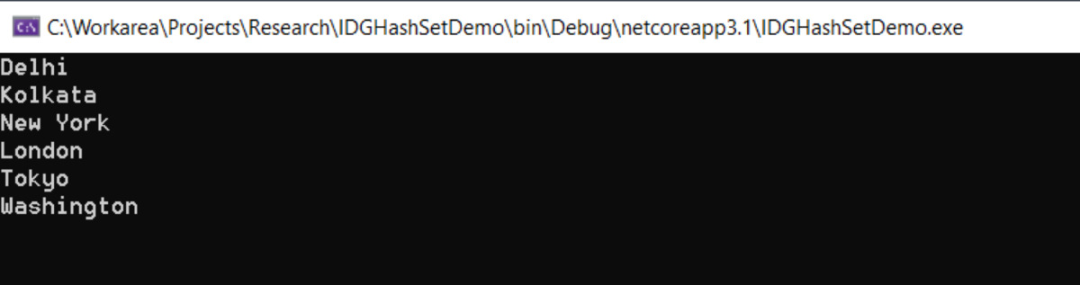
現(xiàn)在可以考慮一下下面的代碼段,它展示了重復(fù)的元素是如何被剔除的。
????????static?void?Main(string[]?args)
????????{
????????????string[]?cities?=?new?string[]?{
????????????????"Delhi",
????????????????"Kolkata",
????????????????"New?York",
????????????????"London",
????????????????"Tokyo",
????????????????"Washington",
????????????????"Tokyo"
????????????};
????????????HashSet<string>?hashSet?=?new?HashSet<string>(cities);
????????????foreach?(var?city?in?hashSet)
????????????{
????????????????Console.WriteLine(city);
????????????}
????????}
當(dāng)你執(zhí)行完上面的程序,重復(fù)的城市名稱已經(jīng)被移除了。
從 HashSet 中移除元素
從HashSet 中刪除某一個元素可以調(diào)用 Remove 方法,它的語法結(jié)構(gòu)如下:
public?bool?Remove?(T?item);
如果在集合中找到了這個元素,Remove方法將會刪除這個元素并且返回true,否則返回 false。
下面的代碼片段展示了如何使用 Remove 方法刪除 HashSet 中的元素
string?item?=?"D";
if(hashSet.Contains(item))
{
???hashSet.Remove(item);
}
如果你想刪除 HashSet 中的所有元素,可以調(diào)用 Clear 方法。
HashSet 的 set操作
HashSet提供了非常多的方法用于 set集合 操作上,比如說:IntersectWith, UnionWith, IsProperSubsetOf, ExceptWith, 和 SymmetricExceptWith
IsProperSubsetOf
這個 IsProperSubsetOf 用于判斷 HashSet 是否為某一個集合的完全子集,可以看下面的例子:
HashSet<string>?setA?=?new?HashSet<string>()?{?"A",?"B",?"C",?"D"?};
HashSet<string>?setB?=?new?HashSet<string>()?{?"A",?"B",?"C",?"X"?};
HashSet<string>?setC?=?new?HashSet<string>()?{?"A",?"B",?"C",?"D",?"E"?};
if?(setA.IsProperSubsetOf(setC))
???Console.WriteLine("setC?contains?all?elements?of?setA.");
if?(!setA.IsProperSubsetOf(setB))
???Console.WriteLine("setB?does?not?contains?all?elements?of?setA.");
如果你執(zhí)行了上面這個程序,你會在控制臺上看到如下的輸出:

UnionWith
UnionWith方法常用于集合的合并,比如說下面的代碼:
HashSet<string>?setA?=?new?HashSet<string>()?{?"A",?"B",?"C",?"D",?"E"?};
HashSet<string>?setB?=?new?HashSet<string>()?{?"A",?"B",?"C",?"X",?"Y"?};
setA.UnionWith(setB);
foreach(string?str?in?setA)
{
???Console.WriteLine(str);
}
當(dāng)你執(zhí)行完上面的代碼,SetB 集合會被 SetA 集合吞掉,最后 SetA 集合將會是包括:"A", "B", "C", "D", "E", "X", and "Y" 。
IntersectWith
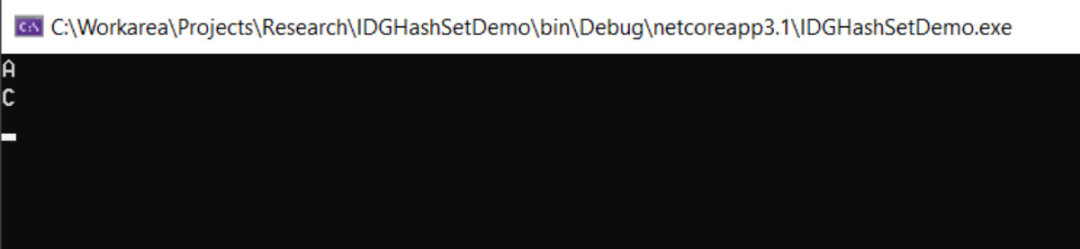
IntersectWith 方法常用于表示兩個 HashSet 的交集,下面的例子或許會讓你更加理解:
HashSet<string>?setA?=?new?HashSet<string>()?{?"A",?"B",?"C",?"D",?"E"?};
HashSet<string>?setB?=?new?HashSet<string>()?{?"A",?"X",?"C",?"Y"};
setA.IntersectWith(setB);
foreach?(string?str?in?setA)
{
????Console.WriteLine(str);
}
當(dāng)你運行了上面的這段程序,只有兩個 HashSet 中都存在的元素才會輸出到控制臺中,輸出結(jié)果如下所示:
ExceptWith
ExceptWith 方法表示數(shù)學(xué)上的減法操作,這個時間復(fù)雜度是 O(N),假定你有兩個HashSet 集合,分別叫 setA 和 setB,并且用了下面的語句。
setA.ExceptWith(setB);
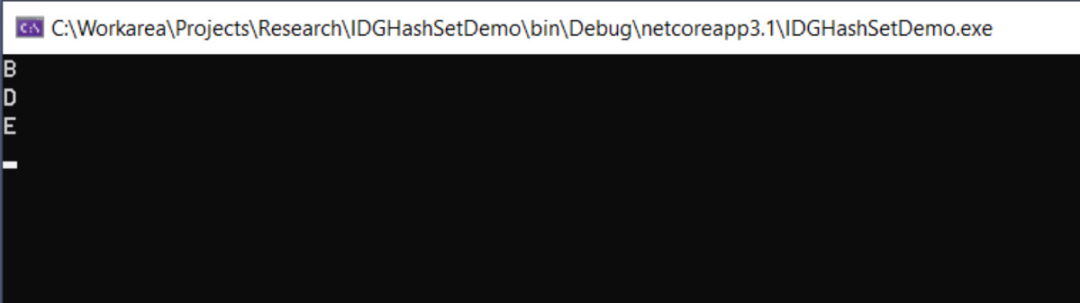
它返回的元素為:setA中有,setB中沒有 的最終結(jié)果,如果還不明白的話,使用如下代碼輔助理解:
HashSet<string>?setA?=?new?HashSet<string>()?{?"A",?"B",?"C",?"D",?"E"?};
HashSet<string>?setB?=?new?HashSet<string>()?{?"A",?"X",?"C",?"Y"?};
setA.ExceptWith(setB);
foreach?(string?str?in?setA)
{
???Console.WriteLine(str);
}
當(dāng)你執(zhí)行了上面這段程序,元素 B,D,E 將會輸出到控制臺上。
SymmetricExceptWith
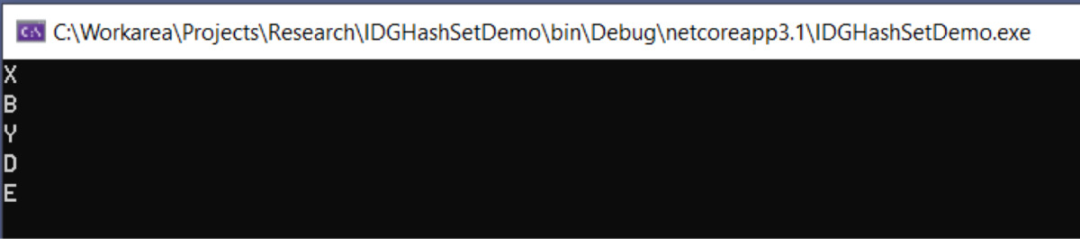
SymmetricExceptWith 方法常用于修改一個 HashSet 來存放兩個 HashSet 都是唯一的元素,換句話說,我要的就是兩個集合都不全有的元素,如果還不明白的話,考慮下面的代碼段:
HashSet<string>?setA?=?new?HashSet<string>()?{?"A",?"B",?"C",?"D",?"E"?};
HashSet<string>?setB?=?new?HashSet<string>()?{?"A",?"X",?"C",?"Y"?};
setA.SymmetricExceptWith(setB);
foreach?(string?str?in?setA)
{
??Console.WriteLine(str);
}
當(dāng)你執(zhí)行完上面的代碼,你會發(fā)現(xiàn),setA中有而setB中沒有 和 setB中有而setA中沒有的元素將會輸出到控制臺中。
我們知道數(shù)組的平均復(fù)雜度是 O(N),這里的 n 表示數(shù)組里的元素數(shù)量,而訪問 HashSet 中的某一個元素,它的復(fù)雜度為 O(1),這個常量復(fù)雜度就決定了 HashSet 在快速檢索 和執(zhí)行 set集合 操作上是一個非常好的選擇,你也可以使用 List 去存儲某些有指定順序的元素,同時也可以包含重復(fù)的值。