
【死磕 NIO】— 深入分析Channel和FileChannel
大家好,我是大明哥,這次我們來(lái)看看NIO的第二個(gè)組件:Channel。
上篇文章[【死磕 NIO】— 深入分析Buffer]介紹了 NIO 中的 Buffer,Buffer 我們可以認(rèn)為他是裝載數(shù)據(jù)的容器,有了容器,還需要傳輸數(shù)據(jù)的通道才能完成數(shù)據(jù)的傳輸,這個(gè)通道就是今天要介紹的 Channel。
Channel 我們可以認(rèn)為它是本地 I/O 設(shè)備、網(wǎng)絡(luò) I/O 的通信橋梁,只有搭建了這座橋梁,數(shù)據(jù)才能被寫入 Buffer 。
Channel
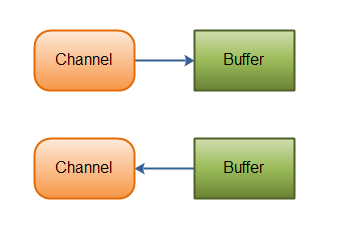
在 NIO 中,Channel 和 Buffer 是相輔相成的,我們只能從 Channel 讀取數(shù)據(jù)到 Buffer 中,或者從 Buffer 寫入數(shù)據(jù)到 Channle,如下圖:
Channel 類似于 OIO 中的流(Stream),但是又有所區(qū)別:
流是單向的,但 Channel 是雙向的,可讀可寫。
流是阻塞的,但 Channle 可以異步讀寫。
流中的數(shù)據(jù)可以選擇性的先讀到緩存中,而 Channel 的數(shù)據(jù)總是要先讀到一個(gè) Buffer 中,或從 Buffer 中寫入,如上圖。
NIO 中通過(guò) Channel 封裝了對(duì)數(shù)據(jù)源的操作,通過(guò) Channel 我們可以操作數(shù)據(jù)源,但是又不必關(guān)注數(shù)據(jù)源的具體物理結(jié)構(gòu),這個(gè)數(shù)據(jù)源可以是文件,也可以是socket。
Channel 的接口定義如下:
public interface Channel extends Closeable {

    public boolean isOpen();

    public void close() throws IOException;
}
Channel 接口僅定義兩個(gè)方法:
isOpen():Channel 是否打開close():關(guān)閉 Channel
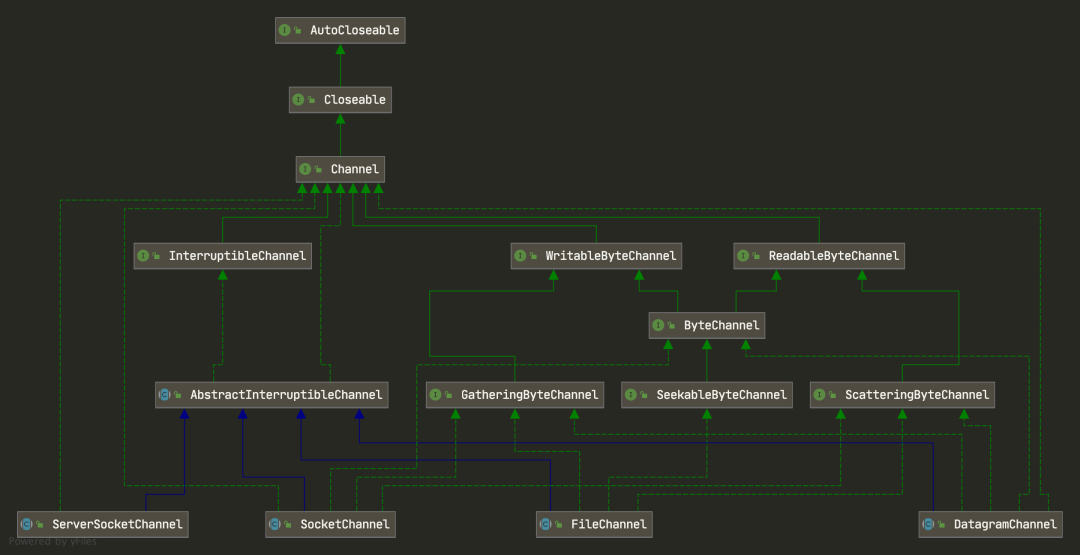
它的主要實(shí)現(xiàn)有:
FileChannel:文件通道,用于文件的數(shù)據(jù)讀寫。
SocketChannel:套接字通道,能通過(guò) TCP 讀寫網(wǎng)絡(luò)中的數(shù)據(jù)。
ServerSocketChannel:服務(wù)器套接字通道,監(jiān)聽(tīng)新進(jìn)來(lái)的 TCP 連接,像 web 服務(wù)器那樣,對(duì)每一個(gè)新進(jìn)來(lái)的連接都會(huì)創(chuàng)建一個(gè) SocketChannel。
DatagramChannel:數(shù)據(jù)報(bào)通道,能通過(guò) UDP 讀寫網(wǎng)絡(luò)中的數(shù)據(jù)。
基本類圖如下:
下面就 FileChannel 做詳細(xì)介紹。
FileChannel
FileChannel 主要是用來(lái)讀寫和映射一個(gè)系統(tǒng)文件的 Channel,它是一個(gè)抽象類,具體由 FileChannelImpl 來(lái)實(shí)現(xiàn)。
定義如下:
package java.nio.channels;

public abstract class FileChannel
    extends AbstractInterruptibleChannel
    implements SeekableByteChannel, GatheringByteChannel, ScatteringByteChannel{
    /**
     * 初始化一個(gè)無(wú)參構(gòu)造器.
     */
    protected FileChannel() { }

    //打開或創(chuàng)建一個(gè)文件,返回一個(gè)文件通道來(lái)訪問(wèn)文件
    public static FileChannel open(Path path,
                                   Set options,
                                   FileAttribute... attrs)
        throws IOException
    {
        FileSystemProvider provider = path.getFileSystem().provider();
        return provider.newFileChannel(path, options, attrs);
    }

    private static final FileAttribute[] NO_ATTRIBUTES = new FileAttribute[0];

    //打開或創(chuàng)建一個(gè)文件,返回一個(gè)文件通道來(lái)訪問(wèn)文件
    public static FileChannel open(Path path, OpenOption... options)
        throws IOException
    {
        Set set = new HashSet(options.length);
        Collections.addAll(set, options);
        return open(path, set, NO_ATTRIBUTES);
    }

  //從這個(gè)通道讀入一個(gè)字節(jié)序列到給定的緩沖區(qū)
    public abstract int read(ByteBuffer dst) throws IOException;

    //從這個(gè)通道讀入指定開始位置和長(zhǎng)度的字節(jié)序列到給定的緩沖區(qū)
    public abstract long read(ByteBuffer[] dsts, int offset, int length)
        throws IOException;

    /**
     * 從這個(gè)通道讀入一個(gè)字節(jié)序列到給定的緩沖區(qū)
     */
    public final long read(ByteBuffer[] dsts) throws IOException {
        return read(dsts, 0, dsts.length);
    }

    /**
     * 從給定的緩沖區(qū)寫入字節(jié)序列到這個(gè)通道
     */
    public abstract int write(ByteBuffer src) throws IOException;

    /**
     * 從給定緩沖區(qū)的子序列向該信道寫入字節(jié)序列
     */
    public abstract long write(ByteBuffer[] srcs, int offset, int length)
        throws IOException;

    /**
     * 從給定的緩沖區(qū)寫入字節(jié)序列到這個(gè)通道
     */
    public final long write(ByteBuffer[] srcs) throws IOException {
        return write(srcs, 0, srcs.length);
    }

    /**
     * 返回通道讀寫緩沖區(qū)中的開始位置
     */
    public abstract long position() throws IOException;

    /**
     * 設(shè)置通道讀寫緩沖區(qū)中的開始位置
     */
    public abstract FileChannel position(long newPosition) throws IOException;

    /**
     * 返回此通道文件的當(dāng)前大小
     */
    public abstract long size() throws IOException;

    /**
     * 通過(guò)指定的參數(shù)size來(lái)截取通道的大小
     */
    public abstract FileChannel truncate(long size) throws IOException;

    /**
     * 強(qiáng)制將通道中的更新文件寫入到存儲(chǔ)設(shè)備(磁盤等)中
     */
    public abstract void force(boolean metaData) throws IOException;

    /**
     * 將當(dāng)前通道中的文件寫入到可寫字節(jié)通道中
   * position就是開始寫的位置,long就是寫的長(zhǎng)度
     */
    public abstract long transferTo(long position, long count,
                                    WritableByteChannel target)
        throws IOException;

    /**
     * 將當(dāng)前通道中的文件寫入可讀字節(jié)通道中
   * position就是開始寫的位置,long就是寫的長(zhǎng)度
     */
    public abstract long transferFrom(ReadableByteChannel src,
                                      long position, long count)
        throws IOException;

    /**
     * 從通道中讀取一系列字節(jié)到給定的緩沖區(qū)中
   * 從指定的讀取開始位置position處讀取
     */
    public abstract int read(ByteBuffer dst, long position) throws IOException;

    /**
     * 從給定的緩沖區(qū)寫入字節(jié)序列到這個(gè)通道
     * 從指定的讀取開始位置position處開始寫
     */
    public abstract int write(ByteBuffer src, long position) throws IOException;


    // -- Memory-mapped buffers --

    /**
     * 一個(gè)文件映射模式類型安全枚舉
     */
    public static class MapMode {

        //只讀映射模型
        public static final MapMode READ_ONLY
            = new MapMode("READ_ONLY");

        //讀寫映射模型
        public static final MapMode READ_WRITE
            = new MapMode("READ_WRITE");

        /**
         * 私有模式(復(fù)制在寫)映射
         */
        public static final MapMode PRIVATE
            = new MapMode("PRIVATE");

        private final String name;

        private MapMode(String name) {
            this.name = name;
        }
    }

    /**
     * 將該通道文件的一個(gè)區(qū)域直接映射到內(nèi)存中
     */
    public abstract MappedByteBuffer map(MapMode mode,
                                         long position, long size)
        throws IOException;

    /**
     * 獲取當(dāng)前通道文件的給定區(qū)域上的鎖
   * 區(qū)域就是從position處開始,size長(zhǎng)度
   * shared為true代表獲取共享鎖,false代表獲取獨(dú)占鎖
     */
    public abstract FileLock lock(long position, long size, boolean shared)
        throws IOException;

    /**
     * 獲取當(dāng)前通道文件上的獨(dú)占鎖
     */
    public final FileLock lock() throws IOException {
        return lock(0L, Long.MAX_VALUE, false);
    }

    /**
     * 嘗試獲取給定的通道文件區(qū)域上的鎖
     * 區(qū)域就是從position處開始,size長(zhǎng)度
   * shared為true代表獲取共享鎖,false代表獲取獨(dú)占鎖
     */
    public abstract FileLock tryLock(long position, long size, boolean shared)
        throws IOException;

    /**
     * 嘗試獲取當(dāng)前通道文件上的獨(dú)占鎖
     */
    public final FileLock tryLock() throws IOException {
        return tryLock(0L, Long.MAX_VALUE, false);
    }

}
打開 FileChannel
在使用 FileChannle 之前我們必須要先打開它,但是我們無(wú)法直接打開一個(gè) FileChannel,需要通過(guò)使用一個(gè) InputStream、OutputStream、RandomAcessFile 來(lái)獲取一個(gè) FileChannel 實(shí)例,如下:
RandomAccessFile accessFile = new RandomAccessFile("/Users/chenssy/Documents/FileChannel.txt","rw");
FileChannel fileChannel = accessFile.getChannel();
調(diào)用 getChannel() 即可獲取 FileChannel 實(shí)例,源碼如下:
public final FileChannel getChannel() {
    synchronized (this) {
        if (channel == null) {
            channel = FileChannelImpl.open(fd, path, true, rw, this);
        }
        return channel;
    }
}
getChnnel() 方法很簡(jiǎn)單,直接調(diào)用 FileChannelImpl 的靜態(tài)方法 open():
public static FileChannel open(Path path,
        Set options,
        FileAttribute... attrs) throws IOException{
    FileSystemProvider provider = path.getFileSystem().provider();
    return provider.newFileChannel(path, options, attrs);
}
從 FileChannel 讀數(shù)據(jù)
調(diào)用 FileChannel 的 read() 方法即可從 FileChannel 中獲取數(shù)據(jù),當(dāng)然不是直接獲取,而是需要先寫入到 Buffer 中,所以調(diào)用 read() 之前,我們需要分配一個(gè) Buffer,然后調(diào)用 read() ,該方法返回 int 表示有多少數(shù)據(jù)讀取到了 Buffer 中了,如果返回 -1 表示已經(jīng)到文件末尾了。
ByteBuffer buffer = ByteBuffer.allocate(1024);
int readCount = fileChannel.read(buffer);
FileChannel 僅定義了方法,具體實(shí)現(xiàn)在 FileChannelImpl,如下:
public int read(ByteBuffer dst) throws IOException {
    ensureOpen();
    if (!readable)
        throw new NonReadableChannelException();
        // 加鎖
    synchronized (positionLock) {
        int n = 0;
        int ti = -1;
        try {
            begin();
            ti = threads.add();
            if (!isOpen())
                return 0;
            do {
                // 通過(guò)IOUtil.read實(shí)現(xiàn)
                n = IOUtil.read(fd, dst, -1, nd);
            } while ((n == IOStatus.INTERRUPTED) && isOpen());
            return IOStatus.normalize(n);
        } finally {
            threads.remove(ti);
            end(n > 0);
            assert IOStatus.check(n);
        }
    }
}
首先確保該 Channel 是打開的
然后加鎖,主要是因?yàn)閷懭刖彌_區(qū)需要保證線程安全
最后通過(guò)
IOUtils.read()實(shí)現(xiàn)
static int read(FileDescriptor fd, ByteBuffer dst, long position, NativeDispatcher nd) throws IOException
{
    // 1 申請(qǐng)一塊臨時(shí)堆外DirectByteBuffer
    ByteBuffer bb = Util.getTemporaryDirectBuffer(dst.remaining());
    try {
        // 2 先往DirectByteBuffer寫入數(shù)據(jù),提高效率
        int n = readIntoNativeBuffer(fd, bb, position, nd);
        bb.flip();
        if (n > 0)
            // 3 再拷貝到傳入的buffer
            dst.put(bb);
        return n;
    } finally {
        Util.offerFirstTemporaryDirectBuffer(bb);
    }
}
首先申請(qǐng)一塊臨時(shí)的堆外 DirectByteBuffer
然后先往 DirectByteBuffer 寫入數(shù)據(jù),因?yàn)檫@樣能夠提高效率,為什么會(huì)提高效率,我們后文分析。
最后拷貝到 ByteBuffer 中
寫數(shù)據(jù)到 FileChannel
read()方法是從 FileChannel 中讀取數(shù)據(jù),那 write()方法則是從 ByteBuffer中讀取數(shù)據(jù)寫入到 Channel 中。調(diào)用 write() 需要先申請(qǐng)一個(gè) ByteBuffer ,如下:
ByteBuffer buffer = ByteBuffer.allocate(1024);
fileChannel.write(buffer);
同樣,實(shí)現(xiàn)是在 FileChannelImpl 中。
public int write(ByteBuffer src) throws IOException {
    ensureOpen();
    if (!writable)
        throw new NonWritableChannelException();
    synchronized (positionLock) {
        int n = 0;
        int ti = -1;
        try {
            begin();
            ti = threads.add();
            if (!isOpen())
                return 0;
            do {
                n = IOUtil.write(fd, src, -1, nd);
            } while ((n == IOStatus.INTERRUPTED) && isOpen());
            return IOStatus.normalize(n);
        } finally {
            threads.remove(ti);
            end(n > 0);
            assert IOStatus.check(n);
        }
    }
}
與 read() 方法實(shí)現(xiàn)一模一樣,先確定該 Channel 是打開的,然后加鎖,最后調(diào)用 IOUtil 的 write() 。
static int write(FileDescriptor fd, ByteBuffer src, long position, NativeDispatcher nd)
   throws IOException
{
   if (src instanceof DirectBuffer)
       return writeFromNativeBuffer(fd, src, position, nd);

   int pos = src.position();
   int lim = src.limit();
   assert (pos <= lim);
   int rem = (pos <= lim ? lim - pos : 0);
   // 2 否則構(gòu)造一塊跟傳入緩沖區(qū)一樣大小的DirectBuffer
   ByteBuffer bb = Util.getTemporaryDirectBuffer(rem);
   try {
       bb.put(src);
       bb.flip();
       src.position(pos);

       // 3 調(diào)用writeFromNativeBuffer讀取
       int n = writeFromNativeBuffer(fd, bb, position, nd);
       if (n > 0) {
           // now update src
           src.position(pos + n);
       }
       return n;
   } finally {
       Util.offerFirstTemporaryDirectBuffer(bb);
   }
}
首先判斷傳入的 Buffer 是否為 DirectBuffer,如果是的話,就直接寫入
否則則構(gòu)造一塊跟傳入 Buffer 一樣大小的 DirectBuffer
最后調(diào)用
writeFromNativeBuffer()
關(guān)閉 FileChannel
保持好習(xí)慣,用完了一定要記得關(guān)閉:close()。
public final void close() throws IOException {
    synchronized (closeLock) {
        if (!open)
            return;
        open = false;
        implCloseChannel();
    }
}
調(diào)用 implCloseChannel() 釋放 Channel。
protected void implCloseChannel() throws IOException {
    // 釋放文件鎖
    if (fileLockTable != null) {
        for (FileLock fl: fileLockTable.removeAll()) {
            synchronized (fl) {
                if (fl.isValid()) {
                    //釋放鎖
                    nd.release(fd, fl.position(), fl.size());
                    ((FileLockImpl)fl).invalidate();
                }
            }
        }
    }
    // 通知當(dāng)前通道所有被阻塞線程
    threads.signalAndWait();
    if (parent != null) {
        ((java.io.Closeable)parent).close();
    } else {
        nd.close(fd);
    }
}
關(guān)閉 FileChannel 時(shí),需要釋放所有鎖和文件流。
示例
讀數(shù)據(jù)
public static void main(String[] args) throws Exception {
    RandomAccessFile accessFile = new RandomAccessFile("/Users/chenssy/Documents/FileChannel.txt","rw");
    FileChannel fileChannel = accessFile.getChannel();

    ByteBuffer buffer = ByteBuffer.allocate(1024);
    fileChannel.read(buffer);
    System.out.println(new String(buffer.array()));
    fileChannel.close();
}
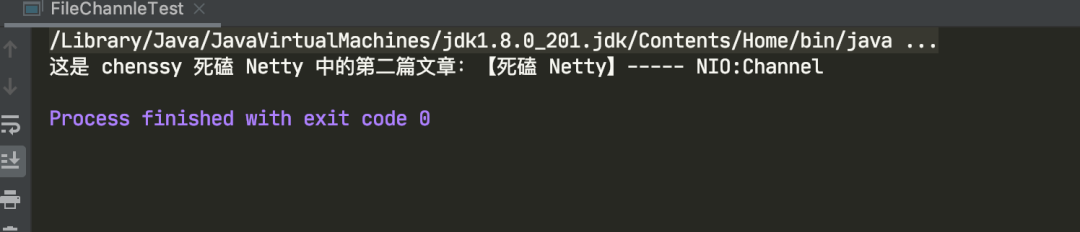
運(yùn)行結(jié)果:
寫數(shù)據(jù)
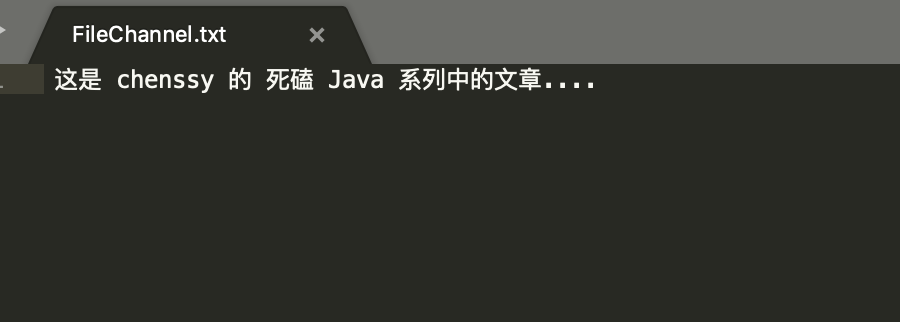
public static void main(String[] args) throws Exception {
    String fileContent = "這是 chenssy 的 死磕 Java 系列中的文章....";
    RandomAccessFile accessFile = new RandomAccessFile("/Users/chenssy/Documents/FileChannel.txt","rw");
    FileChannel fileChannel = accessFile.getChannel();

    ByteBuffer buffer = ByteBuffer.allocate(1024);
    buffer.put(fileContent.getBytes("UTF-8"));
    buffer.flip();
    fileChannel.write(buffer);
    fileChannel.close();
}
運(yùn)行結(jié)果:
參考資料
Java NIO系列教程(七) FileChannel