
一篇文章帶你了解CSS 文本樣式
點擊上方“IT共享之家”,進(jìn)行關(guān)注
回復(fù)“資料”可獲贈Python學(xué)習(xí)福利
大家好,我是IT共享者,人稱皮皮。這篇文章我們來講講CSS的文本樣式。
一、文本顏色Color
顏色屬性被用來設(shè)置文字的顏色。
顏色是通過CSS最經(jīng)常的指定:
十六進(jìn)制值 - 如"#FF0000"。
一個RGB值 - "RGB(255,0,0)"。
顏色的名稱 - 如"紅"。
一個網(wǎng)頁的文本顏色是指在主體內(nèi)的選擇:
<html><head><meta charset="utf-8"><meta name="viewport" content="width=640, user-scalable=no"><title>項目</title><style>body {color: blue;}h1 {color: #00ff00;}h2 {color: rgb(255, 0, 0);}</style></head><body><h2>hello world</h2><h1>welcome to CaoZhou</h1></body></html>

注:對于W3C標(biāo)準(zhǔn)的CSS:如果你定義了顏色屬性,你還必須定義背景色屬性。
二、屬性
1. text-align 文本的對齊方式
文本排列屬性是用來設(shè)置文本的水平對齊方式。
文本可居中或?qū)R到左或右,兩端對齊。
當(dāng)text-align設(shè)置為"justify",每一行被展開為寬度相等,左,右外邊距是對齊(如雜志和報紙)。
<html lang="en"><head><meta charset="UTF-8"><title>Document</title><style>h1 {text-align: center;}p.date {text-align: right;}p.main {text-align: justify;}</style></head><body><p class="date">2015 年 3 月 14 號</p><p class="main"> 從前有個書生,和未婚妻約好在某年某月某日結(jié)婚。到那一天,未婚妻卻嫁給了別人。書生受此打擊, 一病不起。 這時,路過一游方僧人,從懷里摸出一面鏡子叫書生看。書生看到茫茫大海,一名遇害的女子一絲不掛地躺在海灘上。路過一人, 看一眼,搖搖頭,走了。又路過一人,將衣服脫下,給女尸蓋上,走了。再路過一人,過去,挖個坑,小心翼翼把尸體掩埋了。 僧人解釋道, 那具海灘上的女尸,就是你未婚妻的前世。你是第二個路過的人,曾給過他一件衣服。她今生和你相戀,只為還你一個情。但是她最終要報答一生一世的人,是最后那個把她掩埋的人,那人就是他現(xiàn)在的丈夫。書生大悟,病愈。</p><p><b>注意:</b> 重置瀏覽器窗口大小查看 "justify" 是如何工作的。</p></body></html>

2. text-decoration文本修飾
text-decoration 屬性用來設(shè)置或刪除文本的裝飾。
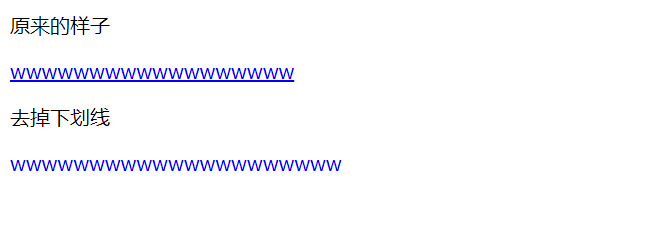
從設(shè)計的角度看 text-decoration屬性主要是用來刪除鏈接的下劃線:
<html lang="en"><head><meta charset="UTF-8"><title>Document</title><style>.none {}.del {text-decoration: none;}</style></head><body><p>原來的樣子</p><a href="#" class="none">wwwwwwwwwwwwwwwwww</a><p>去掉下劃線</p><a href="#" class="del">wwwwwwwwwwwwwwwwwwwww</a></body></html>
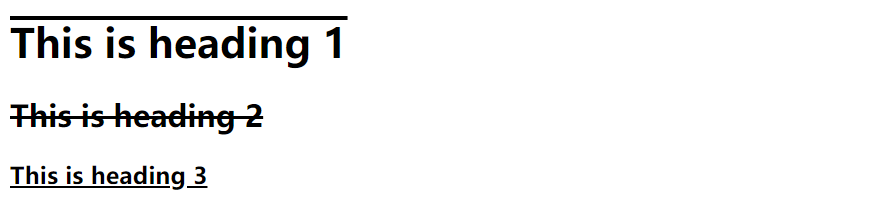
也可以這樣裝飾文字:
<html><head><meta charset="utf-8"><meta name="viewport" content="width=640, user-scalable=no"><title>項目</title><style>h1 {text-decoration: overline;}h2 {text-decoration: line-through;}h3 {text-decoration: underline;}</style></head><body><h1>This is heading 1</h1><h2>This is heading 2</h2><h3>This is heading 3</h3></body></html>
注:不建議強調(diào)指出不是鏈接的文本,因為這常常混淆用戶。
3. text-transform文本轉(zhuǎn)換
text-transform文本轉(zhuǎn)換屬性是用來指定在一個文本中的大寫和小寫字母。
uppercase:轉(zhuǎn)換為全部大寫。
lowercase:轉(zhuǎn)換為全部小寫。
capitalize :每個單詞的首字母大寫。
<html><head><meta charset="utf-8"><meta name="viewport" content="width=640, user-scalable=no"><title>項目</title><style>p.uppercase {text-transform: uppercase;}p.lowercase {text-transform: lowercase;}p.capitalize {text-transform: capitalize;}</style></head><body><p class="uppercase">This is some text.</p><p class="lowercase">This is some text.</p><p class="capitalize">This is some text.</p></body></html>

4. text-indent文本縮進(jìn)
text-indent文本縮進(jìn)屬性是用來指定文本的第一行的縮進(jìn)。
p {text-indent:50px;}5. letter-spacing 設(shè)置字符間距
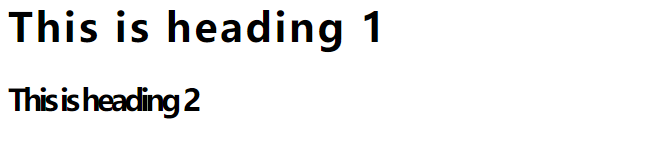
增加或減少字符之間的空間。
<style>h1 {letter-spacing:2px;}h2 {letter-spacing:-3px;}</style>
6. line-height設(shè)置行高
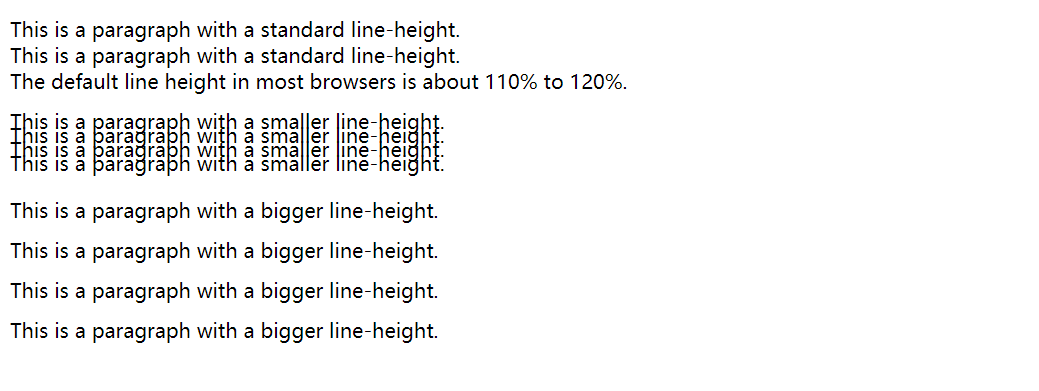
指定在一個段落中行之間的空間。
<html><head><meta charset="utf-8"><meta name="viewport" content="width=640, user-scalable=no"><title>項目</title><style>p.small {line-height: 70%;}p.big {line-height: 200%;}</style></head><body><p>This is a paragraph with a standard line-height.<br> This is a paragraph with a standard line-height.<br> The default line height in most browsers is about 110% to 120%.<br></p><p class="small">This is a paragraph with a smaller line-height.<br> This is a paragraph with a smaller line-height.<br> This is a paragraph with a smaller line-height.<br> This is a paragraph with a smaller line-height.<br></p><p class="big">This is a paragraph with a bigger line-height.<br> This is a paragraph with a bigger line-height.<br> This is a paragraph with a bigger line-height.<br> This is a paragraph with a bigger line-height.<br></p></body></html>
7. word-spacing 設(shè)置字間距
增加一個段落中的單詞之間的空白空間。
<html><head><meta charset="utf-8"><meta name="viewport" content="width=640, user-scalable=no"><title>項目</title><style type="text/css">p {word-spacing: 30px;}</style></head><body><p>This is some text. This is some text.</p></body></html>

8. vertical-align 設(shè)置元垂直居中
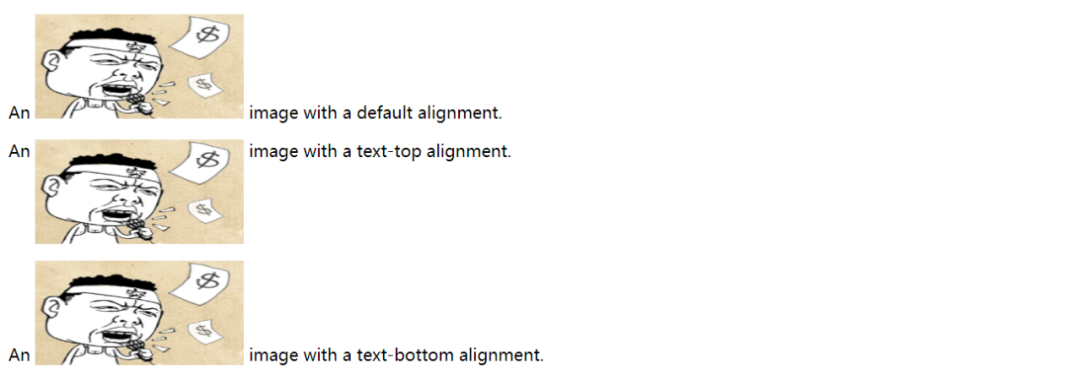
設(shè)置文本的垂直對齊圖像。
<html><head><meta charset="utf-8"><meta name="viewport" content="width=640, user-scalable=no"><title>項目</title><style>img{width: 200px;height: 100px;}img.top {vertical-align: text-top;}img.bottom {vertical-align: text-bottom;}</style></head><body><p>An <img src="img/logo.png" /> image with a default alignment.</p><p>An <img class="top" src="img/logo.png" /> image with a text-top alignment.</p><p>An <img class="bottom" src="img/logo.png" /> image with a text-bottom alignment.</p></body></html>
9. text-shadow 設(shè)置文本陰影
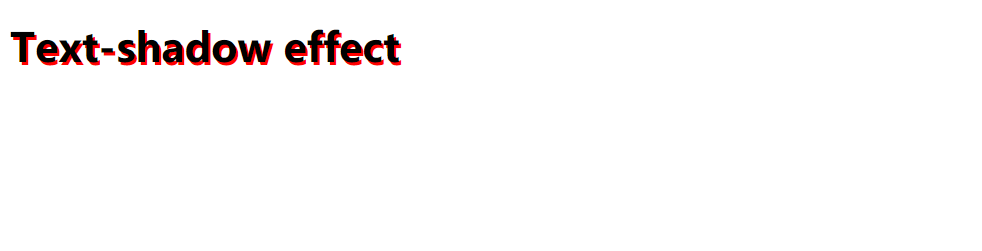
設(shè)置文本陰影。
<html><head><meta charset="utf-8"><meta name="viewport" content="width=640, user-scalable=no"><title>項目</title><style>h1{text-shadow: 2px 2px #FF0000;}</style></head><body><h1>Text-shadow effect</h1></body></html>
三、總結(jié)
本文主要介紹了CSS文本樣式實際應(yīng)用中應(yīng)該如何去操作,通過講解文本中對應(yīng)的屬性去改變文本的表現(xiàn)形式。使用豐富的效果圖的展示,能夠更直觀的看到運行的效果,能夠更好的理解。使用Html語言,代碼結(jié)構(gòu)更佳的清晰,能夠幫助你更好的學(xué)習(xí)。
看完本文有收獲?請轉(zhuǎn)發(fā)分享給更多的人
IT共享之家
入群請在微信后臺回復(fù)【入群】
------------------- End -------------------
往期精彩文章推薦: