
深度學(xué)習(xí)Pytorch框架Tensor張量

極市導(dǎo)讀
?本文主要介紹了Tensor的裁剪運算、索引與數(shù)據(jù)篩選、組合/拼接、切片、變形操作、填充操作和Tensor的頻譜操作(傅里葉變換)。>>加入極市CV技術(shù)交流群,走在計算機(jī)視覺的最前沿
1 Tensor的裁剪運算
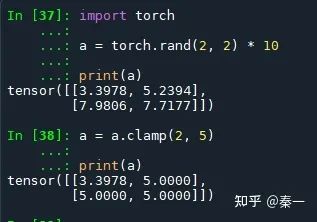
對Tensor中的元素進(jìn)行范圍過濾 常用于梯度裁剪(gradient clipping),即在發(fā)生梯度離散或者梯度爆炸時對梯度的處理 torch.clamp(input, min, max, out=None) → Tensor:將輸入 input張量每個元素的夾緊到區(qū)間 [min,max],并返回結(jié)果到一個新張量。
2 Tensor的索引與數(shù)據(jù)篩選
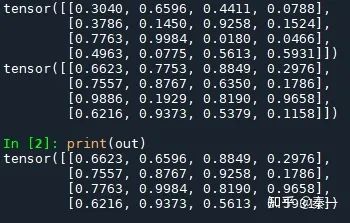
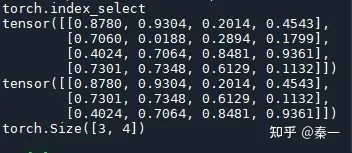
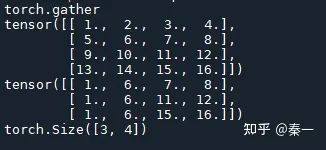
torch.where(codition,x,y):按照條件從x和y中選出滿足條件的元素組成新的tensor,輸入?yún)?shù)condition:條件限制,如果滿足條件,則選擇a,否則選擇b作為輸出。 torch.gather(input,dim,index,out=None):在指定維度上按照索引賦值輸出tensor torch.inex_select(input,dim,index,out=None):按照指定索引賦值輸出tensor torch.masked_select(input,mask,out=None):按照mask輸出tensor,輸出為向量 torch.take(input,indices):將輸入看成1D-tensor,按照索引得到輸出tensor torch.nonzero(input,out=None):輸出非0元素的坐標(biāo)
import?torch
#torch.where

a?=?torch.rand(4,?4)
b?=?torch.rand(4,?4)

print(a)
print(b)

out?=?torch.where(a?>?0.5,?a,?b)

print(out)
print("torch.index_select")
a?=?torch.rand(4,?4)
print(a)
out?=?torch.index_select(a,?dim=0,
???????????????????index=torch.tensor([0,?3,?2]))
#dim=0按列,index取的是行
print(out,?out.shape)
print("torch.gather")
a?=?torch.linspace(1,?16,?16).view(4,?4)

print(a)

out?=?torch.gather(a,?dim=0,
?????????????index=torch.tensor([[0,?1,?1,?1],
?????????????????????????????????[0,?1,?2,?2],
?????????????????????????????????[0,?1,?3,?3]]))
print(out)
print(out.shape)
#注:從0開始,第0列的第0個,第一列的第1個,第二列的第1個,第三列的第1個,,,以此類推
#dim=0,?out[i,?j,?k]?=?input[index[i,?j,?k],?j,?k]
#dim=1,?out[i,?j,?k]?=?input[i,?index[i,?j,?k],?k]
#dim=2,?out[i,?j,?k]?=?input[i,?j,?index[i,?j,?k]]
print("torch.masked_index")
a?=?torch.linspace(1,?16,?16).view(4,?4)
mask?=?torch.gt(a,?8)
print(a)
print(mask)
out?=?torch.masked_select(a,?mask)
print(out)

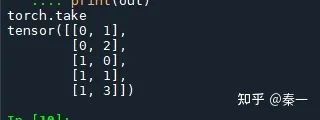
print("torch.take")
a?=?torch.linspace(1,?16,?16).view(4,?4)

b?=?torch.take(a,?index=torch.tensor([0,?15,?13,?10]))

print(b)

#torch.nonzero
print("torch.take")
a?=?torch.tensor([[0,?1,?2,?0],?[2,?3,?0,?1]])
out?=?torch.nonzero(a)
print(out)
#稀疏表示
3 Tensor的組合/拼接
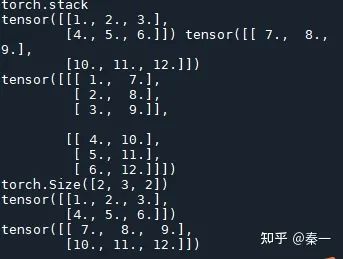
torch.cat(seq,dim=0,out=None):按照已經(jīng)存在的維度進(jìn)行拼接 torch.stack(seq,dim=0,out=None):沿著一個新維度對輸入張量序列進(jìn)行連接。序列中所有的張量都應(yīng)該為相同形狀。
print("torch.stack")
a?=?torch.linspace(1,?6,?6).view(2,?3)
b?=?torch.linspace(7,?12,?6).view(2,?3)
print(a,?b)
out?=?torch.stack((a,?b),?dim=2)
print(out)
print(out.shape)

print(out[:,?:,?0])
print(out[:,?:,?1])
4 Tensor的切片
torch.chunk(tensor,chunks,dim=0):按照某個維度平均分塊(最后一個可能小于平均值) torch.split(tensor,split_size_or_sections,dim=0):按照某個維度依照第二個參數(shù)給出的list或者int進(jìn)行分割tensor
5 Tensor的變形操作
torch().reshape(input,shape) torch().t(input):只針對2D tensor轉(zhuǎn)置 torch().transpose(input,dim0,dim1):交換兩個維度 torch().squeeze(input,dim=None,out=None):去除那些維度大小為1的維度 torch().unbind(tensor,dim=0):去除某個維度 torch().unsqueeze(input,dim,out=None):在指定位置添加維度,dim=-1在最后添加 torch().flip(input,dims):按照給定維度翻轉(zhuǎn)張量 torch().rot90(input,k,dims):按照指定維度和旋轉(zhuǎn)次數(shù)進(jìn)行張量旋轉(zhuǎn)
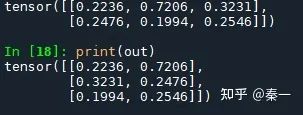
import?torch
a?=?torch.rand(2,?3)
print(a)
out?=?torch.reshape(a,?(3,?2))
print(out)
print(a)
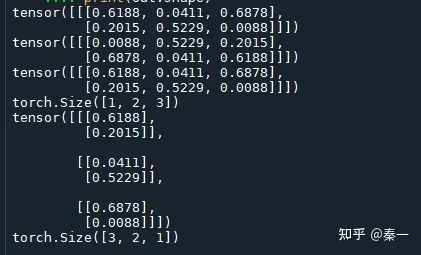
print(torch.flip(a,?dims=[2,?1]))

print(a)
print(a.shape)
out?=?torch.rot90(a,?-1,?dims=[0,?2])?#順時針旋轉(zhuǎn)90°??
print(out)
print(out.shape)
6 Tensor的填充操作
torch.full((2,3),3.14)
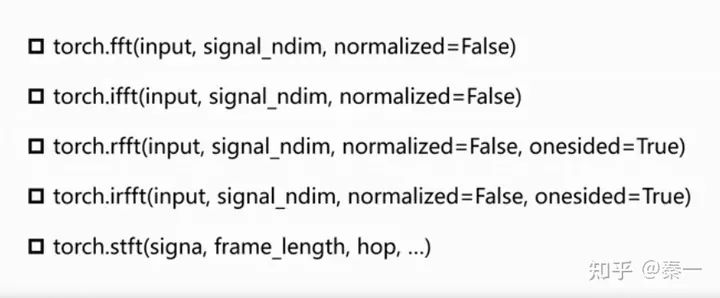
7 Tensor的頻譜操作(傅里葉變換)
如果覺得有用,就請分享到朋友圈吧!
公眾號后臺回復(fù)“CVPR21檢測”獲取CVPR2021目標(biāo)檢測論文下載~

#?CV技術(shù)社群邀請函?#

備注:姓名-學(xué)校/公司-研究方向-城市(如:小極-北大-目標(biāo)檢測-深圳)
即可申請加入極市目標(biāo)檢測/圖像分割/工業(yè)檢測/人臉/醫(yī)學(xué)影像/3D/SLAM/自動駕駛/超分辨率/姿態(tài)估計/ReID/GAN/圖像增強/OCR/視頻理解等技術(shù)交流群
每月大咖直播分享、真實項目需求對接、求職內(nèi)推、算法競賽、干貨資訊匯總、與?10000+來自港科大、北大、清華、中科院、CMU、騰訊、百度等名校名企視覺開發(fā)者互動交流~

評論
圖片
表情