
【132期】面試再被問到Spring容器IOC初始化過程,就拿這篇文章砸他~

閱讀本文大概需要 14?分鐘。
作者:擁抱心中的夢想
juejin.im/post/5ab30714f265da237b21fbcc
一、老規(guī)矩,先比比點(diǎn)幺蛾子
1、閱讀源碼分析是非常無聊的,但既然你進(jìn)來了,肯定也是對這個(gè)東西進(jìn)行了解,也希望這篇總結(jié)能對你有所啟發(fā)。
2、前方高能,文章可能會非常的長,圖文并茂。
3、閱讀前建議你對相關(guān)設(shè)計(jì)模式、軟件設(shè)計(jì) 6 大原則有所了解,小編會在行文中進(jìn)行穿插。
4、小編在讀大四,學(xué)識尚淺,喜歡專研,如果你發(fā)現(xiàn)文章觀點(diǎn)有所錯(cuò)誤或者與你見解有差異,歡迎評論區(qū)指出和交流!
5、建議你邊看文章的時(shí)候可以邊在 IDE 中進(jìn)行調(diào)試跟蹤
6、文章所有 UML 圖利用 idea 自動(dòng)生成,具體生成方法為:
選中一個(gè)類名,先ctrl+shift+alt+U,再ctrl+alt+B,然后回車即可
二、文章將圍繞什么來進(jìn)行展開?

三、Spring 容器 IOC 有哪些東西組成?
1、上面那句代碼有個(gè)文件叫
applicationContext.xml, 這是個(gè)資源文件,由于我們的bean都在里邊進(jìn)行配置定義,那 Spring 總得對這個(gè)文件進(jìn)行讀取并解析吧!所以 Spring 中有個(gè)模塊叫Resource模塊,顧名思義,就是資源嘛!用于對所有資源xml、txt、property等文件資源的抽象。關(guān)于對Resource的更多知識,可以參考下邊兩篇文章:
談一談我對 Spring Resource 的理解:https://juejin.im/post/5ab0ce60518825611a405106
Spring 資源文件剖析和策略模式應(yīng)用(李剛):http://www.ibm.com/developerworks/cn/java/j-lo-spring-resource/index.html
(圖片有點(diǎn)大,不知道會不會不清晰,如果不清晰可以按照上面說的idea生成方法去生成即可):
Resource是整個(gè)體系的根接口,點(diǎn)進(jìn)源碼可以看到它定義了許多的策略方法,因?yàn)樗怯昧?code style="padding-right: 5px;padding-left: 5px;max-width: 100%;box-sizing: border-box;font-family: Courier, "Courier New", monospace;background-color: bisque;overflow-wrap: break-word !important;">策略模式這種設(shè)計(jì)模式,運(yùn)用的好處就是策略接口/類定義了同一的策略,不同的子類有不同的具體策略實(shí)現(xiàn),客戶端調(diào)用時(shí)傳入一個(gè)具體的實(shí)現(xiàn)對象比如UrlResource或者FileSystemResource給策略接口/類Resource即可!策略如下: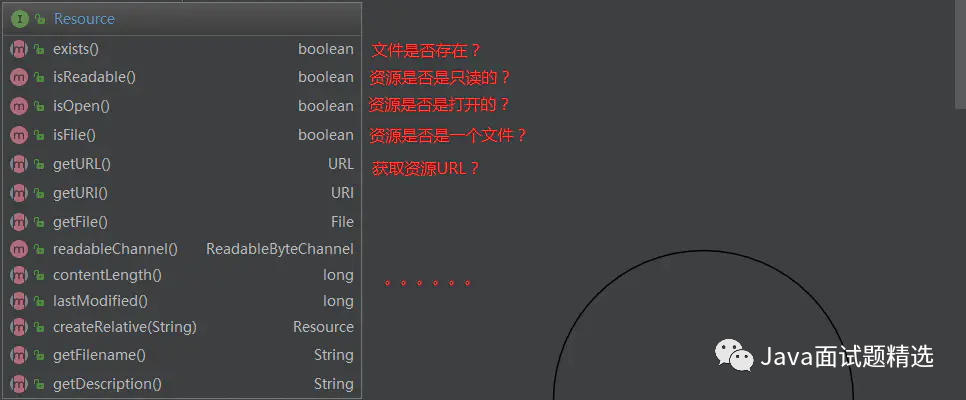
2、上面講了 Spring 框架對各種資源的抽象采用了
策略模式,那么問題來了,現(xiàn)在表示資源的東西有了,那么是怎么把該資源加載進(jìn)來呢?于是就有了下面的ResourceLoader組件,該組件負(fù)責(zé)對 Spring 資源的加載,資源指的是xml、properties等文件資源,返回一個(gè)對應(yīng)類型的Resource對象。。UML 圖如下:
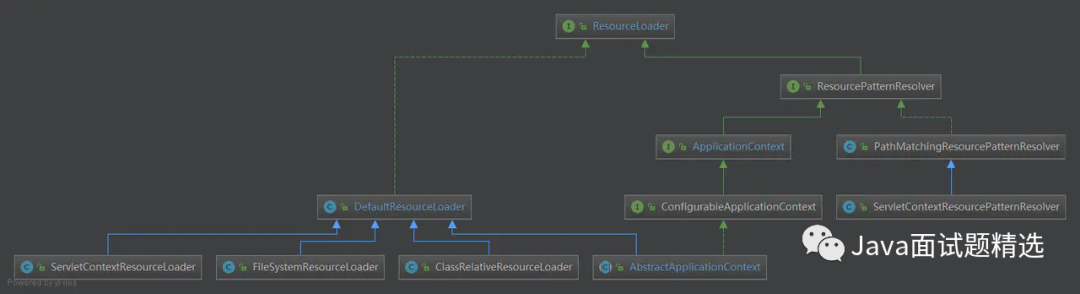
ResourceLoader組件其實(shí)跟Resource組件差不多,都是一個(gè)根接口,對應(yīng)有不同的子類實(shí)現(xiàn),比如加載來自文件系統(tǒng)的資源,則可以使用FileSystemResourceLoader, 加載來自ServletContext上下文的資源,則可以使用ServletContextResourceLoader。還有最重要的一點(diǎn),從上圖看出,ApplicationContext,AbstractApplication是實(shí)現(xiàn)了ResourceLoader的,這說明什么呢?說明我們的應(yīng)用上下文ApplicationContext擁有加載資源的能力,這也說明了為什么可以通過傳入一個(gè)String resource path給ClassPathXmlApplicationContext("applicationContext.xml")就能獲得 xml 文件資源的原因了!清晰了嗎?nice!3、上面兩點(diǎn)講到了,好!既然我們擁有了加載器
ResourceLoader,也擁有了對資源的描述Resource, 但是我們在 xml 文件中聲明的bean的定義,而不是說如何將bean對象。我想應(yīng)該不難理解吧!就像你想表示一個(gè)學(xué)生Student,那么你在程序中肯定要聲明一個(gè)類Student吧!至于學(xué)生數(shù)據(jù)是從excel導(dǎo)入,或者程序運(yùn)行時(shí)new出來,或者從xml中加載進(jìn)來這些都不重要,重要的是你要有一個(gè)將現(xiàn)實(shí)中的實(shí)體表示為程序中的對象的東西,所以BeanDefinition的組件,UML 圖如下:
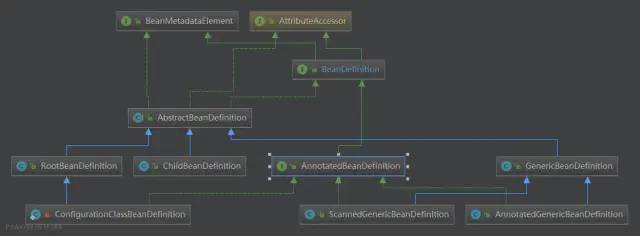
BeanDefinition是一一對應(yīng)的,class、scope、lazy-init等配置屬性,BeanDefinition則提供了相應(yīng)的beanClass、scope、lazyInit屬性。其中 RootBeanDefinition是最常用的實(shí)現(xiàn)類,它對應(yīng)一般性的元素標(biāo)簽,GenericBeanDefinition是自2.5以后新加入的bean文件配置屬性定義類,是一站式服務(wù)類。在配置文件中可以定義父和子,父用RootBeanDefinition表示,而子用ChildBeanDefiniton表示,而沒有父的就使用RootBeanDefinition表示。AbstractBeanDefinition對兩者共同的類信息進(jìn)行抽象。?Spring通過BeanDefinition將配置文件中的配置信息轉(zhuǎn)換為容器的內(nèi)部表示,并將這些BeanDefiniton注冊到BeanDefinitonRegistry中。Spring容器的BeanDefinitionRegistry就像是Spring配置信息的內(nèi)存數(shù)據(jù)庫,主要是以map的形式保存,后續(xù)操作直接從BeanDefinitionRegistry中讀取配置信息。一般情況下,BeanDefinition只在容器啟動(dòng)時(shí)加載并解析,除非容器刷新或重啟,這些信息不會發(fā)生變化,當(dāng)然如果用戶有特殊的需求,也可以通過編程的方式在運(yùn)行期調(diào)整BeanDefinition的定義。
4、有了加載器
ResourceLoader,也擁有了對資源的描述Resource,也有了對bean的定義,我們不禁要問,我們的Resource資源是怎么轉(zhuǎn)成我們的BeanDefinition的呢? 因此就引入了BeanDefinitionReader組件, Reader 嘛!就是一種讀取機(jī)制,UML 圖如下:
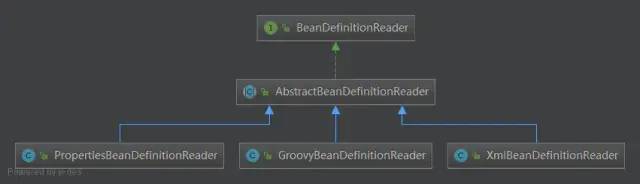
PropertiedBeanDefinitionReader,XmlBeanDefinitionReader對應(yīng)從 Property 和 xml 的 Resource 解析成BeanDefinition。其實(shí)這種讀取數(shù)據(jù)轉(zhuǎn)換成內(nèi)部對象的,不僅僅是 Spring 專有的,比如:Dom4j 解析器 SAXReader reader = new SAXReader(); Document doc = reader.read(url.getFile());//url 是一個(gè) URLResource 對象 嚴(yán)格來說,都是 Reader 體系吧,就是將統(tǒng)一資源數(shù)據(jù)對象讀取轉(zhuǎn)換成相應(yīng)內(nèi)部對象。
5、好了!基本上所有組件都快齊全了!對了,還有一個(gè)組件,你有了
BeanDefinition后,你還必須將它們注冊到工廠中去,所以當(dāng)你使用getBean()方法時(shí)工廠才知道返回什么給你。還有一個(gè)問題,既然要保存注冊這些bean, 那肯定要有個(gè)數(shù)據(jù)結(jié)構(gòu)充當(dāng)容器吧!沒錯(cuò),就是一個(gè)Map, 下面貼出BeanDefinitionRegistry的一個(gè)實(shí)現(xiàn),叫SimpleBeanDefinitionRegistry的源碼圖:
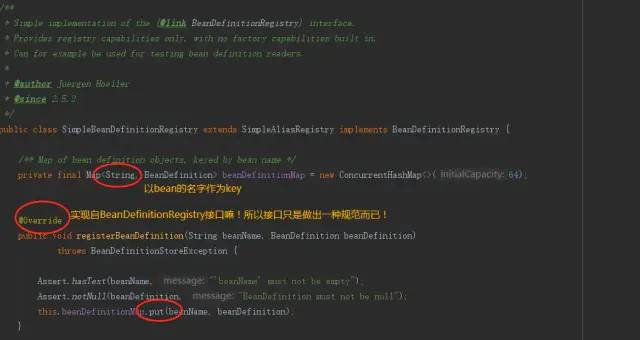
BeanDefinitionRegistry的 UML 圖如下: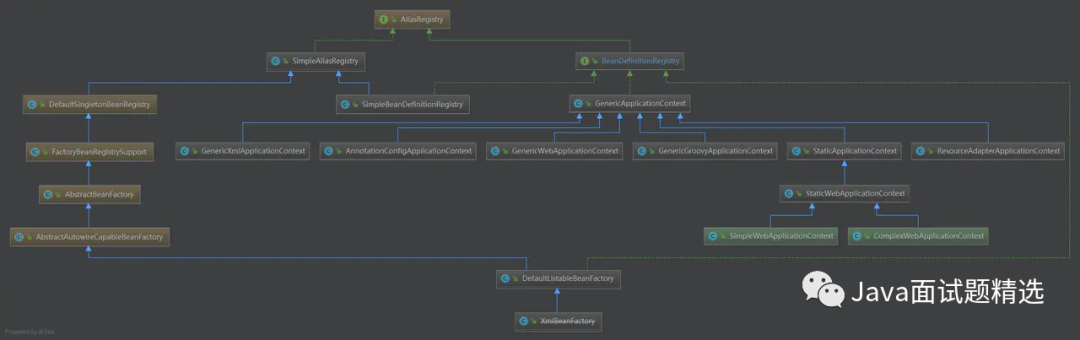
BeanDefinitionRegistry有三個(gè)默認(rèn)實(shí)現(xiàn),分別是SimpleBeanDefinitionRegistry,DefaultListableBeanFactory,GenericApplicationContext, 其中SimpleBeanDefinitionRegistry,DefaultListableBeanFactory都持有一個(gè) Map,也就是說這兩個(gè)實(shí)現(xiàn)類把保存了 bean。而GenericApplicationContext則持有一個(gè)DefaultListableBeanFactory對象引用用于獲取里邊對應(yīng)的 Map。在DefaultListableBeanFactory中
GenericApplicationContext中
6、前面說的 5 個(gè)點(diǎn)基本上可以看出
ApplicationContext上下文基本直接或間接貫穿所有的部分,因此我們一般稱之為容器,除此之外,ApplicationContext還擁有除了bean容器這種角色外,還包括了獲取整個(gè)程序運(yùn)行的環(huán)境參數(shù)等信息(比如 JDK 版本,jre 等),其實(shí)這部分 Spring 也做了對應(yīng)的封裝,稱之為Enviroment, 下面就跟著小編的 eclipse, 一起 debug 下容器的初始化工程吧!

四、實(shí)踐是檢驗(yàn)真理的唯一標(biāo)準(zhǔn)
Student.java如下:package com.wokao666;
public class Student {
private int id;
private String name;
private int age;
public int getId() {
return id;
}
public void setId(int id) {
this.id = id;
}
public String getName() {
return name;
}
public void setName(String name) {
this.name = name;
}
public int getAge() {
return age;
}
public void setAge(int age) {
this.age = age;
}
public Student(int id, String name, int age) {
super();
this.id = id;
this.name = name;
this.age = age;
}
public Student() {
super();
}
@Override
public String toString() {
return "Student [id=" + id + ", ]";
}
}
application.xml中進(jìn)行配置,兩個(gè)bean:"stu1" class="com.wokao666.Student">
"stu2" class="com.wokao666.Student">
Breakpoint):第一步:急切地加載ContextClosedEvent類,以避免在WebLogic 8.1中的應(yīng)用程序關(guān)閉時(shí)出現(xiàn)奇怪的類加載器問題。
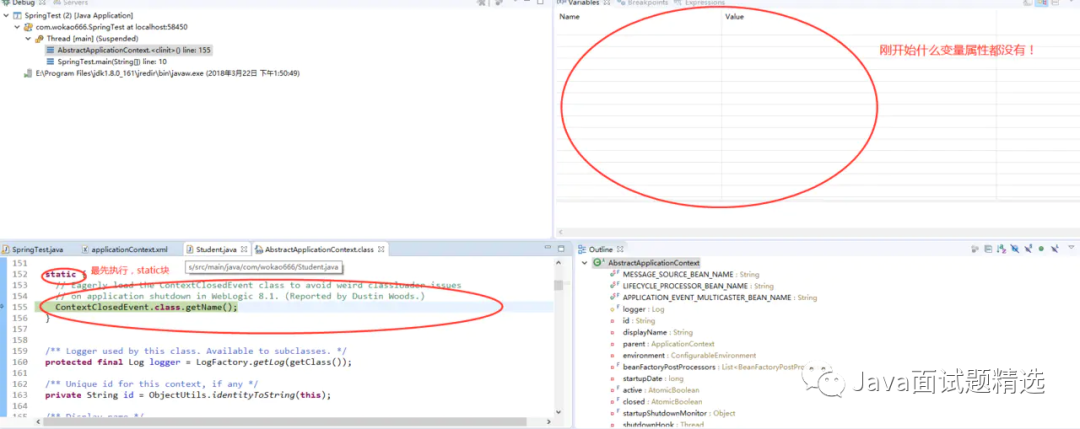
第二步:既然是new ClassPathXmlApplicationContext()?那么就調(diào)用構(gòu)造器嘛!
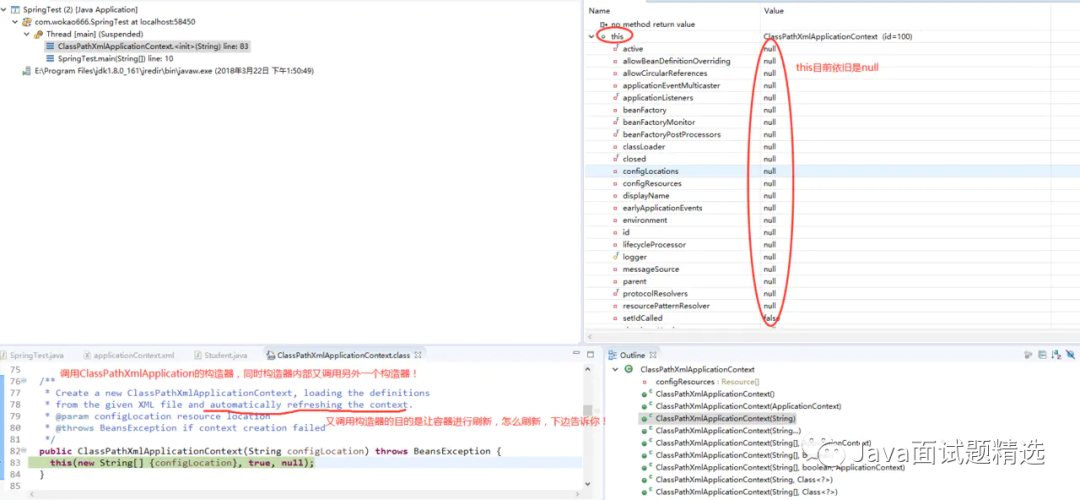
第三步:
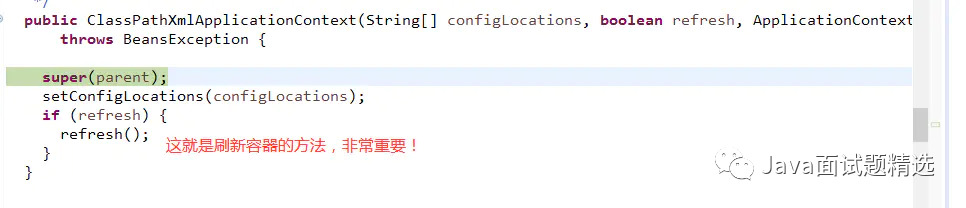
第四步:
super(parent),再結(jié)合上面第三節(jié)的第 6 小點(diǎn) UML 圖一步一步跟蹤,然后我們來到AbstractApplicationContext的這個(gè)方法: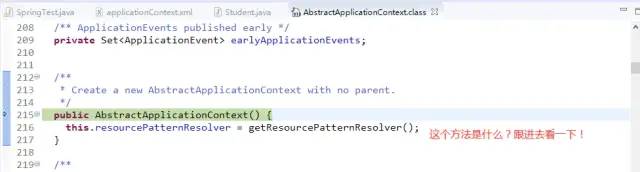
resourcePatternResolver的類型是什么呢?屬于第三節(jié)說的 6 大步驟的哪個(gè)部分呢?通過跟蹤可以看到它的類型是ResourcePatternResolver類型的,而ResourcePatternResolver又是繼承了ResourceLoader接口,因此屬于加載資源模塊,如果還不清晰,咱們再看看ResourcePatternResolver的源碼即可,如下圖: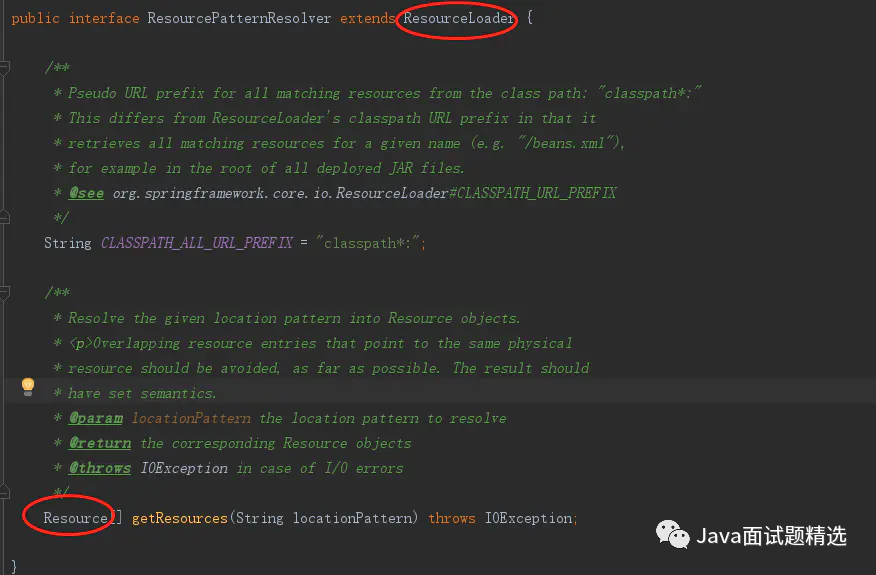
ResourceLoader接口,而且只定義一個(gè)getResources()方法用于返回Resource[]資源集合。再者,這個(gè)接口還使用了策略模式,其具體的實(shí)現(xiàn)都在實(shí)現(xiàn)類當(dāng)中,好吧!來看看 UML 圖就知道了!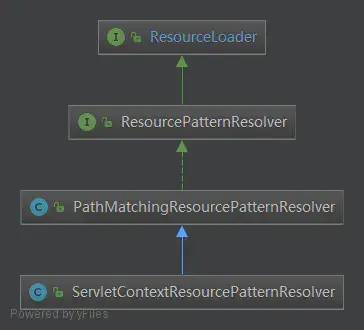
PathMatchingResourcePatternResolver這個(gè)實(shí)現(xiàn)類呢!它就是用來解釋不同路徑資源的,比如你傳入的資源路徑有可能是一個(gè)常規(guī)的url, 又或者有可能是以classpath*前綴,都交給它處理。ServletContextResourcePatternResolver這個(gè)實(shí)現(xiàn)類顧名思義就是用來加載Servlet上下文的,通常用在 web 中。第五步:
AbstractApplicationContext進(jìn)行實(shí)例化,此時(shí)this對象的某些屬性被初始化了(如日志對象),如下圖: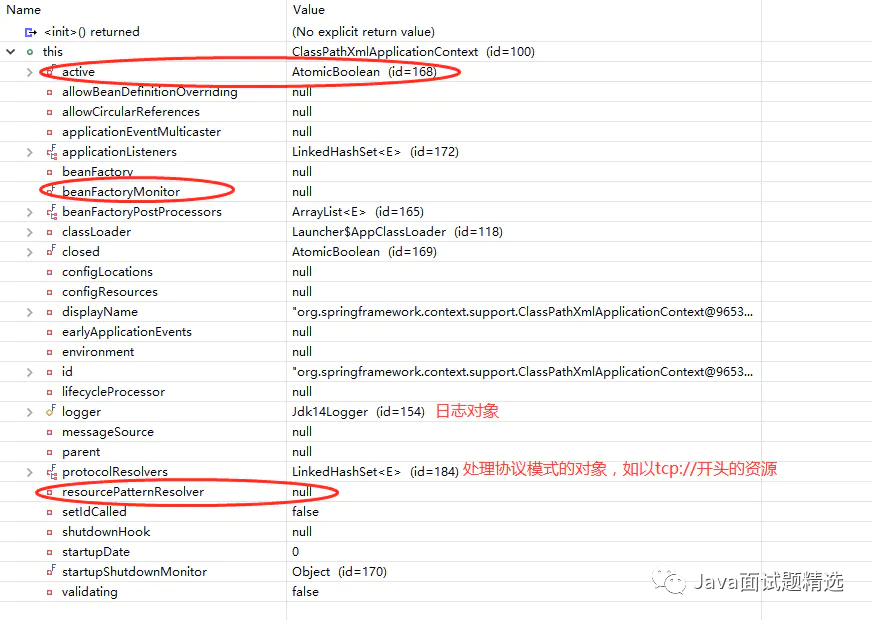
getResourcePatternResolver()方法: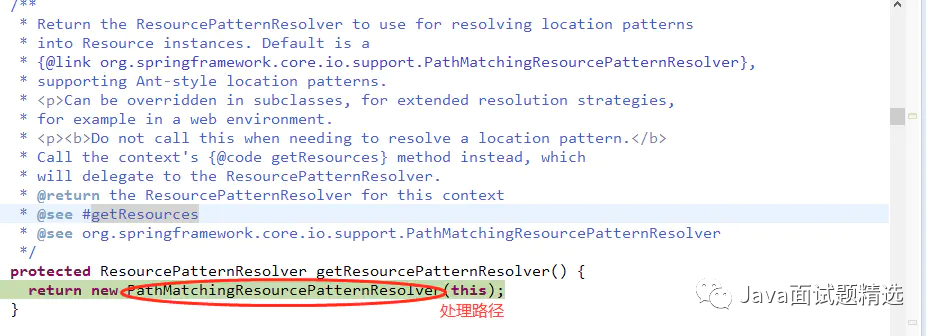
PathMatchingResourcePatternResolver用來處理不同的資源路徑的,怎么處理,我們先進(jìn)去看看!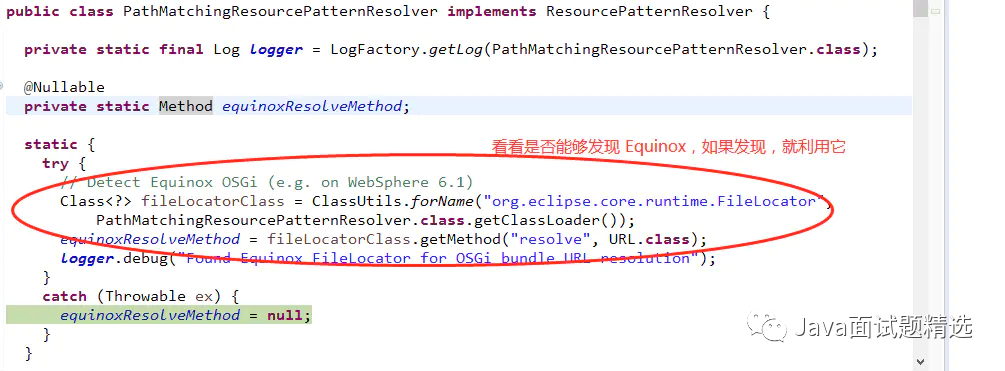
找到用于OSGi包URL解析的Equinox FileLocator日志。沒打印很明顯找不到!setParent()方法。第六步:
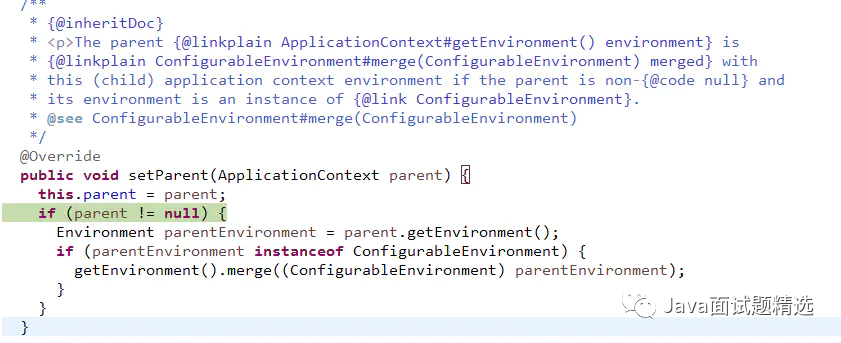
null,,則該父代與當(dāng)前this應(yīng)用上下文環(huán)境合并。顯然這一步并沒有做什么事!parent顯然是null的,那么就不合并嘛!還是使用當(dāng)前this的環(huán)境。1、初始化相關(guān)上下文環(huán)境,也就是初始化
ClassPathXmlApplicationContext實(shí)例2、獲得一個(gè)
resourcePatternResolver對象,方便第七步的資源解析成Resource對象
第七步:

super(parent)的追蹤。讓我們看看setConfigLocation()方法是怎么一回事~/**
* Set the config locations for this application context.//未應(yīng)用上下文設(shè)置資源路徑
*If not set, the implementation may use a default as appropriate.//如果未設(shè)置,則實(shí)現(xiàn)可以根據(jù)需要使用默認(rèn)值。
*/
public void setConfigLocations(String... locations) {
if (locations != null) {//非空
Assert.noNullElements(locations, "Config locations must not be null");//斷言保證locations的每個(gè)元素都不為null
this.configLocations = new String[locations.length];
for (int i = 0; i < locations.length; i++) {
this.configLocations[i] = resolvePath(locations[i]).trim();//去空格,很好奇resolvePath做了什么事情?
}
}
else {
this.configLocations = null;
}
}
resolvePath()方法看看:/**
* 解析給定的資源路徑,必要時(shí)用相應(yīng)的環(huán)境屬性值替換占位符,應(yīng)用于資源路徑配置。
* Resolve the given path, replacing placeholders with corresponding
* environment property values if necessary. Applied to config locations.
* @param path the original file path
* @return the resolved file path
* @see org.springframework.core.env.Environment#resolveRequiredPlaceholders(String)
*/
protected String resolvePath(String path) {
return getEnvironment().resolveRequiredPlaceholders(path);
}
getEnvironment()看看:/**
* {@inheritDoc}
*If {@code null}, a new environment will be initialized via
* {@link #createEnvironment()}.
*/
@Override
public ConfigurableEnvironment getEnvironment() {
if (this.environment == null) {
this.environment = createEnvironment();
}
return this.environment;
}
createEnvironment(), 方法,我們看到在這里創(chuàng)建了一個(gè)新的StandardEnviroment對象,它是Environment的實(shí)現(xiàn)類,表示容器運(yùn)行的環(huán)境,比如 JDK 環(huán)境,Servlet 環(huán)境,Spring 環(huán)境等等,每個(gè)環(huán)境都有自己的配置數(shù)據(jù),如System.getProperties()、System.getenv()等可以拿到 JDK 環(huán)境數(shù)據(jù);ServletContext.getInitParameter()可以拿到 Servlet 環(huán)境配置數(shù)據(jù)等等, 也就是說 Spring 抽象了一個(gè)Environment來表示環(huán)境配置。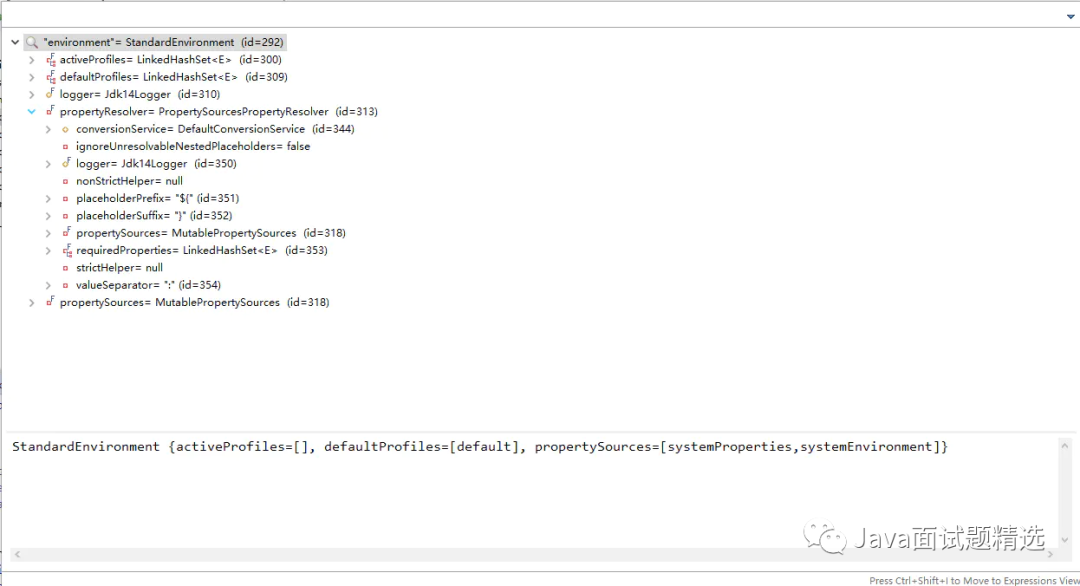
StandardEnviroment對象并沒有包含什么內(nèi)容,只是一個(gè)標(biāo)準(zhǔn)的環(huán)境,所有的屬性都是默認(rèn)值。path進(jìn)行路徑解析第八步:這一步是重頭戲
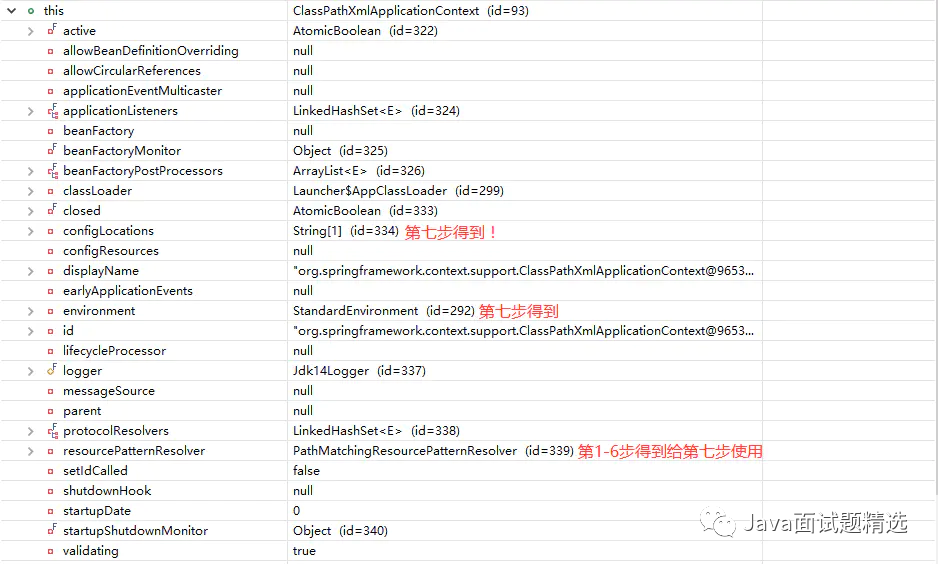
refresh()方法:
@Override
public void refresh() throws BeansException, IllegalStateException {
	synchronized (this.startupShutdownMonitor) {
		// 刷新前準(zhǔn)備工作,包括設(shè)置啟動(dòng)時(shí)間,是否激活標(biāo)識位,初始化屬性源(property source)配置
		prepareRefresh();

		// 創(chuàng)建beanFactory(過程是根據(jù)xml為每個(gè)bean生成BeanDefinition并注冊到生成的beanFactory
		ConfigurableListableBeanFactory beanFactory = obtainFreshBeanFactory();

		//準(zhǔn)備創(chuàng)建好的beanFactory(給beanFactory設(shè)置ClassLoader,設(shè)置SpEL表達(dá)式解析器,設(shè)置類型轉(zhuǎn)化器【能將xml String類型轉(zhuǎn)成相應(yīng)對象】,
		//增加內(nèi)置ApplicationContextAwareProcessor對象,忽略各種Aware對象,注冊各種內(nèi)置的對賬對象【BeanFactory,ApplicationContext】等,
		//注冊AOP相關(guān)的一些東西,注冊環(huán)境相關(guān)的一些bean
		prepareBeanFactory(beanFactory);

		try {
			// 模板方法,為容器某些子類擴(kuò)展功能所用(工廠后處理器)這里可以參考BeanFactoryPostProcessor接口的postProcessBeanFactory方法
			postProcessBeanFactory(beanFactory);

			// 調(diào)用所有BeanFactoryPostProcessor注冊為Bean
			invokeBeanFactoryPostProcessors(beanFactory);

			// 注冊所有實(shí)現(xiàn)了BeanPostProcessor接口的Bean
			registerBeanPostProcessors(beanFactory);

			// 初始化MessageSource,和國際化相關(guān)
			initMessageSource();

			// 初始化容器事件傳播器
			initApplicationEventMulticaster();

			// 調(diào)用容器子類某些特殊Bean的初始化,模板方法
			onRefresh();

			// 為事件傳播器注冊監(jiān)聽器
			registerListeners();

			// 初始化所有剩余的bean(普通bean)
			finishBeanFactoryInitialization(beanFactory);

			// 初始化容器的生命周期事件處理器,并發(fā)布容器的生命周期事件
			finishRefresh();
		}
		catch (BeansException ex) {
			if (logger.isWarnEnabled()) {
				logger.warn("Exception encountered during context initialization - " +
						"cancelling refresh attempt: " + ex);
			}
			// 銷毀已創(chuàng)建的bean
			destroyBeans();
			// 重置`active`標(biāo)志
			cancelRefresh(ex);
			throw ex;
		}
		finally {
							//重置一些緩存
			resetCommonCaches();
		}
	}
}
refresh()方法其實(shí)是一個(gè)模板方法, 很多方法都讓不同的實(shí)現(xiàn)類去實(shí)現(xiàn),但該類本身也實(shí)現(xiàn)了其中一些方法,并且這些已經(jīng)實(shí)現(xiàn)的方法是不允許子類重寫的,比如:prepareRefresh()方法。更多模板方法設(shè)計(jì)模式,可看我之前的文章?談一談我對‘模板方法’設(shè)計(jì)模式的理解(Template)。prepareRefresh()方法:/**
* Prepare this context for refreshing, setting its startup date and
* active flag as well as performing any initialization of property sources.
*/
protected void prepareRefresh() {
this.startupDate = System.currentTimeMillis();//設(shè)置容器啟動(dòng)時(shí)間
this.closed.set(false);//容器關(guān)閉標(biāo)志,是否關(guān)閉?
this.active.set(true);//容器激活標(biāo)志,是否激活?
if (logger.isInfoEnabled()) {//運(yùn)行到這里,控制臺就會打印當(dāng)前容器的信息
logger.info("Refreshing " + this);
}
// 空方法,由子類覆蓋實(shí)現(xiàn),初始化容器上下文中的property文件
initPropertySources();
//驗(yàn)證標(biāo)記為必需的所有屬性均可解析,請參閱ConfigurablePropertyResolver#setRequiredProperties
getEnvironment().validateRequiredProperties();
//允許收集早期的ApplicationEvents,一旦多播器可用,即可發(fā)布...
this.earlyApplicationEvents = new LinkedHashSet();
}
三月 22, 2018 4:21:13 下午 org.springframework.context.support.ClassPathXmlApplicationContext prepareRefresh
信息: Refreshing org.springframework.context.support.ClassPathXmlApplicationContext@96532d6: startup date [Thu Mar 22 16:21:09 CST 2018]; root of context hierarchy
第九步:
obtainFreshBeanFactory()方法:/**
* 告訴子類刷新內(nèi)部bean工廠(子類是指AbstractApplicationContext的子類,我們使用的是ClassPathXmlApplicationContext)
* Tell the subclass to refresh the internal bean factory.
*/
protected ConfigurableListableBeanFactory obtainFreshBeanFactory() {
refreshBeanFactory();//刷新Bean工廠,如果已經(jīng)存在Bean工廠,那就關(guān)閉并銷毀,再創(chuàng)建一個(gè)新的bean工廠
ConfigurableListableBeanFactory beanFactory = getBeanFactory();//獲取新創(chuàng)建的Bean工廠
if (logger.isDebugEnabled()) {
logger.debug("Bean factory for " + getDisplayName() + ": " + beanFactory);//控制臺打印
}
return beanFactory;
}
refreshBeanFactory()方法:/**
* 該實(shí)現(xiàn)執(zhí)行該上下文的基礎(chǔ)Bean工廠的實(shí)際刷新,關(guān)閉以前的Bean工廠(如果有的話)以及為該上下文的生命周期的下一階段初始化新鮮的Bean工廠。
* This implementation performs an actual refresh of this context's underlying
* bean factory, shutting down the previous bean factory (if any) and
* initializing a fresh bean factory for the next phase of the context's lifecycle.
*/
@Override
protected final void refreshBeanFactory() throws BeansException {
if (hasBeanFactory()) {//如果已有bean工廠
destroyBeans();//銷毀
closeBeanFactory();//關(guān)閉
}
try {
DefaultListableBeanFactory beanFactory = createBeanFactory();//創(chuàng)建一個(gè)新的bean工廠
beanFactory.setSerializationId(getId());//為序列化目的指定一個(gè)id,如果需要,可以將此BeanFactory從此id反序列化回BeanFactory對象。
//定制容器,設(shè)置啟動(dòng)參數(shù)(bean可覆蓋、循環(huán)引用),開啟注解自動(dòng)裝配
customizeBeanFactory(beanFactory);
////將所有BeanDefinition載入beanFactory中,此處依舊是模板方法,具體由子類實(shí)現(xiàn)
loadBeanDefinitions(beanFactory);
//beanFactory同步賦值
synchronized (this.beanFactoryMonitor) {
this.beanFactory = beanFactory;
}
}
catch (IOException ex) {
throw new ApplicationContextException("I/O error parsing bean definition source for " + getDisplayName(), ex);
}
}
BeanDefinition注冊到 beanfactory 中。如果不太清楚可以回過頭看看我們的第三節(jié)第5點(diǎn)內(nèi)容第十步:
loadBeanDefinitions(beanFactory)方法中去take a look:/**
* 使用XmlBeanDefinitionReader來加載beandefnition,之前說過使用reader機(jī)制加載Resource資源變?yōu)锽eanDefinition對象
* Loads the bean definitions via an XmlBeanDefinitionReader.
* @see org.springframework.beans.factory.xml.XmlBeanDefinitionReader
* @see #initBeanDefinitionReader
* @see #loadBeanDefinitions
*/
@Override
protected void loadBeanDefinitions(DefaultListableBeanFactory beanFactory) throws BeansException, IOException {
// 創(chuàng)建XmlBeanDefinitionReader對象
XmlBeanDefinitionReader beanDefinitionReader = new XmlBeanDefinitionReader(beanFactory);
// 使用當(dāng)前上下文Enviroment中的Resource配置beanDefinitionReader,因?yàn)閎eanDefinitionReader要將Resource解析成BeanDefinition嘛!
beanDefinitionReader.setEnvironment(this.getEnvironment());
beanDefinitionReader.setResourceLoader(this);
beanDefinitionReader.setEntityResolver(new ResourceEntityResolver(this));
//初始化這個(gè)reader
initBeanDefinitionReader(beanDefinitionReader);
//將beandefinition注冊到工廠中(這一步就是將bean保存到Map中)
loadBeanDefinitions(beanDefinitionReader);
}
三月 22, 2018 5:09:40 下午 org.springframework.beans.factory.xml.XmlBeanDefinitionReader loadBeanDefinitions
信息: Loading XML bean definitions from class path resource [applicationContext.xml]
第十一步:
prepareBeanFactory(beanFactory)方法://設(shè)置bean類加載器
//設(shè)置Spring語言表達(dá)式(SpEL)解析器
//掃描ApplicationContextAware bean
//注冊類加載期類型切面織入(AOP)LoadTimeWeaver
//為各種加載進(jìn)入beanFactory的bean配置默認(rèn)環(huán)境
第十二步:
postProcessBeanFactory(beanFactory)方法:postProcessBeanFactory同樣作為一個(gè)模板方法,由子類來提供具體的實(shí)現(xiàn),子類可以有自己的特殊對BeanDefinition后處理方法,即子類可以在這對前面生成的BeanDefinition,即bean的元數(shù)據(jù)再處理。比如修改某個(gè)bean的id/name屬性、scope屬性、lazy-init屬性等。第十三步:
invokeBeanFactoryPostProcessors(beanFactory)方法:BeanFactoryPostProcessor,它是一個(gè)接口,實(shí)現(xiàn)了此接口的類需重寫postProcessBeanFactory()這個(gè)方法,可以看出該方法跟第十二步的方法是一樣的,只不過作為接口,更多的是提供給開發(fā)者來對生成的BeanDefinition做處理,由開發(fā)者提供處理邏輯。第十四步:
初始化消息處理源,初始化容器事件,注冊bean監(jiān)聽器到事件傳播器上,最后完成容器刷新。五、總結(jié)
好記性不如爛筆頭的說法。1、首先初始化上下文,生成
ClassPathXmlApplicationContext對象,在獲取resourcePatternResolver對象將xml解析成Resource對象。2、利用 1 生成的 context、resource 初始化工廠,并將 resource 解析成 beandefinition, 再將 beandefinition 注冊到 beanfactory 中。
推薦閱讀:
【130期】面試官:你能說清楚分布式鎖,進(jìn)程鎖,線程鎖的區(qū)別嗎?
【128期】一道搜狗面試題:IO多路復(fù)用中select、poll、epoll之間的區(qū)別
微信掃描二維碼,關(guān)注我的公眾號
朕已閱?