
C++核心準(zhǔn)則?:注釋風(fēng)格

NL.1: Don't say in comments what can be clearly stated in code
NL.1:請不要在注釋中說明代碼可以清楚表達(dá)的內(nèi)容
Reason(原因)
Compilers do not read comments. Comments are less precise than code. Comments are not updated as consistently as code.
編譯器不閱讀注釋。注釋不如代碼精確。注釋不會一直隨代碼一起更新。
Example, bad(反面示例)
auto x = m * v1 + vv; // multiply m with v1 and add the result to vvEnforcement(實(shí)施建議)
Build an AI program that interprets colloquial English text and see if what is said could be better expressed in C++.
建立一個可以解釋口語英語文本的AI程序,看看是否可以用C ++更好地表達(dá)。

NL.2: State intent in comments
NL.2:?在注釋中說明意圖
Reason(原因)
Code says what is done, not what is supposed to be done. Often intent can be stated more clearly and concisely than the implementation.
代碼說明做了什么,而不會說明應(yīng)該做什么。通常意圖得表達(dá)可以比實(shí)現(xiàn)更清楚,更簡明。
Example(示例)
void stable_sort(Sortable& c)
    // sort c in the order determined by <, keep equal elements (as defined by ==) in
    // their original relative order
{
    // ... quite a few lines of non-trivial code ...
}
Note(注意)
If the comment and the code disagree, both are likely to be wrong.
如果注釋和代碼相矛盾,則兩者可能都是錯誤的。

NL.3: Keep comments crisp
NL.3:保持注釋清晰
Reason(原因)
Verbosity slows down understanding and makes the code harder to read by spreading it around in the source file.
過于詳細(xì)的注釋減慢代碼的理解速度,這種注釋在源文件中四處傳播會使代碼難以閱讀。
Note(注意)
Use intelligible English. I might be fluent in Danish, but most programmers are not; the maintainers of my code might not be. Avoid SMS lingo and watch your grammar, punctuation, and capitalization. Aim for professionalism, not "cool."
使用可理解的英語。我可能會說流利的丹麥語,但大多數(shù)程序員不是。我的代碼的維護(hù)者可能不是。避免使用SMS術(shù)語,并注意語法,標(biāo)點(diǎn)和大寫字母。追求專業(yè),而不是“酷”。
Enforcement(實(shí)施建議)
not possible.
原文鏈接
https://github.com/isocpp/CppCoreGuidelines/blob/master/CppCoreGuidelines.md#nl-naming-and-layout-rules
新書介紹
《實(shí)戰(zhàn)Python設(shè)計模式》是作者最近出版的新書,拜托多多關(guān)注!
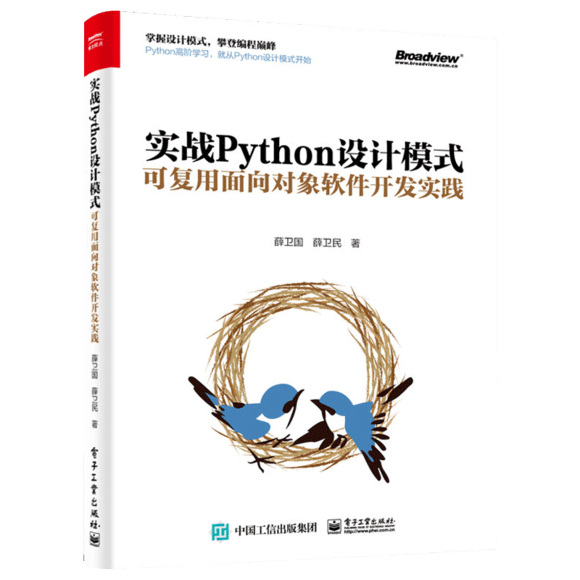
本書利用Python 的標(biāo)準(zhǔn)GUI 工具包tkinter,通過可執(zhí)行的示例對23 個設(shè)計模式逐個進(jìn)行說明。這樣一方面可以使讀者了解真實(shí)的軟件開發(fā)工作中每個設(shè)計模式的運(yùn)用場景和想要解決的問題;另一方面通過對這些問題的解決過程進(jìn)行說明,讓讀者明白在編寫代碼時如何判斷使用設(shè)計模式的利弊,并合理運(yùn)用設(shè)計模式。
對設(shè)計模式感興趣而且希望隨學(xué)隨用的讀者通過本書可以快速跨越從理解到運(yùn)用的門檻;希望學(xué)習(xí)Python GUI 編程的讀者可以將本書中的示例作為設(shè)計和開發(fā)的參考;使用Python 語言進(jìn)行圖像分析、數(shù)據(jù)處理工作的讀者可以直接以本書中的示例為基礎(chǔ),迅速構(gòu)建自己的系統(tǒng)架構(gòu)。
覺得本文有幫助?請分享給更多人。
關(guān)注微信公眾號【面向?qū)ο笏伎肌枯p松學(xué)習(xí)每一天!
面向?qū)ο箝_發(fā),面向?qū)ο笏伎迹?/span>