
關(guān)于Python的20個奇技淫巧

一、快速實現(xiàn)字頻統(tǒng)計
from collections import Counterwords = '''我明白你的意思,你的意思就是想意思意思,但是你不明白我的意思,我的意思是你不用意思意思。'''word_counts = Counter(words)top_three = word_counts.most_common(3)print(top_three)# 輸出:[('意', 8), ('思', 8), ('你', 4)]
二、漢字轉(zhuǎn)拼音
import pypinyinwords = "床前明月光"pypinyin.pinyin(words)# 輸出:[['chuáng'], ['qián'], ['míng'], ['yuè'], ['guāng']]
三、查看某個文件夾里是否有python文件(或其他格式文件)
import osfiles = os.listdir("E:\\testfile\\")if any(name.endswith('.py') for name in files):print(1)
四、快速打印字符串
row = ["我", "愛", "python"]print(*row,sep="")# 輸出:我愛python
五、計算兩個日期間隔天數(shù)
from datetime import dated1 = date(2020,1,1)d2 = date(2020,9,13)print(abs(d2-d1).days)# 輸出:256
六、字符串拆解為鍵值對
比如'x=11,y=20'拆解成{'x': 42.0, 'y': 1.0}kvp = lambda elem,t,i: t(elem.split('=')[i])parse_kvp_str = lambda args : dict([(kvp(elem,str,0), kvp(elem,float,1)) for elem in args.split(',')])parse_kvp_str('x=11,y=20')# 輸出:{'x': 42.0, 'y': 1.0}
七、變量值交換
a = 1b = 2a, b = b, a
八、將值追加到字典某個鍵下的列表中
d = {}d.setdefault(2, []).append(23)d.setdefault(2, []).append(11)d[2]# 輸出:[23, 11]
九、返回列表中出現(xiàn)次數(shù)最多的元素
test = [1, 2, 3, 5, 2, 2, 3, 1, 2, 6, 2]print(max(set(test), key = test.count))# 輸出:2
十、查看某個變量占用內(nèi)存的大小
import sysx = 1print(sys.getsizeof(x))# 輸出:28
十一、隨機返回幾個字母組成的單詞
import string, randomrandword = lambda n: "".join([random.choice(string.ascii_letters) for i in range(n)])# 輸出:'qsNWZF'
十二、從混亂的字符串中分解出單詞
words = lambda text: ''.join(c if c.isalnum() else ' ' for c in text).split()words('Johnny.Appleseed!is:a*good&farmer')# 輸出:['Johnny', 'Appleseed', 'is', 'a', 'good', 'farmer']
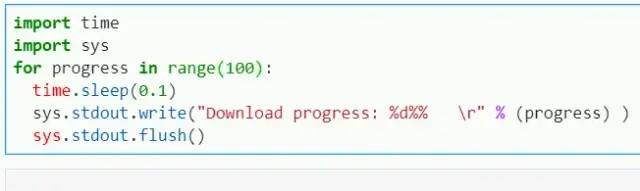
十三、打印進度條
import timeimport sysfor progress in range(100):time.sleep(0.1)sys.stdout.write("Download progress: %d%% \r" % (progress) )sys.stdout.flush()
十四、快速反轉(zhuǎn)字符串
a = 'Python is a powerful languange.'print(a[::-1])# 輸出:.egnaugnal lufrewop a si nohtyP
十五、找出兩個列表中不一樣的元素
list1 = ['Scott', 'Eric', 'Kelly', 'Emma', 'Smith']list2 = ['Scott', 'Eric', 'Kelly']set1 = set(list1)set2 = set(list2)list3 = list(set1.symmetric_difference(set2))print(list3)# 輸出:['Emma', 'Smith']
十六、刪除列表中的重復(fù)項
listNumbers = [20, 22, 24, 26, 28, 28, 20, 30, 24]list(set(listNumbers))# 輸出:[20, 22, 24, 26, 28, 30]
十七、將兩個列表變成字典
ItemId = [54, 65, 76]names = ["Hard Disk", "Laptop", "RAM"]itemDictionary = dict(zip(ItemId, names))print(itemDictionary)# 輸出:{54: 'Hard Disk', 65: 'Laptop', 76: 'RAM'}
十八、移除字符換中的標(biāo)點
punctuations = '''!()-[]{};:'"\,<>./?@#$%^&*_~,。!?'''my_str = "你好,!!我的網(wǎng)名叫作:隔-壁-老-王。"# 移除標(biāo)點no_punct = ""for char in my_str:if char not in punctuations:no_punct = no_punct + charprint(no_punct)# 輸出:你好我的名字叫作:隔壁老王
十九、創(chuàng)建一個文件(如果文件不存在)
import osMESSAGE = '該文件已經(jīng)存在.'TESTDIR = 'testdir'try:home = os.path.expanduser("~")print(home)if not os.path.exists(os.path.join(home, TESTDIR)):os.makedirs(os.path.join(home, TESTDIR))else:print(MESSAGE)except Exception as e:print(e)
二十、從函數(shù)中返回多個值
def f():return 1,2,3,4a,b,c,d = f()print(a,b,c,d)# 輸出:1,2,3,4

推薦閱讀
(點擊標(biāo)題可跳轉(zhuǎn)閱讀)
通俗易懂之最小二乘法(附matlab和python例子實現(xiàn))
教你用Python制作實現(xiàn)自定義字符大小的簡易小說閱讀器
老鐵,三連支持一下,好嗎?↓↓↓



點分享

點點贊

點在
評論
圖片
表情