
spring多個(gè)AOP執(zhí)行先后順序

眾所周知,spring聲明式事務(wù)是基于AOP實(shí)現(xiàn)的,那么,如果我們?cè)谕粋€(gè)方法自定義多個(gè)AOP,我們?nèi)绾沃付ㄋ麄兊膱?zhí)行順序呢?
網(wǎng)上很多答案都是指定order,order越小越是最先執(zhí)行,這種也不能算是錯(cuò),但有些片面。
通過(guò)實(shí)現(xiàn)org.springframework.core.Ordered接口
@Component??
????@Aspect??
????@Slf4j??
????public class MessageQueueAopAspect1 implements Ordered{@Override??
????????public int getOrder() {
????????????// TODO Auto-generated method stub
????????????return?2;
????????}
??????????
????}
通過(guò)注解
@Component??
????@Aspect??
????@Slf4j??
????@Order(1)
????public class MessageQueueAopAspect1{
??????????
????????...
????}
通過(guò)配置文件配置
<aop:config?expose-proxy="true">??
????????<aop:aspect?ref="aopBean"?order="0">????
????????????<aop:pointcut?id="testPointcut"??expression="@annotation(xxx.xxx.xxx.annotation.xxx)"/>????
????????????<aop:around?pointcut-ref="testPointcut"?method="doAround"?/>????
????????????aop:aspect>????
????aop:config>
我們?cè)谕粋€(gè)方法上加以下兩個(gè)AOP,看看究竟。
@Component??
????@Aspect??
????@Slf4j
????public?class?MessageQueueAopAspect1?implements?Ordered{
??????????
????????@Resource(name="actionMessageProducer")
????????private?IProducer actionProducer;
??????????
????????@Pointcut("@annotation(com.xxx.annotation.MessageQueueRequire1)")
????????private?void?pointCutMethod()?{
????????}
??????????
????????//聲明前置通知
????????@Before("pointCutMethod()")
????????public?void?doBefore(JoinPoint point)?{
????????????log.info("MessageQueueAopAspect1:doBefore");
????????????return;
????????}
??????
????????//聲明后置通知
????????@AfterReturning(pointcut = "pointCutMethod()", returning = "returnValue")
????????public?void?doAfterReturning(JoinPoint point,Object returnValue)?{
????????????log.info("MessageQueueAopAspect1:doAfterReturning");
????????}
??????
????????//聲明例外通知
????????@AfterThrowing(pointcut = "pointCutMethod()", throwing = "e")
????????public?void?doAfterThrowing(Exception e)?{
????????????log.info("MessageQueueAopAspect1:doAfterThrowing");
????????}
??????
????????//聲明最終通知
????????@After("pointCutMethod()")
????????public?void?doAfter()?{
????????????log.info("MessageQueueAopAspect1:doAfter");
????????}
??????
????????//聲明環(huán)繞通知
????????@Around("pointCutMethod()")
????????public?Object doAround(ProceedingJoinPoint pjp)?throws?Throwable {
????????????log.info("MessageQueueAopAspect1:doAround-1");
????????????Object obj = pjp.proceed();
????????????log.info("MessageQueueAopAspect1:doAround-2");
????????????return?obj;
????????}
??????????
????????@Override??
????????public?int?getOrder()?{
????????????return?1001;
????????}
????} @Component??
@Aspect??
@Slf4j
public?class?MessageQueueAopAspect2?implements?Ordered{
??????
????@Resource(name="actionMessageProducer")
????private?IProducer actionProducer;
??????
????@Pointcut("@annotation(com.xxx.annotation.MessageQueueRequire2)")
????private?void?pointCutMethod()?{
????}
??????
??????
????//聲明前置通知
????@Before("pointCutMethod()")
????public?void?doBefore(JoinPoint point)?{
????????log.info("MessageQueueAopAspect2:doBefore");
????????return;
????}
??
????//聲明后置通知
????@AfterReturning(pointcut = "pointCutMethod()", returning = "returnValue")
????public?void?doAfterReturning(JoinPoint point,Object returnValue)?{
????????log.info("MessageQueueAopAspect2:doAfterReturning");
????}
??
????//聲明例外通知
????@AfterThrowing(pointcut = "pointCutMethod()", throwing = "e")
????public?void?doAfterThrowing(Exception e)?{
????????log.info("MessageQueueAopAspect2:doAfterThrowing");
????}
??
????//聲明最終通知
????@After("pointCutMethod()")
????public?void?doAfter()?{
????????log.info("MessageQueueAopAspect2:doAfter");
????}
??
????//聲明環(huán)繞通知
????@Around("pointCutMethod()")
????public?Object doAround(ProceedingJoinPoint pjp)?throws?Throwable {
????????log.info("MessageQueueAopAspect2:doAround-1");
????????Object obj = pjp.proceed();
????????log.info("MessageQueueAopAspect2:doAround-2");
????????return?obj;
????}
??????
????@Override??
????public?int?getOrder()?{
????????return?1002;
????}
} @Transactional(propagation=Propagation.REQUIRES_NEW)
????@MessageQueueRequire1??
????@MessageQueueRequire2??
????public PnrPaymentErrCode bidLoan(String id){
??????????????????...
???????????}看看執(zhí)行結(jié)果:

從上面的測(cè)試我們看到,確實(shí)是order越小越是最先執(zhí)行,但更重要的是最先執(zhí)行的最后結(jié)束。
這個(gè)不難理解,Spring AOP就是面向切面編程,什么是切面,畫(huà)一個(gè)圖來(lái)理解下:
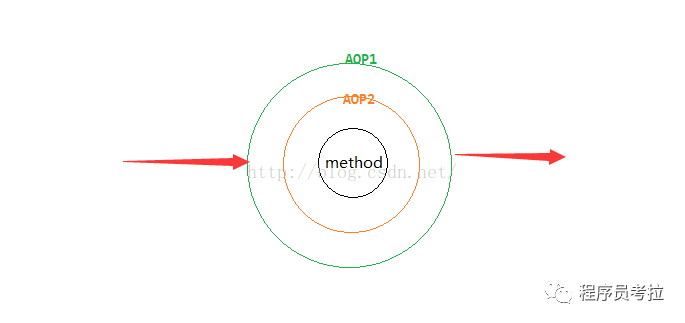
? ? ? ? ?
由此得出:spring aop就是一個(gè)同心圓,要執(zhí)行的方法為圓心,最外層的order最小。從最外層按照AOP1、AOP2的順序依次執(zhí)行doAround方法,doBefore方法。然后執(zhí)行method方法,最后按照AOP2、AOP1的順序依次執(zhí)行doAfter、doAfterReturn方法。也就是說(shuō)對(duì)多個(gè)AOP來(lái)說(shuō),先before的,一定后after。
? ? ? ??
如果我們要在同一個(gè)方法事務(wù)提交后執(zhí)行自己的AOP,那么把事務(wù)的AOP order設(shè)置為2,自己的AOP order設(shè)置為1,然后在doAfterReturn里邊處理自己的業(yè)務(wù)邏輯。
出處:cnblogs.com/panchanggui/p/12203066.html
點(diǎn)個(gè)“在看”哦!