
徒手?jǐn)]了一個(gè)RPC框架,理解更透徹了,代碼已上傳github,自取~
一、前言
前段時(shí)間看到一篇不錯(cuò)的文章《看了這篇你就會(huì)手寫RPC框架了》,于是便來了興趣對(duì)著實(shí)現(xiàn)了一遍,后面覺得還有很多優(yōu)化的地方便對(duì)其進(jìn)行了改進(jìn)。
主要改動(dòng)點(diǎn)如下:
除了Java序列化協(xié)議,增加了protobuf和kryo序列化協(xié)議,配置即用。 增加多種負(fù)載均衡算法(隨機(jī)、輪詢、加權(quán)輪詢、平滑加權(quán)輪詢),配置即用。 客戶端增加本地服務(wù)列表緩存,提高性能。 修復(fù)高并發(fā)情況下,netty導(dǎo)致的內(nèi)存泄漏問題 由原來的每個(gè)請(qǐng)求建立一次連接,改為建立TCP長(zhǎng)連接,并多次復(fù)用。 服務(wù)端增加線程池提高消息處理能力
二、介紹
RPC,即 Remote Procedure Call(遠(yuǎn)程過程調(diào)用),調(diào)用遠(yuǎn)程計(jì)算機(jī)上的服務(wù),就像調(diào)用本地服務(wù)一樣。RPC可以很好的解耦系統(tǒng),如WebService就是一種基于Http協(xié)議的RPC。
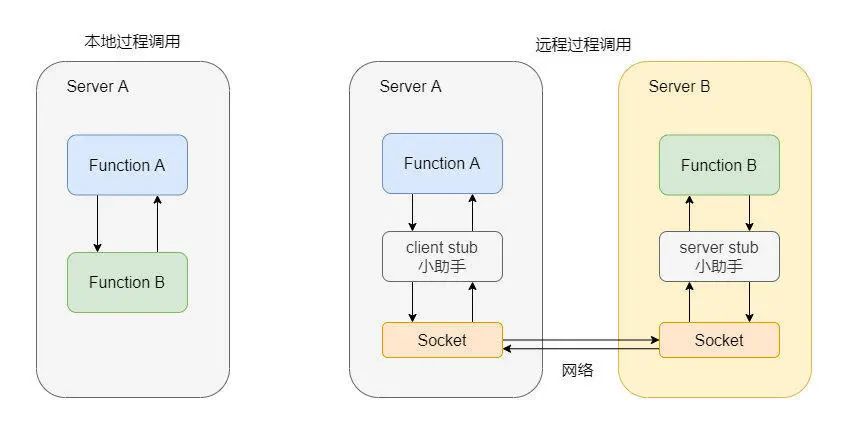
調(diào)用示意圖
總的來說,就如下幾個(gè)步驟:
客戶端(ServerA)執(zhí)行遠(yuǎn)程方法時(shí)就調(diào)用client stub傳遞類名、方法名和參數(shù)等信息。 client stub會(huì)將參數(shù)等信息序列化為二進(jìn)制流的形式,然后通過Sockect發(fā)送給服務(wù)端(ServerB) 服務(wù)端收到數(shù)據(jù)包后,server stub 需要進(jìn)行解析反序列化為類名、方法名和參數(shù)等信息。 server stub調(diào)用對(duì)應(yīng)的本地方法,并把執(zhí)行結(jié)果返回給客戶端
所以一個(gè)RPC框架有如下角色:
服務(wù)消費(fèi)者
遠(yuǎn)程方法的調(diào)用方,即客戶端。一個(gè)服務(wù)既可以是消費(fèi)者也可以是提供者。
服務(wù)提供者
遠(yuǎn)程服務(wù)的提供方,即服務(wù)端。一個(gè)服務(wù)既可以是消費(fèi)者也可以是提供者。
注冊(cè)中心
保存服務(wù)提供者的服務(wù)地址等信息,一般由zookeeper、redis等實(shí)現(xiàn)。
監(jiān)控運(yùn)維(可選)
監(jiān)控接口的響應(yīng)時(shí)間、統(tǒng)計(jì)請(qǐng)求數(shù)量等,及時(shí)發(fā)現(xiàn)系統(tǒng)問題并發(fā)出告警通知。
三、實(shí)現(xiàn)
本RPC框架rpc-spring-boot-starter涉及技術(shù)棧如下:
使用zookeeper作為注冊(cè)中心 使用netty作為通信框架 消息編解碼:protostuff、kryo、java spring 使用SPI來根據(jù)配置動(dòng)態(tài)選擇負(fù)載均衡算法等
由于代碼過多,這里只講幾處改動(dòng)點(diǎn)。
3.1動(dòng)態(tài)負(fù)載均衡算法
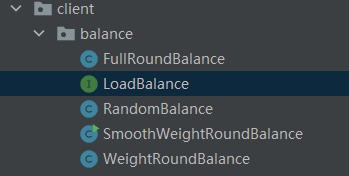
1.編寫LoadBalance的實(shí)現(xiàn)類
2.自定義注解 @LoadBalanceAno
/**
 * 負(fù)載均衡注解
 */
@Target(ElementType.TYPE)
@Retention(RetentionPolicy.RUNTIME)
@Documented
public @interface LoadBalanceAno {

    String value() default "";
}

/**
 * 輪詢算法
 */
@LoadBalanceAno(RpcConstant.BALANCE_ROUND)
public class FullRoundBalance implements LoadBalance {

    private static Logger logger = LoggerFactory.getLogger(FullRoundBalance.class);

    private volatile int index;

    @Override
    public synchronized Service chooseOne(List<Service> services) {
        // 加鎖防止多線程情況下,index超出services.size()
        if (index == services.size()) {
            index = 0;
        }
        return services.get(index++);
    }
}
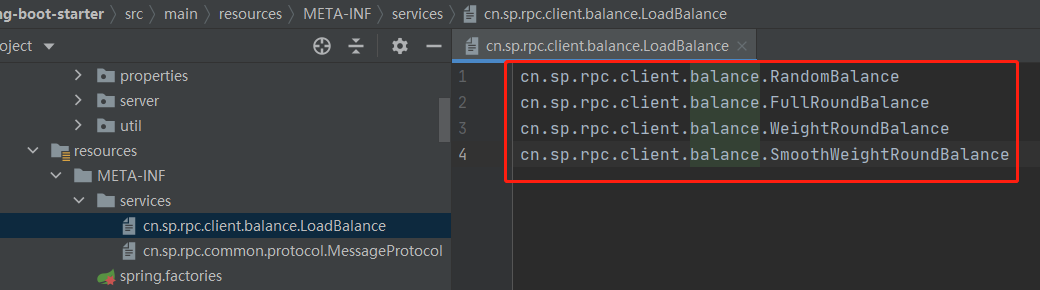
3.新建在resource目錄下META-INF/servers文件夾并創(chuàng)建文件
4.RpcConfig增加配置項(xiàng)loadBalance
/**
 * @author 2YSP
 * @date 2020/7/26 15:13
 */
@ConfigurationProperties(prefix = "sp.rpc")
public class RpcConfig {

    /**
     * 服務(wù)注冊(cè)中心地址
     */
    private String registerAddress = "127.0.0.1:2181";

    /**
     * 服務(wù)暴露端口
     */
    private Integer serverPort = 9999;
    /**
     * 服務(wù)協(xié)議
     */
    private String protocol = "java";
    /**
     * 負(fù)載均衡算法
     */
    private String loadBalance = "random";
    /**
     * 權(quán)重,默認(rèn)為1
     */
    private Integer weight = 1;

   // 省略getter setter
}
5.在自動(dòng)配置類RpcAutoConfiguration根據(jù)配置選擇對(duì)應(yīng)的算法實(shí)現(xiàn)類
/**
     * 使用spi匹配符合配置的負(fù)載均衡算法
     *
     * @param name
     * @return
     */
    private LoadBalance getLoadBalance(String name) {
        ServiceLoader<LoadBalance> loader = ServiceLoader.load(LoadBalance.class);
        Iterator<LoadBalance> iterator = loader.iterator();
        while (iterator.hasNext()) {
            LoadBalance loadBalance = iterator.next();
            LoadBalanceAno ano = loadBalance.getClass().getAnnotation(LoadBalanceAno.class);
            Assert.notNull(ano, "load balance name can not be empty!");
            if (name.equals(ano.value())) {
                return loadBalance;
            }
        }
        throw new RpcException("invalid load balance config");
    }

 @Bean
    public ClientProxyFactory proxyFactory(@Autowired RpcConfig rpcConfig) {
        ClientProxyFactory clientProxyFactory = new ClientProxyFactory();
        // 設(shè)置服務(wù)發(fā)現(xiàn)著
        clientProxyFactory.setServerDiscovery(new           ZookeeperServerDiscovery(rpcConfig.getRegisterAddress()));

        // 設(shè)置支持的協(xié)議
        Map<String, MessageProtocol> supportMessageProtocols = buildSupportMessageProtocols();
        clientProxyFactory.setSupportMessageProtocols(supportMessageProtocols);
        // 設(shè)置負(fù)載均衡算法
        LoadBalance loadBalance = getLoadBalance(rpcConfig.getLoadBalance());
        clientProxyFactory.setLoadBalance(loadBalance);
        // 設(shè)置網(wǎng)絡(luò)層實(shí)現(xiàn)
        clientProxyFactory.setNetClient(new NettyNetClient());

        return clientProxyFactory;
    }
3.2本地服務(wù)列表緩存
使用Map來緩存數(shù)據(jù)
/**
 * 服務(wù)發(fā)現(xiàn)本地緩存
 */
public class ServerDiscoveryCache {
    /**
     * key: serviceName
     */
    private static final Map<String, List<Service>> SERVER_MAP = new ConcurrentHashMap<>();
    /**
     * 客戶端注入的遠(yuǎn)程服務(wù)service class
     */
    public static final List<String> SERVICE_CLASS_NAMES = new ArrayList<>();

    public static void put(String serviceName, List<Service> serviceList) {
        SERVER_MAP.put(serviceName, serviceList);
    }

    /**
     * 去除指定的值
     * @param serviceName
     * @param service
     */
    public static void remove(String serviceName, Service service) {
        SERVER_MAP.computeIfPresent(serviceName, (key, value) ->
                value.stream().filter(o -> !o.toString().equals(service.toString())).collect(Collectors.toList())
        );
    }

    public static void removeAll(String serviceName) {
        SERVER_MAP.remove(serviceName);
    }


    public static boolean isEmpty(String serviceName) {
        return SERVER_MAP.get(serviceName) == null || SERVER_MAP.get(serviceName).size() == 0;
    }

    public static List<Service> get(String serviceName) {
        return SERVER_MAP.get(serviceName);
    }
}
ClientProxyFactory,先查本地緩存,緩存沒有再查詢zookeeper。
/**
     * 根據(jù)服務(wù)名獲取可用的服務(wù)地址列表
     * @param serviceName
     * @return
     */
    private List<Service> getServiceList(String serviceName) {
        List<Service> services;
        synchronized (serviceName){
            if (ServerDiscoveryCache.isEmpty(serviceName)) {
                services = serverDiscovery.findServiceList(serviceName);
                if (services == null || services.size() == 0) {
                    throw new RpcException("No provider available!");
                }
                ServerDiscoveryCache.put(serviceName, services);
            } else {
                services = ServerDiscoveryCache.get(serviceName);
            }
        }
        return services;
    }
問題: 如果服務(wù)端因?yàn)殄礄C(jī)或網(wǎng)絡(luò)問題下線了,緩存卻還在就會(huì)導(dǎo)致客戶端請(qǐng)求已經(jīng)不可用的服務(wù)端,增加請(qǐng)求失敗率。 **解決方案:**由于服務(wù)端注冊(cè)的是臨時(shí)節(jié)點(diǎn),所以如果服務(wù)端下線節(jié)點(diǎn)會(huì)被移除。只要監(jiān)聽zookeeper的子節(jié)點(diǎn),如果新增或刪除子節(jié)點(diǎn)就直接清空本地緩存即可。
DefaultRpcProcessor
/**
 * Rpc處理者,支持服務(wù)啟動(dòng)暴露,自動(dòng)注入Service
 * @author 2YSP
 * @date 2020/7/26 14:46
 */
public class DefaultRpcProcessor implements ApplicationListener<ContextRefreshedEvent> {


    @Override
    public void onApplicationEvent(ContextRefreshedEvent event) {
        // Spring啟動(dòng)完畢過后會(huì)收到一個(gè)事件通知
        if (Objects.isNull(event.getApplicationContext().getParent())){
            ApplicationContext context = event.getApplicationContext();
            // 開啟服務(wù)
            startServer(context);
            // 注入Service
            injectService(context);
        }
    }

    private void injectService(ApplicationContext context) {
        String[] names = context.getBeanDefinitionNames();
        for(String name : names){
            Class<?> clazz = context.getType(name);
            if (Objects.isNull(clazz)){
                continue;
            }

            Field[] declaredFields = clazz.getDeclaredFields();
            for(Field field : declaredFields){
                // 找出標(biāo)記了InjectService注解的屬性
                InjectService injectService = field.getAnnotation(InjectService.class);
                if (injectService == null){
                    continue;
                }

                Class<?> fieldClass = field.getType();
                Object object = context.getBean(name);
                field.setAccessible(true);
                try {
                    field.set(object,clientProxyFactory.getProxy(fieldClass));
                } catch (IllegalAccessException e) {
                    e.printStackTrace();
                }
    // 添加本地服務(wù)緩存
                ServerDiscoveryCache.SERVICE_CLASS_NAMES.add(fieldClass.getName());
            }
        }
        // 注冊(cè)子節(jié)點(diǎn)監(jiān)聽
        if (clientProxyFactory.getServerDiscovery() instanceof ZookeeperServerDiscovery){
            ZookeeperServerDiscovery serverDiscovery = (ZookeeperServerDiscovery) clientProxyFactory.getServerDiscovery();
            ZkClient zkClient = serverDiscovery.getZkClient();
            ServerDiscoveryCache.SERVICE_CLASS_NAMES.forEach(name ->{
                String servicePath = RpcConstant.ZK_SERVICE_PATH + RpcConstant.PATH_DELIMITER + name + "/service";
                zkClient.subscribeChildChanges(servicePath, new ZkChildListenerImpl());
            });
            logger.info("subscribe service zk node successfully");
        }

    }

    private void startServer(ApplicationContext context) {
        ...

    }
}
ZkChildListenerImpl
/**
 * 子節(jié)點(diǎn)事件監(jiān)聽處理類
 */
public class ZkChildListenerImpl implements IZkChildListener {

    private static Logger logger = LoggerFactory.getLogger(ZkChildListenerImpl.class);

    /**
     * 監(jiān)聽子節(jié)點(diǎn)的刪除和新增事件
     * @param parentPath /rpc/serviceName/service
     * @param childList
     * @throws Exception
     */
    @Override
    public void handleChildChange(String parentPath, List<String> childList) throws Exception {
        logger.debug("Child change parentPath:[{}] -- childList:[{}]", parentPath, childList);
        // 只要子節(jié)點(diǎn)有改動(dòng)就清空緩存
        String[] arr = parentPath.split("/");
        ServerDiscoveryCache.removeAll(arr[2]);
    }
}
3.3nettyClient支持TCP長(zhǎng)連接
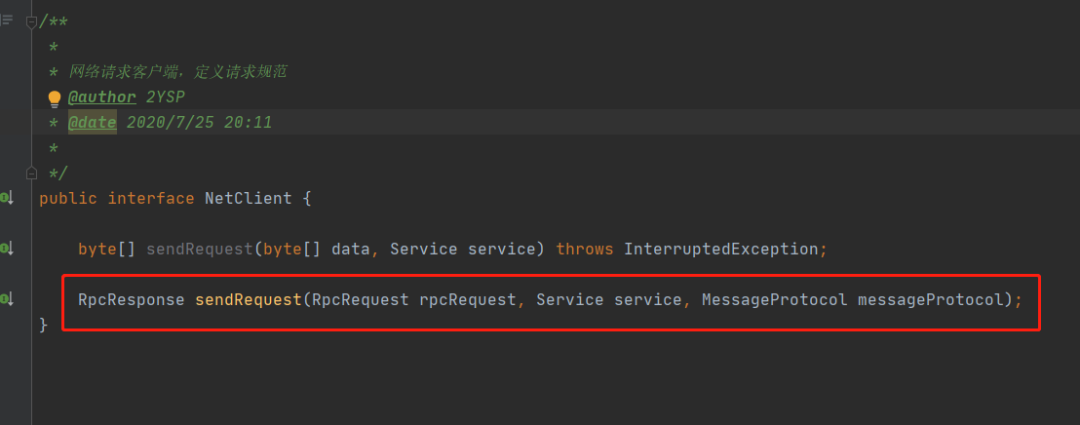
這部分的改動(dòng)最多,先增加新的sendRequest接口。
實(shí)現(xiàn)類NettyNetClient
/**
 * @author 2YSP
 * @date 2020/7/25 20:12
 */
public class NettyNetClient implements NetClient {

    private static Logger logger = LoggerFactory.getLogger(NettyNetClient.class);

    private static ExecutorService threadPool = new ThreadPoolExecutor(4, 10, 200,
            TimeUnit.SECONDS, new LinkedBlockingQueue<>(1000), new ThreadFactoryBuilder()
            .setNameFormat("rpcClient-%d")
            .build());

    private EventLoopGroup loopGroup = new NioEventLoopGroup(4);

    /**
     * 已連接的服務(wù)緩存
     * key: 服務(wù)地址,格式:ip:port
     */
    public static Map<String, SendHandlerV2> connectedServerNodes = new ConcurrentHashMap<>();

    @Override
    public byte[] sendRequest(byte[] data, Service service) throws InterruptedException {
  ....
        return respData;
    }

    @Override
    public RpcResponse sendRequest(RpcRequest rpcRequest, Service service, MessageProtocol messageProtocol) {

        String address = service.getAddress();
        synchronized (address) {
            if (connectedServerNodes.containsKey(address)) {
                SendHandlerV2 handler = connectedServerNodes.get(address);
                logger.info("使用現(xiàn)有的連接");
                return handler.sendRequest(rpcRequest);
            }

            String[] addrInfo = address.split(":");
            final String serverAddress = addrInfo[0];
            final String serverPort = addrInfo[1];
            final SendHandlerV2 handler = new SendHandlerV2(messageProtocol, address);
            threadPool.submit(() -> {
                        // 配置客戶端
                        Bootstrap b = new Bootstrap();
                        b.group(loopGroup).channel(NioSocketChannel.class)
                                .option(ChannelOption.TCP_NODELAY, true)
                                .handler(new ChannelInitializer<SocketChannel>() {
                                    @Override
                                    protected void initChannel(SocketChannel socketChannel) throws Exception {
                                        ChannelPipeline pipeline = socketChannel.pipeline();
                                        pipeline
                                                .addLast(handler);
                                    }
                                });
                        // 啟用客戶端連接
                        ChannelFuture channelFuture = b.connect(serverAddress, Integer.parseInt(serverPort));
                        channelFuture.addListener(new ChannelFutureListener() {
                            @Override
                            public void operationComplete(ChannelFuture channelFuture) throws Exception {
                                connectedServerNodes.put(address, handler);
                            }
                        });
                    }
            );
            logger.info("使用新的連接。。。");
            return handler.sendRequest(rpcRequest);
        }
    }
}
每次請(qǐng)求都會(huì)調(diào)用sendRequest()方法,用線程池異步和服務(wù)端創(chuàng)建TCP長(zhǎng)連接,連接成功后將SendHandlerV2緩存到ConcurrentHashMap中方便復(fù)用,后續(xù)請(qǐng)求的請(qǐng)求地址(ip+port)如果在connectedServerNodes中存在則使用connectedServerNodes中的handler處理不再重新建立連接。
SendHandlerV2
/**
 * @author 2YSP
 * @date 2020/8/19 20:06
 */
public class SendHandlerV2 extends ChannelInboundHandlerAdapter {

    private static Logger logger = LoggerFactory.getLogger(SendHandlerV2.class);

    /**
     * 等待通道建立最大時(shí)間
     */
    static final int CHANNEL_WAIT_TIME = 4;
    /**
     * 等待響應(yīng)最大時(shí)間
     */
    static final int RESPONSE_WAIT_TIME = 8;

    private volatile Channel channel;

    private String remoteAddress;

    private static Map<String, RpcFuture<RpcResponse>> requestMap = new ConcurrentHashMap<>();

    private MessageProtocol messageProtocol;

    private CountDownLatch latch = new CountDownLatch(1);

    public SendHandlerV2(MessageProtocol messageProtocol,String remoteAddress) {
        this.messageProtocol = messageProtocol;
        this.remoteAddress = remoteAddress;
    }

    @Override
    public void channelRegistered(ChannelHandlerContext ctx) throws Exception {
        this.channel = ctx.channel();
        latch.countDown();
    }

    @Override
    public void channelActive(ChannelHandlerContext ctx) throws Exception {
        logger.debug("Connect to server successfully:{}", ctx);
    }

    @Override
    public void channelRead(ChannelHandlerContext ctx, Object msg) throws Exception {
        logger.debug("Client reads message:{}", msg);
        ByteBuf byteBuf = (ByteBuf) msg;
        byte[] resp = new byte[byteBuf.readableBytes()];
        byteBuf.readBytes(resp);
        // 手動(dòng)回收
        ReferenceCountUtil.release(byteBuf);
        RpcResponse response = messageProtocol.unmarshallingResponse(resp);
        RpcFuture<RpcResponse> future = requestMap.get(response.getRequestId());
        future.setResponse(response);
    }

    @Override
    public void exceptionCaught(ChannelHandlerContext ctx, Throwable cause) throws Exception {
        cause.printStackTrace();
        logger.error("Exception occurred:{}", cause.getMessage());
        ctx.close();
    }

    @Override
    public void channelReadComplete(ChannelHandlerContext ctx) throws Exception {
        ctx.flush();
    }

    @Override
    public void channelInactive(ChannelHandlerContext ctx) throws Exception {
        super.channelInactive(ctx);
        logger.error("channel inactive with remoteAddress:[{}]",remoteAddress);
        NettyNetClient.connectedServerNodes.remove(remoteAddress);

    }

    @Override
    public void userEventTriggered(ChannelHandlerContext ctx, Object evt) throws Exception {
        super.userEventTriggered(ctx, evt);
    }

    public RpcResponse sendRequest(RpcRequest request) {
        RpcResponse response;
        RpcFuture<RpcResponse> future = new RpcFuture<>();
        requestMap.put(request.getRequestId(), future);
        try {
            byte[] data = messageProtocol.marshallingRequest(request);
            ByteBuf reqBuf = Unpooled.buffer(data.length);
            reqBuf.writeBytes(data);
            if (latch.await(CHANNEL_WAIT_TIME,TimeUnit.SECONDS)){
                channel.writeAndFlush(reqBuf);
                // 等待響應(yīng)
                response = future.get(RESPONSE_WAIT_TIME, TimeUnit.SECONDS);
            }else {
                throw new RpcException("establish channel time out");
            }
        } catch (Exception e) {
            throw new RpcException(e.getMessage());
        } finally {
            requestMap.remove(request.getRequestId());
        }
        return response;
    }
}
RpcFuture
package cn.sp.rpc.client.net;

import java.util.concurrent.*;

/**
 * @author 2YSP
 * @date 2020/8/19 22:31
 */
public class RpcFuture<T> implements Future<T> {

    private T response;
    /**
     * 因?yàn)檎?qǐng)求和響應(yīng)是一一對(duì)應(yīng)的,所以這里是1
     */
    private CountDownLatch countDownLatch = new CountDownLatch(1);
    /**
     * Future的請(qǐng)求時(shí)間,用于計(jì)算Future是否超時(shí)
     */
    private long beginTime = System.currentTimeMillis();

    @Override
    public boolean cancel(boolean mayInterruptIfRunning) {
        return false;
    }

    @Override
    public boolean isCancelled() {
        return false;
    }

    @Override
    public boolean isDone() {
        if (response != null) {
            return true;
        }
        return false;
    }

    /**
     * 獲取響應(yīng),直到有結(jié)果才返回
     * @return
     * @throws InterruptedException
     * @throws ExecutionException
     */
    @Override
    public T get() throws InterruptedException, ExecutionException {
        countDownLatch.await();
        return response;
    }

    @Override
    public T get(long timeout, TimeUnit unit) throws InterruptedException, ExecutionException, TimeoutException {
        if (countDownLatch.await(timeout,unit)){
            return response;
        }
        return null;
    }

    public void setResponse(T response) {
        this.response = response;
        countDownLatch.countDown();
    }

    public long getBeginTime() {
        return beginTime;
    }
}
此處邏輯,第一次執(zhí)行 SendHandlerV2#sendRequest() 時(shí)channel需要等待通道建立好之后才能發(fā)送請(qǐng)求,所以用CountDownLatch來控制,等待通道建立。 自定義Future+requestMap緩存來實(shí)現(xiàn)netty的請(qǐng)求和阻塞等待響應(yīng),RpcRequest對(duì)象在創(chuàng)建時(shí)會(huì)生成一個(gè)請(qǐng)求的唯一標(biāo)識(shí)requestId,發(fā)送請(qǐng)求前先將RpcFuture緩存到requestMap中,key為requestId,讀取到服務(wù)端的響應(yīng)信息后(channelRead方法),將響應(yīng)結(jié)果放入對(duì)應(yīng)的RpcFuture中。 SendHandlerV2#channelInactive() 方法中,如果連接的服務(wù)端異常斷開連接了,則及時(shí)清理緩存中對(duì)應(yīng)的serverNode。
四、壓力測(cè)試
測(cè)試環(huán)境:
(英特爾)Intel(R) Core(TM) i5-6300HQ CPU @ 2.30GHz 4核 windows10家庭版(64位) 16G內(nèi)存
1.本地啟動(dòng)zookeeper 2.本地啟動(dòng)一個(gè)消費(fèi)者,兩個(gè)服務(wù)端,輪詢算法 3.使用ab進(jìn)行壓力測(cè)試,4個(gè)線程發(fā)送10000個(gè)請(qǐng)求
ab -c 4 -n 10000 http://localhost:8080/test/user?id=1
測(cè)試結(jié)果:
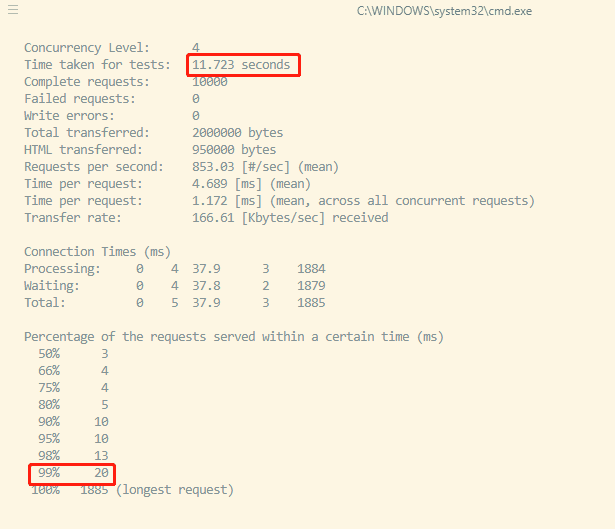
從圖片可以看出,10000個(gè)請(qǐng)求只用了11s,比之前的130+秒耗時(shí)減少了10倍以上。
代碼地址:
https://github.com/2YSP/rpc-spring-boot-starter
https://github.com/2YSP/rpc-example
后臺(tái)回復(fù) 學(xué)習(xí)資料 領(lǐng)取學(xué)習(xí)視頻

如有收獲,點(diǎn)個(gè)在看,誠(chéng)摯感謝