
如何優(yōu)雅的實現(xiàn)分布式鎖

概述
提到分布式鎖大家都會想到如下兩種:
基于 Redisson組件,使用redlock算法實現(xiàn)基于 Apache Curator,利用Zookeeper的臨時順序節(jié)點模型實現(xiàn)
今天我們來說說第三種,使用 Spring Integration 實現(xiàn),也是我個人比較推薦的一種。
Spring Integration在基于Spring的應(yīng)用程序中實現(xiàn)輕量級消息傳遞,并支持通過聲明適配器與外部系統(tǒng)集成。Spring Integration的主要目標是提供一個簡單的模型來構(gòu)建企業(yè)集成解決方案,同時保持關(guān)注點的分離,這對于生成可維護,可測試的代碼至關(guān)重要。我們熟知的
Spring Cloud Stream的底層就是Spring Integration。
官方地址:https://github.com/spring-projects/spring-integration
Spring Integration提供的全局鎖目前為如下存儲提供了實現(xiàn):
Gemfire JDBC Redis Zookeeper
它們使用相同的API抽象,這意味著,不論使用哪種存儲,你的編碼體驗是一樣的。試想一下你目前是基于zookeeper實現(xiàn)的分布式鎖,哪天你想換成redis的實現(xiàn),我們只需要修改相關(guān)依賴和配置就可以了,無需修改代碼。下面是你使用 Spring Integration 實現(xiàn)分布式鎖時需要關(guān)注的方法:
| 方法名 | 描述 |
|---|---|
lock() | Acquires the lock. ? 加鎖,如果已經(jīng)被其他線程鎖住或者當(dāng)前線程不能獲取鎖則阻塞 |
lockInterruptibly() | Acquires the lock unless the current thread is interrupted. 加鎖,除非當(dāng)前線程被打斷。 |
tryLock() | Acquires the lock only if it is free at the time of invocation. 嘗試加鎖,如果已經(jīng)有其他鎖鎖住,獲取當(dāng)前線程不能加鎖,則返回false,加鎖失敗;加鎖成功則返回true |
tryLock(long time, TimeUnit unit) | Acquires the lock if it is free within the given waiting time and the current thread has not been interrupted. 嘗試在指定時間內(nèi)加鎖,如果已經(jīng)有其他鎖鎖住,獲取當(dāng)前線程不能加鎖,則返回false,加鎖失敗;加鎖成功則返回true |
unlock() | Releases the lock. 解鎖 |
實戰(zhàn)
話不多說,我們看看使用 Spring Integration ?如何基于redis和zookeeper快速實現(xiàn)分布式鎖,至于Gemfire 和 Jdbc的實現(xiàn)大家自行實踐。
基于Redis實現(xiàn)
引入相關(guān)組件
<dependency>
?<groupId>org.springframework.bootgroupId>
?<artifactId>spring-boot-starter-integrationartifactId>
dependency>

<dependency>
?<groupId>org.springframework.integrationgroupId>
?<artifactId>spring-integration-redisartifactId>
dependency>

<dependency>
?<groupId>org.springframework.bootgroupId>
?<artifactId>spring-boot-starter-data-redisartifactId>
dependency>
在application.yml中添加redis的配置
spring:
?redis:
??host:?172.31.0.149
??port:?7111
建立配置類,注入 RedisLockRegistry
@Configuration
public?class?RedisLockConfiguration?{

????@Bean
????public?RedisLockRegistry?redisLockRegistry(RedisConnectionFactory?redisConnectionFactory){
????????return?new?RedisLockRegistry(redisConnectionFactory,?"redis-lock");
????}

}
編寫測試代碼
@RestController
@RequestMapping("lock")
@Log4j2
public?class?DistributedLockController?{
????@Autowired
????private?RedisLockRegistry?redisLockRegistry;

????@GetMapping("/redis")
????public?void?test1()?{
????????Lock?lock?=?redisLockRegistry.obtain("redis");
????????try{
????????????//嘗試在指定時間內(nèi)加鎖,如果已經(jīng)有其他鎖鎖住,獲取當(dāng)前線程不能加鎖,則返回false,加鎖失敗;加鎖成功則返回true
????????????if(lock.tryLock(3,?TimeUnit.SECONDS)){
????????????????log.info("lock?is?ready");
????????????????TimeUnit.SECONDS.sleep(5);
????????????}
????????}?catch?(InterruptedException?e)?{
????????????log.error("obtain?lock?error",e);
????????}?finally?{
????????????lock.unlock();
????????}
????}
}
測試
啟動多個實例,分別訪問/lock/redis端點,一個正常秩序業(yè)務(wù)邏輯,另外一個實例訪問出現(xiàn)如下錯誤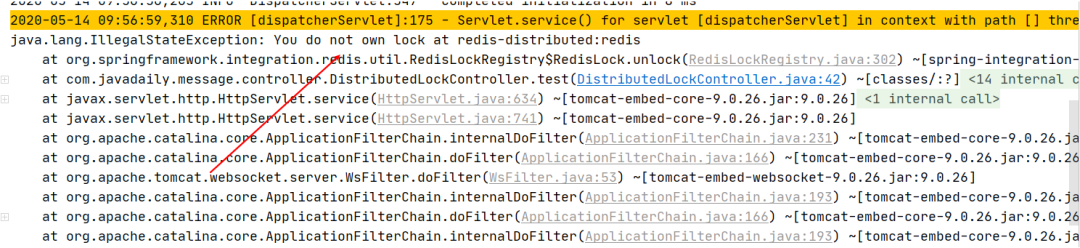 說明第二個實例沒有拿到鎖,證明了分布式鎖的存在。
注意,如果使用新版Springboot進行集成時需要使用Redis4版本,否則會出現(xiàn)下面的異常告警,主要是 unlock() 釋放鎖時使用了UNLINK命令,這個需要Redis4版本才能支持。
2020-05-14?11:30:24,781?WARN??RedisLockRegistry:339?-?The?UNLINK?command?has?failed?(not?supported?on?the?Redis?server?);?falling?back?to?the?regular?DELETE?command
org.springframework.data.redis.RedisSystemException:?Error?in?execution;?nested?exception?is?io.lettuce.core.RedisCommandExecutionException:?ERR?unknown?command?'UNLINK'
基于Zookeeper實現(xiàn)
引入組件
<dependency>
?<groupId>org.springframework.bootgroupId>
?<artifactId>spring-boot-starter-integrationartifactId>
dependency>

?<dependency>
?<groupId>org.springframework.integrationgroupId>
?<artifactId>spring-integration-zookeeperartifactId>
dependency>
在application.yml中添加zookeeper的配置
zookeeper:??
????host:?172.31.0.43:2181
建立配置類,注入 ZookeeperLockRegistry
@Configuration
public?class?ZookeeperLockConfiguration?{
????@Value("${zookeeper.host}")
????private?String?zkUrl;


????@Bean
????public?CuratorFrameworkFactoryBean?curatorFrameworkFactoryBean(){
????????return?new?CuratorFrameworkFactoryBean(zkUrl);
????}

????@Bean
????public?ZookeeperLockRegistry?zookeeperLockRegistry(CuratorFramework?curatorFramework){
????????return?new?ZookeeperLockRegistry(curatorFramework,"/zookeeper-lock");
????}
}
編寫測試代碼
@RestController
@RequestMapping("lock")
@Log4j2
public?class?DistributedLockController?{

????@Autowired
????private?ZookeeperLockRegistry?zookeeperLockRegistry;

????@GetMapping("/zookeeper")
????public?void?test2()?{
????????Lock?lock?=?zookeeperLockRegistry.obtain("zookeeper");
????????try{
????????????//嘗試在指定時間內(nèi)加鎖,如果已經(jīng)有其他鎖鎖住,獲取當(dāng)前線程不能加鎖,則返回false,加鎖失敗;加鎖成功則返回true
????????????if(lock.tryLock(3,?TimeUnit.SECONDS)){
????????????????log.info("lock?is?ready");
????????????????TimeUnit.SECONDS.sleep(5);
????????????}
????????}?catch?(InterruptedException?e)?{
????????????log.error("obtain?lock?error",e);
????????}?finally?{
????????????lock.unlock();
????????}
????}
}
測試
啟動多個實例,分別訪問/lock/zookeeper端點,一個正常執(zhí)行業(yè)務(wù)邏輯,另外一個實例訪問出現(xiàn)如下錯誤: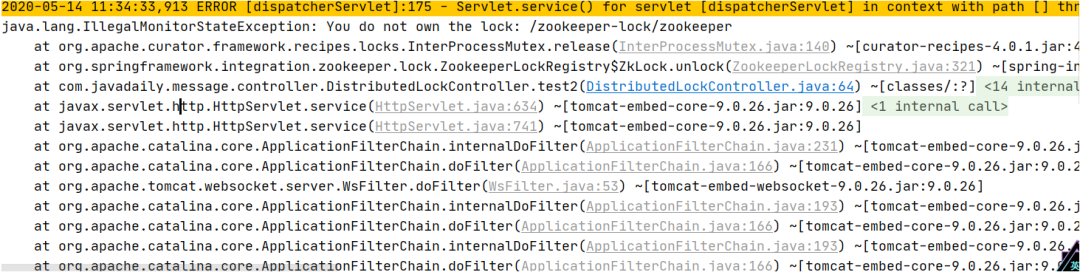 說明第二個實例沒有拿到鎖,證明了分布式鎖的存在。
收藏?等于白嫖,點贊?才是真情!

3.?大型網(wǎng)站架構(gòu)演化發(fā)展歷程
8. 深入理解 MySQL:快速學(xué)會分析SQL執(zhí)行效率

掃碼二維碼關(guān)注我
·end·
—如果本文有幫助,請分享到朋友圈吧—
我們一起愉快的玩耍!
