
實操教程|PyTorch實現(xiàn)斷點繼續(xù)訓(xùn)練
點擊上方“程序員大白”,選擇“星標(biāo)”公眾號
重磅干貨,第一時間送達(dá)


最近在嘗試用CIFAR10訓(xùn)練分類問題的時候,由于數(shù)據(jù)集體量比較大,訓(xùn)練的過程中時間比較長,有時候想給停下來,但是停下來了之后就得重新訓(xùn)練,之前師兄讓我們學(xué)習(xí)斷點繼續(xù)訓(xùn)練及繼續(xù)訓(xùn)練的時候注意epoch的改變等,今天上午給大致整理了一下,不全面僅供參考
Epoch: 9 | train loss: 0.3517 | test accuracy: 0.7184 | train time: 14215.1018 sEpoch: 9 | train loss: 0.2471 | test accuracy: 0.7252 | train time: 14309.1216 sEpoch: 9 | train loss: 0.4335 | test accuracy: 0.7201 | train time: 14403.2398 sEpoch: 9 | train loss: 0.2186 | test accuracy: 0.7242 | train time: 14497.1921 sEpoch: 9 | train loss: 0.2127 | test accuracy: 0.7196 | train time: 14591.4974 sEpoch: 9 | train loss: 0.1624 | test accuracy: 0.7142 | train time: 14685.7034 sEpoch: 9 | train loss: 0.1795 | test accuracy: 0.7170 | train time: 14780.2831 s絕望!!!!!訓(xùn)練到了一定次數(shù)發(fā)現(xiàn)訓(xùn)練次數(shù)少了,或者中途斷了又得重新開始訓(xùn)練
一、模型的保存與加載
PyTorch中的保存(序列化,從內(nèi)存到硬盤)與反序列化(加載,從硬盤到內(nèi)存)
torch.save主要參數(shù):obj:對象 、f:輸出路徑
torch.load 主要參數(shù) :f:文件路徑 、map_location:指定存放位置、 cpu or gpu
模型的保存的兩種方法:
1、保存整個Module
torch.save(net, path)
2、保存模型參數(shù)
state_dict = net.state_dict()torch.save(state_dict , path)
二、模型的訓(xùn)練過程中保存
checkpoint = {"net": model.state_dict(),'optimizer':optimizer.state_dict(),"epoch": epoch}
將網(wǎng)絡(luò)訓(xùn)練過程中的網(wǎng)絡(luò)的權(quán)重,優(yōu)化器的權(quán)重保存,以及epoch 保存,便于繼續(xù)訓(xùn)練恢復(fù)
在訓(xùn)練過程中,可以根據(jù)自己的需要,每多少代,或者多少epoch保存一次網(wǎng)絡(luò)參數(shù),便于恢復(fù),提高程序的魯棒性。
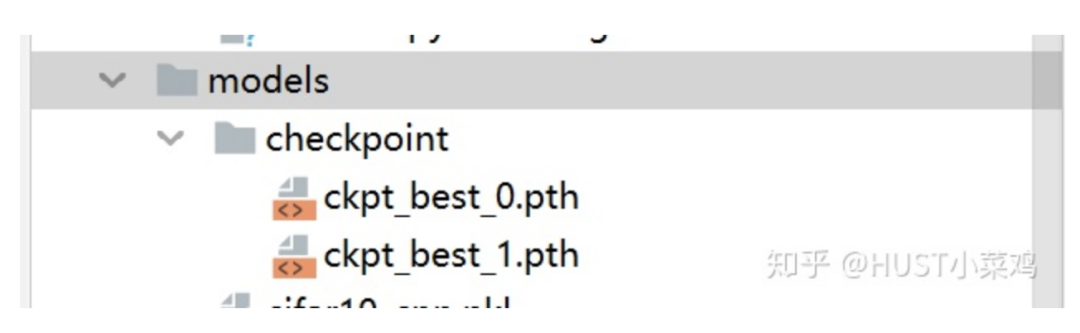
checkpoint = {"net": model.state_dict(),'optimizer':optimizer.state_dict(),"epoch": epoch}if not os.path.isdir("./models/checkpoint"):os.mkdir("./models/checkpoint")torch.save(checkpoint, './models/checkpoint/ckpt_best_%s.pth' %(str(epoch)))
通過上述的過程可以在訓(xùn)練過程自動在指定位置創(chuàng)建文件夾,并保存斷點文件
三、模型的斷點繼續(xù)訓(xùn)練
if RESUME:path_checkpoint = "./models/checkpoint/ckpt_best_1.pth" # 斷點路徑checkpoint = torch.load(path_checkpoint) # 加載斷點model.load_state_dict(checkpoint['net']) # 加載模型可學(xué)習(xí)參數(shù)optimizer.load_state_dict(checkpoint['optimizer']) # 加載優(yōu)化器參數(shù)start_epoch = checkpoint['epoch'] # 設(shè)置開始的epoch
指出這里的是否繼續(xù)訓(xùn)練,及訓(xùn)練的checkpoint的文件位置等可以通過argparse從命令行直接讀取,也可以通過log文件直接加載,也可以自己在代碼中進(jìn)行修改。關(guān)于argparse參照我的這一篇文章:
HUST小菜雞:argparse 命令行選項、參數(shù)和子命令解析器
https://zhuanlan.zhihu.com/p/133285373
四、重點在于epoch的恢復(fù)
start_epoch = -1if RESUME:path_checkpoint = "./models/checkpoint/ckpt_best_1.pth"checkpoint = torch.load(path_checkpoint)model.load_state_dict(checkpoint['net'])optimizer.load_state_dict(checkpoint['optimizer'])start_epoch = checkpoint['epoch']for epoch in range(start_epoch + 1 ,EPOCH):# print('EPOCH:',epoch)for step, (b_img,b_label) in enumerate(train_loader):train_output = model(b_img)loss = loss_func(train_output,b_label)optimizer.zero_grad()loss.backward()optimizer.step()
通過定義start_epoch變量來保證繼續(xù)訓(xùn)練的時候epoch不會變化
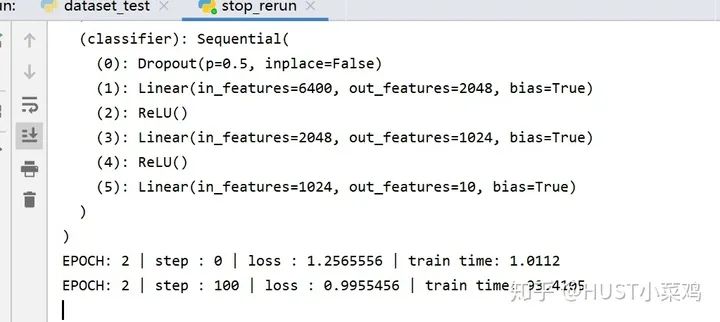
斷點繼續(xù)訓(xùn)練
一、初始化隨機(jī)數(shù)種子
import torchimport randomimport numpy as npdef set_random_seed(seed = 10,deterministic=False,benchmark=False):random.seed(seed)np.random(seed)torch.manual_seed(seed)torch.cuda.manual_seed_all(seed)if deterministic:torch.backends.cudnn.deterministic = Trueif benchmark:torch.backends.cudnn.benchmark = True
關(guān)于torch.backends.cudnn.deterministic和torch.backends.cudnn.benchmark詳見
Pytorch學(xué)習(xí)0.01:cudnn.benchmark= True的設(shè)置
https://www.cnblogs.com/captain-dl/p/11938864.html
pytorch---之cudnn.benchmark和cudnn.deterministic_人工智能_zxyhhjs2017的博客
https://blog.csdn.net/zxyhhjs2017/article/details/91348108
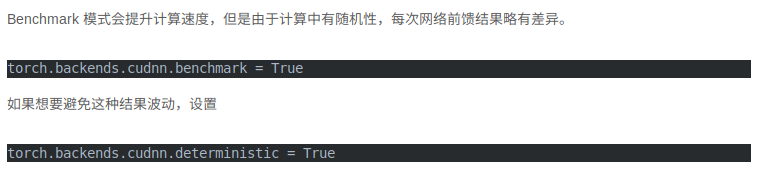
benchmark用在輸入尺寸一致,可以加速訓(xùn)練,deterministic用來固定內(nèi)部隨機(jī)性
二、多步長SGD繼續(xù)訓(xùn)練
在簡單的任務(wù)中,我們使用固定步長(也就是學(xué)習(xí)率LR)進(jìn)行訓(xùn)練,但是如果學(xué)習(xí)率lr設(shè)置的過小的話,則會導(dǎo)致很難收斂,如果學(xué)習(xí)率很大的時候,就會導(dǎo)致在最小值附近,總會錯過最小值,loss產(chǎn)生震蕩,無法收斂。所以這要求我們要對于不同的訓(xùn)練階段使用不同的學(xué)習(xí)率,一方面可以加快訓(xùn)練的過程,另一方面可以加快網(wǎng)絡(luò)收斂。
采用多步長 torch.optim.lr_scheduler的多種步長設(shè)置方式來實現(xiàn)步長的控制,lr_scheduler的各種使用推薦參考如下教程:
【轉(zhuǎn)載】 Pytorch中的學(xué)習(xí)率調(diào)整lr_scheduler,ReduceLROnPlateau
https://www.cnblogs.com/devilmaycry812839668/p/10630302.html
所以我們在保存網(wǎng)絡(luò)中的訓(xùn)練的參數(shù)的過程中,還需要保存lr_scheduler的state_dict,然后斷點繼續(xù)訓(xùn)練的時候恢復(fù)
#這里我設(shè)置了不同的epoch對應(yīng)不同的學(xué)習(xí)率衰減,在10->20->30,學(xué)習(xí)率依次衰減為原來的0.1,即一個數(shù)量級lr_schedule = torch.optim.lr_scheduler.MultiStepLR(optimizer,milestones=[10,20,30,40,50],gamma=0.1)optimizer = torch.optim.SGD(model.parameters(),lr=0.1)for epoch in range(start_epoch+1,80):optimizer.zero_grad()optimizer.step()lr_schedule.step()if epoch %10 ==0:print('epoch:',epoch)print('learning rate:',optimizer.state_dict()['param_groups'][0]['lr'])
lr的變化過程如下:
epoch: 10learning rate: 0.1epoch: 20learning rate: 0.010000000000000002epoch: 30learning rate: 0.0010000000000000002epoch: 40learning rate: 0.00010000000000000003epoch: 50learning rate: 1.0000000000000004e-05epoch: 60learning rate: 1.0000000000000004e-06epoch: 70learning rate: 1.0000000000000004e-06
我們在保存的時候,也需要對lr_scheduler的state_dict進(jìn)行保存,斷點繼續(xù)訓(xùn)練的時候也需要恢復(fù)lr_scheduler
#加載恢復(fù)if RESUME:path_checkpoint = "./model_parameter/test/ckpt_best_50.pth" # 斷點路徑checkpoint = torch.load(path_checkpoint) # 加載斷點model.load_state_dict(checkpoint['net']) # 加載模型可學(xué)習(xí)參數(shù)optimizer.load_state_dict(checkpoint['optimizer']) # 加載優(yōu)化器參數(shù)start_epoch = checkpoint['epoch'] # 設(shè)置開始的epochlr_schedule.load_state_dict(checkpoint['lr_schedule'])#加載lr_scheduler#保存for epoch in range(start_epoch+1,80):optimizer.zero_grad()optimizer.step()lr_schedule.step()if epoch %10 ==0:print('epoch:',epoch)print('learning rate:',optimizer.state_dict()['param_groups'][0]['lr'])checkpoint = {"net": model.state_dict(),'optimizer': optimizer.state_dict(),"epoch": epoch,'lr_schedule': lr_schedule.state_dict()}if not os.path.isdir("./model_parameter/test"):os.mkdir("./model_parameter/test")torch.save(checkpoint, './model_parameter/test/ckpt_best_%s.pth' % (str(epoch)))
三、保存最好的結(jié)果
每一個epoch中的每個step會有不同的結(jié)果,可以保存每一代最好的結(jié)果,用于后續(xù)的訓(xùn)練
第一次實驗代碼
RESUME = TrueEPOCH = 40LR = 0.0005model = cifar10_cnn.CIFAR10_CNN()print(model)optimizer = torch.optim.Adam(model.parameters(),lr=LR)loss_func = nn.CrossEntropyLoss()start_epoch = -1if RESUME:path_checkpoint = "./models/checkpoint/ckpt_best_1.pth" # 斷點路徑checkpoint = torch.load(path_checkpoint) # 加載斷點model.load_state_dict(checkpoint['net']) # 加載模型可學(xué)習(xí)參數(shù)optimizer.load_state_dict(checkpoint['optimizer']) # 加載優(yōu)化器參數(shù)start_epoch = checkpoint['epoch'] # 設(shè)置開始的epochfor epoch in range(start_epoch + 1 ,EPOCH):# print('EPOCH:',epoch)for step, (b_img,b_label) in enumerate(train_loader):train_output = model(b_img)loss = loss_func(train_output,b_label)# losses.append(loss)optimizer.zero_grad()loss.backward()optimizer.step()if step % 100 == 0:now = time.time()print('EPOCH:',epoch,'| step :',step,'| loss :',loss.data.numpy(),'| train time: %.4f'%(now-start_time))checkpoint = {"net": model.state_dict(),'optimizer':optimizer.state_dict(),"epoch": epoch}if not os.path.isdir("./models/checkpoint"):os.mkdir("./models/checkpoint")torch.save(checkpoint, './models/checkpoint/ckpt_best_%s.pth' %(str(epoch)))
更新實驗代碼
optimizer = torch.optim.SGD(model.parameters(),lr=0.1)lr_schedule = torch.optim.lr_scheduler.MultiStepLR(optimizer,milestones=[10,20,30,40,50],gamma=0.1)start_epoch = 9# print(schedule)if RESUME:path_checkpoint = "./model_parameter/test/ckpt_best_50.pth" # 斷點路徑checkpoint = torch.load(path_checkpoint) # 加載斷點model.load_state_dict(checkpoint['net']) # 加載模型可學(xué)習(xí)參數(shù)optimizer.load_state_dict(checkpoint['optimizer']) # 加載優(yōu)化器參數(shù)start_epoch = checkpoint['epoch'] # 設(shè)置開始的epochlr_schedule.load_state_dict(checkpoint['lr_schedule'])for epoch in range(start_epoch+1,80):optimizer.zero_grad()optimizer.step()lr_schedule.step()if epoch %10 ==0:print('epoch:',epoch)print('learning rate:',optimizer.state_dict()['param_groups'][0]['lr'])checkpoint = {"net": model.state_dict(),'optimizer': optimizer.state_dict(),"epoch": epoch,'lr_schedule': lr_schedule.state_dict()}if not os.path.isdir("./model_parameter/test"):os.mkdir("./model_parameter/test")torch.save(checkpoint, './model_parameter/test/ckpt_best_%s.pth' % (str(epoch)))
推薦閱讀
國產(chǎn)小眾瀏覽器因屏蔽視頻廣告,被索賠100萬(后續(xù))
年輕人“不講武德”:因看黃片上癮,把網(wǎng)站和786名女主播起訴了
關(guān)于程序員大白
程序員大白是一群哈工大,東北大學(xué),西湖大學(xué)和上海交通大學(xué)的碩士博士運營維護(hù)的號,大家樂于分享高質(zhì)量文章,喜歡總結(jié)知識,歡迎關(guān)注[程序員大白],大家一起學(xué)習(xí)進(jìn)步!