Java 反射到底慢在哪?

Java技術(shù)棧
www.javastack.cn
關(guān)注閱讀更多優(yōu)質(zhì)文章
反射具體是怎么影響性能的?這引起了我的反思。關(guān)于 Java 反射系列文章可以關(guān)注公眾號(hào)Java技術(shù)棧搜索閱讀。
是啊,在闡述某個(gè)觀點(diǎn)時(shí)確實(shí)有必要說明原因,并且證明這個(gè)觀點(diǎn)是對(duì)的,雖然反射影響性能人盡皆知,我曾經(jīng)也真的研究過反射是否存在性能問題,但并沒有在寫文章的時(shí)候詳細(xì)說明。
這讓我想到網(wǎng)上很多信息只會(huì)告訴你結(jié)論,并不會(huì)說明原因,導(dǎo)致很多學(xué)到的東西都是死記硬背,而不是真正掌握,別人一問或者自己親身遇到同樣的問題時(shí),傻眼了。
反射真的存在性能問題嗎?
還是使用上篇文章的demo,為了放大問題,找到共性,采用逐漸擴(kuò)大測試次數(shù)、每次測試多次取平均值的方式,針對(duì)同一個(gè)方法分別就直接調(diào)用該方法、反射調(diào)用該方法、直接調(diào)用該方法對(duì)應(yīng)的實(shí)例、反射調(diào)用該方法對(duì)應(yīng)的實(shí)例分別從1-1000000,每隔一個(gè)數(shù)量級(jí)測試一次:
測試代碼如下(Person、ICompany、ProgramMonkey這三個(gè)類已在之前的文章中貼出):
public?class?ReflectionPerformanceActivity?extends?Activity{
????private?TextView?mExecuteResultTxtView?=?null;
????private?EditText?mExecuteCountEditTxt?=?null;
????private?Executor?mPerformanceExecutor?=?Executors.newSingleThreadExecutor();
????private?static?final?int?AVERAGE_COUNT?=?10;

????@Override
????protected?void?onCreate(Bundle?savedInstanceState){
????????super.onCreate(savedInstanceState);
????????setContentView(R.layout.activity_reflection_performance_layout);
????????mExecuteResultTxtView?=?(TextView)findViewById(R.id.executeResultTxtId);
????????mExecuteCountEditTxt?=?(EditText)findViewById(R.id.executeCountEditTxtId);
????}

????public?void?onClick(View?v){
????????switch(v.getId()){
????????????case?R.id.executeBtnId:{
????????????????execute();
????????????}
????????????break;
????????????default:{

????????????}
????????????break;
????????}
????}

????private?void?execute(){
????????mExecuteResultTxtView.setText("");
????????mPerformanceExecutor.execute(new?Runnable(){
????????????@Override
????????????public?void?run(){
????????????????long?costTime?=?0;
????????????????int?executeCount?=?Integer.parseInt(mExecuteCountEditTxt.getText().toString());
????????????????long?reflectMethodCostTime=0,normalMethodCostTime=0,reflectFieldCostTime=0,normalFieldCostTime=0;
????????????????updateResultTextView(executeCount?+?"毫秒耗時(shí)情況測試");
????????????????for(int?index?=?0;?index?????????????????????updateResultTextView("第?"?+?(index+1)?+?"?次");
????????????????????costTime?=?getNormalCallCostTime(executeCount);
????????????????????reflectMethodCostTime?+=?costTime;
????????????????????updateResultTextView("執(zhí)行直接調(diào)用方法耗時(shí):"?+?costTime?+?"?毫秒");
????????????????????costTime?=?getReflectCallMethodCostTime(executeCount);
????????????????????normalMethodCostTime?+=?costTime;
????????????????????updateResultTextView("執(zhí)行反射調(diào)用方法耗時(shí):"?+?costTime?+?"?毫秒");
????????????????????costTime?=?getNormalFieldCostTime(executeCount);
????????????????????reflectFieldCostTime?+=?costTime;
????????????????????updateResultTextView("執(zhí)行普通調(diào)用實(shí)例耗時(shí):"?+?costTime?+?"?毫秒");
????????????????????costTime?=?getReflectCallFieldCostTime(executeCount);
????????????????????normalFieldCostTime?+=?costTime;
????????????????????updateResultTextView("執(zhí)行反射調(diào)用實(shí)例耗時(shí):"?+?costTime?+?"?毫秒");
????????????????}

????????????????updateResultTextView("執(zhí)行直接調(diào)用方法平均耗時(shí):"?+?reflectMethodCostTime/AVERAGE_COUNT?+?"?毫秒");
????????????????updateResultTextView("執(zhí)行反射調(diào)用方法平均耗時(shí):"?+?normalMethodCostTime/AVERAGE_COUNT?+?"?毫秒");
????????????????updateResultTextView("執(zhí)行普通調(diào)用實(shí)例平均耗時(shí):"?+?reflectFieldCostTime/AVERAGE_COUNT?+?"?毫秒");
????????????????updateResultTextView("執(zhí)行反射調(diào)用實(shí)例平均耗時(shí):"?+?normalFieldCostTime/AVERAGE_COUNT?+?"?毫秒");
????????????}
????????});
????}

????private?long?getReflectCallMethodCostTime(int?count){
????????long?startTime?=?System.currentTimeMillis();
????????for(int?index?=?0?;?index?????????????ProgramMonkey?programMonkey?=?new?ProgramMonkey("小明",?"男",?12);
????????????try{
????????????????Method?setmLanguageMethod?=?programMonkey.getClass().getMethod("setmLanguage",?String.class);
????????????????setmLanguageMethod.setAccessible(true);
????????????????setmLanguageMethod.invoke(programMonkey,?"Java");
????????????}catch(IllegalAccessException?e){
????????????????e.printStackTrace();
????????????}catch(InvocationTargetException?e){
????????????????e.printStackTrace();
????????????}catch(NoSuchMethodException?e){
????????????????e.printStackTrace();
????????????}
????????}

????????return?System.currentTimeMillis()-startTime;
????}

????private?long?getReflectCallFieldCostTime(int?count){
????????long?startTime?=?System.currentTimeMillis();
????????for(int?index?=?0?;?index?????????????ProgramMonkey?programMonkey?=?new?ProgramMonkey("小明",?"男",?12);
????????????try{
????????????????Field?ageField?=?programMonkey.getClass().getDeclaredField("mLanguage");
????????????????ageField.set(programMonkey,?"Java");
????????????}catch(NoSuchFieldException?e){
????????????????e.printStackTrace();
????????????}catch(IllegalAccessException?e){
????????????????e.printStackTrace();
????????????}
????????}

????????return?System.currentTimeMillis()-startTime;
????}

????private?long?getNormalCallCostTime(int?count){
????????long?startTime?=?System.currentTimeMillis();
????????for(int?index?=?0?;?index?????????????ProgramMonkey?programMonkey?=?new?ProgramMonkey("小明",?"男",?12);
????????????programMonkey.setmLanguage("Java");
????????}

????????return?System.currentTimeMillis()-startTime;
????}

????private?long?getNormalFieldCostTime(int?count){
????????long?startTime?=?System.currentTimeMillis();
????????for(int?index?=?0?;?index?????????????ProgramMonkey?programMonkey?=?new?ProgramMonkey("小明",?"男",?12);
????????????programMonkey.mLanguage?=?"Java";
????????}

????????return?System.currentTimeMillis()-startTime;
????}

????private?void?updateResultTextView(final?String?content){
????????ReflectionPerformanceActivity.this.runOnUiThread(new?Runnable(){
????????????@Override
????????????public?void?run(){
????????????????mExecuteResultTxtView.append(content);
????????????????mExecuteResultTxtView.append("\n");
????????????}
????????});
????}
}
測試結(jié)果如下:
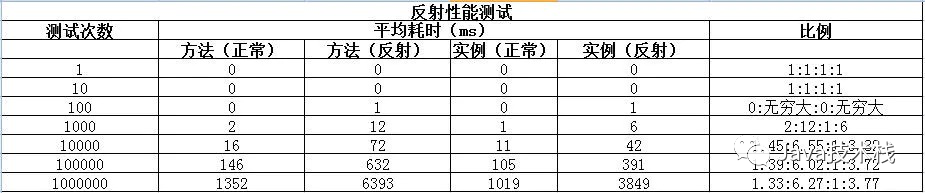
反射性能測試結(jié)果
測試結(jié)論:
反射的確會(huì)導(dǎo)致性能問題;推薦看下《Java反射是什么?》夠了。 反射導(dǎo)致的性能問題是否嚴(yán)重跟使用的次數(shù)有關(guān)系,如果控制在100次以內(nèi),基本上沒什么差別,如果調(diào)用次數(shù)超過了100次,性能差異會(huì)很明顯; 四種訪問方式,直接訪問實(shí)例的方式效率最高;其次是直接調(diào)用方法的方式,耗時(shí)約為直接調(diào)用實(shí)例的1.4倍;接著是通過反射訪問實(shí)例的方式,耗時(shí)約為直接訪問實(shí)例的3.75倍;最慢的是通過反射訪問方法的方式,耗時(shí)約為直接訪問實(shí)例的6.2倍;
反射到底慢在哪?
跟蹤源碼可以發(fā)現(xiàn),四個(gè)方法中都存在實(shí)例化ProgramMonkey的代碼,所以可以排除是這句話導(dǎo)致的不同調(diào)用方式產(chǎn)生的性能差異;通過反射調(diào)用方法中調(diào)用了setAccessible方法,但該方法純粹只是設(shè)置屬性值,不會(huì)產(chǎn)生明顯的性能差異;所以最有可能產(chǎn)生性能差異的只有g(shù)etMethod和getDeclaredField、invoke和set方法了,下面分別就這兩組方法進(jìn)行測試,找到具體慢在哪?
首先測試invoke和set方法,修改getReflectCallMethodCostTime和getReflectCallFieldCostTime方法的代碼如下:
????private?long?getReflectCallMethodCostTime(int?count){
????????long?startTime?=?System.currentTimeMillis();
????????ProgramMonkey?programMonkey?=?new?ProgramMonkey("小明",?"男",?12);
????????Method?setmLanguageMethod?=?null;
????????try{
????????????setmLanguageMethod?=?programMonkey.getClass().getMethod("setmLanguage",?String.class);
????????????setmLanguageMethod.setAccessible(true);
????????}catch(NoSuchMethodException?e){
????????????e.printStackTrace();
????????}

????????for(int?index?=?0?;?index?????????????try{
????????????????setmLanguageMethod.invoke(programMonkey,?"Java");
????????????}catch(IllegalAccessException?e){
????????????????e.printStackTrace();
????????????}catch(InvocationTargetException?e){
????????????????e.printStackTrace();
????????????}
????????}

????????return?System.currentTimeMillis()-startTime;
????}

????private?long?getReflectCallFieldCostTime(int?count){
????????long?startTime?=?System.currentTimeMillis();
????????ProgramMonkey?programMonkey?=?new?ProgramMonkey("小明",?"男",?12);
????????Field?ageField?=?null;
????????try{
????????????ageField?=?programMonkey.getClass().getDeclaredField("mLanguage");

????????}catch(NoSuchFieldException?e){
????????????e.printStackTrace();
????????}

????????for(int?index?=?0?;?index?????????????try{
????????????????ageField.set(programMonkey,?"Java");
????????????}catch(IllegalAccessException?e){
????????????????e.printStackTrace();
????????????}
????????}

????????return?System.currentTimeMillis()-startTime;
????}
沿用上面的測試方法,測試結(jié)果如下:
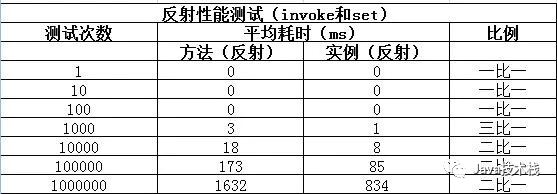
invoke和set
修改getReflectCallMethodCostTime和getReflectCallFieldCostTime方法的代碼如下,對(duì)getMethod和getDeclaredField進(jìn)行測試:
private?long?getReflectCallMethodCostTime(int?count){
????long?startTime?=?System.currentTimeMillis();
????ProgramMonkey?programMonkey?=?new?ProgramMonkey("小明",?"男",?12);

????for(int?index?=?0?;?index?????????try{
????????????Method?setmLanguageMethod?=?programMonkey.getClass().getMethod("setmLanguage",?String.class);
????????}catch(NoSuchMethodException?e){
????????????e.printStackTrace();
????????}
????}

????return?System.currentTimeMillis()-startTime;
}

private?long?getReflectCallFieldCostTime(int?count){
????long?startTime?=?System.currentTimeMillis();
????ProgramMonkey?programMonkey?=?new?ProgramMonkey("小明",?"男",?12);
????for(int?index?=?0?;?index?????????try{
????????????Field?ageField?=?programMonkey.getClass().getDeclaredField("mLanguage");
????????}catch(NoSuchFieldException?e){
????????????e.printStackTrace();
????????}
????}

????return?System.currentTimeMillis()-startTime;
}
沿用上面的測試方法,測試結(jié)果如下:
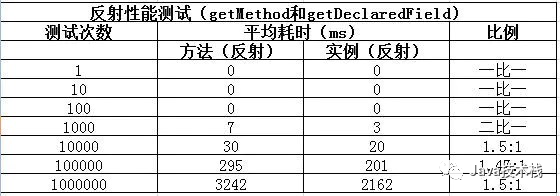
getMethod和getDeclaredField
測試結(jié)論:
getMethod和getDeclaredField方法會(huì)比invoke和set方法耗時(shí); 隨著測試數(shù)量級(jí)越大,性能差異的比例越趨于穩(wěn)定;
由于測試的這四個(gè)方法最終調(diào)用的都是native方法,無法進(jìn)一步跟蹤。
個(gè)人猜測應(yīng)該是和在程序運(yùn)行時(shí)操作class有關(guān),比如需要判斷是否安全?是否允許這樣操作?入?yún)⑹欠裾_?是否能夠在虛擬機(jī)中找到需要反射的類?主要是這一系列判斷條件導(dǎo)致了反射耗時(shí);也有可能是因?yàn)檎{(diào)用natvie方法,需要使用JNI接口,導(dǎo)致了性能問題(參照Log.java、System.out.println,都是調(diào)用native方法,重復(fù)調(diào)用多次耗時(shí)很明顯)。
如果避免反射導(dǎo)致的性能問題?
不要過于頻繁地使用反射,大量地使用反射會(huì)帶來性能問題; 通過反射直接訪問實(shí)例會(huì)比訪問方法快很多,所以應(yīng)該優(yōu)先采用訪問實(shí)例的方式。
后記
測試頻繁調(diào)用native方法是否會(huì)有明顯的性能問題;
測試同一個(gè)方法內(nèi),過多的條件判斷是否會(huì)有明顯的性能問題;
測試類的復(fù)雜程度是否會(huì)對(duì)反射的性能有明顯影響。





關(guān)注Java技術(shù)棧看更多干貨