20 個(gè)實(shí)例玩轉(zhuǎn) Java 8 Stream,寫的太好了!
點(diǎn)擊關(guān)注公眾號,Java干貨及時(shí)送達(dá)
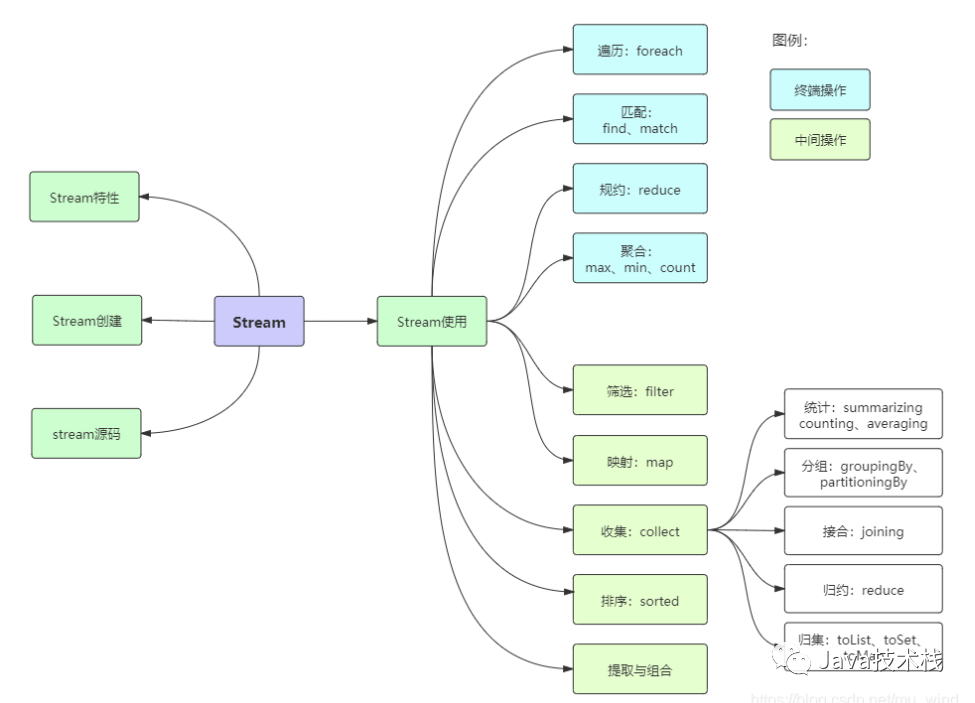
先貼上幾個(gè)案例,水平高超的同學(xué)可以挑戰(zhàn)一下:
從員工集合中篩選出salary大于8000的員工,并放置到新的集合里。 統(tǒng)計(jì)員工的最高薪資、平均薪資、薪資之和。 將員工按薪資從高到低排序,同樣薪資者年齡小者在前。 將員工按性別分類,將員工按性別和地區(qū)分類,將員工按薪資是否高于8000分為兩部分。
用傳統(tǒng)的迭代處理也不是很難,但代碼就顯得冗余了,跟Stream相比高下立判。
1 Stream概述
Java 8 是一個(gè)非常成功的版本,這個(gè)版本新增的Stream,配合同版本出現(xiàn)的 Lambda ,給我們操作集合(Collection)提供了極大的便利。
那么什么是Stream?
Stream將要處理的元素集合看作一種流,在流的過程中,借助Stream API對流中的元素進(jìn)行操作,比如:篩選、排序、聚合等。
Stream可以由數(shù)組或集合創(chuàng)建,對流的操作分為兩種:
中間操作,每次返回一個(gè)新的流,可以有多個(gè)。 終端操作,每個(gè)流只能進(jìn)行一次終端操作,終端操作結(jié)束后流無法再次使用。終端操作會產(chǎn)生一個(gè)新的集合或值。
另外,Stream有幾個(gè)特性:
stream不存儲數(shù)據(jù),而是按照特定的規(guī)則對數(shù)據(jù)進(jìn)行計(jì)算,一般會輸出結(jié)果。 stream不會改變數(shù)據(jù)源,通常情況下會產(chǎn)生一個(gè)新的集合或一個(gè)值。 stream具有延遲執(zhí)行特性,只有調(diào)用終端操作時(shí),中間操作才會執(zhí)行。
2 Stream的創(chuàng)建
Stream可以通過集合數(shù)組創(chuàng)建。
1、通過 java.util.Collection.stream() 方法用集合創(chuàng)建流
List<String> list = Arrays.asList("a", "b", "c");
// 創(chuàng)建一個(gè)順序流
Stream<String> stream = list.stream();
// 創(chuàng)建一個(gè)并行流
Stream<String> parallelStream = list.parallelStream();
2、使用java.util.Arrays.stream(T[] array)方法用數(shù)組創(chuàng)建流
int[] array={1,3,5,6,8};
IntStream stream = Arrays.stream(array);
3、使用Stream的靜態(tài)方法:of()、iterate()、generate()
Stream<Integer> stream = Stream.of(1, 2, 3, 4, 5, 6);

Stream<Integer> stream2 = Stream.iterate(0, (x) -> x + 3).limit(4);
stream2.forEach(System.out::println); // 0 2 4 6 8 10

Stream<Double> stream3 = Stream.generate(Math::random).limit(3);
stream3.forEach(System.out::println);
輸出結(jié)果:
0 3 6 9 0.6796156909271994 0.1914314208854283 0.8116932592396652
stream和parallelStream的簡單區(qū)分: stream是順序流,由主線程按順序?qū)α鲌?zhí)行操作,而parallelStream是并行流,內(nèi)部以多線程并行執(zhí)行的方式對流進(jìn)行操作,但前提是流中的數(shù)據(jù)處理沒有順序要求。例如篩選集合中的奇數(shù),兩者的處理不同之處:
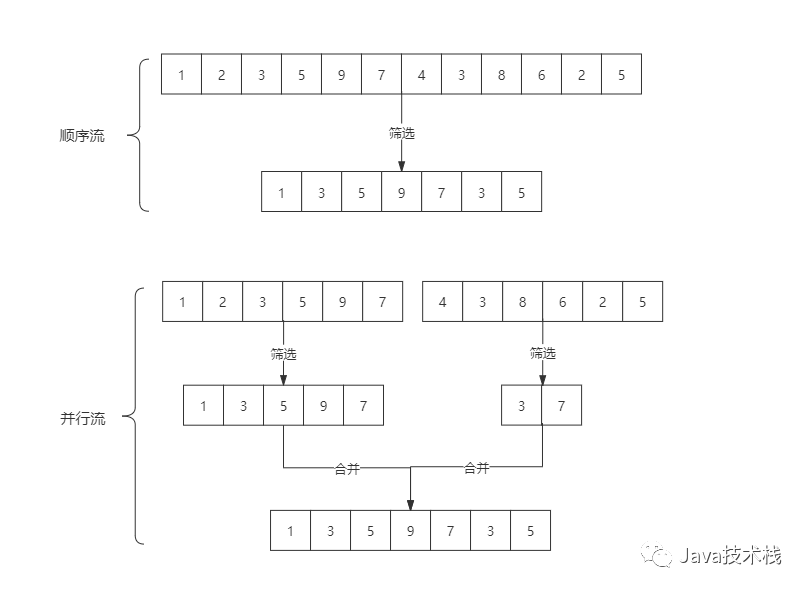
如果流中的數(shù)據(jù)量足夠大,并行流可以加快處速度。Java 8 創(chuàng)建 Stream 的 10 種方式,這篇推薦看下哦。
除了直接創(chuàng)建并行流,還可以通過parallel()把順序流轉(zhuǎn)換成并行流:
Optional<Integer> findFirst = list.stream().parallel().filter(x->x>6).findFirst();
3 Stream的使用
在使用stream之前,先理解一個(gè)概念:Optional 。
Optional類是一個(gè)可以為null的容器對象。如果值存在則isPresent()方法會返回true,調(diào)用get()方法會返回該對象。更詳細(xì)說明請見:菜鳥教程Java 8 Optional類
接下來,大批代碼向你襲來!我將用20個(gè)案例將Stream的使用整得明明白白,只要跟著敲一遍代碼,就能很好地掌握。

案例使用的員工類
List<Person> personList = new ArrayList<Person>();
personList.add(new Person("Tom", 8900, "male", "New York"));
personList.add(new Person("Jack", 7000, "male", "Washington"));
personList.add(new Person("Lily", 7800, "female", "Washington"));
personList.add(new Person("Anni", 8200, "female", "New York"));
personList.add(new Person("Owen", 9500, "male", "New York"));
personList.add(new Person("Alisa", 7900, "female", "New York"));

class Person {
 private String name;  // 姓名
 private int salary; // 薪資
 private int age; // 年齡
 private String sex; //性別
 private String area;  // 地區(qū)

 // 構(gòu)造方法
 public Person(String name, int salary, int age,String sex,String area) {
  this.name = name;
  this.salary = salary;
  this.age = age;
  this.sex = sex;
  this.area = area;
 }
 // 省略了get和set,請自行添加

}
3.1 遍歷/匹配(foreach/find/match)
Stream也是支持類似集合的遍歷和匹配元素的,只是Stream中的元素是以Optional類型存在的。Stream的遍歷、匹配非常簡單。另外,Java 8 系列教程和示例全部整理好了,微信搜索Java技術(shù)棧,在后臺發(fā)送:Java,可以在線閱讀。

// import已省略,請自行添加,后面代碼亦是

public class StreamTest {
 public static void main(String[] args) {
        List<Integer> list = Arrays.asList(7, 6, 9, 3, 8, 2, 1);

        // 遍歷輸出符合條件的元素
        list.stream().filter(x -> x > 6).forEach(System.out::println);
        // 匹配第一個(gè)
        Optional<Integer> findFirst = list.stream().filter(x -> x > 6).findFirst();
        // 匹配任意(適用于并行流)
        Optional<Integer> findAny = list.parallelStream().filter(x -> x > 6).findAny();
        // 是否包含符合特定條件的元素
        boolean anyMatch = list.stream().anyMatch(x -> x < 6);
        System.out.println("匹配第一個(gè)值:" + findFirst.get());
        System.out.println("匹配任意一個(gè)值:" + findAny.get());
        System.out.println("是否存在大于6的值:" + anyMatch);
    }
}
3.2 篩選(filter)
篩選,是按照一定的規(guī)則校驗(yàn)流中的元素,將符合條件的元素提取到新的流中的操作。

案例一:篩選出Integer集合中大于7的元素,并打印出來
public class StreamTest {
 public static void main(String[] args) {
  List<Integer> list = Arrays.asList(6, 7, 3, 8, 1, 2, 9);
  Stream<Integer> stream = list.stream();
  stream.filter(x -> x > 7).forEach(System.out::println);
 }
}
預(yù)期結(jié)果:
8 9
案例二:篩選員工中工資高于8000的人,并形成新的集合。 形成新集合依賴collect(收集),后文有詳細(xì)介紹。
public class StreamTest {
 public static void main(String[] args) {
  List<Person> personList = new ArrayList<Person>();
  personList.add(new Person("Tom", 8900, 23, "male", "New York"));
  personList.add(new Person("Jack", 7000, 25, "male", "Washington"));
  personList.add(new Person("Lily", 7800, 21, "female", "Washington"));
  personList.add(new Person("Anni", 8200, 24, "female", "New York"));
  personList.add(new Person("Owen", 9500, 25, "male", "New York"));
  personList.add(new Person("Alisa", 7900, 26, "female", "New York"));

  List<String> fiterList = personList.stream().filter(x -> x.getSalary() > 8000).map(Person::getName)
    .collect(Collectors.toList());
  System.out.print("高于8000的員工姓名:" + fiterList);
 }
}
運(yùn)行結(jié)果:
高于8000的員工姓名:[Tom, Anni, Owen]
3.3 聚合(max/min/count)
max、min、count這些字眼你一定不陌生,沒錯(cuò),在mysql中我們常用它們進(jìn)行數(shù)據(jù)統(tǒng)計(jì)。Java stream中也引入了這些概念和用法,極大地方便了我們對集合、數(shù)組的數(shù)據(jù)統(tǒng)計(jì)工作。
最新 Java 核心技術(shù)教程和示例源碼:https://github.com/javastacks/javastack
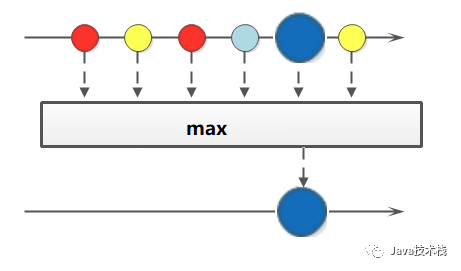
案例一:獲取String集合中最長的元素。
public class StreamTest {
 public static void main(String[] args) {
  List<String> list = Arrays.asList("adnm", "admmt", "pot", "xbangd", "weoujgsd");

  Optional<String> max = list.stream().max(Comparator.comparing(String::length));
  System.out.println("最長的字符串:" + max.get());
 }
}
輸出結(jié)果:
最長的字符串:weoujgsd
案例二:獲取Integer集合中的最大值。
public class StreamTest {
 public static void main(String[] args) {
  List<Integer> list = Arrays.asList(7, 6, 9, 4, 11, 6);

  // 自然排序
  Optional<Integer> max = list.stream().max(Integer::compareTo);
  // 自定義排序
  Optional<Integer> max2 = list.stream().max(new Comparator<Integer>() {
   @Override
   public int compare(Integer o1, Integer o2) {
    return o1.compareTo(o2);
   }
  });
  System.out.println("自然排序的最大值:" + max.get());
  System.out.println("自定義排序的最大值:" + max2.get());
 }
}
輸出結(jié)果:
自然排序的最大值:11 自定義排序的最大值:11
案例三:獲取員工工資最高的人。
public class StreamTest {
 public static void main(String[] args) {
  List<Person> personList = new ArrayList<Person>();
  personList.add(new Person("Tom", 8900, 23, "male", "New York"));
  personList.add(new Person("Jack", 7000, 25, "male", "Washington"));
  personList.add(new Person("Lily", 7800, 21, "female", "Washington"));
  personList.add(new Person("Anni", 8200, 24, "female", "New York"));
  personList.add(new Person("Owen", 9500, 25, "male", "New York"));
  personList.add(new Person("Alisa", 7900, 26, "female", "New York"));

  Optional<Person> max = personList.stream().max(Comparator.comparingInt(Person::getSalary));
  System.out.println("員工工資最大值:" + max.get().getSalary());
 }
}
輸出結(jié)果:
員工工資最大值:9500
案例四:計(jì)算Integer集合中大于6的元素的個(gè)數(shù)。
import java.util.Arrays;
import java.util.List;

public class StreamTest {
 public static void main(String[] args) {
  List<Integer> list = Arrays.asList(7, 6, 4, 8, 2, 11, 9);

  long count = list.stream().filter(x -> x > 6).count();
  System.out.println("list中大于6的元素個(gè)數(shù):" + count);
 }
}
輸出結(jié)果:
list中大于6的元素個(gè)數(shù):4
3.4 映射(map/flatMap)
映射,可以將一個(gè)流的元素按照一定的映射規(guī)則映射到另一個(gè)流中。分為map和flatMap:
map:接收一個(gè)函數(shù)作為參數(shù),該函數(shù)會被應(yīng)用到每個(gè)元素上,并將其映射成一個(gè)新的元素。flatMap:接收一個(gè)函數(shù)作為參數(shù),將流中的每個(gè)值都換成另一個(gè)流,然后把所有流連接成一個(gè)流。
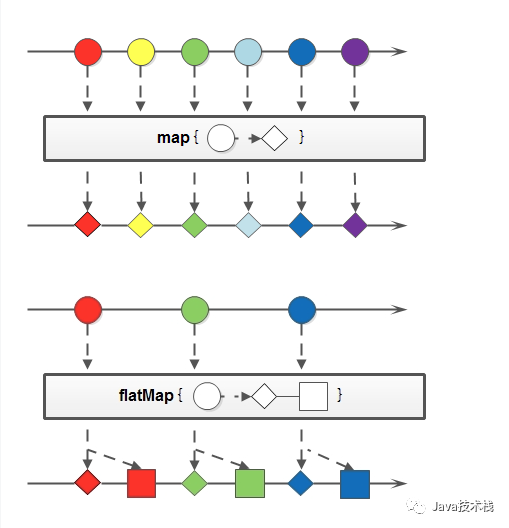
案例一:英文字符串?dāng)?shù)組的元素全部改為大寫。整數(shù)數(shù)組每個(gè)元素+3。
public class StreamTest {
 public static void main(String[] args) {
  String[] strArr = { "abcd", "bcdd", "defde", "fTr" };
  List<String> strList = Arrays.stream(strArr).map(String::toUpperCase).collect(Collectors.toList());

  List<Integer> intList = Arrays.asList(1, 3, 5, 7, 9, 11);
  List<Integer> intListNew = intList.stream().map(x -> x + 3).collect(Collectors.toList());

  System.out.println("每個(gè)元素大寫:" + strList);
  System.out.println("每個(gè)元素+3:" + intListNew);
 }
}
輸出結(jié)果:
每個(gè)元素大寫:[ABCD, BCDD, DEFDE, FTR] 每個(gè)元素+3:[4, 6, 8, 10, 12, 14]
點(diǎn)擊關(guān)注公眾號,Java干貨及時(shí)送達(dá)
public class StreamTest {
 public static void main(String[] args) {
  List<Person> personList = new ArrayList<Person>();
  personList.add(new Person("Tom", 8900, 23, "male", "New York"));
  personList.add(new Person("Jack", 7000, 25, "male", "Washington"));
  personList.add(new Person("Lily", 7800, 21, "female", "Washington"));
  personList.add(new Person("Anni", 8200, 24, "female", "New York"));
  personList.add(new Person("Owen", 9500, 25, "male", "New York"));
  personList.add(new Person("Alisa", 7900, 26, "female", "New York"));

  // 不改變原來員工集合的方式
  List<Person> personListNew = personList.stream().map(person -> {
   Person personNew = new Person(person.getName(), 0, 0, null, null);
   personNew.setSalary(person.getSalary() + 10000);
   return personNew;
  }).collect(Collectors.toList());
  System.out.println("一次改動前:" + personList.get(0).getName() + "-->" + personList.get(0).getSalary());
  System.out.println("一次改動后:" + personListNew.get(0).getName() + "-->" + personListNew.get(0).getSalary());

  // 改變原來員工集合的方式
  List<Person> personListNew2 = personList.stream().map(person -> {
   person.setSalary(person.getSalary() + 10000);
   return person;
  }).collect(Collectors.toList());
  System.out.println("二次改動前:" + personList.get(0).getName() + "-->" + personListNew.get(0).getSalary());
  System.out.println("二次改動后:" + personListNew2.get(0).getName() + "-->" + personListNew.get(0).getSalary());
 }
}
一次改動前:Tom–>8900 一次改動后:Tom–>18900 二次改動前:Tom–>18900 二次改動后:Tom–>18900
案例三:將兩個(gè)字符數(shù)組合并成一個(gè)新的字符數(shù)組。
public class StreamTest {
 public static void main(String[] args) {
  List<String> list = Arrays.asList("m,k,l,a", "1,3,5,7");
  List<String> listNew = list.stream().flatMap(s -> {
   // 將每個(gè)元素轉(zhuǎn)換成一個(gè)stream
   String[] split = s.split(",");
   Stream<String> s2 = Arrays.stream(split);
   return s2;
  }).collect(Collectors.toList());

  System.out.println("處理前的集合:" + list);
  System.out.println("處理后的集合:" + listNew);
 }
}
輸出結(jié)果:
處理前的集合:[m-k-l-a, 1-3-5] 處理后的集合:[m, k, l, a, 1, 3, 5]
3.5 歸約(reduce)
推薦閱讀:最新 Java 核心技術(shù)教程,都在這了!
歸約,也稱縮減,顧名思義,是把一個(gè)流縮減成一個(gè)值,能實(shí)現(xiàn)對集合求和、求乘積和求最值操作。
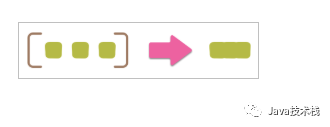
案例一:求Integer集合的元素之和、乘積和最大值。
public class StreamTest {
 public static void main(String[] args) {
  List<Integer> list = Arrays.asList(1, 3, 2, 8, 11, 4);
  // 求和方式1
  Optional<Integer> sum = list.stream().reduce((x, y) -> x + y);
  // 求和方式2
  Optional<Integer> sum2 = list.stream().reduce(Integer::sum);
  // 求和方式3
  Integer sum3 = list.stream().reduce(0, Integer::sum);

  // 求乘積
  Optional<Integer> product = list.stream().reduce((x, y) -> x * y);

  // 求最大值方式1
  Optional<Integer> max = list.stream().reduce((x, y) -> x > y ? x : y);
  // 求最大值寫法2
  Integer max2 = list.stream().reduce(1, Integer::max);

  System.out.println("list求和:" + sum.get() + "," + sum2.get() + "," + sum3);
  System.out.println("list求積:" + product.get());
  System.out.println("list求和:" + max.get() + "," + max2);
 }
}
輸出結(jié)果:
list求和:29,29,29 list求積:2112 list求和:11,11
案例二:求所有員工的工資之和和最高工資。
public class StreamTest {
 public static void main(String[] args) {
  List<Person> personList = new ArrayList<Person>();
  personList.add(new Person("Tom", 8900, 23, "male", "New York"));
  personList.add(new Person("Jack", 7000, 25, "male", "Washington"));
  personList.add(new Person("Lily", 7800, 21, "female", "Washington"));
  personList.add(new Person("Anni", 8200, 24, "female", "New York"));
  personList.add(new Person("Owen", 9500, 25, "male", "New York"));
  personList.add(new Person("Alisa", 7900, 26, "female", "New York"));

  // 求工資之和方式1:
  Optional<Integer> sumSalary = personList.stream().map(Person::getSalary).reduce(Integer::sum);
  // 求工資之和方式2:
  Integer sumSalary2 = personList.stream().reduce(0, (sum, p) -> sum += p.getSalary(),
    (sum1, sum2) -> sum1 + sum2);
  // 求工資之和方式3:
  Integer sumSalary3 = personList.stream().reduce(0, (sum, p) -> sum += p.getSalary(), Integer::sum);

  // 求最高工資方式1:
  Integer maxSalary = personList.stream().reduce(0, (max, p) -> max > p.getSalary() ? max : p.getSalary(),
    Integer::max);
  // 求最高工資方式2:
  Integer maxSalary2 = personList.stream().reduce(0, (max, p) -> max > p.getSalary() ? max : p.getSalary(),
    (max1, max2) -> max1 > max2 ? max1 : max2);

  System.out.println("工資之和:" + sumSalary.get() + "," + sumSalary2 + "," + sumSalary3);
  System.out.println("最高工資:" + maxSalary + "," + maxSalary2);
 }
}
輸出結(jié)果:
工資之和:49300,49300,49300 最高工資:9500,9500
3.6 收集(collect)
collect,收集,可以說是內(nèi)容最繁多、功能最豐富的部分了。從字面上去理解,就是把一個(gè)流收集起來,最終可以是收集成一個(gè)值也可以收集成一個(gè)新的集合。
collect主要依賴java.util.stream.Collectors類內(nèi)置的靜態(tài)方法。
3.6.1 歸集(toList/toSet/toMap)
因?yàn)榱鞑淮鎯?shù)據(jù),那么在流中的數(shù)據(jù)完成處理后,需要將流中的數(shù)據(jù)重新歸集到新的集合里。toList、toSet和toMap比較常用,另外還有toCollection、toConcurrentMap等復(fù)雜一些的用法。
下面用一個(gè)案例演示toList、toSet和toMap:
public class StreamTest {
 public static void main(String[] args) {
  List<Integer> list = Arrays.asList(1, 6, 3, 4, 6, 7, 9, 6, 20);
  List<Integer> listNew = list.stream().filter(x -> x % 2 == 0).collect(Collectors.toList());
  Set<Integer> set = list.stream().filter(x -> x % 2 == 0).collect(Collectors.toSet());

  List<Person> personList = new ArrayList<Person>();
  personList.add(new Person("Tom", 8900, 23, "male", "New York"));
  personList.add(new Person("Jack", 7000, 25, "male", "Washington"));
  personList.add(new Person("Lily", 7800, 21, "female", "Washington"));
  personList.add(new Person("Anni", 8200, 24, "female", "New York"));

  Map<?, Person> map = personList.stream().filter(p -> p.getSalary() > 8000)
    .collect(Collectors.toMap(Person::getName, p -> p));
  System.out.println("toList:" + listNew);
  System.out.println("toSet:" + set);
  System.out.println("toMap:" + map);
 }
}
運(yùn)行結(jié)果:
toList:[6, 4, 6, 6, 20] toSet:[4, 20, 6] toMap:{Tom=mutest.Person@5fd0d5ae, Anni=mutest.Person@2d98a335}
3.6.2 統(tǒng)計(jì)(count/averaging)
Collectors提供了一系列用于數(shù)據(jù)統(tǒng)計(jì)的靜態(tài)方法:
計(jì)數(shù): count平均值: averagingInt、averagingLong、averagingDouble最值: maxBy、minBy求和: summingInt、summingLong、summingDouble統(tǒng)計(jì)以上所有: summarizingInt、summarizingLong、summarizingDouble
案例:統(tǒng)計(jì)員工人數(shù)、平均工資、工資總額、最高工資。
public class StreamTest {
 public static void main(String[] args) {
  List<Person> personList = new ArrayList<Person>();
  personList.add(new Person("Tom", 8900, 23, "male", "New York"));
  personList.add(new Person("Jack", 7000, 25, "male", "Washington"));
  personList.add(new Person("Lily", 7800, 21, "female", "Washington"));

  // 求總數(shù)
  Long count = personList.stream().collect(Collectors.counting());
  // 求平均工資
  Double average = personList.stream().collect(Collectors.averagingDouble(Person::getSalary));
  // 求最高工資
  Optional<Integer> max = personList.stream().map(Person::getSalary).collect(Collectors.maxBy(Integer::compare));
  // 求工資之和
  Integer sum = personList.stream().collect(Collectors.summingInt(Person::getSalary));
  // 一次性統(tǒng)計(jì)所有信息
  DoubleSummaryStatistics collect = personList.stream().collect(Collectors.summarizingDouble(Person::getSalary));

  System.out.println("員工總數(shù):" + count);
  System.out.println("員工平均工資:" + average);
  System.out.println("員工工資總和:" + sum);
  System.out.println("員工工資所有統(tǒng)計(jì):" + collect);
 }
}
運(yùn)行結(jié)果:
員工總數(shù):3 員工平均工資:7900.0 員工工資總和:23700 員工工資所有統(tǒng)計(jì):DoubleSummaryStatistics{count=3, sum=23700.000000,min=7000.000000, average=7900.000000, max=8900.000000}
3.6.3 分組(partitioningBy/groupingBy)
分區(qū):將 stream按條件分為兩個(gè)Map,比如員工按薪資是否高于8000分為兩部分。分組:將集合分為多個(gè)Map,比如員工按性別分組。有單級分組和多級分組。
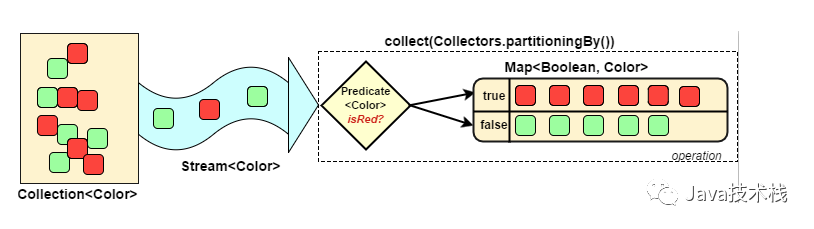
案例:將員工按薪資是否高于8000分為兩部分;將員工按性別和地區(qū)分組
public class StreamTest {
 public static void main(String[] args) {
  List<Person> personList = new ArrayList<Person>();
  personList.add(new Person("Tom", 8900, "male", "New York"));
  personList.add(new Person("Jack", 7000, "male", "Washington"));
  personList.add(new Person("Lily", 7800, "female", "Washington"));
  personList.add(new Person("Anni", 8200, "female", "New York"));
  personList.add(new Person("Owen", 9500, "male", "New York"));
  personList.add(new Person("Alisa", 7900, "female", "New York"));

  // 將員工按薪資是否高于8000分組
        Map<Boolean, List<Person>> part = personList.stream().collect(Collectors.partitioningBy(x -> x.getSalary() > 8000));
        // 將員工按性別分組
        Map<String, List<Person>> group = personList.stream().collect(Collectors.groupingBy(Person::getSex));
        // 將員工先按性別分組,再按地區(qū)分組
        Map<String, Map<String, List<Person>>> group2 = personList.stream().collect(Collectors.groupingBy(Person::getSex, Collectors.groupingBy(Person::getArea)));
        System.out.println("員工按薪資是否大于8000分組情況:" + part);
        System.out.println("員工按性別分組情況:" + group);
        System.out.println("員工按性別、地區(qū):" + group2);
 }
}
輸出結(jié)果:
員工按薪資是否大于8000分組情況:{false=[mutest.Person@2d98a335, mutest.Person@16b98e56, mutest.Person@7ef20235], true=[mutest.Person@27d6c5e0, mutest.Person@4f3f5b24, mutest.Person@15aeb7ab]}

員工按性別分組情況:{female=[mutest.Person@16b98e56, mutest.Person@4f3f5b24, mutest.Person@7ef20235], male=[mutest.Person@27d6c5e0, mutest.Person@2d98a335, mutest.Person@15aeb7ab]}

員工按性別、地區(qū):{female={New York=[mutest.Person@4f3f5b24, mutest.Person@7ef20235], Washington=[mutest.Person@16b98e56]}, male={New York=[mutest.Person@27d6c5e0, mutest.Person@15aeb7ab], Washington=[mutest.Person@2d98a335]}}
3.6.4 接合(joining)
joining可以將stream中的元素用特定的連接符(沒有的話,則直接連接)連接成一個(gè)字符串。
public class StreamTest {
 public static void main(String[] args) {
  List<Person> personList = new ArrayList<Person>();
  personList.add(new Person("Tom", 8900, 23, "male", "New York"));
  personList.add(new Person("Jack", 7000, 25, "male", "Washington"));
  personList.add(new Person("Lily", 7800, 21, "female", "Washington"));

  String names = personList.stream().map(p -> p.getName()).collect(Collectors.joining(","));
  System.out.println("所有員工的姓名:" + names);
  List<String> list = Arrays.asList("A", "B", "C");
  String string = list.stream().collect(Collectors.joining("-"));
  System.out.println("拼接后的字符串:" + string);
 }
}
運(yùn)行結(jié)果:
所有員工的姓名:Tom,Jack,Lily 拼接后的字符串:A-B-C
3.6.5 歸約(reducing)
Collectors類提供的reducing方法,相比于stream本身的reduce方法,增加了對自定義歸約的支持。
public class StreamTest {
 public static void main(String[] args) {
  List<Person> personList = new ArrayList<Person>();
  personList.add(new Person("Tom", 8900, 23, "male", "New York"));
  personList.add(new Person("Jack", 7000, 25, "male", "Washington"));
  personList.add(new Person("Lily", 7800, 21, "female", "Washington"));

  // 每個(gè)員工減去起征點(diǎn)后的薪資之和(這個(gè)例子并不嚴(yán)謹(jǐn),但一時(shí)沒想到好的例子)
  Integer sum = personList.stream().collect(Collectors.reducing(0, Person::getSalary, (i, j) -> (i + j - 5000)));
  System.out.println("員工扣稅薪資總和:" + sum);

  // stream的reduce
  Optional<Integer> sum2 = personList.stream().map(Person::getSalary).reduce(Integer::sum);
  System.out.println("員工薪資總和:" + sum2.get());
 }
}
運(yùn)行結(jié)果:
員工扣稅薪資總和:8700 員工薪資總和:23700
3.7 排序(sorted)
sorted,中間操作。有兩種排序:
sorted():自然排序,流中元素需實(shí)現(xiàn)Comparable接口 sorted(Comparator com):Comparator排序器自定義排序
public class StreamTest {
 public static void main(String[] args) {
  List<Person> personList = new ArrayList<Person>();

  personList.add(new Person("Sherry", 9000, 24, "female", "New York"));
  personList.add(new Person("Tom", 8900, 22, "male", "Washington"));
  personList.add(new Person("Jack", 9000, 25, "male", "Washington"));
  personList.add(new Person("Lily", 8800, 26, "male", "New York"));
  personList.add(new Person("Alisa", 9000, 26, "female", "New York"));

  // 按工資升序排序(自然排序)
  List<String> newList = personList.stream().sorted(Comparator.comparing(Person::getSalary)).map(Person::getName)
    .collect(Collectors.toList());
  // 按工資倒序排序
  List<String> newList2 = personList.stream().sorted(Comparator.comparing(Person::getSalary).reversed())
    .map(Person::getName).collect(Collectors.toList());
  // 先按工資再按年齡升序排序
  List<String> newList3 = personList.stream()
    .sorted(Comparator.comparing(Person::getSalary).thenComparing(Person::getAge)).map(Person::getName)
    .collect(Collectors.toList());
  // 先按工資再按年齡自定義排序(降序)
  List<String> newList4 = personList.stream().sorted((p1, p2) -> {
   if (p1.getSalary() == p2.getSalary()) {
    return p2.getAge() - p1.getAge();
   } else {
    return p2.getSalary() - p1.getSalary();
   }
  }).map(Person::getName).collect(Collectors.toList());

  System.out.println("按工資升序排序:" + newList);
  System.out.println("按工資降序排序:" + newList2);
  System.out.println("先按工資再按年齡升序排序:" + newList3);
  System.out.println("先按工資再按年齡自定義降序排序:" + newList4);
 }
}
按工資自然排序:[Lily, Tom, Sherry, Jack, Alisa] 按工資降序排序:[Sherry, Jack, Alisa,Tom, Lily] 先按工資再按年齡自然排序:[Sherry, Jack, Alisa, Tom, Lily] 先按工資再按年齡自定義降序排序:[Alisa, Jack, Sherry, Tom, Lily]
3.8 提取/組合
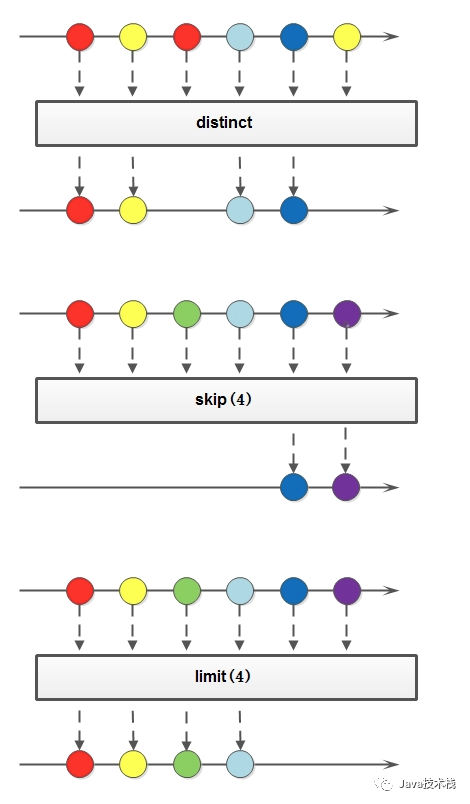
流也可以進(jìn)行合并、去重、限制、跳過等操作。
public class StreamTest {
 public static void main(String[] args) {
  String[] arr1 = { "a", "b", "c", "d" };
  String[] arr2 = { "d", "e", "f", "g" };

  Stream<String> stream1 = Stream.of(arr1);
  Stream<String> stream2 = Stream.of(arr2);
  // concat:合并兩個(gè)流 distinct:去重
  List<String> newList = Stream.concat(stream1, stream2).distinct().collect(Collectors.toList());
  // limit:限制從流中獲得前n個(gè)數(shù)據(jù)
  List<Integer> collect = Stream.iterate(1, x -> x + 2).limit(10).collect(Collectors.toList());
  // skip:跳過前n個(gè)數(shù)據(jù)
  List<Integer> collect2 = Stream.iterate(1, x -> x + 2).skip(1).limit(5).collect(Collectors.toList());

  System.out.println("流合并:" + newList);
  System.out.println("limit:" + collect);
  System.out.println("skip:" + collect2);
 }
}
運(yùn)行結(jié)果:
流合并:[a, b, c, d, e, f, g] limit:[1, 3, 5, 7, 9, 11, 13, 15, 17, 19] skip:[3, 5, 7, 9, 11]
4 Stream源碼解讀
這部分等有時(shí)間慢慢分解吧。另外,關(guān)注公眾號Java技術(shù)棧,在后臺回復(fù):面試,可以獲取我整理的 Java 系列面試題和答案,非常齊全。
好,以上就是全部內(nèi)容,能堅(jiān)持看到這里,你一定很有收獲,那么動一動拿offer的小手,點(diǎn)個(gè)贊再走吧。
原文鏈接:https://blog.csdn.net/mu_wind/article/details/109516995
版權(quán)聲明:本文為CSDN博主「云深i不知處」的原創(chuàng)文章,遵循CC 4.0 BY-SA版權(quán)協(xié)議,轉(zhuǎn)載請附上原文出處鏈接及本聲明。






關(guān)注Java技術(shù)棧看更多干貨