
Go中的HTTP請(qǐng)求之——HTTP1.1請(qǐng)求流程分析
回復(fù)“Go語言”即可獲贈(zèng)Python從入門到進(jìn)階共10本電子書
前言
http是目前應(yīng)用最為廣泛, 也是程序員接觸最多的協(xié)議之一。今天筆者站在GoPher的角度對(duì)http1.1的請(qǐng)求流程進(jìn)行全面的分析。希望讀者讀完此文后, 能夠有以下幾個(gè)收獲:
對(duì)http1.1的請(qǐng)求流程有一個(gè)大概的了解
在平時(shí)的開發(fā)中能夠更好地重用底層TCP連接
對(duì)http1.1的線頭阻塞能有一個(gè)更清楚的認(rèn)識(shí)
HTTP1.1流程
今天內(nèi)容較多, 廢話不多說, 直接上干貨。
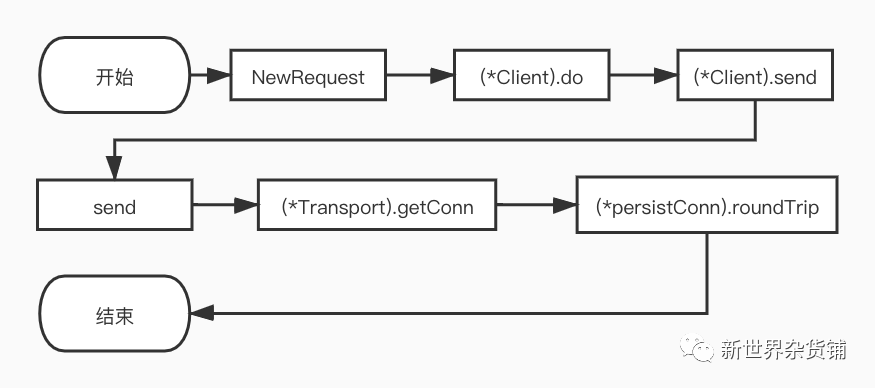
接下來, 筆者將根據(jù)流程圖,對(duì)除了NewRequest以外的函數(shù)進(jìn)行逐步的展開和分析
(*Client).do
(*Client).do方法的核心代碼是一個(gè)沒有結(jié)束條件的for循環(huán)。
for {
	// For all but the first request, create the next
	// request hop and replace req.
	if len(reqs) > 0 {
		loc := resp.Header.Get("Location")
		// ...此處省略代碼...
		err = c.checkRedirect(req, reqs)
		// ...此處省略很多代碼...
	}

	reqs = append(reqs, req)
	var err error
	var didTimeout func() bool
	if resp, didTimeout, err = c.send(req, deadline); err != nil {
		// c.send() always closes req.Body
		reqBodyClosed = true
		// ...此處省略代碼...
		return nil, uerr(err)
	}

	var shouldRedirect bool
	redirectMethod, shouldRedirect, includeBody = redirectBehavior(req.Method, resp, reqs[0])
	if !shouldRedirect {
		return resp, nil
	}

	req.closeBody()
}
上面的代碼中, 請(qǐng)求第一次進(jìn)入會(huì)調(diào)用c.send, 得到響應(yīng)后會(huì)判斷請(qǐng)求是否需要重定向, 如果需要重定向則繼續(xù)循環(huán), 否則返回響應(yīng)。
進(jìn)入重定向流程后, 這里筆者簡(jiǎn)單介紹一下checkRedirect函數(shù):
func defaultCheckRedirect(req *Request, via []*Request) error {
	if len(via) >= 10 {
		return errors.New("stopped after 10 redirects")
	}
	return nil
}
// ...
func (c *Client) checkRedirect(req *Request, via []*Request) error {
	fn := c.CheckRedirect
	if fn == nil {
		fn = defaultCheckRedirect
	}
	return fn(req, via)
}
由上可知, 用戶可以自己定義重定向的檢查規(guī)則。如果用戶沒有自定義檢查規(guī)則, 則重定向次數(shù)不能超過10次。
(*Client).send
(*Client).send方法邏輯較為簡(jiǎn)單, 主要看用戶有沒有為http.Client的Jar字段實(shí)現(xiàn)CookieJar接口。主要流程如下:
如果實(shí)現(xiàn)了CookieJar接口, 為Request添加保存的cookie信息。
調(diào)用
send函數(shù)。如果實(shí)現(xiàn)了CookieJar接口, 將Response中的cookie信息保存下來。
// didTimeout is non-nil only if err != nil.
func (c *Client) send(req *Request, deadline time.Time) (resp *Response, didTimeout func() bool, err error) {
	if c.Jar != nil {
		for _, cookie := range c.Jar.Cookies(req.URL) {
			req.AddCookie(cookie)
		}
	}
	resp, didTimeout, err = send(req, c.transport(), deadline)
	if err != nil {
		return nil, didTimeout, err
	}
	if c.Jar != nil {
		if rc := resp.Cookies(); len(rc) > 0 {
			c.Jar.SetCookies(req.URL, rc)
		}
	}
	return resp, nil, nil
}
另外, 我們還需要關(guān)注c.transport()的調(diào)用。如果用戶未對(duì)http.Client指定Transport則會(huì)使用go默認(rèn)的DefaultTransport。
該Transport實(shí)現(xiàn)RoundTripper接口。在go中RoundTripper的定義為“執(zhí)行單個(gè)HTTP事務(wù)的能力,獲取給定請(qǐng)求的響應(yīng)”。
func (c *Client) transport() RoundTripper {
	if c.Transport != nil {
		return c.Transport
	}
	return DefaultTransport
}
send
send函數(shù)會(huì)檢查request的URL,以及參數(shù)的rt, 和header值。如果URL和rt為nil則直接返回錯(cuò)誤。同時(shí), 如果請(qǐng)求中設(shè)置了用戶信息, 還會(huì)檢查并設(shè)置basic的驗(yàn)證頭信息,最后調(diào)用rt.RoundTrip得到請(qǐng)求的響應(yīng)。
func send(ireq *Request, rt RoundTripper, deadline time.Time) (resp *Response, didTimeout func() bool, err error) {
	req := ireq // req is either the original request, or a modified fork
	// ...此處省略代碼...
	if u := req.URL.User; u != nil && req.Header.Get("Authorization") == "" {
		username := u.Username()
		password, _ := u.Password()
		forkReq()
		req.Header = cloneOrMakeHeader(ireq.Header)
		req.Header.Set("Authorization", "Basic "+basicAuth(username, password))
	}

	if !deadline.IsZero() {
		forkReq()
	}
	stopTimer, didTimeout := setRequestCancel(req, rt, deadline)

	resp, err = rt.RoundTrip(req)
	if err != nil {
        // ...此處省略代碼...
		return nil, didTimeout, err
	}
	// ...此處省略代碼...
	return resp, nil, nil
}
(*Transport).RoundTrip
(*Transport).RoundTrip的邏輯很簡(jiǎn)單,它會(huì)調(diào)用(*Transport).roundTrip方法,因此本節(jié)實(shí)際上是對(duì)(*Transport).roundTrip方法的分析。
func (t *Transport) RoundTrip(req *Request) (*Response, error) {
	return t.roundTrip(req)
}
func (t *Transport) roundTrip(req *Request) (*Response, error) {
	// ...此處省略校驗(yàn)header頭和headervalue的代碼以及其他代碼...

	for {
		select {
		case <-ctx.Done():
			req.closeBody()
			return nil, ctx.Err()
		default:
		}

		// treq gets modified by roundTrip, so we need to recreate for each retry.
		treq := &transportRequest{Request: req, trace: trace}
		cm, err := t.connectMethodForRequest(treq)
		// ...此處省略代碼...
		pconn, err := t.getConn(treq, cm)
		if err != nil {
			t.setReqCanceler(req, nil)
			req.closeBody()
			return nil, err
		}

		var resp *Response
		if pconn.alt != nil {
			// HTTP/2 path.
			t.setReqCanceler(req, nil) // not cancelable with CancelRequest
			resp, err = pconn.alt.RoundTrip(req)
		} else {
			resp, err = pconn.roundTrip(treq)
		}
		if err == nil {
			return resp, nil
		}

		// ...此處省略判斷是否重試請(qǐng)求的代碼邏輯...
	}
}
由上可知, 每次for循環(huán), 會(huì)判斷請(qǐng)求上下文是否已經(jīng)取消, 如果沒有取消則繼續(xù)進(jìn)行后續(xù)的流程。
先調(diào)用
t.getConn方法獲取一個(gè)persistConn。因?yàn)楸酒髦际莌ttp1.1,所以我們直接看http1.1的執(zhí)行分支。根據(jù)源碼中的注釋和實(shí)際的debug結(jié)果,獲取到連接后, 會(huì)繼續(xù)調(diào)用
pconn.roundTrip。
(*Transport).getConn
筆者認(rèn)為這一步在http請(qǐng)求中是非常核心的一個(gè)步驟,因?yàn)橹挥泻蛃erver端建立連接后才能進(jìn)行后續(xù)的通信。
func (t *Transport) getConn(treq *transportRequest, cm connectMethod) (pc *persistConn, err error) {
	req := treq.Request
	trace := treq.trace
	ctx := req.Context()
	// ...此處省略代碼...
	w := &wantConn{
		cm:         cm,
		key:        cm.key(),
		ctx:        ctx,
		ready:      make(chan struct{}, 1),
		beforeDial: testHookPrePendingDial,
		afterDial:  testHookPostPendingDial,
	}
	// ...此處省略代碼...
	// Queue for idle connection.
	if delivered := t.queueForIdleConn(w); delivered {
		pc := w.pc
		// ...此處省略代碼...
		return pc, nil
	}

	cancelc := make(chan error, 1)
	t.setReqCanceler(req, func(err error) { cancelc <- err })

	// Queue for permission to dial.
	t.queueForDial(w)

	// Wait for completion or cancellation.
	select {
	case <-w.ready:
		// Trace success but only for HTTP/1.
		// HTTP/2 calls trace.GotConn itself.
		if w.pc != nil && w.pc.alt == nil && trace != nil && trace.GotConn != nil {
			trace.GotConn(httptrace.GotConnInfo{Conn: w.pc.conn, Reused: w.pc.isReused()})
		}
		// ...此處省略代碼...
		return w.pc, w.err
	case <-req.Cancel:
		return nil, errRequestCanceledConn
	case <-req.Context().Done():
		return nil, req.Context().Err()
	case err := <-cancelc:
		if err == errRequestCanceled {
			err = errRequestCanceledConn
		}
		return nil, err
	}
}
由上能夠清楚的知道, 獲取連接分為以下幾個(gè)步驟:
調(diào)用
t.queueForIdleConn獲取一個(gè)空閑且可復(fù)用的連接,如果獲取成功則直接返回該連接。如果未獲取到空閑連接則調(diào)用
t.queueForDial開始新建一個(gè)連接。等待w.ready關(guān)閉,則可以返回新的連接。
(*Transport).queueForIdleConn
(*Transport).queueForIdleConn方法會(huì)根據(jù)請(qǐng)求的connectMethodKey從t.idleConn獲取一個(gè)[]*persistConn切片, 并從切片中,根據(jù)算法獲取一個(gè)有效的空閑連接。如果未獲取到空閑連接,則將wantConn結(jié)構(gòu)體變量放入t.idleConnWait[w.key]等待隊(duì)列,此處wantConn結(jié)構(gòu)體變量就是前面提到的w。
connectMethodKey定義和queueForIdleConn部分關(guān)鍵代碼如下:
type connectMethodKey struct {
	proxy, scheme, addr string
	onlyH1              bool
}

func (t *Transport) queueForIdleConn(w *wantConn) (delivered bool) {
    // ...此處省略代碼...
	// Look for most recently-used idle connection.
	if list, ok := t.idleConn[w.key]; ok {
		stop := false
		delivered := false
		for len(list) > 0 && !stop {
			pconn := list[len(list)-1]

			// See whether this connection has been idle too long, considering
			// only the wall time (the Round(0)), in case this is a laptop or VM
			// coming out of suspend with previously cached idle connections.
			tooOld := !oldTime.IsZero() && pconn.idleAt.Round(0).Before(oldTime)
			// ...此處省略代碼...
			delivered = w.tryDeliver(pconn, nil)
			if delivered {
				// ...此處省略代碼...
			}
			stop = true
		}
		if len(list) > 0 {
			t.idleConn[w.key] = list
		} else {
			delete(t.idleConn, w.key)
		}
		if stop {
			return delivered
		}
	}

	// Register to receive next connection that becomes idle.
	if t.idleConnWait == nil {
		t.idleConnWait = make(map[connectMethodKey]wantConnQueue)
	}
	q := t.idleConnWait[w.key]
	q.cleanFront()
	q.pushBack(w)
	t.idleConnWait[w.key] = q
	return false
}
其中w.tryDeliver方法主要作用是將連接協(xié)程安全的賦值給w.pc,并關(guān)閉w.ready管道。此時(shí)我們便可以和(*Transport).getConn中調(diào)用queueForIdleConn成功后的返回值對(duì)應(yīng)上。
(*Transport).queueForDial
(*Transport).queueForDial方法包含三個(gè)步驟:
如果t.MaxConnsPerHost小于等于0,執(zhí)行
go t.dialConnFor(w)并返回。其中MaxConnsPerHost代表著每個(gè)host的最大連接數(shù),小于等于0表示不限制。如果當(dāng)前host的連接數(shù)不超過t.MaxConnsPerHost,對(duì)當(dāng)前host的連接數(shù)+1,然后執(zhí)行
go t.dialConnFor(w)并返回。如果當(dāng)前host的連接數(shù)等于t.MaxConnsPerHost,則將
wantConn結(jié)構(gòu)體變量放入t.connsPerHostWait[w.key]等待隊(duì)列,此處wantConn結(jié)構(gòu)體變量就是前面提到的w。另外在放入等待隊(duì)列前會(huì)先清除隊(duì)列中已經(jīng)失效或者不再等待的變量。
func (t *Transport) queueForDial(w *wantConn) {
	w.beforeDial()
	if t.MaxConnsPerHost <= 0 {
		go t.dialConnFor(w)
		return
	}

	t.connsPerHostMu.Lock()
	defer t.connsPerHostMu.Unlock()

	if n := t.connsPerHost[w.key]; n < t.MaxConnsPerHost {
		if t.connsPerHost == nil {
			t.connsPerHost = make(map[connectMethodKey]int)
		}
		t.connsPerHost[w.key] = n + 1
		go t.dialConnFor(w)
		return
	}

	if t.connsPerHostWait == nil {
		t.connsPerHostWait = make(map[connectMethodKey]wantConnQueue)
	}
	q := t.connsPerHostWait[w.key]
	q.cleanFront()
	q.pushBack(w)
	t.connsPerHostWait[w.key] = q
}
(*Transport).dialConnFor
(*Transport).dialConnFor方法調(diào)用t.dialConn獲取一個(gè)真正的*persistConn。并將這個(gè)連接傳遞給w, 如果w已經(jīng)獲取到了連接,則會(huì)傳遞失敗,此時(shí)調(diào)用t.putOrCloseIdleConn將連接放回空閑連接池。
如果連接獲取錯(cuò)誤則會(huì)調(diào)用t.decConnsPerHost減少當(dāng)前host的連接數(shù)。
func (t *Transport) dialConnFor(w *wantConn) {
	defer w.afterDial()

	pc, err := t.dialConn(w.ctx, w.cm)
	delivered := w.tryDeliver(pc, err)
	if err == nil && (!delivered || pc.alt != nil) {
		// pconn was not passed to w,
		// or it is HTTP/2 and can be shared.
		// Add to the idle connection pool.
		t.putOrCloseIdleConn(pc)
	}
	if err != nil {
		t.decConnsPerHost(w.key)
	}
}
(*Transport).putOrCloseIdleConn方法
func (t *Transport) putOrCloseIdleConn(pconn *persistConn) {
	if err := t.tryPutIdleConn(pconn); err != nil {
		pconn.close(err)
	}
}
func (t *Transport) tryPutIdleConn(pconn *persistConn) error {
	if t.DisableKeepAlives || t.MaxIdleConnsPerHost < 0 {
		return errKeepAlivesDisabled
	}
	// ...此處省略代碼...
	t.idleMu.Lock()
	defer t.idleMu.Unlock()
	// ...此處省略代碼...

	// Deliver pconn to goroutine waiting for idle connection, if any.
	// (They may be actively dialing, but this conn is ready first.
	// Chrome calls this socket late binding.
	// See https://insouciant.org/tech/connection-management-in-chromium/.)
	key := pconn.cacheKey
	if q, ok := t.idleConnWait[key]; ok {
		done := false
		if pconn.alt == nil {
			// HTTP/1.
			// Loop over the waiting list until we find a w that isn't done already, and hand it pconn.
			for q.len() > 0 {
				w := q.popFront()
				if w.tryDeliver(pconn, nil) {
					done = true
					break
				}
			}
		} else {
			// HTTP/2.
			// Can hand the same pconn to everyone in the waiting list,
			// and we still won't be done: we want to put it in the idle
			// list unconditionally, for any future clients too.
			for q.len() > 0 {
				w := q.popFront()
				w.tryDeliver(pconn, nil)
			}
		}
		if q.len() == 0 {
			delete(t.idleConnWait, key)
		} else {
			t.idleConnWait[key] = q
		}
		if done {
			return nil
		}
	}

	if t.closeIdle {
		return errCloseIdle
	}
	if t.idleConn == nil {
		t.idleConn = make(map[connectMethodKey][]*persistConn)
	}
	idles := t.idleConn[key]
	if len(idles) >= t.maxIdleConnsPerHost() {
		return errTooManyIdleHost
	}
	// ...此處省略代碼...
	t.idleConn[key] = append(idles, pconn)
	t.idleLRU.add(pconn)
	// ...此處省略代碼...
	// Set idle timer, but only for HTTP/1 (pconn.alt == nil).
	// The HTTP/2 implementation manages the idle timer itself
	// (see idleConnTimeout in h2_bundle.go).
	if t.IdleConnTimeout > 0 && pconn.alt == nil {
		if pconn.idleTimer != nil {
			pconn.idleTimer.Reset(t.IdleConnTimeout)
		} else {
			pconn.idleTimer = time.AfterFunc(t.IdleConnTimeout, pconn.closeConnIfStillIdle)
		}
	}
	pconn.idleAt = time.Now()
	return nil
}
func (t *Transport) maxIdleConnsPerHost() int {
	if v := t.MaxIdleConnsPerHost; v != 0 {
		return v
	}
	return DefaultMaxIdleConnsPerHost // 2
}
由上可知,將連接放入t.idleConn前,先檢查t.idleConnWait的數(shù)量。如果有請(qǐng)求在等待空閑連接, 則將連接復(fù)用,沒有空閑連接時(shí),才將連接放入t.idleConn。連接放入t.idleConn后,還會(huì)重置連接的可空閑時(shí)間。
另外在t.putOrCloseIdleConn函數(shù)中還需要注意兩點(diǎn):
如果用戶自定義了http.client,且將DisableKeepAlives設(shè)置為true,或者將MaxIdleConnsPerHost設(shè)置為負(fù)數(shù),則連接不會(huì)放入t.idleConn即連接不能復(fù)用。
在判斷已有空閑連接數(shù)量時(shí), 如果MaxIdleConnsPerHost 不等于0, 則返回用戶設(shè)置的數(shù)量,否則返回默認(rèn)值2,詳見上面的
(*Transport).maxIdleConnsPerHost?函數(shù)。
綜上, 我們知道對(duì)于部分有連接數(shù)限制的業(yè)務(wù), 我們可以為http.Client自定義一個(gè)Transport, 并設(shè)置Transport的MaxConnsPerHost,MaxIdleConnsPerHost,IdleConnTimeout和DisableKeepAlives從而達(dá)到即限制連接數(shù)量,又能保證一定的并發(fā)。
(*Transport).decConnsPerHost方法
func (t *Transport) decConnsPerHost(key connectMethodKey) {
	// ...此處省略代碼...
	t.connsPerHostMu.Lock()
	defer t.connsPerHostMu.Unlock()
	n := t.connsPerHost[key]
	// ...此處省略代碼...

	// Can we hand this count to a goroutine still waiting to dial?
	// (Some goroutines on the wait list may have timed out or
	// gotten a connection another way. If they're all gone,
	// we don't want to kick off any spurious dial operations.)
	if q := t.connsPerHostWait[key]; q.len() > 0 {
		done := false
		for q.len() > 0 {
			w := q.popFront()
			if w.waiting() {
				go t.dialConnFor(w)
				done = true
				break
			}
		}
		if q.len() == 0 {
			delete(t.connsPerHostWait, key)
		} else {
			// q is a value (like a slice), so we have to store
			// the updated q back into the map.
			t.connsPerHostWait[key] = q
		}
		if done {
			return
		}
	}

	// Otherwise, decrement the recorded count.
	if n--; n == 0 {
		delete(t.connsPerHost, key)
	} else {
		t.connsPerHost[key] = n
	}
}
由上可知, decConnsPerHost方法主要干了兩件事:
判斷是否有請(qǐng)求在等待撥號(hào), 如果有則執(zhí)行
go t.dialConnFor(w)。如果沒有請(qǐng)求在等待撥號(hào), 則減少當(dāng)前host的連接數(shù)量。
(*Transport).dialConn
根據(jù)http.Client的默認(rèn)配置和實(shí)際的debug結(jié)果,(*Transport).dialConn方法主要邏輯如下:
調(diào)用
t.dial(ctx, "tcp", cm.addr())創(chuàng)建TCP連接。如果是https的請(qǐng)求, 則對(duì)請(qǐng)求建立安全的tls傳輸通道。
為persistConn創(chuàng)建讀寫buffer, 如果用戶沒有自定義讀寫buffer的大小, 根據(jù)writeBufferSize和readBufferSize方法可知, 讀寫bufffer的大小默認(rèn)為4096。
執(zhí)行
go pconn.readLoop()和go pconn.writeLoop()開啟讀寫循環(huán)然后返回連接。
func (t *Transport) dialConn(ctx context.Context, cm connectMethod) (pconn *persistConn, err error) {
	pconn = &persistConn{
		t:             t,
		cacheKey:      cm.key(),
		reqch:         make(chan requestAndChan, 1),
		writech:       make(chan writeRequest, 1),
		closech:       make(chan struct{}),
		writeErrCh:    make(chan error, 1),
		writeLoopDone: make(chan struct{}),
	}
	// ...此處省略代碼...
	if cm.scheme() == "https" && t.hasCustomTLSDialer() {
		// ...此處省略代碼...
	} else {
		conn, err := t.dial(ctx, "tcp", cm.addr())
		if err != nil {
			return nil, wrapErr(err)
		}
		pconn.conn = conn
		if cm.scheme() == "https" {
			var firstTLSHost string
			if firstTLSHost, _, err = net.SplitHostPort(cm.addr()); err != nil {
				return nil, wrapErr(err)
			}
			if err = pconn.addTLS(firstTLSHost, trace); err != nil {
				return nil, wrapErr(err)
			}
		}
	}

	// Proxy setup.
	switch { // ...此處省略代碼... }

	if cm.proxyURL != nil && cm.targetScheme == "https" {
		// ...此處省略代碼...
	}

	if s := pconn.tlsState; s != nil && s.NegotiatedProtocolIsMutual && s.NegotiatedProtocol != "" {
		// ...此處省略代碼...
	}

	pconn.br = bufio.NewReaderSize(pconn, t.readBufferSize())
	pconn.bw = bufio.NewWriterSize(persistConnWriter{pconn}, t.writeBufferSize())

	go pconn.readLoop()
	go pconn.writeLoop()
	return pconn, nil
}
func (t *Transport) writeBufferSize() int {
	if t.WriteBufferSize > 0 {
		return t.WriteBufferSize
	}
	return 4 << 10
}

func (t *Transport) readBufferSize() int {
	if t.ReadBufferSize > 0 {
		return t.ReadBufferSize
	}
	return 4 << 10
}
(*persistConn).roundTrip
(*persistConn).roundTrip方法是http1.1請(qǐng)求的核心之一,該方法在這里獲取真實(shí)的Response并返回給上層。
func (pc *persistConn) roundTrip(req *transportRequest) (resp *Response, err error) {
	// ...此處省略代碼...

	gone := make(chan struct{})
	defer close(gone)
	// ...此處省略代碼...
	const debugRoundTrip = false

	// Write the request concurrently with waiting for a response,
	// in case the server decides to reply before reading our full
	// request body.
	startBytesWritten := pc.nwrite
	writeErrCh := make(chan error, 1)
	pc.writech <- writeRequest{req, writeErrCh, continueCh}

	resc := make(chan responseAndError)
	pc.reqch <- requestAndChan{
		req:        req.Request,
		ch:         resc,
		addedGzip:  requestedGzip,
		continueCh: continueCh,
		callerGone: gone,
	}

	var respHeaderTimer <-chan time.Time
	cancelChan := req.Request.Cancel
	ctxDoneChan := req.Context().Done()
	for {
		testHookWaitResLoop()
		select {
		case err := <-writeErrCh:
			// ...此處省略代碼...
			if err != nil {
				pc.close(fmt.Errorf("write error: %v", err))
				return nil, pc.mapRoundTripError(req, startBytesWritten, err)
			}
			// ...此處省略代碼...
		case <-pc.closech:
			// ...此處省略代碼...
			return nil, pc.mapRoundTripError(req, startBytesWritten, pc.closed)
		case <-respHeaderTimer:
			// ...此處省略代碼...
			return nil, errTimeout
		case re := <-resc:
			if (re.res == nil) == (re.err == nil) {
				panic(fmt.Sprintf("internal error: exactly one of res or err should be set; nil=%v", re.res == nil))
			}
			if debugRoundTrip {
				req.logf("resc recv: %p, %T/%#v", re.res, re.err, re.err)
			}
			if re.err != nil {
				return nil, pc.mapRoundTripError(req, startBytesWritten, re.err)
			}
			return re.res, nil
		case <-cancelChan:
			pc.t.CancelRequest(req.Request)
			cancelChan = nil
		case <-ctxDoneChan:
			pc.t.cancelRequest(req.Request, req.Context().Err())
			cancelChan = nil
			ctxDoneChan = nil
		}
	}
}
由上可知, (*persistConn).roundTrip方法可以分為三步:
向連接的writech寫入
writeRequest:?pc.writech <- writeRequest{req, writeErrCh, continueCh}, 參考(*Transport).dialConn可知pc.writech是一個(gè)緩沖大小為1的管道,所以會(huì)立馬寫入成功。向連接的reqch寫入
requestAndChan:?pc.reqch <- requestAndChan, pc.reqch和pc.writech一樣都是緩沖大小為1的管道。其中requestAndChan.ch是一個(gè)無緩沖的responseAndError管道,(*persistConn).roundTrip就通過這個(gè)管道讀取到真實(shí)的響應(yīng)。開啟for循環(huán)select, 等待響應(yīng)或者超時(shí)等信息。
(*persistConn).writeLoop 寫循環(huán)
(*persistConn).writeLoop方法主體邏輯相對(duì)簡(jiǎn)單,把用戶的請(qǐng)求寫入連接的寫緩存buffer, 最后再flush就可以了。
func (pc *persistConn) writeLoop() {
	defer close(pc.writeLoopDone)
	for {
		select {
		case wr := <-pc.writech:
			startBytesWritten := pc.nwrite
			err := wr.req.Request.write(pc.bw, pc.isProxy, wr.req.extra, pc.waitForContinue(wr.continueCh))
			if bre, ok := err.(requestBodyReadError); ok {
				err = bre.error
				wr.req.setError(err)
			}
			if err == nil {
				err = pc.bw.Flush()
			}
			if err != nil {
				wr.req.Request.closeBody()
				if pc.nwrite == startBytesWritten {
					err = nothingWrittenError{err}
				}
			}
			pc.writeErrCh <- err // to the body reader, which might recycle us
			wr.ch <- err         // to the roundTrip function
			if err != nil {
				pc.close(err)
				return
			}
		case <-pc.closech:
			return
		}
	}
}
(*persistConn).readLoop 讀循環(huán)
(*persistConn).readLoop有較多的細(xì)節(jié), 我們先看代碼, 然后再逐步分析。
func (pc *persistConn) readLoop() {
	closeErr := errReadLoopExiting // default value, if not changed below
	defer func() {
		pc.close(closeErr)
		pc.t.removeIdleConn(pc)
	}()

	tryPutIdleConn := func(trace *httptrace.ClientTrace) bool {
		if err := pc.t.tryPutIdleConn(pc); err != nil {
			// ...此處省略代碼...
		}
		// ...此處省略代碼...
		return true
	}
	// ...此處省略代碼...
	alive := true
	for alive {
	    // ...此處省略代碼...
	    rc := <-pc.reqch
	    trace := httptrace.ContextClientTrace(rc.req.Context())

		var resp *Response
		if err == nil {
			resp, err = pc.readResponse(rc, trace)
		} else {
			err = transportReadFromServerError{err}
			closeErr = err
		}

		// ...此處省略代碼...
		bodyWritable := resp.bodyIsWritable()
		hasBody := rc.req.Method != "HEAD" && resp.ContentLength != 0

		if resp.Close || rc.req.Close || resp.StatusCode <= 199 || bodyWritable {
			// Don't do keep-alive on error if either party requested a close
			// or we get an unexpected informational (1xx) response.
			// StatusCode 100 is already handled above.
			alive = false
		}

		if !hasBody || bodyWritable {
			// ...此處省略代碼...
			continue
		}

		waitForBodyRead := make(chan bool, 2)
		body := &bodyEOFSignal{
			body: resp.Body,
			earlyCloseFn: func() error {
				waitForBodyRead <- false
				<-eofc // will be closed by deferred call at the end of the function
				return nil

			},
			fn: func(err error) error {
				isEOF := err == io.EOF
				waitForBodyRead <- isEOF
				if isEOF {
					<-eofc // see comment above eofc declaration
				} else if err != nil {
					if cerr := pc.canceled(); cerr != nil {
						return cerr
					}
				}
				return err
			},
		}

		resp.Body = body
		// ...此處省略代碼...

		select {
		case rc.ch <- responseAndError{res: resp}:
		case <-rc.callerGone:
			return
		}

		// Before looping back to the top of this function and peeking on
		// the bufio.Reader, wait for the caller goroutine to finish
		// reading the response body. (or for cancellation or death)
		select {
		case bodyEOF := <-waitForBodyRead:
			pc.t.setReqCanceler(rc.req, nil) // before pc might return to idle pool
			alive = alive &&
				bodyEOF &&
				!pc.sawEOF &&
				pc.wroteRequest() &&
				tryPutIdleConn(trace)
			if bodyEOF {
				eofc <- struct{}{}
			}
		case <-rc.req.Cancel:
			alive = false
			pc.t.CancelRequest(rc.req)
		case <-rc.req.Context().Done():
			alive = false
			pc.t.cancelRequest(rc.req, rc.req.Context().Err())
		case <-pc.closech:
			alive = false
		}

		testHookReadLoopBeforeNextRead()
	}
}
由上可知, 只要連接處于活躍狀態(tài), 則這個(gè)讀循環(huán)會(huì)一直開啟, 直到 連接不活躍或者產(chǎn)生其他錯(cuò)誤才會(huì)結(jié)束讀循環(huán)。
在上述源碼中,pc.readResponse(rc,trace)會(huì)從連接的讀buffer中獲取一個(gè)請(qǐng)求對(duì)應(yīng)的Response。
讀到響應(yīng)之后判斷請(qǐng)求是否是HEAD請(qǐng)求或者響應(yīng)內(nèi)容為空,如果是HEAD請(qǐng)求或者響應(yīng)內(nèi)容為空則將響應(yīng)寫入rc.ch,并將連接放入idleConn(此處因?yàn)槠脑蚴÷粤嗽创a內(nèi)容, 正常請(qǐng)求的邏輯也有寫響應(yīng)和將連接放入idleConn兩個(gè)步驟)。
如果不是HEAD請(qǐng)求并且響應(yīng)內(nèi)容不為空即!hasBody || bodyWritable為false:
創(chuàng)建一個(gè)緩沖大小為2的等待響應(yīng)被讀取的管道
waitForBodyRead:?waitForBodyRead := make(chan bool, 2)將響應(yīng)的Body修改為
bodyEOFSignal結(jié)構(gòu)體。通過上面的源碼我們可以知道,此時(shí)的resp.Body中有earlyCloseFn和fn兩個(gè)函數(shù)。earlyCloseFn函數(shù)會(huì)向waitForBodyRead管道寫入false, fn函數(shù)會(huì)判斷響應(yīng)是否讀完, 如果已經(jīng)讀完則向waitForBodyRead寫入true否則寫入false。將修改后的響應(yīng)寫入
rc.ch。其中rc.ch從rc := <-pc.reqch獲取,而pc.reqch正是前面(*persistConn).roundTrip函數(shù)寫入的requestAndChan。requestAndChan.ch是一個(gè)無緩沖的responseAndError管道,(*persistConn).roundTrip通過這個(gè)管道讀取到真實(shí)的響應(yīng)。select 讀取 waitForBodyRead被寫入的值。如果讀到到的是true則可以調(diào)用tryPutIdleConn(此方法會(huì)調(diào)用前面提到的(*Transport).tryPutIdleConn方法)將連接放入idleConn從而復(fù)用連接。
waitForBodyRead寫入true的原因我們已經(jīng)知道了,但是被寫入true的時(shí)機(jī)我們尚不明確。
func (es *bodyEOFSignal) Read(p []byte) (n int, err error) {
	// ...此處省略代碼...
	n, err = es.body.Read(p)
	if err != nil {
		es.mu.Lock()
		defer es.mu.Unlock()
		if es.rerr == nil {
			es.rerr = err
		}
		err = es.condfn(err)
	}
	return
}

func (es *bodyEOFSignal) Close() error {
	es.mu.Lock()
	defer es.mu.Unlock()
	if es.closed {
		return nil
	}
	es.closed = true
	if es.earlyCloseFn != nil && es.rerr != io.EOF {
		return es.earlyCloseFn()
	}
	err := es.body.Close()
	return es.condfn(err)
}

// caller must hold es.mu.
func (es *bodyEOFSignal) condfn(err error) error {
	if es.fn == nil {
		return err
	}
	err = es.fn(err)
	es.fn = nil
	return err
}
由上述源碼可知, 只有當(dāng)調(diào)用方完整的讀取了響應(yīng),該連接才能夠被復(fù)用。因此在http1.1中,一個(gè)連接上的請(qǐng)求,只有等前一個(gè)請(qǐng)求處理完之后才能繼續(xù)下一個(gè)請(qǐng)求。如果前面的請(qǐng)求處理較慢, 則后面的請(qǐng)求必須等待, 這就是http1.1中的線頭阻塞。
根據(jù)上面的邏輯, 我們GoPher在平時(shí)的開發(fā)中如果遇到了不關(guān)心響應(yīng)的請(qǐng)求, 也一定要記得把響應(yīng)body讀完以保證連接的復(fù)用性。筆者在這里給出一個(gè)demo:
io.CopyN(ioutil.Discard, resp.Body, 2 << 10)
resp.Body.Close()
以上,就是筆者整理的HTTP1.1的請(qǐng)求流程。
注意
筆者本著嚴(yán)謹(jǐn)?shù)膽B(tài)度, 特此提醒:
上述流程中筆者對(duì)很多細(xì)節(jié)并未詳細(xì)提及或者僅一筆帶過,希望讀者酌情參考。
總結(jié)
在go中發(fā)起http1.1的請(qǐng)求時(shí), 如果遇到不關(guān)心響應(yīng)的請(qǐng)求,請(qǐng)務(wù)必完整讀取響應(yīng)內(nèi)容以保證連接的復(fù)用性。
如果遇到對(duì)連接數(shù)有限制的業(yè)務(wù),可以通過自定義http.Client的Transport, 并設(shè)置Transport的
MaxConnsPerHost,MaxIdleConnsPerHost,IdleConnTimeout和DisableKeepAlives的值,來控制連接數(shù)。如果對(duì)于重定向業(yè)務(wù)邏輯有需求,可以自定義http.Client的
CheckRedirect。在http1.1,中一個(gè)連接上的請(qǐng)求,只有等前一個(gè)請(qǐng)求處理完之后才能繼續(xù)下一個(gè)請(qǐng)求。如果前面的請(qǐng)求處理較慢, 則后面的請(qǐng)求必須等待, 這就是http1.1中的線頭阻塞。
注: 寫本文時(shí), 筆者所用go版本為: go1.14.2
生命不息, 探索不止, 后續(xù)將持續(xù)更新有關(guān)于go的技術(shù)探索
原創(chuàng)不易, 卑微求關(guān)注收藏二連。
推薦閱讀:
-------------------?End?-------------------

歡迎大家點(diǎn)贊,轉(zhuǎn)發(fā),轉(zhuǎn)載,感謝大家的相伴與支持
想加入學(xué)習(xí)群請(qǐng)?jiān)诤笈_(tái)回復(fù)【入群】
萬水千山總是情,點(diǎn)個(gè)【在看】行不行