不要再寫Python for循環(huán)了!
點擊上方“七天小碼哥”,選擇“星標(biāo)”公眾號
超級無敵干貨,第一時間送達!!!

來源丨網(wǎng)絡(luò)
為什么要挑戰(zhàn)自己在代碼里不寫 for loop?因為這樣可以迫使你去學(xué)習(xí)使用比較高級、比較地道的語法或 library。文中以 python 為例子,講了不少大家其實在別人的代碼里都見過、但自己很少用的語法。
自從我開始探索 Python 中驚人的語言功能已經(jīng)有一段時間了。一開始,我給自己一個挑戰(zhàn),目的是讓我練習(xí)更多的 Python 語言功能,而不是使用其他編程語言的編程經(jīng)驗。這讓事情變得越來越有趣!代碼變得越來越簡潔,代碼看起來更加結(jié)構(gòu)化和規(guī)范化。下面我將會介紹這些好處。
通常如下使用場景中會用到 for 循環(huán):
在一個序列來提取一些信息。 從一個序列生成另一個序列。 寫 for 已成習(xí)慣。
幸運的是,Python 已經(jīng)有很多工具可以幫助你完成這些工作,你只需要轉(zhuǎn)移你的思路,并以不同的角度來思考它。
通過避免編寫 for 循環(huán),你可以獲得什么好處:
較少的代碼量 更好的代碼可讀性 更少的縮進(對 Python 還是很有意義的)
我們來看一下下面的代碼結(jié)構(gòu):
# 1with ...:for ...:if ...:try:except:else:
在這個例子中,我們正在處理多層嵌套的代碼,這很難閱讀。這個例子使用了多層嵌套的代碼。我在這段代碼中發(fā)現(xiàn)它無差別使用縮進把管理邏輯(with, try-except)和業(yè)務(wù)邏輯(for, if)混在一起。如果你遵守只對管理邏輯使用縮進的規(guī)范,那么核心業(yè)務(wù)邏輯應(yīng)該立刻脫離出來。
"扁平結(jié)構(gòu)比嵌套結(jié)構(gòu)更好" - The Zen of Python
可以使用的已有的工具來替換 for 循環(huán)
1.List Comprehension / Generator 表達式
我們來看一個簡單的例子。如果你想將一個數(shù)組轉(zhuǎn)換為另一個數(shù)組:
result = []for item in item_list:new_item = do_something_with(item)result.append(item)
如果你喜歡 MapReduce,你也可以使用 map,或者 Python 中的 List Comprehension:
result = [do_something_with(item) for item in item_list]同樣,如果您只想迭代數(shù)組中的元素,也可以使用一樣的代碼 Generator Expression。result = (do_something_with(item) for item in item_list)
2.函數(shù)
如果您想要將一個數(shù)組映射成另外數(shù)組,只需調(diào)用 map 函數(shù),就可以用一個更高級、更實用的編程方式解決這個問題。
doubled_list = map(lambda x: x * 2, old_list)如果要將序列減少為單個,請使用 reduce
from functools import reducesummation = reduce(lambda x, y: x + y, numbers)
另外,許多 Python 內(nèi)置函數(shù)都會使用 iterables:
> a = list(range(10))> a[0, 1, 2, 3, 4, 5, 6, 7, 8, 9]> all(a)False> any(a)True> max(a)9> min(a)0> list(filter(bool, a))[1, 2, 3, 4, 5, 6, 7, 8, 9]> set(a){0, 1, 2, 3, 4, 5, 6, 7, 8, 9}> dict(zip(a,a)){0: 0, 1: 1, 2: 2, 3: 3, 4: 4, 5: 5, 6: 6, 7: 7, 8: 8, 9: 9}> sorted(a, reverse=True)[9, 8, 7, 6, 5, 4, 3, 2, 1, 0]> str(a)'[0, 1, 2, 3, 4, 5, 6, 7, 8, 9]'> sum(a)45
3.Extract Functions or Generators
上述兩種方法是很好的處理更簡單的邏輯。更復(fù)雜的邏輯怎么樣?作為程序員,我們編寫函數(shù)來抽離出復(fù)雜的業(yè)務(wù)。相同的想法適用于此。如果你是這樣寫的:
results = []for item in item_list:# setups# condition# processing# calculationresults.append(result)
顯然你對一個代碼塊添加了太多的責(zé)任。相反,我建議你做:
def process_item(item):# setups# condition# processing# calculationreturn resultresults = [process_item(item) for item in item_list]
如果換成嵌套函數(shù)會如何
results = []for i in range(10):for j in range(i):results.append((i, j))
換成 List Comprehension 來實現(xiàn)是這樣的:
results = [(i, j)for i in range(10)for j in range(i)]
如果你的代碼塊需要記錄一些內(nèi)部狀態(tài)
# finding the max prior to the current itema = [3, 4, 6, 2, 1, 9, 0, 7, 5, 8]results = []current_max = 0for i in a:current_max = max(i, current_max)results.append(current_max)# results = [3, 4, 6, 6, 6, 9, 9, 9, 9, 9]
我們使用 generator 來實現(xiàn)這一點:
def max_generator(numbers):current_max = 0for i in numbers:current_max = max(i, current_max)yield current_maxa = [3, 4, 6, 2, 1, 9, 0, 7, 5, 8]results = list(max_generator(a))
讀者可能要問 “等等!你在 generator 中用到 for 循環(huán),作弊啊!別急,再看看下面的代碼。
不要自己寫。itertools 會幫你實現(xiàn)了
這個模塊很簡單。我相信這個模塊在大多數(shù)場景中可以替換你原先的 for 循環(huán)。例如,最后一個例子可以重寫為:
from itertools import accumulatea = [3, 4, 6, 2, 1, 9, 0, 7, 5, 8]resutls = list(accumulate(a, max))
另外,如果要迭代組合序列,則需要使用product(), permutations(), combinations()。
結(jié)論
在大多數(shù)情況下,您都不需要編寫 for 循環(huán)。
你應(yīng)該避免編寫 for 循環(huán),這樣會有更好的代碼可讀性。
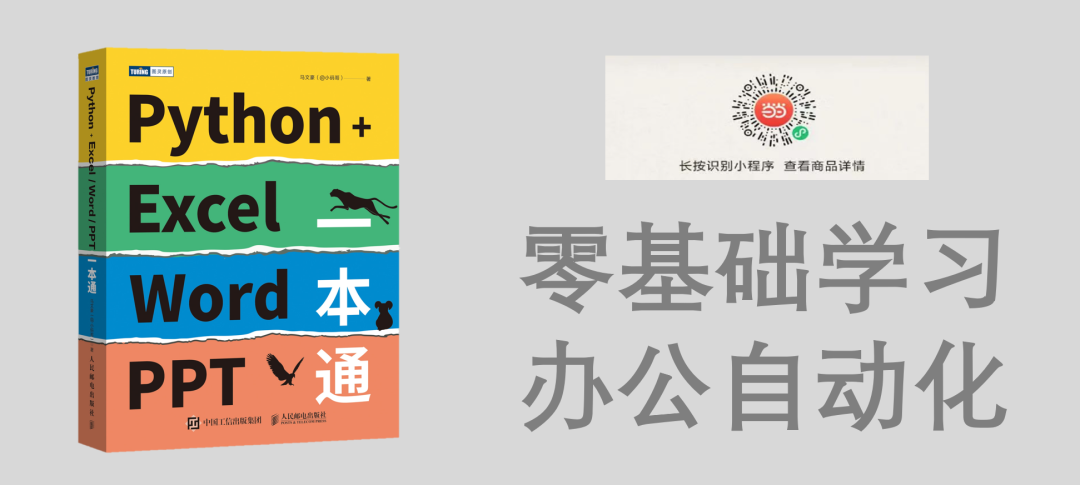
推薦一本適合編程小白學(xué)習(xí)的Python辦公自動化書,提高職場辦公效率,附贈PPT/源代碼/重點教學(xué)視頻講解和作者一對一指導(dǎo)。
▼點擊閱讀原文,了解本書詳情~