
MyBatis 三種批量插入方式的比較,我推薦第3個(gè)!
點(diǎn)擊上方“Java技術(shù)江湖”,選擇“設(shè)為星標(biāo)”
回復(fù)”666“獲取全網(wǎng)最熱的Java核心知識(shí)點(diǎn)整理
數(shù)據(jù)庫(kù)使用的是SQLServer,JDK版本1.8,運(yùn)行在SpringBoot環(huán)境下 對(duì)比3種可用的方式
反復(fù)執(zhí)行單條插入語(yǔ)句 xml拼接sql 批處理執(zhí)行
先說(shuō)結(jié)論:少量插入請(qǐng)使用反復(fù)插入單條數(shù)據(jù),方便。數(shù)量較多請(qǐng)使用批處理方式。(可以考慮以有需求的插入數(shù)據(jù)量20條左右為界吧,在我的測(cè)試和數(shù)據(jù)庫(kù)環(huán)境下耗時(shí)都是百毫秒級(jí)的,方便最重要)無(wú)論何時(shí)都不用xml拼接sql的方式。
拼接SQL的xml
newId()是sqlserver生成UUID的函數(shù),與本文內(nèi)容無(wú)關(guān)
"insertByBatch"?parameterType="java.util.List">
????INSERT?INTO?tb_item?VALUES
????"list"?item="item"?index="index"?separator=",">
????????(newId(),#{item.uniqueCode},#{item.projectId},#{item.name},#{item.type},#{item.packageUnique},
????????#{item.isPackage},#{item.factoryId},#{item.projectName},#{item.spec},#{item.length},#{item.weight},
????????#{item.material},#{item.setupPosition},#{item.areaPosition},#{item.bottomHeight},#{item.topHeight},
????????#{item.serialNumber},#{item.createTime}
Mapper接口Mapper?是?mybatis插件tk.Mapper?的接口,與本文內(nèi)容關(guān)系不大
public?interface?ItemMapper?extends?Mapper<Item>?{
????int?insertByBatch(List- ?itemList)
;
}
Service類(lèi)
@Service
public?class?ItemService?{
????@Autowired
????private?ItemMapper?itemMapper;
????@Autowired
????private?SqlSessionFactory?sqlSessionFactory;
????//批處理
????@Transactional
????public?void?add(List- ?itemList)
?{
????????SqlSession?session?=?sqlSessionFactory.openSession(ExecutorType.BATCH,false);
????????ItemMapper?mapper?=?session.getMapper(ItemMapper.class);
????????for?(int?i?=?0;?i?????????????mapper.insertSelective(itemList.get(i));
????????????if(i%1000==999){//每1000條提交一次防止內(nèi)存溢出
????????????????session.commit();
????????????????session.clearCache();
????????????}
????????}
????????session.commit();
????????session.clearCache();
????}
????//拼接sql
????@Transactional
????public?void?add1(List- ?itemList)
?{
????????itemList.insertByBatch(itemMapper::insertSelective);
????}
????//循環(huán)插入
????@Transactional
????public?void?add2(List- ?itemList)
?{
????????itemList.forEach(itemMapper::insertSelective);
????}
}
測(cè)試類(lèi)
@RunWith(SpringRunner.class)
@SpringBootTest(webEnvironment?=?SpringBootTest.WebEnvironment.RANDOM_PORT,?classes?=?ApplicationBoot.class)
public?class?ItemServiceTest?{
????@Autowired
????ItemService?itemService;
????private?List- ?itemList?=?new?ArrayList<>();
????//生成測(cè)試List
????@Before?
????public?void?createList(){
????????String?json?="{\n"?+
????????????????"????????\"areaPosition\":?\"TEST\",\n"?+
????????????????"????????\"bottomHeight\":?5,\n"?+
????????????????"????????\"factoryId\":?\"0\",\n"?+
????????????????"????????\"length\":?233.233,\n"?+
????????????????"????????\"material\":?\"Q345B\",\n"?+
????????????????"????????\"name\":?\"TEST\",\n"?+
????????????????"????????\"package\":?false,\n"?+
????????????????"????????\"packageUnique\":?\"45f8a0ba0bf048839df85f32ebe5bb81\",\n"?+
????????????????"????????\"projectId\":?\"094b5eb5e0384bb1aaa822880a428b6d\",\n"?+
????????????????"????????\"projectName\":?\"項(xiàng)目_TEST1\",\n"?+
????????????????"????????\"serialNumber\":?\"1/2\",\n"?+
????????????????"????????\"setupPosition\":?\"1B柱\",\n"?+
????????????????"????????\"spec\":?\"200X200X200\",\n"?+
????????????????"????????\"topHeight\":?10,\n"?+
????????????????"????????\"type\":?\"Steel\",\n"?+
????????????????"????????\"uniqueCode\":?\"12344312\",\n"?+
????????????????"????????\"weight\":?100\n"?+
????????????????"????}";
????????Item?test1?=?JSON.parseObject(json,Item.class);
????????test1.setCreateTime(new?Date());
????????for?(int?i?=?0;?i?1000;?i++)?{//測(cè)試會(huì)修改此數(shù)量
????????????itemList.add(test1);
????????}
????}
?????//批處理
????@Test
????@Transactional
????public?void?tesInsert()?{
????????itemService.add(itemList);
????}
????//拼接字符串
????@Test
????@Transactional
????public?void?testInsert1(){
????????itemService.add1(itemList);
????}
????//循環(huán)插入
????@Test
????@Transactional
????public?void?testInsert2(){
????????itemService.add2(itemList);
????}
}
測(cè)試結(jié)果:
10條 25條數(shù)據(jù)插入經(jīng)多次測(cè)試,波動(dòng)性較大,但基本都在百毫秒級(jí)別
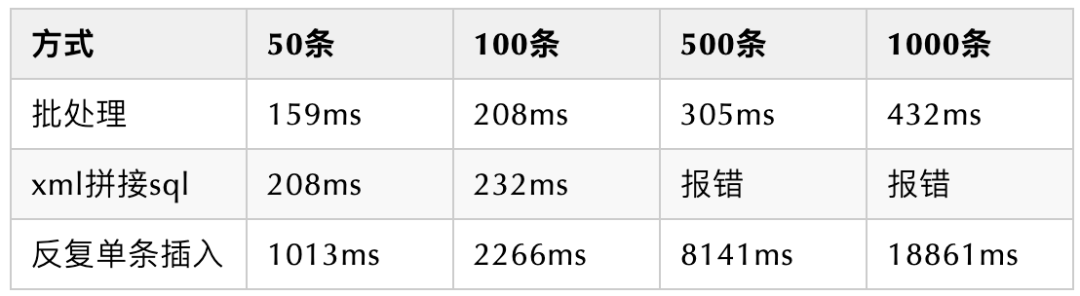
其中 拼接sql方式在插入500條和1000條時(shí)報(bào)錯(cuò)(似乎是因?yàn)閟ql語(yǔ)句過(guò)長(zhǎng),此條跟數(shù)據(jù)庫(kù)類(lèi)型有關(guān),未做其他數(shù)據(jù)庫(kù)的測(cè)試):com.microsoft.sqlserver.jdbc.SQLServerException: 傳入的表格格式數(shù)據(jù)流(TDS)遠(yuǎn)程過(guò)程調(diào)用(RPC)協(xié)議流不正確,此RPC請(qǐng)求中提供了過(guò)多的參數(shù),最多應(yīng)為2100
可以發(fā)現(xiàn)
循環(huán)插入的時(shí)間復(fù)雜度是 O(n),并且常數(shù)C很大 拼接SQL插入的時(shí)間復(fù)雜度(應(yīng)該)是 O(logn),但是成功完成次數(shù)不多,不確定 批處理的效率的時(shí)間復(fù)雜度是 O(logn),并且常數(shù)C也比較小
結(jié)論
循環(huán)插入單條數(shù)據(jù)雖然效率極低,但是代碼量極少,在使用tk.Mapper的插件情況下,僅需代碼,:
@Transactional
public?void?add1(List- ?itemList)
?{
????itemList.forEach(itemMapper::insertSelective);
}
因此,在需求插入數(shù)據(jù)數(shù)量不多的情況下肯定用它了。
xml拼接sql是最不推薦的方式,使用時(shí)有大段的xml和sql語(yǔ)句要寫(xiě),很容易出錯(cuò),工作效率很低。更關(guān)鍵點(diǎn)是,雖然效率尚可,但是真正需要效率的時(shí)候你掛了,要你何用?
批處理執(zhí)行是有大數(shù)據(jù)量插入時(shí)推薦的做法,使用起來(lái)也比較方便。
轉(zhuǎn)自:樓主樓主
鏈接:jianshu.com/p/cce617be9f9e
關(guān)注公眾號(hào)【Java技術(shù)江湖】后回復(fù)“PDF”即可領(lǐng)取200+頁(yè)的《Java工程師面試指南》
強(qiáng)烈推薦,幾乎涵蓋所有Java工程師必知必會(huì)的知識(shí)點(diǎn),不管是復(fù)習(xí)還是面試,都很實(shí)用。
