
Springboot中實(shí)現(xiàn)策略模式+工廠模式
策略模式和工廠模式相信大家都比較熟悉,但是大家有沒有在springboot中實(shí)現(xiàn)策略和工廠模式?
具體策略模式和工廠模式的UML我就不給出來了,使用這個(gè)這兩個(gè)模式主要是防止程序中出現(xiàn)大量的IF ELSE IF ELSE....。接下來咱們直接實(shí)現(xiàn),項(xiàng)目結(jié)構(gòu)圖:
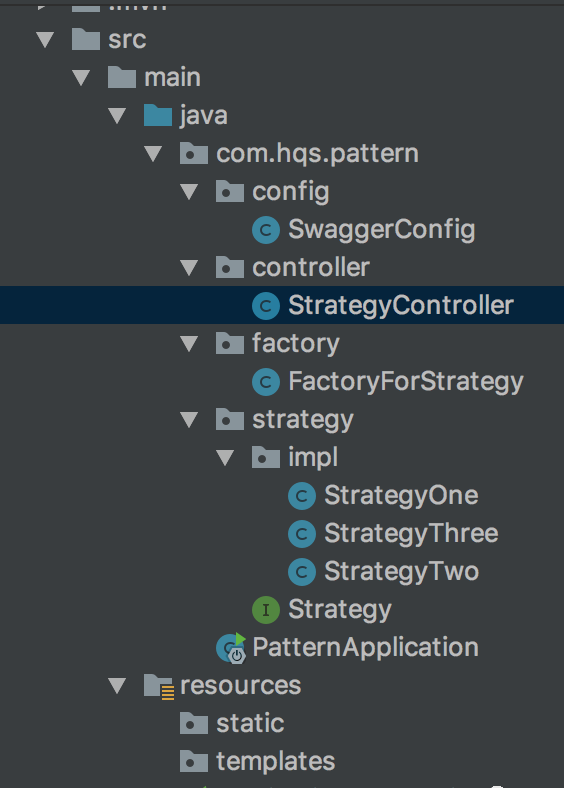
工廠類FactoryStrategy負(fù)責(zé)創(chuàng)建策略的工廠,代碼比較簡(jiǎn)單,比較關(guān)鍵的一點(diǎn)是AutoWired一個(gè)Map<String, Strategy> 這個(gè)會(huì)在初始化的時(shí)候?qū)⑺械腟trategy自動(dòng)加載到Map中,是不是很方便。使用concurrentHashMap是防止多線程操作的時(shí)候出現(xiàn)問題。同時(shí)還要注意@Service注解。
package com.hqs.pattern.factory;

import com.hqs.pattern.strategy.Strategy;
import org.springframework.beans.factory.annotation.Autowired;
import org.springframework.stereotype.Service;

import java.util.Map;
import java.util.concurrent.ConcurrentHashMap;

/**
 * @author huangqingshi
 * @Date 2019-01-31
 */
@Service
public class FactoryForStrategy {

    @Autowired
    Map<String, Strategy> strategys = new ConcurrentHashMap<>(3);

    public Strategy getStrategy(String component) throws Exception{
        Strategy strategy = strategys.get(component);
        if(strategy == null) {
            throw new RuntimeException("no strategy defined");
        }
        return strategy;
    }

}
接下來就是Strategy接口,就一個(gè)doOperation方法。
package com.hqs.pattern.strategy;

/**
 * @author huangqingshi
 * @Date 2019-01-31
 */
public interface Strategy {

    String doOperation();

}
定義接口的實(shí)現(xiàn),我定義了三個(gè), 都類似,這里我就放出一個(gè)來吧。Component里邊的one是指定其名字,這個(gè)會(huì)作為key放到Map strategys里邊。
package com.hqs.pattern.strategy.impl;

import com.hqs.pattern.strategy.Strategy;
import org.springframework.stereotype.Component;

/**
 * @author huangqingshi
 * @Date 2019-01-31
 */
@Component("one")
public class StrategyOne implements Strategy {
    @Override
    public String doOperation() {
        return "one";
    }
}
好了,寫一個(gè)Controller類,用于進(jìn)行測(cè)試,當(dāng)然我還是使用swagger,使用swagger的時(shí)候有個(gè)細(xì)節(jié),就是注意生產(chǎn)上一定不能打開,否則是個(gè)非常可怕的事情。
package com.hqs.pattern.controller;

import com.hqs.pattern.factory.FactoryForStrategy;
import org.springframework.beans.factory.annotation.Autowired;
import org.springframework.stereotype.Controller;
import org.springframework.web.bind.annotation.PostMapping;
import org.springframework.web.bind.annotation.RequestParam;
import org.springframework.web.bind.annotation.ResponseBody;

/**
 * @author huangqingshi
 * @Date 2019-01-31
 */
@Controller
public class StrategyController {

    @Autowired
    FactoryForStrategy factoryForStrategy;

    @PostMapping("/strategy")
    @ResponseBody
    public String strategy(@RequestParam("key") String key) {
        String result;
        try {
            result = factoryForStrategy.getStrategy(key).doOperation();
        } catch (Exception e) {
            result = e.getMessage();
        }
        return result;
    }


}
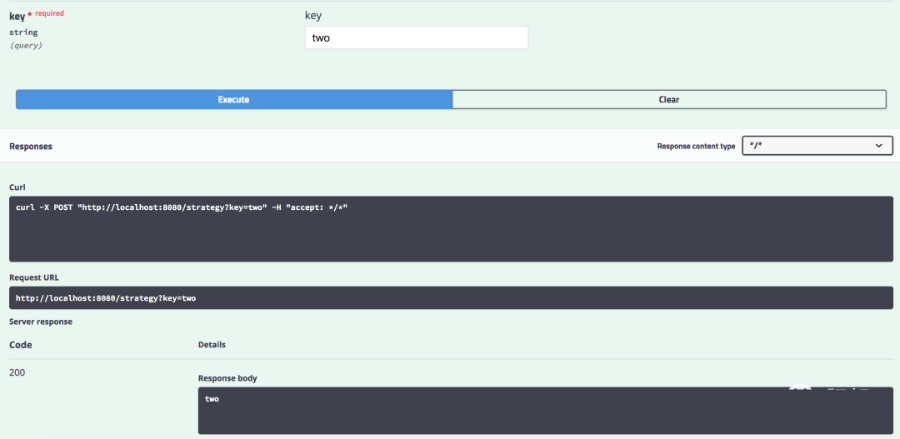
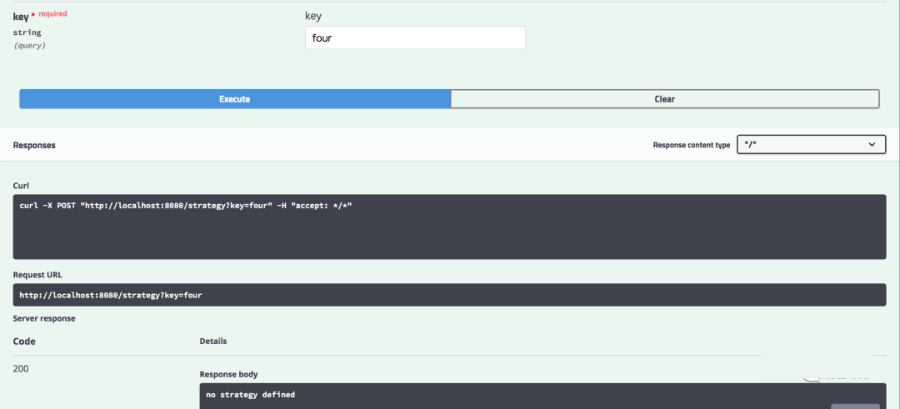
打開swagger進(jìn)行測(cè)試,輸入one,返回one。輸入four,返回no strategy defined。后續(xù)如果有新策略的話,直接實(shí)現(xiàn)即可。
推薦閱讀:
世界的真實(shí)格局分析,地球人類社會(huì)底層運(yùn)行原理
企業(yè)IT技術(shù)架構(gòu)規(guī)劃方案
論數(shù)字化轉(zhuǎn)型——轉(zhuǎn)什么,如何轉(zhuǎn)?
企業(yè)10大管理流程圖,數(shù)字化轉(zhuǎn)型從業(yè)者必備!
【中臺(tái)實(shí)踐】華為大數(shù)據(jù)中臺(tái)架構(gòu)分享.pdf
數(shù)字化轉(zhuǎn)型的本質(zhì)(10個(gè)關(guān)鍵詞)
小米用戶畫像實(shí)戰(zhàn),48頁P(yáng)PT下載