
熟悉Netty之?dāng)?shù)據(jù)傳輸--TCP粘/拆包和加解碼器(二)
敦煌天空的沙粒,帶著我們的記憶
我從半路看回去,這秦關(guān)漫漫好蜿踞
夢想穿過了西域,包含了多少的禪意
愛情像一本游記,我會找尋它的密語
看月牙灣下的淚光,在絲路之上被遺忘
上次用一個(gè)小例子提到了Netty是如何處理粘包/拆包的,今天來分析下其中具體的細(xì)節(jié),首先我們看到例子中用到的一個(gè)類:
io.netty.handler.codec.LineBasedFrameDecoder
下圖是該類的繼承關(guān)系圖:
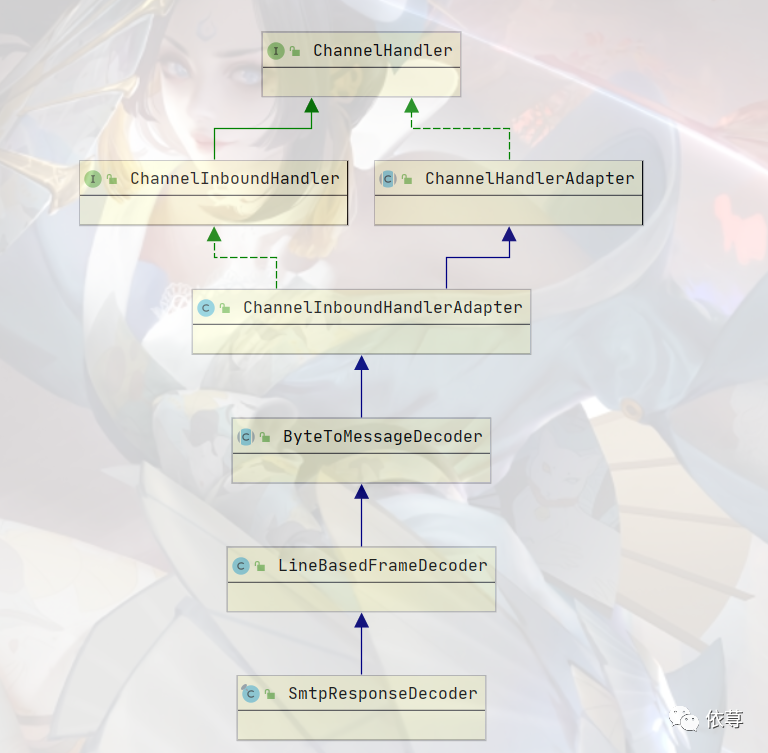
從上圖可以看出,該類屬于
io.netty.channel.ChannelHandler,
所以,我們可以通過io.netty.channel.ChannelPipeline
添加至Handler中,即:
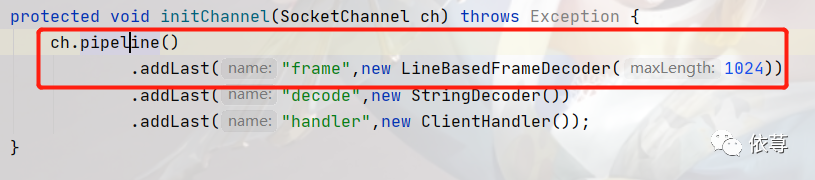
那么
io.netty.handler.codec.LineBasedFrameDecoder
是如何解決粘包/拆包的呢?
直接進(jìn)去看源代碼:
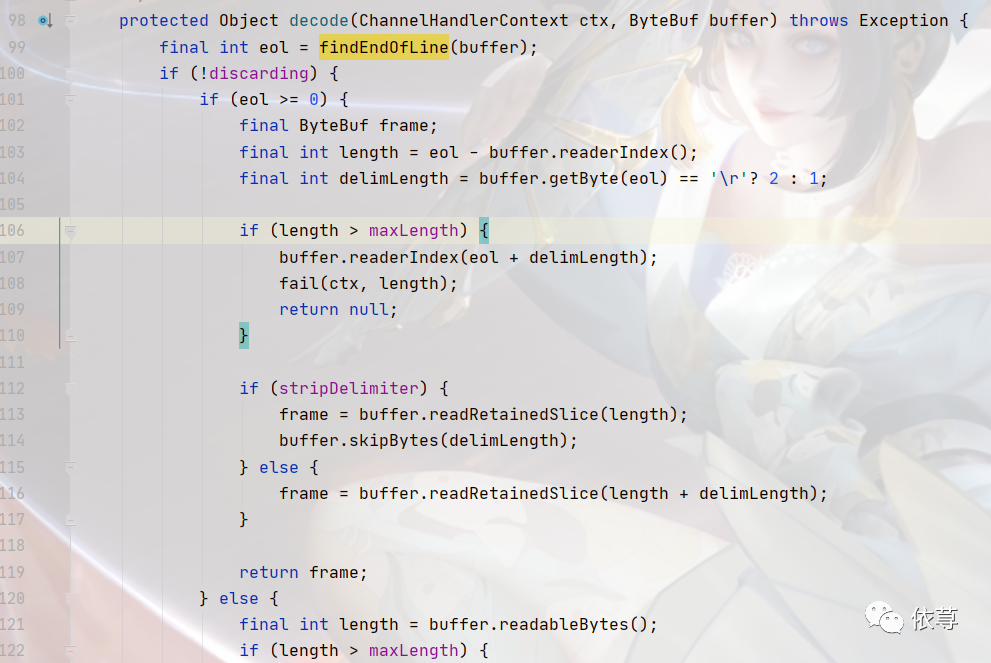
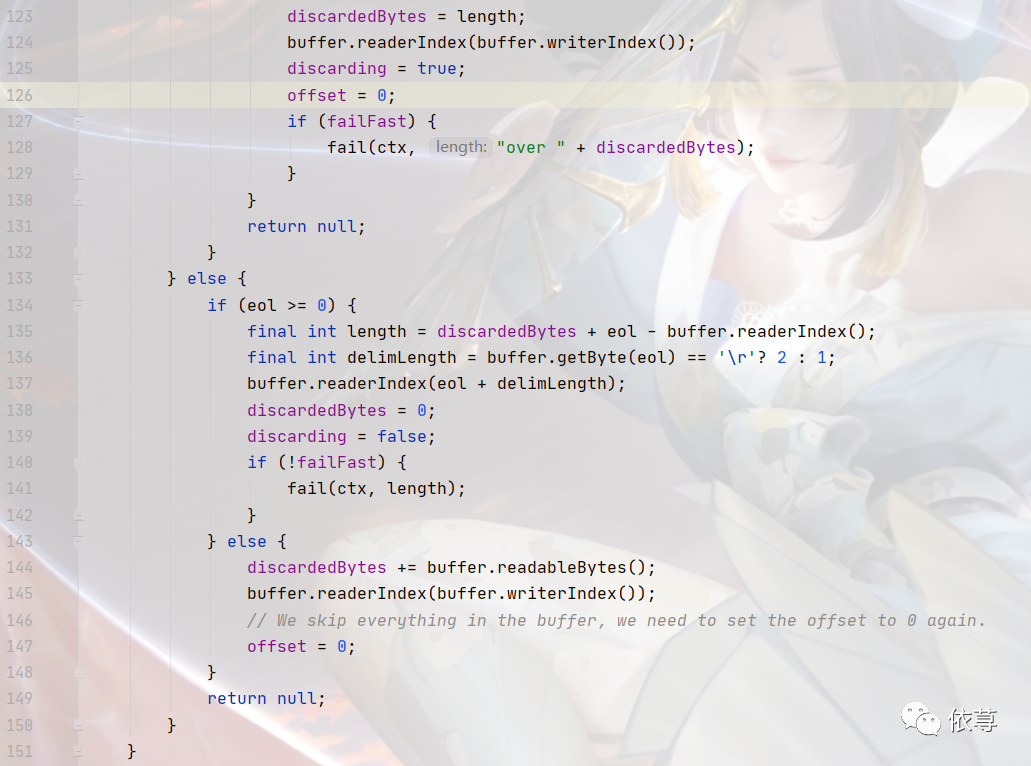
這里是其主要的decode方法,這里不做逐行翻譯了,只是描述其大致意思
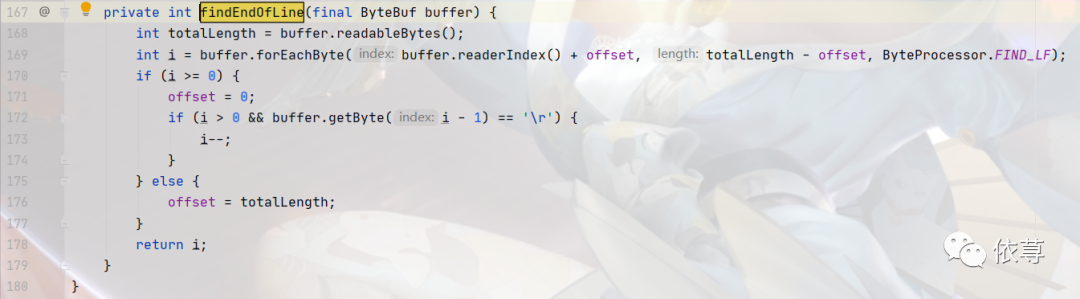
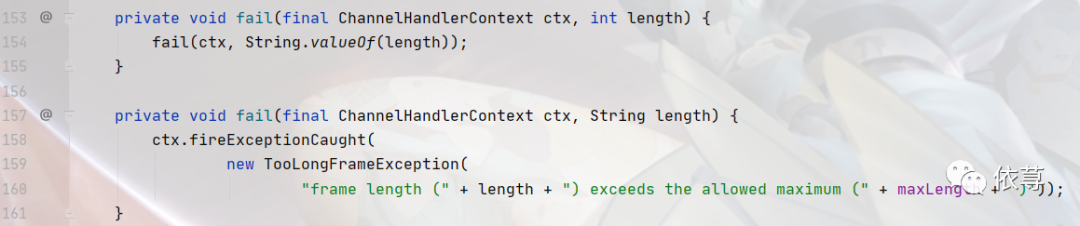
首先通過獲取讀取緩沖區(qū)的數(shù)據(jù),通過字節(jié)循環(huán)匹配,看是否有"\n",如果有,則以此位置結(jié)束,從可讀取索引到此位置區(qū)間的字節(jié)組成一行,如果連續(xù)讀取設(shè)定的長度,都沒有發(fā)現(xiàn)"\n",則拋出異常。
循環(huán)獲取:
 拋出異常:
拋出異常:
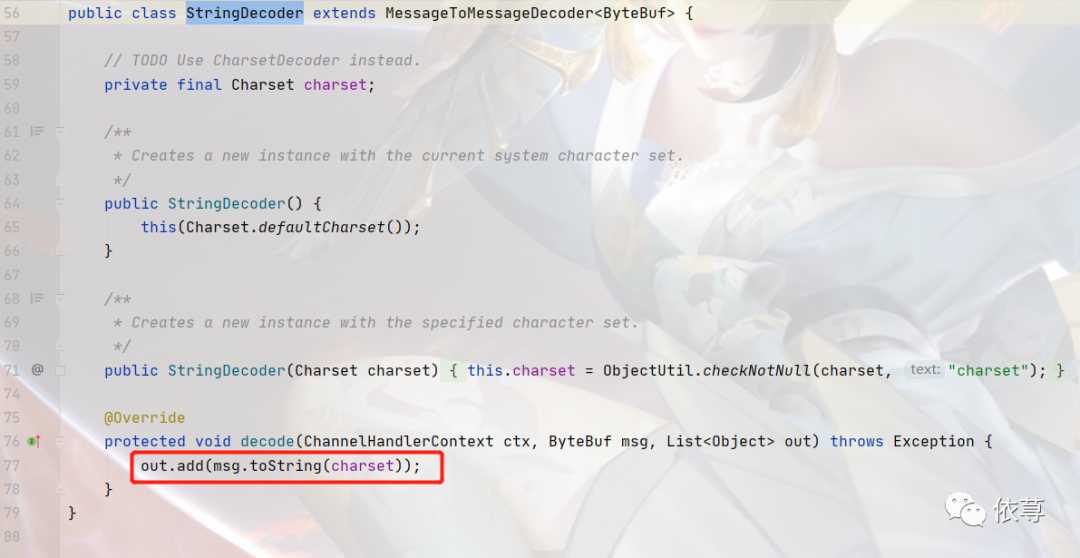
然后,通過
io.netty.handler.codec.string.StringDecoder
將接收到的對象,轉(zhuǎn)化為字符串,調(diào)用后續(xù)的Handler,處理數(shù)據(jù)
io.netty.handler.codec.LineBasedFrameDecoder
和
io.netty.handler.codec.string.StringDecoder
結(jié)合,是一種典型的按換行切換的文本解碼器,它被設(shè)計(jì)用來支持TCP的粘包和拆包
此時(shí),有看官肯定有一種疑惑,那么如果我現(xiàn)在需求不要按照換行符號切換文本呢,比如我們常常用到的聊天軟件,通常有些是可以指定,按回車鍵也可以不發(fā)送數(shù)據(jù),繼續(xù)輸入文本,最后按個(gè)什么組合件發(fā)送數(shù)據(jù),類似QQ或者微信,會提供按Enter鍵發(fā)送數(shù)據(jù)或者Ctrl+Enter發(fā)送數(shù)據(jù),此時(shí),需要怎么處理呢?
其實(shí),無論是Enter或者Ctrl+Enter發(fā)送數(shù)據(jù),程序都會指定一種形式發(fā)送數(shù)據(jù),那么在Netty中,同樣支持利用分隔符解碼器來處理數(shù)據(jù),這個(gè)分隔符則可以任意指定。
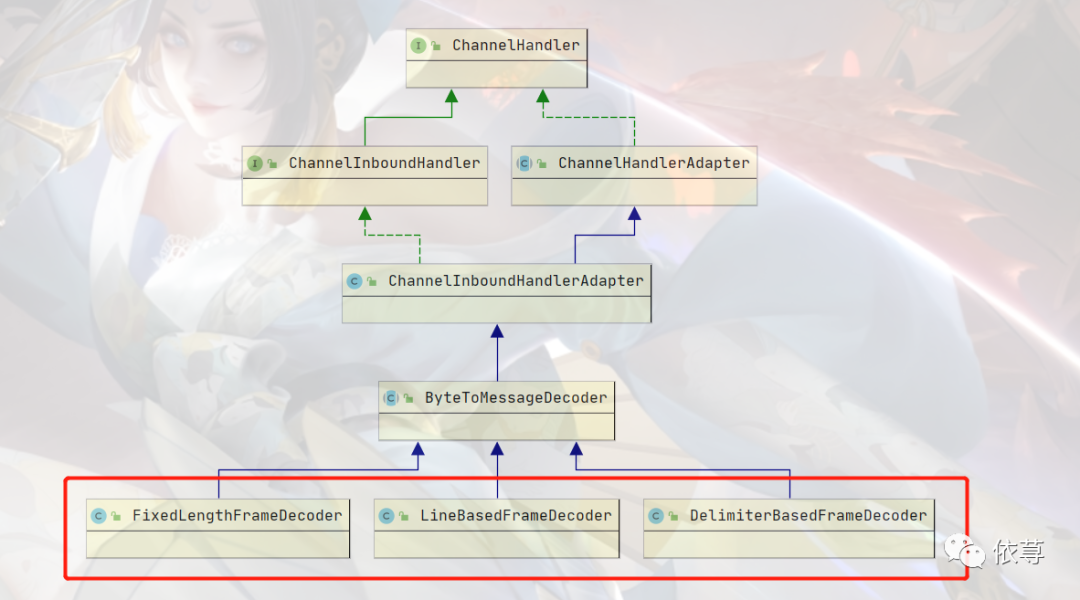
如上圖所示,Netty提供了
io.netty.handler.codec.FixedLengthFrameDecoder
和
io.netty.handler.codec.DelimiterBasedFrameDecoder
自定義分隔符和定長解碼器,來解決上面提到的問題
那么先來看看其實(shí)際應(yīng)用:
用前面例子為例:
服務(wù)端:
package com.lgli.netty.tcppackage;import io.netty.bootstrap.ServerBootstrap;import io.netty.buffer.ByteBuf;import io.netty.buffer.Unpooled;import io.netty.channel.*;import io.netty.channel.nio.NioEventLoopGroup;import io.netty.channel.socket.SocketChannel;import io.netty.channel.socket.nio.NioServerSocketChannel;import io.netty.handler.codec.DelimiterBasedFrameDecoder;import io.netty.handler.codec.LineBasedFrameDecoder;import io.netty.handler.codec.string.StringDecoder;import java.net.InetSocketAddress;/*** Server* @author lgli*/public class MyServer {public static void main(String[] args) {EventLoopGroup bossGroup = new NioEventLoopGroup();EventLoopGroup workGroup = new NioEventLoopGroup();try{ServerBootstrap bootstrap = new ServerBootstrap();bootstrap.group(bossGroup,workGroup).channel(NioServerSocketChannel.class).option(ChannelOption.SO_BACKLOG,10240).childHandler(new ServerInitial());ChannelFuture future = bootstrap.bind(new InetSocketAddress("localhost", 8080)).sync();future.channel().closeFuture().sync();}catch (Exception e){e.printStackTrace();}finally {bossGroup.shutdownGracefully();workGroup.shutdownGracefully();}}static class ServerInitial extends ChannelInitializer<SocketChannel>{protected void initChannel(SocketChannel ch) throws Exception {ByteBuf byteBuf = Unpooled.copiedBuffer("$_end".getBytes());ch.pipeline().addLast("frame",new DelimiterBasedFrameDecoder(1024,byteBuf)).addLast("decode",new StringDecoder()).addLast("handler",new ServerHandler());}}static class ServerHandler extends SimpleChannelInboundHandler<Object>{private int counter;protected void channelRead0(ChannelHandlerContext ctx, Object msg) throws Exception {String receive = (String) msg;System.out.println("服務(wù)端收到客戶端數(shù)據(jù):"+receive+";目前計(jì)數(shù)counter = "+ ++counter);String result = "hello,how are you?".equalsIgnoreCase(receive)?"I am fine,thank you":"wrong msg";result += "$_end";ByteBuf resultBuf = Unpooled.copiedBuffer(result.getBytes());ctx.writeAndFlush(resultBuf);}????}}
客戶端:
package com.lgli.netty.tcppackage;import io.netty.bootstrap.Bootstrap;import io.netty.buffer.ByteBuf;import io.netty.buffer.Unpooled;import io.netty.channel.*;import io.netty.channel.nio.NioEventLoopGroup;import io.netty.channel.socket.SocketChannel;import io.netty.channel.socket.nio.NioSocketChannel;import io.netty.handler.codec.DelimiterBasedFrameDecoder;import io.netty.handler.codec.LineBasedFrameDecoder;import io.netty.handler.codec.string.StringDecoder;import java.net.InetSocketAddress;/*** Client* @author lgli*/public class MyClient {public static void main(String[] args) {EventLoopGroup group = new NioEventLoopGroup();try{Bootstrap bootstrap = new Bootstrap();bootstrap.group(group).channel(NioSocketChannel.class).option(ChannelOption.SO_KEEPALIVE,true).handler(new ClientInitial());ChannelFuture future = bootstrap.connect(new InetSocketAddress("localhost", 8080)).sync();future.channel().closeFuture().sync();}catch (Exception e){e.printStackTrace();}finally {group.shutdownGracefully();}}static class ClientInitial extends ChannelInitializer<SocketChannel>{protected void initChannel(SocketChannel ch) throws Exception {ByteBuf byteBuf = Unpooled.copiedBuffer("$_end".getBytes());ch.pipeline().addLast("frame",new DelimiterBasedFrameDecoder(1024,byteBuf)).addLast("decode",new StringDecoder()).addLast("handler",new ClientHandler());}}static class ClientHandler extends SimpleChannelInboundHandler<Object>{private int counter;private byte[] req;public ClientHandler(){req = ("hello,how are you?$_end").getBytes();????????}public void channelActive(ChannelHandlerContext ctx) throws Exception {ByteBuf buff = null;for(int i = 0 ; i < 100 ;i++){buff = Unpooled.buffer(req.length);buff.writeBytes(req);ctx.writeAndFlush(buff);}}protected void channelRead0(ChannelHandlerContext ctx, Object msg) throws Exception {String msgs = (String) msg;System.out.println("服務(wù)器回復(fù):"+msgs+";此時(shí)計(jì)數(shù)器counter:"+ ++counter);}????}}
這里,主要用了
io.netty.handler.codec.DelimiterBasedFrameDecoder
代替前面的
io.netty.handler.codec.LineBasedFrameDecoder

上述代碼,說明,對于數(shù)據(jù)的截取,是根據(jù)"$_end"作為結(jié)束分隔符,
即遇到"$_end",則截取數(shù)據(jù),發(fā)送數(shù)據(jù)。
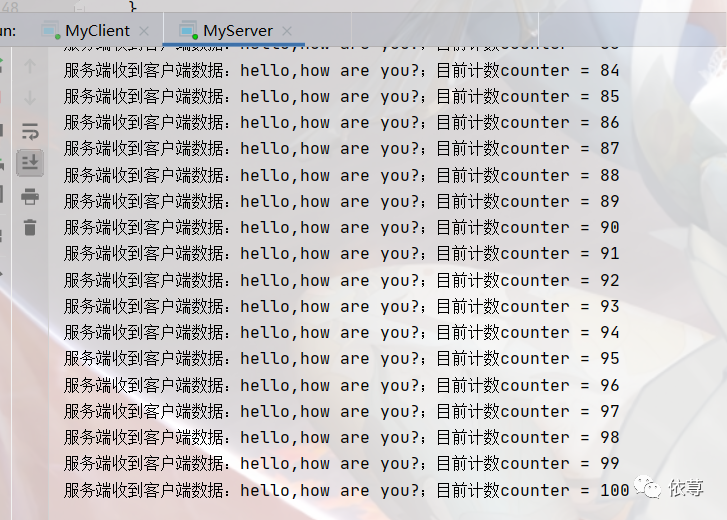
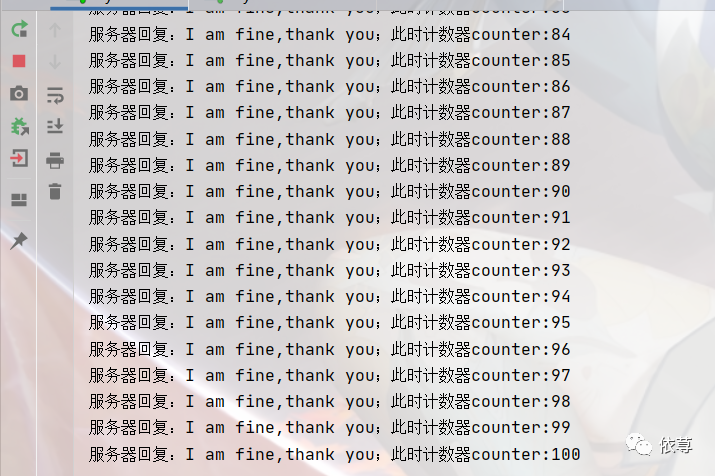
運(yùn)行上述代碼,其實(shí)際結(jié)果如下:
服務(wù)端(部分打印):
客戶端(部分打印):
至于
io.netty.handler.codec.DelimiterBasedFrameDecoder
則是根據(jù)指定長度的截取數(shù)據(jù)
因?yàn)楸容^簡單這里就不做詳述了
有興趣的可以自己做個(gè)實(shí)驗(yàn)
后續(xù)分享:Netty底層實(shí)現(xiàn)原理
有喜歡的煩請點(diǎn)個(gè)關(guān)注,謝謝!