
圖像拼接和圖像融合技術
點擊下方卡片,關注“新機器視覺”公眾號
視覺/圖像重磅干貨,第一時間送達
來源:https://www.cnblogs.com/skyfsm/p/7411961.html
圖像拼接在實際的應用場景很廣,比如無人機航拍,遙感圖像等等,圖像拼接是進一步做圖像理解基礎步驟,拼接效果的好壞直接影響接下來的工作,所以一個好的圖像拼接算法非常重要。
再舉一個身邊的例子吧,你用你的手機對某一場景拍照,但是你沒有辦法一次將所有你要拍的景物全部拍下來,所以你對該場景從左往右依次拍了好幾張圖,來把你要拍的所有景物記錄下來。那么我們能不能把這些圖像拼接成一個大圖呢?我們利用opencv就可以做到圖像拼接的效果!
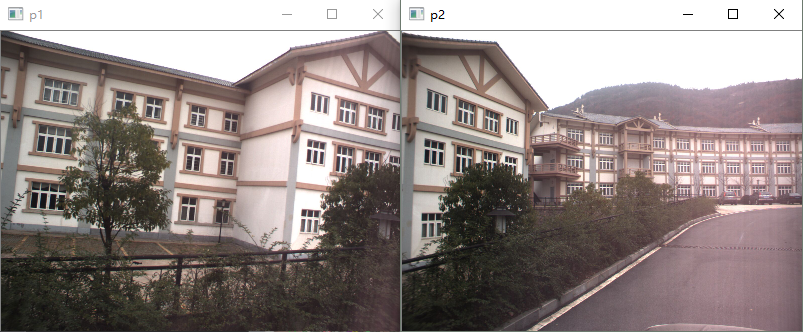
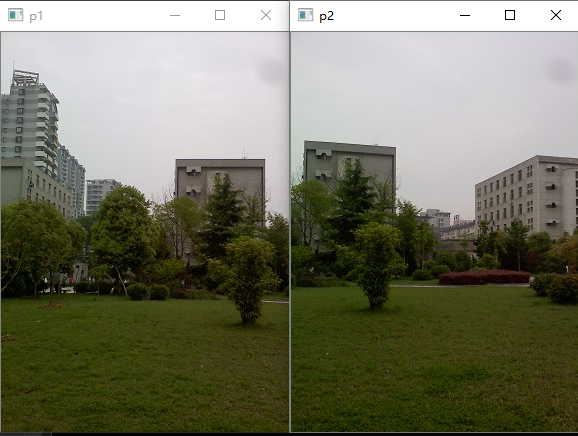
比如我們有對這兩張圖進行拼接。
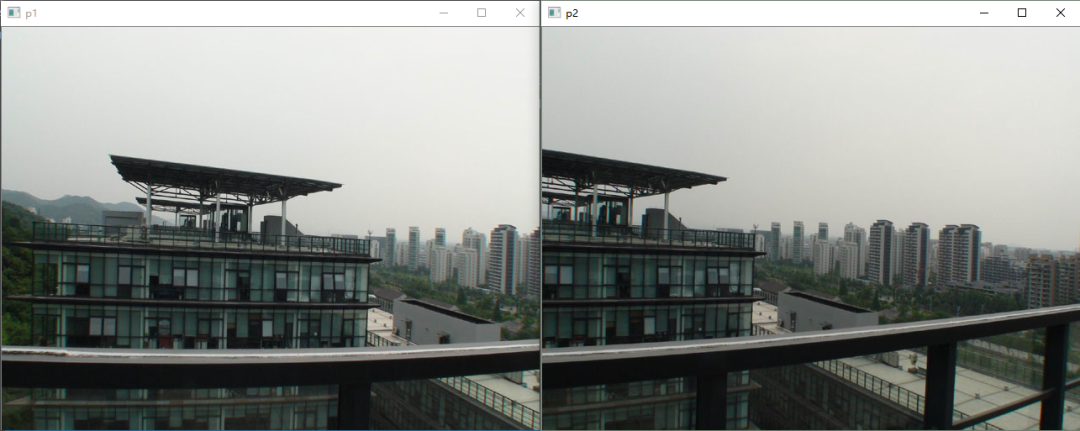
從上面兩張圖可以看出,這兩張圖有比較多的重疊部分,這也是拼接的基本要求。
那么要實現圖像拼接需要那幾步呢?簡單來說有以下幾步:
對每幅圖進行特征點提取
對對特征點進行匹配
進行圖像配準
把圖像拷貝到另一幅圖像的特定位置
對重疊邊界進行特殊處理
好吧,那就開始正式實現圖像配準。
第一步就是特征點提取。現在CV領域有很多特征點的定義,比如sift、surf、harris角點、ORB都是很有名的特征因子,都可以用來做圖像拼接的工作,他們各有優(yōu)勢。本文將使用ORB和SURF進行圖像拼接,用其他方法進行拼接也是類似的。
基于SURF的圖像拼接
用SIFT算法來實現圖像拼接是很常用的方法,但是因為SIFT計算量很大,所以在速度要求很高的場合下不再適用。所以,它的改進方法SURF因為在速度方面有了明顯的提高(速度是SIFT的3倍),所以在圖像拼接領域還是大有作為。雖說SURF精確度和穩(wěn)定性不及SIFT,但是其綜合能力還是優(yōu)越一些。下面將詳細介紹拼接的主要步驟。
1.特征點提取和匹配
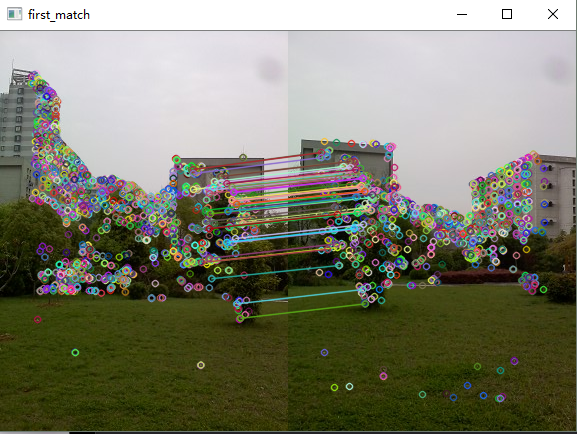
特征點提取和匹配的方法我在上一篇文章《OpenCV探索之路(二十三):特征檢測和特征匹配方法匯總》中做了詳細的介紹,在這里直接使用上文所總結的SURF特征提取和特征匹配的方法。
//提取特征點
SurfFeatureDetector Detector(2000);
vector<KeyPoint> keyPoint1, keyPoint2;
Detector.detect(image1, keyPoint1);
Detector.detect(image2, keyPoint2);
//特征點描述,為下邊的特征點匹配做準備
SurfDescriptorExtractor Descriptor;
Mat imageDesc1, imageDesc2;
Descriptor.compute(image1, keyPoint1, imageDesc1);
Descriptor.compute(image2, keyPoint2, imageDesc2);
FlannBasedMatcher matcher;
vector<vector<DMatch> > matchePoints;
vector<DMatch> GoodMatchePoints;
vector<Mat> train_desc(1, imageDesc1);
matcher.add(train_desc);
matcher.train();
matcher.knnMatch(imageDesc2, matchePoints, 2);
cout << "total match points: " << matchePoints.size() << endl;
// Lowe's algorithm,獲取優(yōu)秀匹配點
for (int i = 0; i < matchePoints.size(); i++)
{
if (matchePoints[i][0].distance < 0.4 * matchePoints[i][1].distance)
{
GoodMatchePoints.push_back(matchePoints[i][0]);
}
}
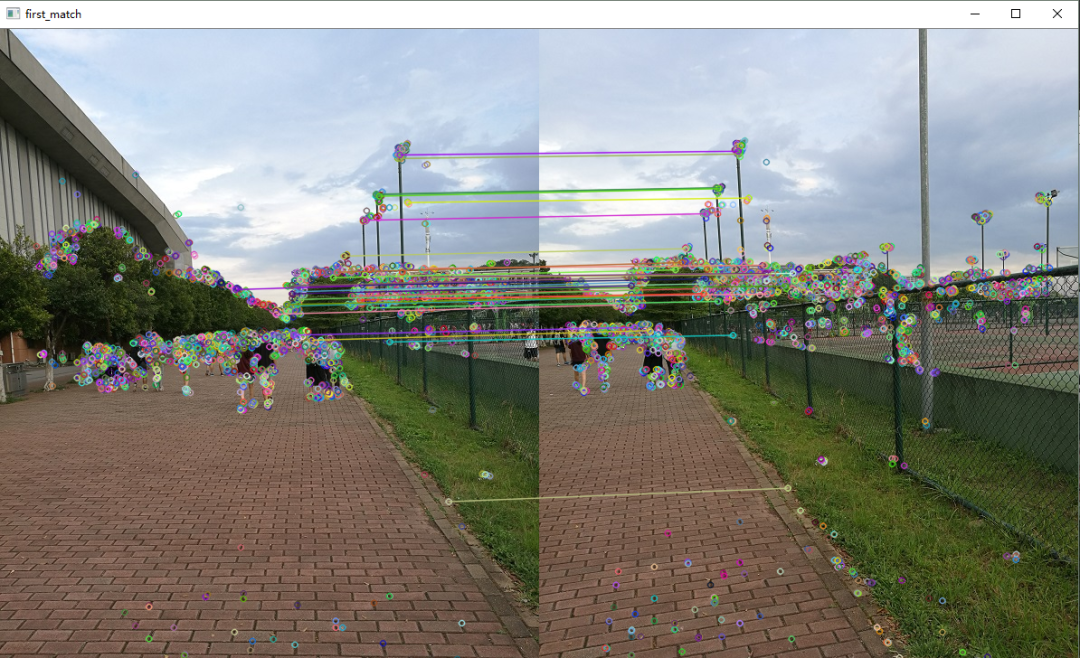
Mat first_match;
drawMatches(image02, keyPoint2, image01, keyPoint1, GoodMatchePoints, first_match);
imshow("first_match ", first_match);
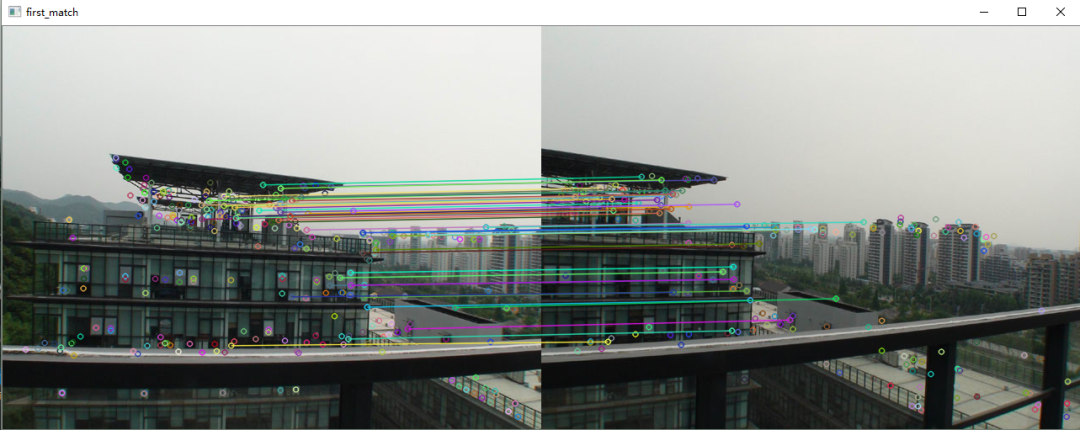
2.圖像配準
這樣子我們就可以得到了兩幅待拼接圖的匹配點集,接下來我們進行圖像的配準,即將兩張圖像轉換為同一坐標下,這里我們需要使用findHomography函數來求得變換矩陣。但是需要注意的是,findHomography函數所要用到的點集是Point2f類型的,所有我們需要對我們剛得到的點集GoodMatchePoints再做一次處理,使其轉換為Point2f類型的點集。
vector<Point2f> imagePoints1, imagePoints2;
for (int i = 0; i<GoodMatchePoints.size(); i++)
{
imagePoints2.push_back(keyPoint2[GoodMatchePoints[i].queryIdx].pt);
imagePoints1.push_back(keyPoint1[GoodMatchePoints[i].trainIdx].pt);
}
這樣子,我們就可以拿著imagePoints1, imagePoints2去求變換矩陣了,并且實現圖像配準。值得注意的是findHomography函數的參數中我們選澤了CV_RANSAC,這表明我們選擇RANSAC算法繼續(xù)篩選可靠地匹配點,這使得匹配點解更為精確。
//獲取圖像1到圖像2的投影映射矩陣 尺寸為3*3
Mat homo = findHomography(imagePoints1, imagePoints2, CV_RANSAC);
也可以使用getPerspectiveTransform方法獲得透視變換矩陣,不過要求只能有4個點,效果稍差
//Mat homo=getPerspectiveTransform(imagePoints1,imagePoints2);
cout << "變換矩陣為:\n" << homo << endl << endl; //輸出映射矩陣
//圖像配準
Mat imageTransform1, imageTransform2;
warpPerspective(image01, imageTransform1, homo, Size(MAX(corners.right_top.x, corners.right_bottom.x), image02.rows));
//warpPerspective(image01, imageTransform2, adjustMat*homo, Size(image02.cols*1.3, image02.rows*1.8));
imshow("直接經過透視矩陣變換", imageTransform1);
imwrite("trans1.jpg", imageTransform1);

3. 圖像拷貝
拷貝的思路很簡單,就是將左圖直接拷貝到配準圖上就可以了。
//創(chuàng)建拼接后的圖,需提前計算圖的大小
int dst_width = imageTransform1.cols; //取最右點的長度為拼接圖的長度
int dst_height = image02.rows;
Mat dst(dst_height, dst_width, CV_8UC3);
dst.setTo(0);
imageTransform1.copyTo(dst(Rect(0, 0, imageTransform1.cols, imageTransform1.rows)));
image02.copyTo(dst(Rect(0, 0, image02.cols, image02.rows)));
imshow("b_dst", dst);

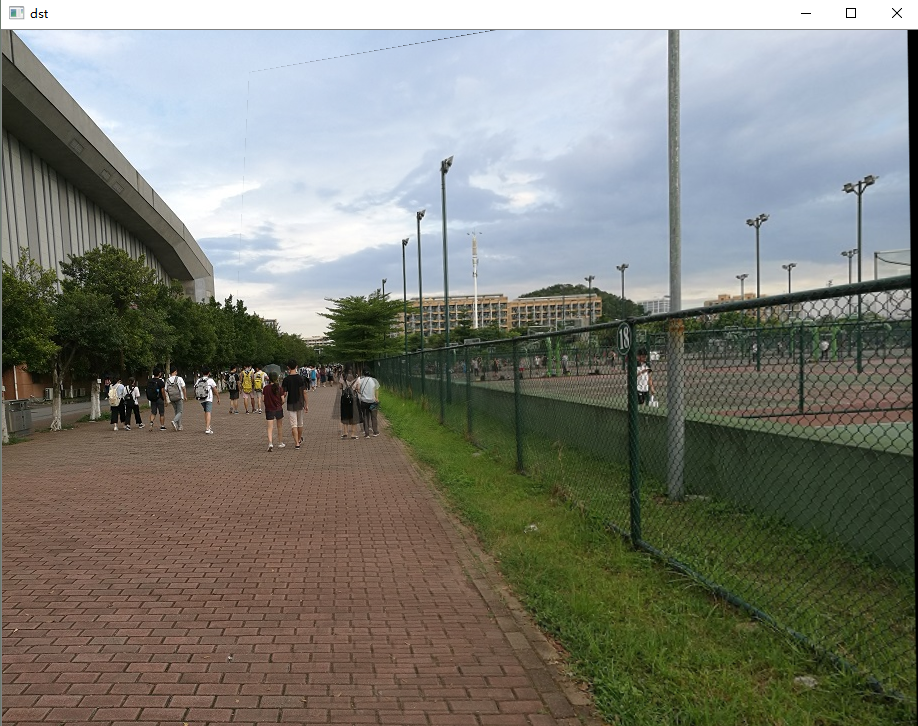
4.圖像融合(去裂縫處理)
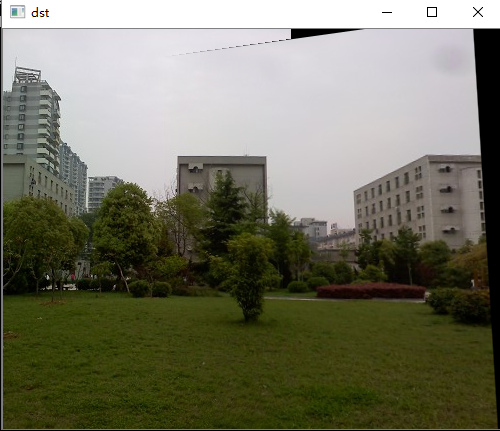
從上圖可以看出,兩圖的拼接并不自然,原因就在于拼接圖的交界處,兩圖因為光照色澤的原因使得兩圖交界處的過渡很糟糕,所以需要特定的處理解決這種不自然。這里的處理思路是加權融合,在重疊部分由前一幅圖像慢慢過渡到第二幅圖像,即將圖像的重疊區(qū)域的像素值按一定的權值相加合成新的圖像。
//優(yōu)化兩圖的連接處,使得拼接自然
void OptimizeSeam(Mat& img1, Mat& trans, Mat& dst)
{
int start = MIN(corners.left_top.x, corners.left_bottom.x);//開始位置,即重疊區(qū)域的左邊界
double processWidth = img1.cols - start;//重疊區(qū)域的寬度
int rows = dst.rows;
int cols = img1.cols; //注意,是列數*通道數
double alpha = 1;//img1中像素的權重
for (int i = 0; i < rows; i++)
{
uchar* p = img1.ptr<uchar>(i); //獲取第i行的首地址
uchar* t = trans.ptr<uchar>(i);
uchar* d = dst.ptr<uchar>(i);
for (int j = start; j < cols; j++)
{
//如果遇到圖像trans中無像素的黑點,則完全拷貝img1中的數據
if (t[j * 3] == 0 && t[j * 3 + 1] == 0 && t[j * 3 + 2] == 0)
{
alpha = 1;
}
else
{
//img1中像素的權重,與當前處理點距重疊區(qū)域左邊界的距離成正比,實驗證明,這種方法確實好
alpha = (processWidth - (j - start)) / processWidth;
}
d[j * 3] = p[j * 3] * alpha + t[j * 3] * (1 - alpha);
d[j * 3 + 1] = p[j * 3 + 1] * alpha + t[j * 3 + 1] * (1 - alpha);
d[j * 3 + 2] = p[j * 3 + 2] * alpha + t[j * 3 + 2] * (1 - alpha);
}
}
}
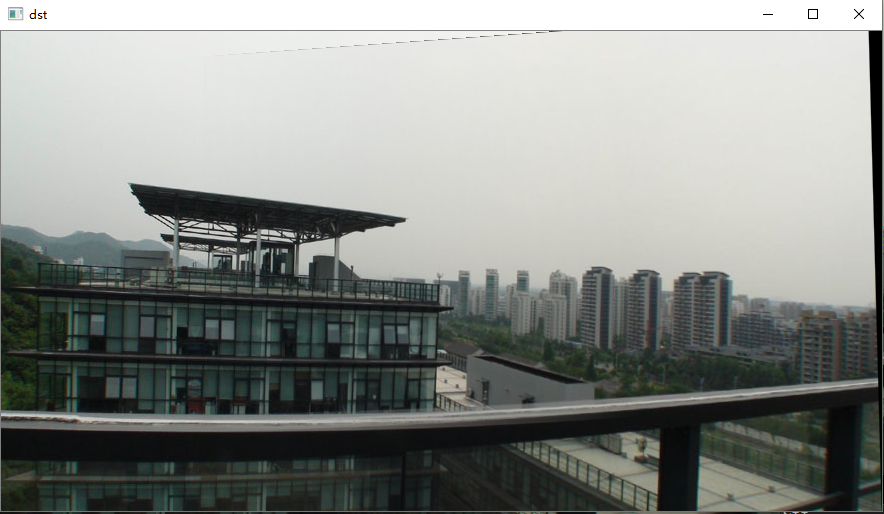
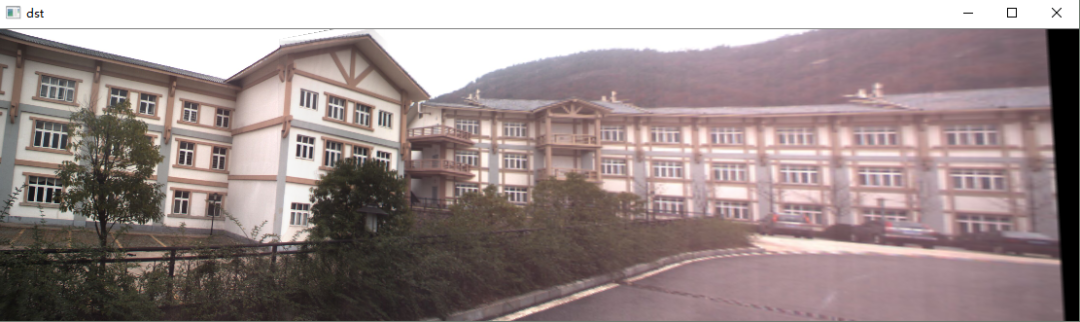
多嘗試幾張,驗證拼接效果
測試一

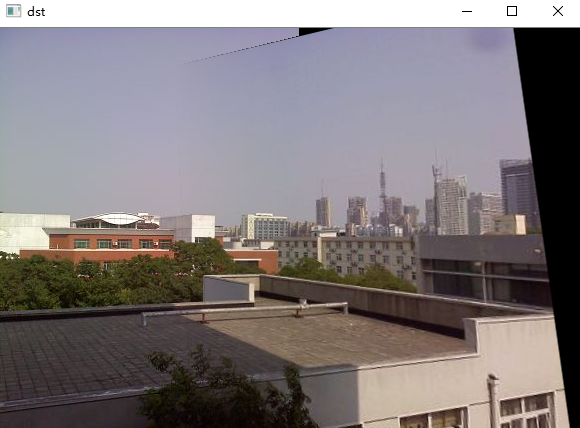
測試二
測試三
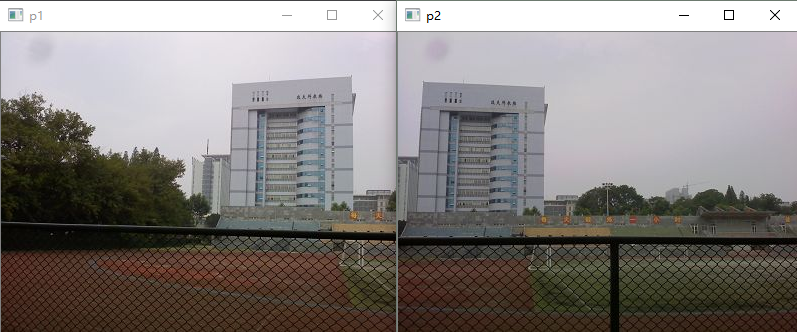
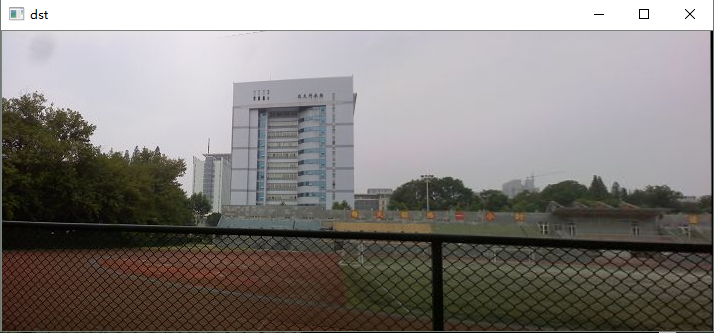
最后給出完整的SURF算法實現的拼接代碼。
#include "highgui/highgui.hpp"
#include "opencv2/nonfree/nonfree.hpp"
#include "opencv2/legacy/legacy.hpp"
#include <iostream>
using namespace cv;
using namespace std;
void OptimizeSeam(Mat& img1, Mat& trans, Mat& dst);
typedef struct
{
Point2f left_top;
Point2f left_bottom;
Point2f right_top;
Point2f right_bottom;
}four_corners_t;
four_corners_t corners;
void CalcCorners(const Mat& H, const Mat& src)
{
double v2[] = { 0, 0, 1 };//左上角
double v1[3];//變換后的坐標值
Mat V2 = Mat(3, 1, CV_64FC1, v2); //列向量
Mat V1 = Mat(3, 1, CV_64FC1, v1); //列向量
V1 = H * V2;
//左上角(0,0,1)
cout << "V2: " << V2 << endl;
cout << "V1: " << V1 << endl;
corners.left_top.x = v1[0] / v1[2];
corners.left_top.y = v1[1] / v1[2];
//左下角(0,src.rows,1)
v2[0] = 0;
v2[1] = src.rows;
v2[2] = 1;
V2 = Mat(3, 1, CV_64FC1, v2); //列向量
V1 = Mat(3, 1, CV_64FC1, v1); //列向量
V1 = H * V2;
corners.left_bottom.x = v1[0] / v1[2];
corners.left_bottom.y = v1[1] / v1[2];
//右上角(src.cols,0,1)
v2[0] = src.cols;
v2[1] = 0;
v2[2] = 1;
V2 = Mat(3, 1, CV_64FC1, v2); //列向量
V1 = Mat(3, 1, CV_64FC1, v1); //列向量
V1 = H * V2;
corners.right_top.x = v1[0] / v1[2];
corners.right_top.y = v1[1] / v1[2];
//右下角(src.cols,src.rows,1)
v2[0] = src.cols;
v2[1] = src.rows;
v2[2] = 1;
V2 = Mat(3, 1, CV_64FC1, v2); //列向量
V1 = Mat(3, 1, CV_64FC1, v1); //列向量
V1 = H * V2;
corners.right_bottom.x = v1[0] / v1[2];
corners.right_bottom.y = v1[1] / v1[2];
}
int main(int argc, char *argv[])
{
Mat image01 = imread("g5.jpg", 1); //右圖
Mat image02 = imread("g4.jpg", 1); //左圖
imshow("p2", image01);
imshow("p1", image02);
//灰度圖轉換
Mat image1, image2;
cvtColor(image01, image1, CV_RGB2GRAY);
cvtColor(image02, image2, CV_RGB2GRAY);
//提取特征點
SurfFeatureDetector Detector(2000);
vector<KeyPoint> keyPoint1, keyPoint2;
Detector.detect(image1, keyPoint1);
Detector.detect(image2, keyPoint2);
//特征點描述,為下邊的特征點匹配做準備
SurfDescriptorExtractor Descriptor;
Mat imageDesc1, imageDesc2;
Descriptor.compute(image1, keyPoint1, imageDesc1);
Descriptor.compute(image2, keyPoint2, imageDesc2);
FlannBasedMatcher matcher;
vector<vector<DMatch> > matchePoints;
vector<DMatch> GoodMatchePoints;
vector<Mat> train_desc(1, imageDesc1);
matcher.add(train_desc);
matcher.train();
matcher.knnMatch(imageDesc2, matchePoints, 2);
cout << "total match points: " << matchePoints.size() << endl;
// Lowe's algorithm,獲取優(yōu)秀匹配點
for (int i = 0; i < matchePoints.size(); i++)
{
if (matchePoints[i][0].distance < 0.4 * matchePoints[i][1].distance)
{
GoodMatchePoints.push_back(matchePoints[i][0]);
}
}
Mat first_match;
drawMatches(image02, keyPoint2, image01, keyPoint1, GoodMatchePoints, first_match);
imshow("first_match ", first_match);
vector<Point2f> imagePoints1, imagePoints2;
for (int i = 0; i<GoodMatchePoints.size(); i++)
{
imagePoints2.push_back(keyPoint2[GoodMatchePoints[i].queryIdx].pt);
imagePoints1.push_back(keyPoint1[GoodMatchePoints[i].trainIdx].pt);
}
//獲取圖像1到圖像2的投影映射矩陣 尺寸為3*3
Mat homo = findHomography(imagePoints1, imagePoints2, CV_RANSAC);
也可以使用getPerspectiveTransform方法獲得透視變換矩陣,不過要求只能有4個點,效果稍差
//Mat homo=getPerspectiveTransform(imagePoints1,imagePoints2);
cout << "變換矩陣為:\n" << homo << endl << endl; //輸出映射矩陣
//計算配準圖的四個頂點坐標
CalcCorners(homo, image01);
cout << "left_top:" << corners.left_top << endl;
cout << "left_bottom:" << corners.left_bottom << endl;
cout << "right_top:" << corners.right_top << endl;
cout << "right_bottom:" << corners.right_bottom << endl;
//圖像配準
Mat imageTransform1, imageTransform2;
warpPerspective(image01, imageTransform1, homo, Size(MAX(corners.right_top.x, corners.right_bottom.x), image02.rows));
//warpPerspective(image01, imageTransform2, adjustMat*homo, Size(image02.cols*1.3, image02.rows*1.8));
imshow("直接經過透視矩陣變換", imageTransform1);
imwrite("trans1.jpg", imageTransform1);
//創(chuàng)建拼接后的圖,需提前計算圖的大小
int dst_width = imageTransform1.cols; //取最右點的長度為拼接圖的長度
int dst_height = image02.rows;
Mat dst(dst_height, dst_width, CV_8UC3);
dst.setTo(0);
imageTransform1.copyTo(dst(Rect(0, 0, imageTransform1.cols, imageTransform1.rows)));
image02.copyTo(dst(Rect(0, 0, image02.cols, image02.rows)));
imshow("b_dst", dst);
OptimizeSeam(image02, imageTransform1, dst);
imshow("dst", dst);
imwrite("dst.jpg", dst);
waitKey();
return 0;
}
//優(yōu)化兩圖的連接處,使得拼接自然
void OptimizeSeam(Mat& img1, Mat& trans, Mat& dst)
{
int start = MIN(corners.left_top.x, corners.left_bottom.x);//開始位置,即重疊區(qū)域的左邊界
double processWidth = img1.cols - start;//重疊區(qū)域的寬度
int rows = dst.rows;
int cols = img1.cols; //注意,是列數*通道數
double alpha = 1;//img1中像素的權重
for (int i = 0; i < rows; i++)
{
uchar* p = img1.ptr<uchar>(i); //獲取第i行的首地址
uchar* t = trans.ptr<uchar>(i);
uchar* d = dst.ptr<uchar>(i);
for (int j = start; j < cols; j++)
{
//如果遇到圖像trans中無像素的黑點,則完全拷貝img1中的數據
if (t[j * 3] == 0 && t[j * 3 + 1] == 0 && t[j * 3 + 2] == 0)
{
alpha = 1;
}
else
{
//img1中像素的權重,與當前處理點距重疊區(qū)域左邊界的距離成正比,實驗證明,這種方法確實好
alpha = (processWidth - (j - start)) / processWidth;
}
d[j * 3] = p[j * 3] * alpha + t[j * 3] * (1 - alpha);
d[j * 3 + 1] = p[j * 3 + 1] * alpha + t[j * 3 + 1] * (1 - alpha);
d[j * 3 + 2] = p[j * 3 + 2] * alpha + t[j * 3 + 2] * (1 - alpha);
}
}
}
基于ORB的圖像拼接
利用ORB進行圖像拼接的思路跟上面的思路基本一樣,只是特征提取和特征點匹配的方式略有差異罷了。這里就不再詳細介紹思路了,直接貼代碼看效果。
#include "highgui/highgui.hpp"
#include "opencv2/nonfree/nonfree.hpp"
#include "opencv2/legacy/legacy.hpp"
#include <iostream>
using namespace cv;
using namespace std;
void OptimizeSeam(Mat& img1, Mat& trans, Mat& dst);
typedef struct
{
Point2f left_top;
Point2f left_bottom;
Point2f right_top;
Point2f right_bottom;
}four_corners_t;
four_corners_t corners;
void CalcCorners(const Mat& H, const Mat& src)
{
double v2[] = { 0, 0, 1 };//左上角
double v1[3];//變換后的坐標值
Mat V2 = Mat(3, 1, CV_64FC1, v2); //列向量
Mat V1 = Mat(3, 1, CV_64FC1, v1); //列向量
V1 = H * V2;
//左上角(0,0,1)
cout << "V2: " << V2 << endl;
cout << "V1: " << V1 << endl;
corners.left_top.x = v1[0] / v1[2];
corners.left_top.y = v1[1] / v1[2];
//左下角(0,src.rows,1)
v2[0] = 0;
v2[1] = src.rows;
v2[2] = 1;
V2 = Mat(3, 1, CV_64FC1, v2); //列向量
V1 = Mat(3, 1, CV_64FC1, v1); //列向量
V1 = H * V2;
corners.left_bottom.x = v1[0] / v1[2];
corners.left_bottom.y = v1[1] / v1[2];
//右上角(src.cols,0,1)
v2[0] = src.cols;
v2[1] = 0;
v2[2] = 1;
V2 = Mat(3, 1, CV_64FC1, v2); //列向量
V1 = Mat(3, 1, CV_64FC1, v1); //列向量
V1 = H * V2;
corners.right_top.x = v1[0] / v1[2];
corners.right_top.y = v1[1] / v1[2];
//右下角(src.cols,src.rows,1)
v2[0] = src.cols;
v2[1] = src.rows;
v2[2] = 1;
V2 = Mat(3, 1, CV_64FC1, v2); //列向量
V1 = Mat(3, 1, CV_64FC1, v1); //列向量
V1 = H * V2;
corners.right_bottom.x = v1[0] / v1[2];
corners.right_bottom.y = v1[1] / v1[2];
}
int main(int argc, char *argv[])
{
Mat image01 = imread("t1.jpg", 1); //右圖
Mat image02 = imread("t2.jpg", 1); //左圖
imshow("p2", image01);
imshow("p1", image02);
//灰度圖轉換
Mat image1, image2;
cvtColor(image01, image1, CV_RGB2GRAY);
cvtColor(image02, image2, CV_RGB2GRAY);
//提取特征點
OrbFeatureDetector surfDetector(3000);
vector<KeyPoint> keyPoint1, keyPoint2;
surfDetector.detect(image1, keyPoint1);
surfDetector.detect(image2, keyPoint2);
//特征點描述,為下邊的特征點匹配做準備
OrbDescriptorExtractor SurfDescriptor;
Mat imageDesc1, imageDesc2;
SurfDescriptor.compute(image1, keyPoint1, imageDesc1);
SurfDescriptor.compute(image2, keyPoint2, imageDesc2);
flann::Index flannIndex(imageDesc1, flann::LshIndexParams(12, 20, 2), cvflann::FLANN_DIST_HAMMING);
vector<DMatch> GoodMatchePoints;
Mat macthIndex(imageDesc2.rows, 2, CV_32SC1), matchDistance(imageDesc2.rows, 2, CV_32FC1);
flannIndex.knnSearch(imageDesc2, macthIndex, matchDistance, 2, flann::SearchParams());
// Lowe's algorithm,獲取優(yōu)秀匹配點
for (int i = 0; i < matchDistance.rows; i++)
{
if (matchDistance.at<float>(i, 0) < 0.4 * matchDistance.at<float>(i, 1))
{
DMatch dmatches(i, macthIndex.at<int>(i, 0), matchDistance.at<float>(i, 0));
GoodMatchePoints.push_back(dmatches);
}
}
Mat first_match;
drawMatches(image02, keyPoint2, image01, keyPoint1, GoodMatchePoints, first_match);
imshow("first_match ", first_match);
vector<Point2f> imagePoints1, imagePoints2;
for (int i = 0; i<GoodMatchePoints.size(); i++)
{
imagePoints2.push_back(keyPoint2[GoodMatchePoints[i].queryIdx].pt);
imagePoints1.push_back(keyPoint1[GoodMatchePoints[i].trainIdx].pt);
}
//獲取圖像1到圖像2的投影映射矩陣 尺寸為3*3
Mat homo = findHomography(imagePoints1, imagePoints2, CV_RANSAC);
也可以使用getPerspectiveTransform方法獲得透視變換矩陣,不過要求只能有4個點,效果稍差
//Mat homo=getPerspectiveTransform(imagePoints1,imagePoints2);
cout << "變換矩陣為:\n" << homo << endl << endl; //輸出映射矩陣
//計算配準圖的四個頂點坐標
CalcCorners(homo, image01);
cout << "left_top:" << corners.left_top << endl;
cout << "left_bottom:" << corners.left_bottom << endl;
cout << "right_top:" << corners.right_top << endl;
cout << "right_bottom:" << corners.right_bottom << endl;
//圖像配準
Mat imageTransform1, imageTransform2;
warpPerspective(image01, imageTransform1, homo, Size(MAX(corners.right_top.x, corners.right_bottom.x), image02.rows));
//warpPerspective(image01, imageTransform2, adjustMat*homo, Size(image02.cols*1.3, image02.rows*1.8));
imshow("直接經過透視矩陣變換", imageTransform1);
imwrite("trans1.jpg", imageTransform1);
//創(chuàng)建拼接后的圖,需提前計算圖的大小
int dst_width = imageTransform1.cols; //取最右點的長度為拼接圖的長度
int dst_height = image02.rows;
Mat dst(dst_height, dst_width, CV_8UC3);
dst.setTo(0);
imageTransform1.copyTo(dst(Rect(0, 0, imageTransform1.cols, imageTransform1.rows)));
image02.copyTo(dst(Rect(0, 0, image02.cols, image02.rows)));
imshow("b_dst", dst);
OptimizeSeam(image02, imageTransform1, dst);
imshow("dst", dst);
imwrite("dst.jpg", dst);
waitKey();
return 0;
}
//優(yōu)化兩圖的連接處,使得拼接自然
void OptimizeSeam(Mat& img1, Mat& trans, Mat& dst)
{
int start = MIN(corners.left_top.x, corners.left_bottom.x);//開始位置,即重疊區(qū)域的左邊界
double processWidth = img1.cols - start;//重疊區(qū)域的寬度
int rows = dst.rows;
int cols = img1.cols; //注意,是列數*通道數
double alpha = 1;//img1中像素的權重
for (int i = 0; i < rows; i++)
{
uchar* p = img1.ptr<uchar>(i); //獲取第i行的首地址
uchar* t = trans.ptr<uchar>(i);
uchar* d = dst.ptr<uchar>(i);
for (int j = start; j < cols; j++)
{
//如果遇到圖像trans中無像素的黑點,則完全拷貝img1中的數據
if (t[j * 3] == 0 && t[j * 3 + 1] == 0 && t[j * 3 + 2] == 0)
{
alpha = 1;
}
else
{
//img1中像素的權重,與當前處理點距重疊區(qū)域左邊界的距離成正比,實驗證明,這種方法確實好
alpha = (processWidth - (j - start)) / processWidth;
}
d[j * 3] = p[j * 3] * alpha + t[j * 3] * (1 - alpha);
d[j * 3 + 1] = p[j * 3 + 1] * alpha + t[j * 3 + 1] * (1 - alpha);
d[j * 3 + 2] = p[j * 3 + 2] * alpha + t[j * 3 + 2] * (1 - alpha);
}
}
}
看一看拼接效果,我覺得還是不錯的。
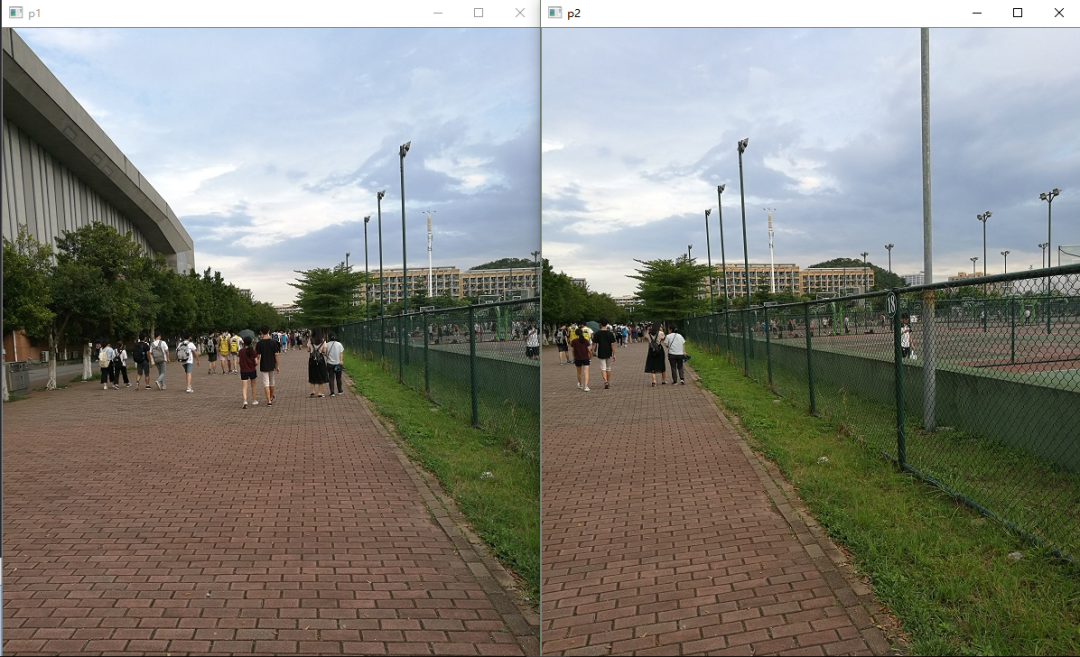
看一下這一組圖片,這組圖片產生了鬼影,為什么?因為兩幅圖中的人物走動了啊!所以要做圖像拼接,盡量保證使用的是靜態(tài)圖片,不要加入一些動態(tài)因素干擾拼接。
opencv自帶的拼接算法stitch
opencv其實自己就有實現圖像拼接的算法,當然效果也是相當好的,但是因為其實現很復雜,而且代碼量很龐大,其實在一些小應用下的拼接有點殺雞用牛刀的感覺。最近在閱讀sticth源碼時,發(fā)現其中有幾個很有意思的地方。
1.opencv stitch選擇的特征檢測方式
一直很好奇opencv stitch算法到底選用了哪個算法作為其特征檢測方式,是ORB,SIFT還是SURF?讀源碼終于看到答案。
#ifdef HAVE_OPENCV_NONFREE
stitcher.setFeaturesFinder(new detail::SurfFeaturesFinder());
#else
stitcher.setFeaturesFinder(new detail::OrbFeaturesFinder());
#endif
在源碼createDefault函數中(默認設置),第一選擇是SURF,第二選擇才是ORB(沒有NONFREE模塊才選),所以既然大牛們這么選擇,必然是經過綜合考慮的,所以應該SURF算法在圖像拼接有著更優(yōu)秀的效果。
2.opencv stitch獲取匹配點的方式
以下代碼是opencv stitch源碼中的特征點提取部分,作者使用了兩次特征點提取的思路:先對圖一進行特征點提取和篩選匹配(1->2),再對圖二進行特征點的提取和匹配(2->1),這跟我們平時的一次提取的思路不同,這種二次提取的思路可以保證更多的匹配點被選中,匹配點越多,findHomography求出的變換越準確。這個思路值得借鑒。
matches_info.matches.clear();
Ptr<flann::IndexParams> indexParams = new flann::KDTreeIndexParams();
Ptr<flann::SearchParams> searchParams = new flann::SearchParams();
if (features2.descriptors.depth() == CV_8U)
{
indexParams->setAlgorithm(cvflann::FLANN_INDEX_LSH);
searchParams->setAlgorithm(cvflann::FLANN_INDEX_LSH);
}
FlannBasedMatcher matcher(indexParams, searchParams);
vector< vector<DMatch> > pair_matches;
MatchesSet matches;
// Find 1->2 matches
matcher.knnMatch(features1.descriptors, features2.descriptors, pair_matches, 2);
for (size_t i = 0; i < pair_matches.size(); ++i)
{
if (pair_matches[i].size() < 2)
continue;
const DMatch& m0 = pair_matches[i][0];
const DMatch& m1 = pair_matches[i][1];
if (m0.distance < (1.f - match_conf_) * m1.distance)
{
matches_info.matches.push_back(m0);
matches.insert(make_pair(m0.queryIdx, m0.trainIdx));
}
}
LOG("\n1->2 matches: " << matches_info.matches.size() << endl);
// Find 2->1 matches
pair_matches.clear();
matcher.knnMatch(features2.descriptors, features1.descriptors, pair_matches, 2);
for (size_t i = 0; i < pair_matches.size(); ++i)
{
if (pair_matches[i].size() < 2)
continue;
const DMatch& m0 = pair_matches[i][0];
const DMatch& m1 = pair_matches[i][1];
if (m0.distance < (1.f - match_conf_) * m1.distance)
if (matches.find(make_pair(m0.trainIdx, m0.queryIdx)) == matches.end())
matches_info.matches.push_back(DMatch(m0.trainIdx, m0.queryIdx, m0.distance));
}
LOG("1->2 & 2->1 matches: " << matches_info.matches.size() << endl);
這里我仿照opencv源碼二次提取特征點的思路對我原有拼接代碼進行改寫,實驗證明獲取的匹配點確實較一次提取要多。
//提取特征點
SiftFeatureDetector Detector(1000); // 海塞矩陣閾值,在這里調整精度,值越大點越少,越精準
vector<KeyPoint> keyPoint1, keyPoint2;
Detector.detect(image1, keyPoint1);
Detector.detect(image2, keyPoint2);
//特征點描述,為下邊的特征點匹配做準備
SiftDescriptorExtractor Descriptor;
Mat imageDesc1, imageDesc2;
Descriptor.compute(image1, keyPoint1, imageDesc1);
Descriptor.compute(image2, keyPoint2, imageDesc2);
FlannBasedMatcher matcher;
vector<vector<DMatch> > matchePoints;
vector<DMatch> GoodMatchePoints;
MatchesSet matches;
vector<Mat> train_desc(1, imageDesc1);
matcher.add(train_desc);
matcher.train();
matcher.knnMatch(imageDesc2, matchePoints, 2);
// Lowe's algorithm,獲取優(yōu)秀匹配點
for (int i = 0; i < matchePoints.size(); i++)
{
if (matchePoints[i][0].distance < 0.4 * matchePoints[i][1].distance)
{
GoodMatchePoints.push_back(matchePoints[i][0]);
matches.insert(make_pair(matchePoints[i][0].queryIdx, matchePoints[i][0].trainIdx));
}
}
cout<<"\n1->2 matches: " << GoodMatchePoints.size() << endl;
#if 1
FlannBasedMatcher matcher2;
matchePoints.clear();
vector<Mat> train_desc2(1, imageDesc2);
matcher2.add(train_desc2);
matcher2.train();
matcher2.knnMatch(imageDesc1, matchePoints, 2);
// Lowe's algorithm,獲取優(yōu)秀匹配點
for (int i = 0; i < matchePoints.size(); i++)
{
if (matchePoints[i][0].distance < 0.4 * matchePoints[i][1].distance)
{
if (matches.find(make_pair(matchePoints[i][0].trainIdx, matchePoints[i][0].queryIdx)) == matches.end())
{
GoodMatchePoints.push_back(DMatch(matchePoints[i][0].trainIdx, matchePoints[i][0].queryIdx, matchePoints[i][0].distance));
}
}
}
cout<<"1->2 & 2->1 matches: " << GoodMatchePoints.size() << endl;
#endif
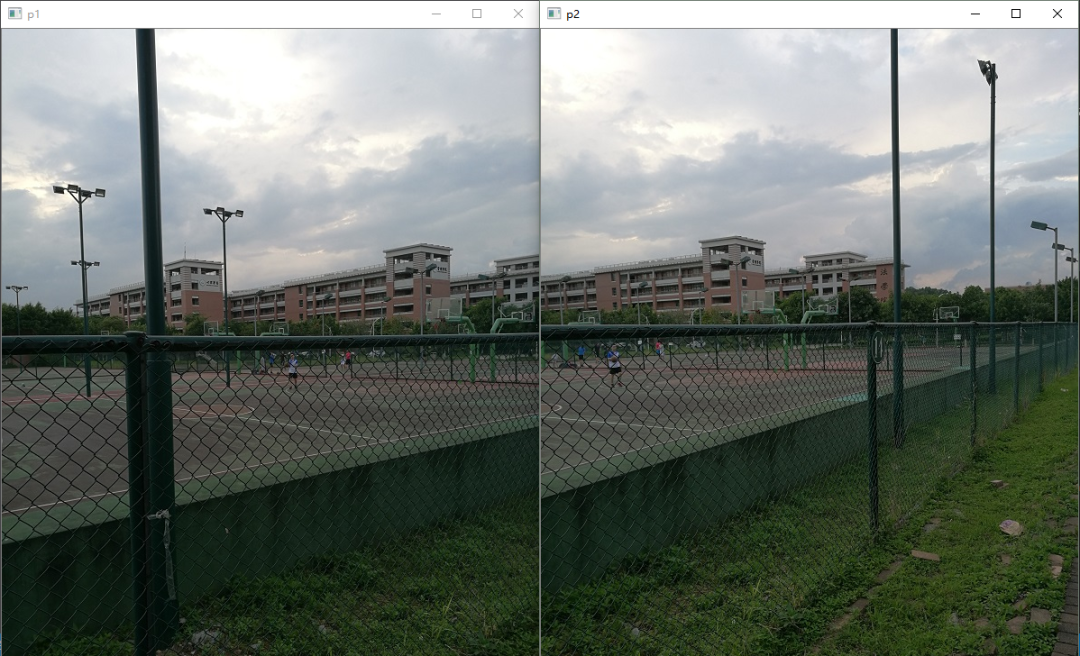
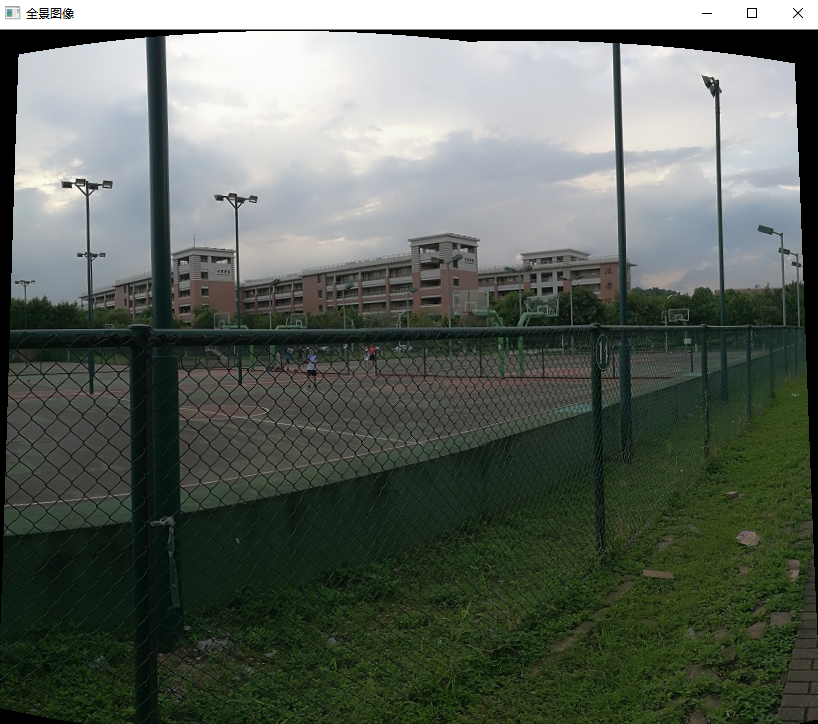
最后再看一下opencv stitch的拼接效果吧~速度雖然比較慢,但是效果還是很好的。
#include <iostream>
#include <opencv2/core/core.hpp>
#include <opencv2/highgui/highgui.hpp>
#include <opencv2/imgproc/imgproc.hpp>
#include <opencv2/stitching/stitcher.hpp>
using namespace std;
using namespace cv;
bool try_use_gpu = false;
vector<Mat> imgs;
string result_name = "dst1.jpg";
int main(int argc, char * argv[])
{
Mat img1 = imread("34.jpg");
Mat img2 = imread("35.jpg");
imshow("p1", img1);
imshow("p2", img2);
if (img1.empty() || img2.empty())
{
cout << "Can't read image" << endl;
return -1;
}
imgs.push_back(img1);
imgs.push_back(img2);
Stitcher stitcher = Stitcher::createDefault(try_use_gpu);
// 使用stitch函數進行拼接
Mat pano;
Stitcher::Status status = stitcher.stitch(imgs, pano);
if (status != Stitcher::OK)
{
cout << "Can't stitch images, error code = " << int(status) << endl;
return -1;
}
imwrite(result_name, pano);
Mat pano2 = pano.clone();
// 顯示源圖像,和結果圖像
imshow("全景圖像", pano);
if (waitKey() == 27)
return 0;
}
—版權聲明—
僅用于學術分享,版權屬于原作者。
若有侵權,請聯系微信號:yiyang-sy 刪除或修改!