使用 Stream API 高逼格優(yōu)化 Java 代碼!
你知道的越多,不知道的就越多,業(yè)余的像一棵小草!
成功路上并不擁擠,因?yàn)閳?jiān)持的人不多。
編輯:業(yè)余草
juejin.cn/post/6844903945005957127
推薦:https://www.xttblog.com/?p=5184
使用Stream API優(yōu)化代碼
Java8的新特性主要是Lambda表達(dá)式和流,當(dāng)流和Lambda表達(dá)式結(jié)合起來(lái)一起使用時(shí),因?yàn)榱魃昝魇教幚頂?shù)據(jù)集合的特點(diǎn),可以讓代碼變得簡(jiǎn)潔易讀
放大招,流如何簡(jiǎn)化代碼
如果有一個(gè)需求,需要對(duì)數(shù)據(jù)庫(kù)查詢到的菜肴進(jìn)行一個(gè)處理:
篩選出卡路里小于400的菜肴 對(duì)篩選出的菜肴進(jìn)行一個(gè)排序 獲取排序后菜肴的名字
菜肴:Dish.java
public class Dish {
    private String name;
    private boolean vegetarian;
    private int calories;
    private Type type;

    // getter and setter
}
Java8以前的實(shí)現(xiàn)方式
private List<String> beforeJava7(List<Dish> dishList) {
        List<Dish> lowCaloricDishes = new ArrayList<>();

        //1.篩選出卡路里小于400的菜肴
        for (Dish dish : dishList) {
            if (dish.getCalories() < 400) {
                lowCaloricDishes.add(dish);
            }
        }

        //2.對(duì)篩選出的菜肴進(jìn)行排序
        Collections.sort(lowCaloricDishes, new Comparator<Dish>() {
            @Override
            public int compare(Dish o1, Dish o2) {
                return Integer.compare(o1.getCalories(), o2.getCalories());
            }
        });

        //3.獲取排序后菜肴的名字
        List<String> lowCaloricDishesName = new ArrayList<>();
        for (Dish d : lowCaloricDishes) {
            lowCaloricDishesName.add(d.getName());
        }

        return lowCaloricDishesName;
    }
Java8之后的實(shí)現(xiàn)方式
 private List<String> afterJava8(List<Dish> dishList) {
        return dishList.stream()
                .filter(d -> d.getCalories() < 400)  //篩選出卡路里小于400的菜肴
                .sorted(comparing(Dish::getCalories))  //根據(jù)卡路里進(jìn)行排序
                .map(Dish::getName)  //提取菜肴名稱
                .collect(Collectors.toList()); //轉(zhuǎn)換為L(zhǎng)ist
    }
不拖泥帶水,一氣呵成,原來(lái)需要寫24代碼實(shí)現(xiàn)的功能現(xiàn)在只需5行就可以完成了

高高興興寫完需求這時(shí)候又有新需求了,新需求如下:
對(duì)數(shù)據(jù)庫(kù)查詢到的菜肴根據(jù)菜肴種類進(jìn)行分類,返回一個(gè) Map<Type, List<Dish>>的結(jié)果
這要是放在jdk8之前肯定會(huì)頭皮發(fā)麻
Java8以前的實(shí)現(xiàn)方式
private static Map<Type, List<Dish>> beforeJdk8(List<Dish> dishList) {
    Map<Type, List<Dish>> result = new HashMap<>();

    for (Dish dish : dishList) {
        //不存在則初始化
        if (result.get(dish.getType())==null) {
            List<Dish> dishes = new ArrayList<>();
            dishes.add(dish);
            result.put(dish.getType(), dishes);
        } else {
            //存在則追加
            result.get(dish.getType()).add(dish);
        }
    }

    return result;
}
還好jdk8有Stream,再也不用擔(dān)心復(fù)雜集合處理需求
Java8以后的實(shí)現(xiàn)方式
private static Map<Type, List<Dish>> afterJdk8(List<Dish> dishList) {
    return dishList.stream().collect(groupingBy(Dish::getType));
}
又是一行代碼解決了需求,忍不住大喊Stream API牛批 看到流的強(qiáng)大功能了吧,接下來(lái)將詳細(xì)介紹流

什么是流
流是從支持?jǐn)?shù)據(jù)處理操作的源生成的元素序列,源可以是數(shù)組、文件、集合、函數(shù)。流不是集合元素,它不是數(shù)據(jù)結(jié)構(gòu)并不保存數(shù)據(jù),它的主要目的在于計(jì)算
如何生成流
生成流的方式主要有五種
通過集合生成,應(yīng)用中最常用的一種
List<Integer> integerList = Arrays.asList(1, 2, 3, 4, 5);
Stream<Integer> stream = integerList.stream();
通過集合的stream方法生成流
通過數(shù)組生成
  int[] intArr = new int[]{1, 2, 3, 4, 5};
  IntStream stream = Arrays.stream(intArr);
通過Arrays.stream方法生成流,并且該方法生成的流是數(shù)值流【即IntStream】而不是Stream<Integer>。補(bǔ)充一點(diǎn)使用數(shù)值流可以避免計(jì)算過程中拆箱裝箱,提高性能。Stream API提供了mapToInt、mapToDouble、mapToLong三種方式將對(duì)象流【即Stream<T>】轉(zhuǎn)換成對(duì)應(yīng)的數(shù)值流,同時(shí)提供了boxed方法將數(shù)值流轉(zhuǎn)換為對(duì)象流
通過值生成
Stream<Integer> stream = Stream.of(1, 2, 3, 4, 5);
通過Stream的of方法生成流,通過Stream的empty方法可以生成一個(gè)空流
通過文件生成
Stream<String> lines = Files.lines(Paths.get("data.txt"), Charset.defaultCharset())
通過Files.line方法得到一個(gè)流,并且得到的每個(gè)流是給定文件中的一行
通過函數(shù)生成 提供了
iterate
和
generate
兩個(gè)靜態(tài)方法從函數(shù)中生成流
iterator
 Stream<Integer> stream = Stream.iterate(0, n -> n + 2).limit(5);

 iterate
方法接受兩個(gè)參數(shù),第一個(gè)為初始化值,第二個(gè)為進(jìn)行的函數(shù)操作,因?yàn)?/p>
iterator
生成的流為無(wú)限流,通過
limit
方法對(duì)流進(jìn)行了截?cái)啵簧?個(gè)偶數(shù)
generator
  Stream<Double> stream = Stream.generate(Math::random).limit(5);

  generate
方法接受一個(gè)參數(shù),方法參數(shù)類型為
Supplier<T>
,由它為流提供值。
generate
生成的流也是無(wú)限流,因此通過
limit
對(duì)流進(jìn)行了截?cái)?/p>
流的操作類型
流的操作類型主要分為兩種
中間操作 一個(gè)流可以后面跟隨零個(gè)或多個(gè)中間操作。其目的主要是打開流,做出某種程度的數(shù)據(jù)映射/過濾,然后返回一個(gè)新的流,交給下一個(gè)操作使用。這類操作都是惰性化的,僅僅調(diào)用到這類方法,并沒有真正開始流的遍歷,真正的遍歷需等到終端操作時(shí),常見的中間操作有下面即將介紹的 filter、map等終端操作 一個(gè)流有且只能有一個(gè)終端操作,當(dāng)這個(gè)操作執(zhí)行后,流就被關(guān)閉了,無(wú)法再被操作,因此一個(gè)流只能被遍歷一次,若想在遍歷需要通過源數(shù)據(jù)在生成流。終端操作的執(zhí)行,才會(huì)真正開始流的遍歷。如下面即將介紹的 count、collect等
流使用
流的使用將分為終端操作和中間操作進(jìn)行介紹
中間操作
filter篩選
 List<Integer> integerList = Arrays.asList(1, 1, 2, 3, 4, 5);
 Stream<Integer> stream = integerList.stream().filter(i -> i > 3);
通過使用filter方法進(jìn)行條件篩選,filter的方法參數(shù)為一個(gè)條件
distinct去除重復(fù)元素
List<Integer> integerList = Arrays.asList(1, 1, 2, 3, 4, 5);
Stream<Integer> stream = integerList.stream().distinct();
通過distinct方法快速去除重復(fù)的元素
limit返回指定流個(gè)數(shù)
 List<Integer> integerList = Arrays.asList(1, 1, 2, 3, 4, 5);
 Stream<Integer> stream = integerList.stream().limit(3);
通過limit方法指定返回流的個(gè)數(shù),limit的參數(shù)值必須>=0,否則將會(huì)拋出異常
skip跳過流中的元素
 List<Integer> integerList = Arrays.asList(1, 1, 2, 3, 4, 5);
 Stream<Integer> stream = integerList.stream().skip(2);
通過skip方法跳過流中的元素,上述例子跳過前兩個(gè)元素,所以打印結(jié)果為2,3,4,5,skip的參數(shù)值必須>=0,否則將會(huì)拋出異常
map流映射
所謂流映射就是將接受的元素映射成另外一個(gè)元素
List<String> stringList = Arrays.asList("Java 8", "Lambdas",  "In", "Action");
Stream<Integer> stream = stringList.stream().map(String::length);
通過map方法可以完成映射,該例子完成中String -> Integer的映射,之前上面的例子通過map方法完成了Dish->String的映射
flatMap流轉(zhuǎn)換
將一個(gè)流中的每個(gè)值都轉(zhuǎn)換為另一個(gè)流
List<String> wordList = Arrays.asList("Hello", "World");
List<String> strList = wordList.stream()
        .map(w -> w.split(" "))
        .flatMap(Arrays::stream)
        .distinct()
        .collect(Collectors.toList());
map(w -> w.split(" "))的返回值為Stream<String[]>,我們想獲取Stream<String>,可以通過flatMap方法完成Stream<String[]> ->Stream<String>的轉(zhuǎn)換
元素匹配
提供了三種匹配方式
allMatch匹配所有
  List<Integer> integerList = Arrays.asList(1, 2, 3, 4, 5);
  if (integerList.stream().allMatch(i -> i > 3)) {
      System.out.println("值都大于3");
  }
通過allMatch方法實(shí)現(xiàn)
anyMatch匹配其中一個(gè)
  List<Integer> integerList = Arrays.asList(1, 2, 3, 4, 5);
  if (integerList.stream().anyMatch(i -> i > 3)) {
      System.out.println("存在大于3的值");
  }
等同于
for (Integer i : integerList) {
    if (i > 3) {
        System.out.println("存在大于3的值");
        break;
    }
}
存在大于3的值則打印,java8中通過anyMatch方法實(shí)現(xiàn)這個(gè)功能
noneMatch全部不匹配
  List<Integer> integerList = Arrays.asList(1, 2, 3, 4, 5);
  if (integerList.stream().noneMatch(i -> i > 3)) {
      System.out.println("值都小于3");
  }
通過
noneMatch
方法實(shí)現(xiàn)
終端操作
統(tǒng)計(jì)流中元素個(gè)數(shù)
通過count
  List<Integer> integerList = Arrays.asList(1, 2, 3, 4, 5);
  Long result = integerList.stream().count();
通過使用count方法統(tǒng)計(jì)出流中元素個(gè)數(shù)
通過counting
  List<Integer> integerList = Arrays.asList(1, 2, 3, 4, 5);
  Long result = integerList.stream().collect(counting());
最后一種統(tǒng)計(jì)元素個(gè)數(shù)的方法在與collect聯(lián)合使用的時(shí)候特別有用
查找
提供了兩種查找方式
findFirst查找第一個(gè)
  List<Integer> integerList = Arrays.asList(1, 2, 3, 4, 5);
  Optional<Integer> result = integerList.stream().filter(i -> i > 3).findFirst();
通過findFirst方法查找到第一個(gè)大于三的元素并打印
findAny隨機(jī)查找一個(gè)
  List<Integer> integerList = Arrays.asList(1, 2, 3, 4, 5);
  Optional<Integer> result = integerList.stream().filter(i -> i > 3).findAny();
通過findAny方法查找到其中一個(gè)大于三的元素并打印,因?yàn)閮?nèi)部進(jìn)行優(yōu)化的原因,當(dāng)找到第一個(gè)滿足大于三的元素時(shí)就結(jié)束,該方法結(jié)果和findFirst方法結(jié)果一樣。提供findAny方法是為了更好的利用并行流,findFirst方法在并行上限制更多【本篇文章將不介紹并行流】
reduce將流中的元素組合起來(lái)
假設(shè)我們對(duì)一個(gè)集合中的值進(jìn)行求和
jdk8之前
  int sum = 0;
  for (int i : integerList) {
  sum += i;
  }
jdk8之后通過reduce進(jìn)行處理
int sum = integerList.stream().reduce(0, (a, b) -> (a + b));
一行就可以完成,還可以使用方法引用簡(jiǎn)寫成:
int sum = integerList.stream().reduce(0, Integer::sum);
reduce接受兩個(gè)參數(shù),一個(gè)初始值這里是0,一個(gè)BinaryOperator<T> accumulator 來(lái)將兩個(gè)元素結(jié)合起來(lái)產(chǎn)生一個(gè)新值, 另外reduce方法還有一個(gè)沒有初始化值的重載方法
獲取流中最小最大值
通過min/max獲取最小最大值
  Optional<Integer> min = menu.stream().map(Dish::getCalories).min(Integer::compareTo);
  Optional<Integer> max = menu.stream().map(Dish::getCalories).max(Integer::compareTo);
也可以寫成:
OptionalInt min = menu.stream().mapToInt(Dish::getCalories).min();
OptionalInt max = menu.stream().mapToInt(Dish::getCalories).max();
min
獲取流中最小值,
max
獲取流中最大值,方法參數(shù)為
Comparator<? super T> comparator
通過minBy/maxBy獲取最小最大值
  Optional<Integer> min = menu.stream().map(Dish::getCalories).collect(minBy(Integer::compareTo));
  Optional<Integer> max = menu.stream().map(Dish::getCalories).collect(maxBy(Integer::compareTo));
minBy
獲取流中最小值,
maxBy
獲取流中最大值,方法參數(shù)為
Comparator<? super T> comparator
通過reduce獲取最小最大值
  Optional<Integer> min = menu.stream().map(Dish::getCalories).reduce(Integer::min);
  Optional<Integer> max = menu.stream().map(Dish::getCalories).reduce(Integer::max);
求和
通過summingInt
int sum = menu.stream().collect(summingInt(Dish::getCalories));
如果數(shù)據(jù)類型為double、long,則通過summingDouble、summingLong方法進(jìn)行求和
通過reduce
int sum = menu.stream().map(Dish::getCalories).reduce(0, Integer::sum);
通過sum
int sum = menu.stream().mapToInt(Dish::getCalories).sum();
在上面求和、求最大值、最小值的時(shí)候,對(duì)于相同操作有不同的方法可以選擇執(zhí)行。可以選擇collect、reduce、min/max/sum方法,推薦使用min、max、sum方法。因?yàn)樗詈?jiǎn)潔易讀,同時(shí)通過mapToInt將對(duì)象流轉(zhuǎn)換為數(shù)值流,避免了裝箱和拆箱操作
通過averagingInt求平均值
double average = menu.stream().collect(averagingInt(Dish::getCalories));
如果數(shù)據(jù)類型為double、long,則通過averagingDouble、averagingLong方法進(jìn)行求平均
通過summarizingInt同時(shí)求總和、平均值、最大值、最小值
IntSummaryStatistics intSummaryStatistics = menu.stream().collect(summarizingInt(Dish::getCalories));
double average = intSummaryStatistics.getAverage();  //獲取平均值
int min = intSummaryStatistics.getMin();  //獲取最小值
int max = intSummaryStatistics.getMax();  //獲取最大值
long sum = intSummaryStatistics.getSum();  //獲取總和
如果數(shù)據(jù)類型為double、long,則通過summarizingDouble、summarizingLong方法
通過foreach進(jìn)行元素遍歷
List<Integer> integerList = Arrays.asList(1, 2, 3, 4, 5);
integerList.stream().forEach(System.out::println);
而在jdk8之前實(shí)現(xiàn)遍歷:
for (int i : integerList) {
    System.out.println(i);
}
jdk8之后遍歷元素來(lái)的更為方便,原來(lái)的for-each直接通過foreach方法就能實(shí)現(xiàn)了
返回集合
List<String> strings = menu.stream().map(Dish::getName).collect(toList());
Set<String> sets = menu.stream().map(Dish::getName).collect(toSet());
只舉例了一部分,還有很多其他方法 jdk8之前
 List<String> stringList = new ArrayList<>();
    Set<String> stringSet = new HashSet<>();
    for (Dish dish : menu) {
        stringList.add(dish.getName());
        stringSet.add(dish.getName());
}
通過遍歷和返回集合的使用發(fā)現(xiàn)流只是把原來(lái)的外部迭代放到了內(nèi)部進(jìn)行,這也是流的主要特點(diǎn)之一。內(nèi)部迭代可以減少好多代碼量
通過joining拼接流中的元素
String result = menu.stream().map(Dish::getName).collect(Collectors.joining(", "));
默認(rèn)如果不通過map方法進(jìn)行映射處理拼接的toString方法返回的字符串,joining的方法參數(shù)為元素的分界符,如果不指定生成的字符串將是一串的,可讀性不強(qiáng)
進(jìn)階通過groupingBy進(jìn)行分組
Map<Type, List<Dish>> result = dishList.stream().collect(groupingBy(Dish::getType));
在collect方法中傳入groupingBy進(jìn)行分組,其中groupingBy的方法參數(shù)為分類函數(shù)。還可以通過嵌套使用groupingBy進(jìn)行多級(jí)分類
Map<Type, List<Dish>> result = menu.stream().collect(groupingBy(Dish::getType,
        groupingBy(dish -> {
            if (dish.getCalories() <= 400) return CaloricLevel.DIET;
                else if (dish.getCalories() <= 700) return CaloricLevel.NORMAL;
                else return CaloricLevel.FAT;
        })));
進(jìn)階通過partitioningBy進(jìn)行分區(qū)
分區(qū)是特殊的分組,它分類依據(jù)是true和false,所以返回的結(jié)果最多可以分為兩組
Map<Boolean, List<Dish>> result = menu.stream().collect(partitioningBy(Dish :: isVegetarian))
等同于
Map<Boolean, List<Dish>> result = menu.stream().collect(groupingBy(Dish :: isVegetarian))
這個(gè)例子可能并不能看出分區(qū)和分類的區(qū)別,甚至覺得分區(qū)根本沒有必要,換個(gè)明顯一點(diǎn)的例子:
List<Integer> integerList = Arrays.asList(1, 2, 3, 4, 5);
Map<Boolean, List<Integer>> result = integerList.stream().collect(partitioningBy(i -> i < 3));
返回值的鍵仍然是布爾類型,但是它的分類是根據(jù)范圍進(jìn)行分類的,分區(qū)比較適合處理根據(jù)范圍進(jìn)行分類
總結(jié)
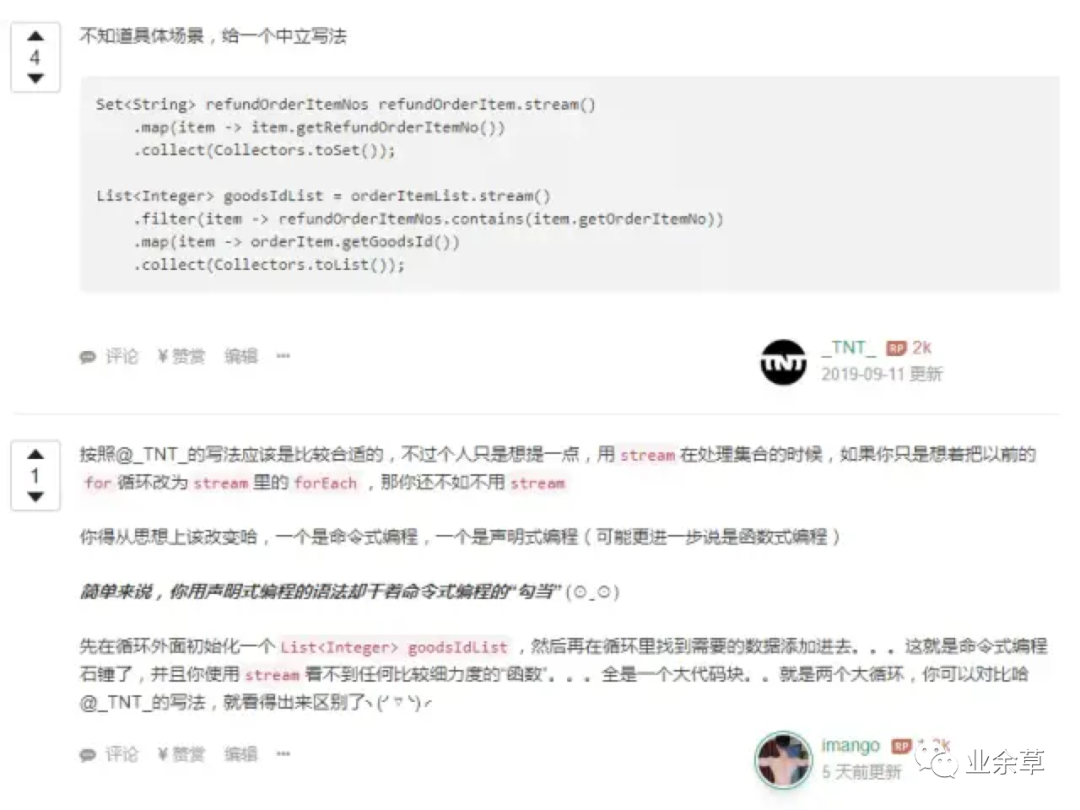
通過使用Stream API可以簡(jiǎn)化代碼,同時(shí)提高了代碼可讀性,趕緊在項(xiàng)目里用起來(lái)。講道理在沒學(xué)Stream API之前,誰(shuí)要是給我在應(yīng)用里寫很多Lambda,Stream API,飛起就想給他一腳。我想,我現(xiàn)在可能愛上他了【嘻嘻】。同時(shí)使用的時(shí)候注意不要將聲明式和命令式編程混合使用,前幾天刷segment刷到一條:
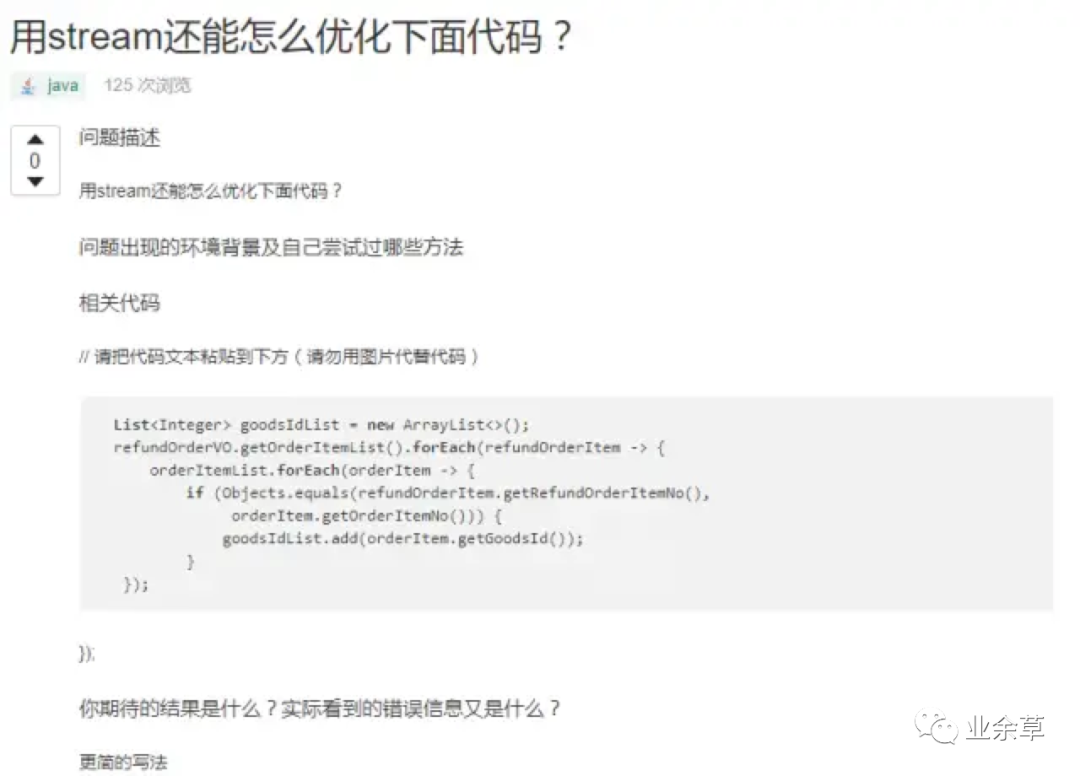
imango老哥說的很對(duì),別用聲明式編程的語(yǔ)法干命令式編程的勾