
服務(wù)注冊(cè)發(fā)現(xiàn)之服務(wù)注冊(cè)中心設(shè)計(jì)原理與Golang實(shí)現(xiàn)
內(nèi)容提要
通過本文您將 get 如下知識(shí):
微服務(wù)為什么引入服務(wù)注冊(cè)發(fā)現(xiàn) 服務(wù)注冊(cè)中心設(shè)計(jì)原理
Golang 代碼實(shí)現(xiàn)服務(wù)注冊(cè)中心
為什么引入服務(wù)注冊(cè)發(fā)現(xiàn)
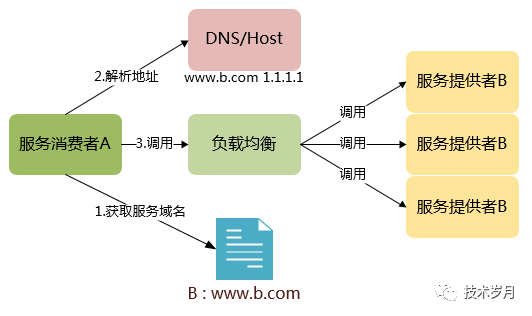
(服務(wù)域名配置模式)
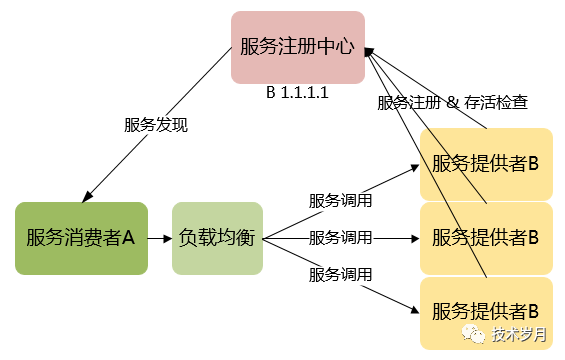
(服務(wù)注冊(cè)發(fā)現(xiàn)模式)
注冊(cè)中心實(shí)現(xiàn)原理
設(shè)計(jì)思想
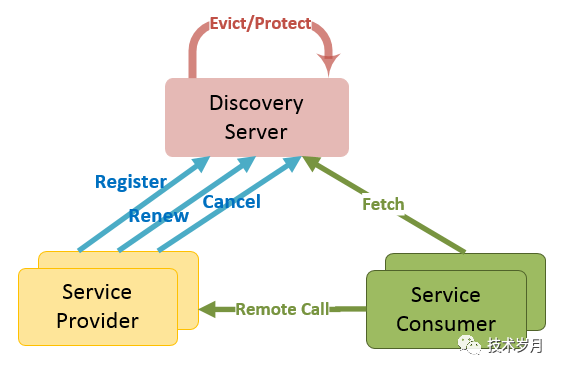
首先進(jìn)行功能需求分析,作為服務(wù)注冊(cè)中心,要實(shí)現(xiàn)如下基本功能:
服務(wù)注冊(cè):接受來自服務(wù)提交的注冊(cè)信息,并保存起來 服務(wù)下線:接受服務(wù)的主動(dòng)下線請(qǐng)求,并將服務(wù)從注冊(cè)信息表中刪除
服務(wù)獲取:調(diào)用方從注冊(cè)中心拉取服務(wù)信息
服務(wù)續(xù)約:服務(wù)健康檢查,服務(wù)通過心跳保持(主動(dòng)續(xù)約)告知注冊(cè)中心服務(wù)可用
服務(wù)剔除:注冊(cè)中心將長(zhǎng)時(shí)間不續(xù)約的服務(wù)實(shí)例從注冊(cè)信息表中刪除
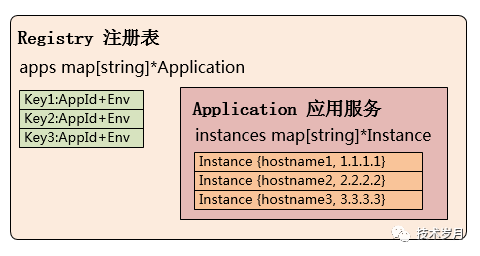
構(gòu)造注冊(cè)表
type Registry struct {
    apps map[string]*Application
    lock sync.RWMutex
}
apps 記錄應(yīng)用服務(wù) Application 的信息,使用 map 結(jié)構(gòu),key 為應(yīng)用服務(wù)的唯一標(biāo)識(shí),值為應(yīng)用服務(wù)結(jié)構(gòu)類型 lock 讀寫鎖,保障并發(fā)讀寫安全
type Application struct {
    appid           string
    instances       map[string]*Instance
    latestTimestamp int64
    lock            sync.RWMutex
}
appid 記錄應(yīng)用服務(wù)唯一標(biāo)識(shí) lock 讀寫鎖,保障并發(fā)讀寫安全
latestTimestamp 記錄更新時(shí)間
instances 記錄服務(wù)實(shí)例 Instance 的信息,使用 map 結(jié)構(gòu),key 為實(shí)例的 hostname (唯一標(biāo)識(shí)),值為實(shí)例結(jié)構(gòu)類型
type Instance struct {
    Env      string   `json:"env"`
    AppId    string   `json:"appid"`
    Hostname string   `json:"hostname"`
    Addrs    []string `json:"addrs"`
    Version  string   `json:"version"`
    Status   uint32   `json:"status"`

    RegTimestamp    int64 `json:"reg_timestamp"`
    UpTimestamp     int64 `json:"up_timestamp"`
    RenewTimestamp  int64 `json:"renew_timestamp"`
    DirtyTimestamp  int64 `json:"dirty_timestamp"`
    LatestTimestamp int64 `json:"latest_timestamp"`
}
Env 服務(wù)環(huán)境標(biāo)識(shí),如 online、dev、test AppId 應(yīng)用服務(wù)的唯一標(biāo)識(shí)
Hostname 服務(wù)實(shí)例的唯一標(biāo)識(shí)
Addrs 服務(wù)實(shí)例的地址,可以是 http 或 rpc 地址,多個(gè)地址可以維護(hù)數(shù)組
Version 服務(wù)實(shí)例版本
Status 服務(wù)實(shí)例狀態(tài),用于控制上下線
xxTimestamp 依次記錄服務(wù)實(shí)例注冊(cè)時(shí)間戳,上線時(shí)間戳,最近續(xù)約時(shí)間戳,臟時(shí)間戳(后面解釋),最后更新時(shí)間戳
服務(wù)注冊(cè)
功能目標(biāo):接受來自服務(wù)提交的注冊(cè)信息,并保存到注冊(cè)表中。先初始化注冊(cè)表 NewRegistry() ,根據(jù)提交信息構(gòu)建實(shí)例 NewInstance(),然后進(jìn)行注冊(cè)寫入。
func NewRegistry() *Registry {
    registry := &Registry{
        apps: make(map[string]*Application),
    }
    return registry
}
func NewInstance(req *RequestRegister) *Instance {
    now := time.Now().UnixNano()
    instance := &Instance{
        Env:             req.Env,
        AppId:           req.AppId,
        Hostname:        req.Hostname,
        Addrs:           req.Addrs,
        Version:         req.Version,
        Status:          req.Status,
        RegTimestamp:    now,
        UpTimestamp:     now,
        RenewTimestamp:  now,
        DirtyTimestamp:  now,
        LatestTimestamp: now,
    }
    return instance
}
r := NewRegistry()
instance := NewInstance(&req)
r.Register(instance, req.LatestTimestamp)
注冊(cè)時(shí),先從 apps 中查找是否已注冊(cè)過,根據(jù)唯一標(biāo)識(shí) key = appid + env 確定。如果沒有注冊(cè)過,先新建應(yīng)用 app,然后將 instance 加入到 app 中,最后 app 放入注冊(cè)表中。這里分別使用了讀鎖和寫鎖,保障數(shù)據(jù)安全同時(shí),盡量減少鎖時(shí)間和鎖搶占影響。
func (r *Registry) Register(instance *Instance, latestTimestamp int64) (*Application, *errcode.Error) {
    key := getKey(instance.AppId, instance.Env)
    r.lock.RLock()
    app, ok := r.apps[key]
    r.lock.RUnlock()
    if !ok { //new app
        app = NewApplication(instance.AppId)
    }
    //add instance
    _, isNew := app.AddInstance(instance, latestTimestamp)
    if isNew { //todo }
    //add into registry apps
    r.lock.Lock()
    r.apps[key] = app
    r.lock.Unlock()
    return app, nil
}
新建應(yīng)用服務(wù) app,初始化 instances
func NewApplication(appid string) *Application {
    return &Application{
        appid:     appid,
        instances: make(map[string]*Instance),
    }
}
將服務(wù)主機(jī)實(shí)例 instance 加入應(yīng)用 app 中,注意判斷是否已存在,存在根據(jù)臟時(shí)間戳 DirtyTimestamp 比對(duì),是否進(jìn)行替換,添加實(shí)例信息,更新最新時(shí)間 latestTimestamp ,并返回實(shí)例。
func (app *Application) AddInstance(in *Instance, latestTimestamp int64) (*Instance, bool) {
    app.lock.Lock()
    defer app.lock.Unlock()
    appIns, ok := app.instances[in.Hostname]
    if ok { //exist
        in.UpTimestamp = appIns.UpTimestamp
        //dirtytimestamp
        if in.DirtyTimestamp < appIns.DirtyTimestamp {
            log.Println("register exist dirty timestamp")
            in = appIns
        }
    }
    //add or update instances
    app.instances[in.Hostname] = in
    app.upLatestTimestamp(latestTimestamp)
    returnIns := new(Instance)
    *returnIns = *in
    return returnIns, !ok
}
返回 !ok (isNew)表明,本次服務(wù)注冊(cè)時(shí),實(shí)例為新增還是替換,用來維護(hù)服務(wù)健康信息(后面會(huì)再次提到)。
var req = &model.RequestRegister{AppId: "com.xx.testapp", Hostname: "myhost", Addrs: []string{"http://testapp.xx.com/myhost"}, Status: 1}
func TestRegister(t *testing.T) {
    r := model.NewRegistry()
    instance := model.NewInstance(req)
    app, _ := r.Register(instance, req.LatestTimestamp)
    t.Log(app)
}

服務(wù)發(fā)現(xiàn)
功能目標(biāo):查找已注冊(cè)的服務(wù)獲取信息,可以指定條件查找,也可以全量查找。這里以指定過濾條件 appid 、env 和 status 為例。
r := model.NewRegistry()
fetchData, err := r.Fetch(req.Env, req.AppId, req.Status, 0)
根據(jù) appid 和 env 組合成 key,然后從注冊(cè)表的 apps 中獲取應(yīng)用 app,然后通過 app 獲取服務(wù)實(shí)例 GetInstance()
func (r *Registry) Fetch(env, appid string, status uint32, latestTime int64) (*FetchData, *errcode.Error) {
    app, ok := r.getApplication(appid, env)
    if !ok {
        return nil, errcode.NotFound
    }
    return app.GetInstance(status, latestTime)
}
func (r *Registry) getApplication(appid, env string) (*Application, bool) {
    key := getKey(appid, env)
    r.lock.RLock()
    app, ok := r.apps[key]
    r.lock.RUnlock()
    return app, ok
}
根據(jù) app 獲取所有應(yīng)用實(shí)例,并用 status 過濾,這里對(duì)返回結(jié)果 instances 中的 Addr 進(jìn)行了拷貝返回一個(gè)新的切片。
func (app *Application) GetInstance(status uint32, latestTime int64) (*FetchData, *errcode.Error) {
    app.lock.RLock()
    defer app.lock.RUnlock()
    if latestTime >= app.latestTimestamp {
        return nil, errcode.NotModified
    }
    fetchData := FetchData{
        Instances:       make([]*Instance, 0),
        LatestTimestamp: app.latestTimestamp,
    }
    var exists bool
    for _, instance := range app.instances {
        if status&instance.Status > 0 {
            exists = true
            newInstance := copyInstance(instance)
            fetchData.Instances = append(fetchData.Instances, newInstance)
        }
    }
    if !exists {
        return nil, errcode.NotFound
    }
    return &fetchData, nil
}
//deep copy
func copyInstance(src *Instance) *Instance {
    dst := new(Instance)
    *dst = *src
    //copy addrs
    dst.Addrs = make([]string, len(src.Addrs))
    for i, addr := range src.Addrs {
        dst.Addrs[i] = addr
    }
    return dst
}
編寫測(cè)試用例,先注冊(cè)再獲取,看到可以正常獲取到信息。

服務(wù)下線
功能目標(biāo):接受服務(wù)的下線請(qǐng)求,并將服務(wù)從注冊(cè)信息列表中刪除。通過傳入 env, appid, hostname 三要素信息進(jìn)行對(duì)應(yīng)服務(wù)實(shí)例的取消。
r := model.NewRegistry()
r.Cancel(req.Env, req.AppId, req.Hostname, 0)
根據(jù) appid 和 env 找到對(duì)象的 app,然后刪除 app 中對(duì)應(yīng)的 hostname。如果 hostname 后 app.instances 為空,那么將 app 從注冊(cè)表中清除。
func (r *Registry) Cancel(env, appid, hostname string, latestTimestamp int64) (*Instance, *errcode.Error) {
    log.Println("action cancel...")
    //find app
    app, ok := r.getApplication(appid, env)
    if !ok {
        return nil, errcode.NotFound
    }
    instance, ok, insLen := app.Cancel(hostname, latestTimestamp)
    if !ok {
        return nil, errcode.NotFound
    }
    //if instances is empty, delete app from apps
    if insLen == 0 {
        r.lock.Lock()
        delete(r.apps, getKey(appid, env))
        r.lock.Unlock()
    }
    return instance, nil
}
func (app *Application) Cancel(hostname string, latestTimestamp int64) (*Instance, bool, int) {
    newInstance := new(Instance)
    app.lock.Lock()
    defer app.lock.Unlock()
    appIn, ok := app.instances[hostname]
    if !ok {
        return nil, ok, 0
    }
    //delete hostname
    delete(app.instances, hostname)
    appIn.LatestTimestamp = latestTimestamp
    app.upLatestTimestamp(latestTimestamp)
    *newInstance = *appIn
    return newInstance, true, len(app.instances)
}
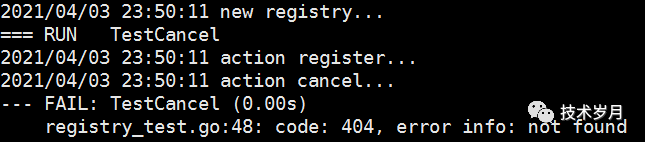
編寫測(cè)試用例先注冊(cè),再取消,然后獲取信息,發(fā)現(xiàn) 404 not found。
服務(wù)續(xù)約
功能目標(biāo):實(shí)現(xiàn)服務(wù)的健康檢查機(jī)制,服務(wù)注冊(cè)后,如果沒有取消,那么就應(yīng)該在注冊(cè)表中,可以隨時(shí)查到,如果某個(gè)服務(wù)實(shí)例掛了,能否自動(dòng)的從注冊(cè)表中刪除,保障注冊(cè)表中的服務(wù)實(shí)例都是正常的。
通常有兩種方式做法:注冊(cè)中心(服務(wù)端)主動(dòng)探活,通過請(qǐng)求指定接口得到正常響應(yīng)來確認(rèn);服務(wù)實(shí)例(客戶端)主動(dòng)上報(bào),調(diào)用續(xù)約接口進(jìn)行續(xù)約,續(xù)約設(shè)有時(shí)效 TTL (time to live)。兩種方式各有優(yōu)缺點(diǎn),大家可以思考一下,不同的注冊(cè)中心也采用了不同的方式,這里選型第二種方案。
r := model.NewRegistry()
r.Renew(req.Env, req.AppId, req.Hostname)
根據(jù) appid 和 env 找到對(duì)象的 app,再根據(jù) hostname 找到對(duì)應(yīng)主機(jī)實(shí)例,更新其 RenewTimestamp 為當(dāng)前時(shí)間。
func (r *Registry) Renew(env, appid, hostname string) (*Instance, *errcode.Error) {
    app, ok := r.getApplication(appid, env)
    if !ok {
        return nil, errcode.NotFound
    }
    in, ok := app.Renew(hostname)
    if !ok {
        return nil, errcode.NotFound
    }
    return in, nil
}
func (app *Application) Renew(hostname string) (*Instance, bool) {
    app.lock.Lock()
    defer app.lock.Unlock()
    appIn, ok := app.instances[hostname]
    if !ok {
        return nil, ok
    }
    appIn.RenewTimestamp = time.Now().UnixNano()
    return copyInstance(appIn), true
}
服務(wù)剔除
功能目標(biāo):既然有服務(wù)定期續(xù)約,那么對(duì)應(yīng)的如果服務(wù)沒有續(xù)約呢?服務(wù)如果下線可以使用 Cancel 進(jìn)行取消,但如果服務(wù)因?yàn)榫W(wǎng)絡(luò)故障或掛了導(dǎo)致不能提供服務(wù),那么可以通過檢查它是否按時(shí)續(xù)約來判斷,把 TTL 達(dá)到閾值的服務(wù)實(shí)例剔除(Cancel),實(shí)現(xiàn)服務(wù)的被動(dòng)下線。
func NewRegistry() *Registry {
++ go r.evictTask()
}
func (r *Registry) evictTask() {
    ticker := time.Tick(configs.CheckEvictInterval)
    for {
        select {
        case <-ticker:
            r.evict()
        }
    }
}
遍歷注冊(cè)表的所有 apps,然后再遍歷其中的 instances,如果當(dāng)前時(shí)間減去實(shí)例上一次續(xù)約時(shí)間 instance.RenewTimestamp 達(dá)到閾值(默認(rèn) 90 秒),那么將其加入過期隊(duì)列中。這里并沒有直接將過期隊(duì)列所有實(shí)例都取消,考慮 GC 以及 本地時(shí)間漂移的因素,設(shè)定了一個(gè)剔除的上限 evictionLimit,隨機(jī)剔除一些過期實(shí)例。
func (r *Registry) evict() {
    now := time.Now().UnixNano()
    var expiredInstances []*Instance
    apps := r.getAllApplications()
    var registryLen int
    for _, app := range apps {
        registryLen += app.GetInstanceLen()
        allInstances := app.GetAllInstances()
        for _, instance := range allInstances {
            if now-instance.RenewTimestamp > int64(configs.InstanceExpireDuration) {
                expiredInstances = append(expiredInstances, instance)
            }
        }
    }
    evictionLimit := registryLen - int(float64(registryLen)*configs.SelfProtectThreshold)
    expiredLen := len(expiredInstances)
    if expiredLen > evictionLimit {
        expiredLen = evictionLimit
    }

    if expiredLen == 0 {
        return
    }
    for i := 0; i < expiredLen; i++ {
        j := i + rand.Intn(len(expiredInstances)-i)
        expiredInstances[i], expiredInstances[j] = expiredInstances[j], expiredInstances[i]
        expiredInstance := expiredInstances[i]
        r.Cancel(expiredInstance.Env, expiredInstance.AppId, expiredInstance.Hostname, now)
    }
}
剔除過期時(shí),采用了 Knuth-Shuffle 算法,也叫公平洗牌算法來實(shí)現(xiàn)隨機(jī)剔除。當(dāng)然如果 expiredLen <= evictionLimit,隨機(jī)剔除的意義不大,如果前者大于后者,隨機(jī)剔除能最大程度保障,剔除的實(shí)例均勻分散到所有應(yīng)用實(shí)例中,降低某服務(wù)被全部清空的風(fēng)險(xiǎn)。公平洗牌算法實(shí)現(xiàn)也比較簡(jiǎn)單,循環(huán)遍歷過期列表,將當(dāng)前數(shù)與特定隨機(jī)數(shù)交換,和我們打牌時(shí)兩兩交換洗牌過程類似,它實(shí)現(xiàn)了 O(n) 的時(shí)間復(fù)雜度,由 Knuth 發(fā)明。
自我保護(hù)
功能目標(biāo):既然服務(wù)會(huì)定期剔除超時(shí)未續(xù)約的服務(wù),那么假設(shè)一種情況,網(wǎng)絡(luò)一段時(shí)間發(fā)生了異常,所有服務(wù)都沒成功續(xù)約,這時(shí)注冊(cè)中心是否將所有服務(wù)全部剔除?當(dāng)然不行!所以,我們需要一個(gè)自我保護(hù)的機(jī)制防止此類事情的發(fā)生。
type Guard struct {
    renewCount     int64
    lastRenewCount int64
    needRenewCount int64
    threshold      int64
    lock           sync.RWMutex
}
renewCount 記錄所有服務(wù)續(xù)約次數(shù),每執(zhí)行一次 renew 加 1 lastRenewCount 記錄上一次檢查周期(默認(rèn) 60 秒)服務(wù)續(xù)約統(tǒng)計(jì)次數(shù)
needRenewCount 記錄一個(gè)周期總計(jì)需要的續(xù)約數(shù),按一次續(xù)約 30 秒,一周期 60 秒,一個(gè)實(shí)例就需要 2 次,所以服務(wù)注冊(cè)時(shí) + 2,服務(wù)取消時(shí) - 2
threshold 通過 needRenewCount 和閾值比例 (0.85)確定觸發(fā)自我保護(hù)的值
func (gd *Guard) incrNeed() {
    gd.lock.Lock()
    defer gd.lock.Unlock()
    gd.needRenewCount += int64(configs.CheckEvictInterval / configs.RenewInterval)
    gd.threshold = int64(float64(gd.needRenewCount) * configs.SelfProtectThreshold)
}
func (gd *Guard) decrNeed() {
    gd.lock.Lock()
    defer gd.lock.Unlock()
    gd.needRenewCount -= int64(configs.CheckEvictInterval / configs.RenewInterval)
    gd.threshold = int64(float64(gd.needRenewCount) * configs.SelfProtectThreshold)
}
func (gd *Guard) setNeed(count int64) {
    gd.lock.Lock()
    defer gd.lock.Unlock()
    gd.needRenewCount = count * int64(configs.CheckEvictInterval/configs.RenewInterval)
    gd.threshold = int64(float64(gd.needRenewCount) * configs.SelfProtectThreshold)
}
func (gd *Guard) incrCount() {
    atomic.AddInt64(&gd.renewCount, 1)
}
type Registry struct {
++    gd   *Guard
}
func NewRegistry() *Registry {
    r := &Registry{
++      gd:   new(Guard),
    }
}
func (r *Registry) Register(...) {
    if isNew {
++      r.gd.incrNeed()
    }
}
func (r *Registry) Cancel(...) {
++   r.gd.decrNeed()
}
func (r *Registry) Renew(...) {
++   r.gd.incrCount()
}
在服務(wù)剔除前進(jìn)行上一周期計(jì)數(shù)統(tǒng)計(jì),并判斷是否達(dá)到自我保護(hù)開啟狀態(tài)。
func (gd *Guard) storeLastCount() {
    atomic.StoreInt64(&gd.lastRenewCount, atomic.SwapInt64(&gd.needRenewCount, 0))
}
func (gd *Guard) selfProtectStatus() bool {
    return atomic.LoadInt64(&gd.lastRenewCount) < atomic.LoadInt64(&gd.threshold)
}
func (r *Registry) evictTask() {
        case <-ticker:
++          r.gd.storeLastCount()
            r.evict()
        }
}
func (r *Registry) evict() {
   delta := now - instance.RenewTimestamp
++ if !protectStatus && delta > int64(configs.InstanceExpireDuration) ||
      delta > int64(configs.InstanceMaxExpireDuration) {
      expiredInstances = append(expiredInstances, instance)
   }
}
func (r *Registry) evictTask() {
    resetTicker := time.Tick(configs.ResetGuardNeedCountInterval)
    for {
        select {
        case <-resetTicker:
            var count int64
            for _, app := range r.getAllApplications() {
                count += int64(app.GetInstanceLen())
            }
            r.gd.setNeed(count)
        }
    }
}
注冊(cè)中心對(duì)外提供服務(wù)
目前注冊(cè)中心基本功能已實(shí)現(xiàn),需要對(duì)外提供服務(wù)了,我們采用 gin 來實(shí)現(xiàn)一個(gè) web 服務(wù),接受 http 請(qǐng)求進(jìn)行服務(wù)的注冊(cè)、查找、續(xù)約、下線操作,這樣保障注冊(cè)中心可以方便的接受來自任何語(yǔ)言客戶端請(qǐng)求。
func main() {
    //init config
    c := flag.String("c", "", "config file path")
    flag.Parse()
    config, err := configs.LoadConfig(*c)
    if err != nil {
        log.Println("load config error:", err)
        return
    }
    //global discovery
    global.Discovery = model.NewDiscovery(config)
    //init router and start server
    router := api.InitRouter()
    srv := &http.Server{
        Addr:    config.HttpServer,
        Handler: router,
    }
    go func() {
        if err := srv.ListenAndServe(); err != nil && err != http.ErrServerClosed {
            log.Fatalf("listen:%s\n", err)
        }
    }()
}
增加一個(gè) discovery 結(jié)構(gòu),并開啟一個(gè)全局變量 global.Discovery ,該結(jié)構(gòu)中維護(hù)注冊(cè)表 Registry,然后就可以根據(jù)注冊(cè)表實(shí)現(xiàn)各種操作了。
type Discovery struct {
    config    *configs.GlobalConfig
    protected bool
    Registry  *Registry
}
func NewDiscovery(config *configs.GlobalConfig) *Discovery {
    dis := &Discovery{
        protected: false,
        config:    config,
        Registry:  NewRegistry(), //init registry
    }
    return dis
}
//init discovery
var Discovery *model.Discovery
router.POST("api/register", handler.RegisterHandler)
func RegisterHandler(c *gin.Context) {
    var req model.RequestRegister
    if e := c.ShouldBindJSON(&req); e != nil {
        err := errcode.ParamError
        c.JSON(http.StatusOK, gin.H{
            "code":    err.Code(),
            "message": err.Error(),
        })
        return
    }
    //bind instance
    instance := model.NewInstance(&req)
    if instance.Status == 0 || instance.Status > 2 {
        err := errcode.ParamError
        c.JSON(http.StatusOK, gin.H{
            "code":    err.Code(),
            "message": err.Error(),
        })
        return
    }
    //dirtytime
    if req.DirtyTimestamp > 0 {
        instance.DirtyTimestamp = req.DirtyTimestamp
    }
    global.Discovery.Registry.Register(instance, req.LatestTimestamp)
    c.JSON(http.StatusOK, gin.H{
        "code":    200,
        "message": "",
        "data":    "",
    })
}
func main() {
    //...
    //graceful restart
    quit := make(chan os.Signal)
    signal.Notify(quit, syscall.SIGINT, syscall.SIGTERM, syscall.SIGHUP, syscall.SIGQUIT)
    <-quit
    log.Println("shutdown discovery server...")
    ctx, cancel := context.WithTimeout(context.Background(), 5*time.Second)
    defer cancel()
    if err := srv.Shutdown(ctx); err != nil {
        log.Fatal("server shutdown error:", err)
    }
    select {
    case <-ctx.Done():
        log.Println("timeout of 5 seconds")
    }
    log.Println("server exiting")
}
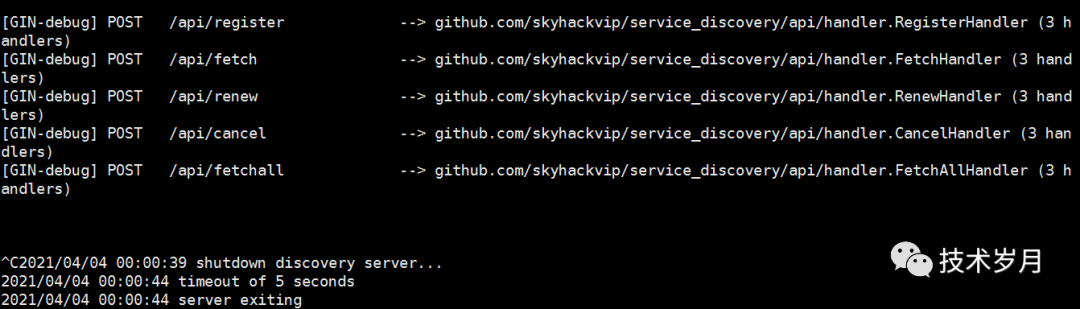
實(shí)現(xiàn)效果如圖所示:
工程實(shí)踐
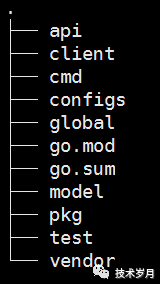
使用 go module 管理依賴的三方包 (gin 和 yaml)
api 存放 http 服務(wù)路由以及對(duì)應(yīng)處理函數(shù)
cmd 存放編譯入口 main 文件
configs 存放全局配置和全局常量
global 存放全局結(jié)構(gòu)變量
model 存放注冊(cè)表結(jié)構(gòu)模型及主要邏輯
總結(jié)與問題
注冊(cè)中心功能實(shí)現(xiàn)
至此,一個(gè)單機(jī)版的注冊(cè)中心就可以工作了,但生產(chǎn)環(huán)境單點(diǎn)肯定是不能容忍的,因此有必要實(shí)現(xiàn)一個(gè)注冊(cè)中心集群。那么是否部署多個(gè)注冊(cè)中心實(shí)例就可以了,當(dāng)然 .... 不行!這只能保障有多個(gè)注冊(cè)中心節(jié)點(diǎn),而每個(gè)節(jié)點(diǎn)中維護(hù)自己的注冊(cè)表,那么就需要進(jìn)行注冊(cè)表數(shù)據(jù)同步。多節(jié)點(diǎn)數(shù)據(jù)同步又會(huì)涉及著名的一致性問題,這時(shí) Paxos、Raft、ZAB、Gossip 等算法名詞涌現(xiàn),而我們將使用 P2P(Peer to Peer)對(duì)等網(wǎng)絡(luò)協(xié)議來實(shí)現(xiàn)。關(guān)于集群設(shè)計(jì)與實(shí)現(xiàn)我們將在后續(xù)文章中展開。
感謝您的閱讀,歡迎大家點(diǎn)贊、分享