
剖析Netty之底層原理(三)
神秘北極圈 阿拉斯加的山巔
誰(shuí)的臉出現(xiàn)海角的天邊
忽然的瞬間在那遙遠(yuǎn)的地點(diǎn)
我看見(jiàn)戀人幸福的光點(diǎn)
靈魂在招喚唱著古老
陌生熟悉的歌謠 天空 在微笑
我的世界繽紛閃耀
前面渾渾噩噩的把服務(wù)端的實(shí)現(xiàn)底層源碼來(lái)了個(gè)大致,感覺(jué)頭有點(diǎn)大,這里用圖例的方式來(lái)理下思緒。
一、EventLoopGroup bossGroup = new NioEventLoopGroup();
這是服務(wù)端的第一句代碼,類(lèi)似的還new了一個(gè)workGroup,工作線程組
這兩句代碼,Netty底層的各種初始化動(dòng)作,前面也都說(shuō)過(guò)了,這里做個(gè)總結(jié):
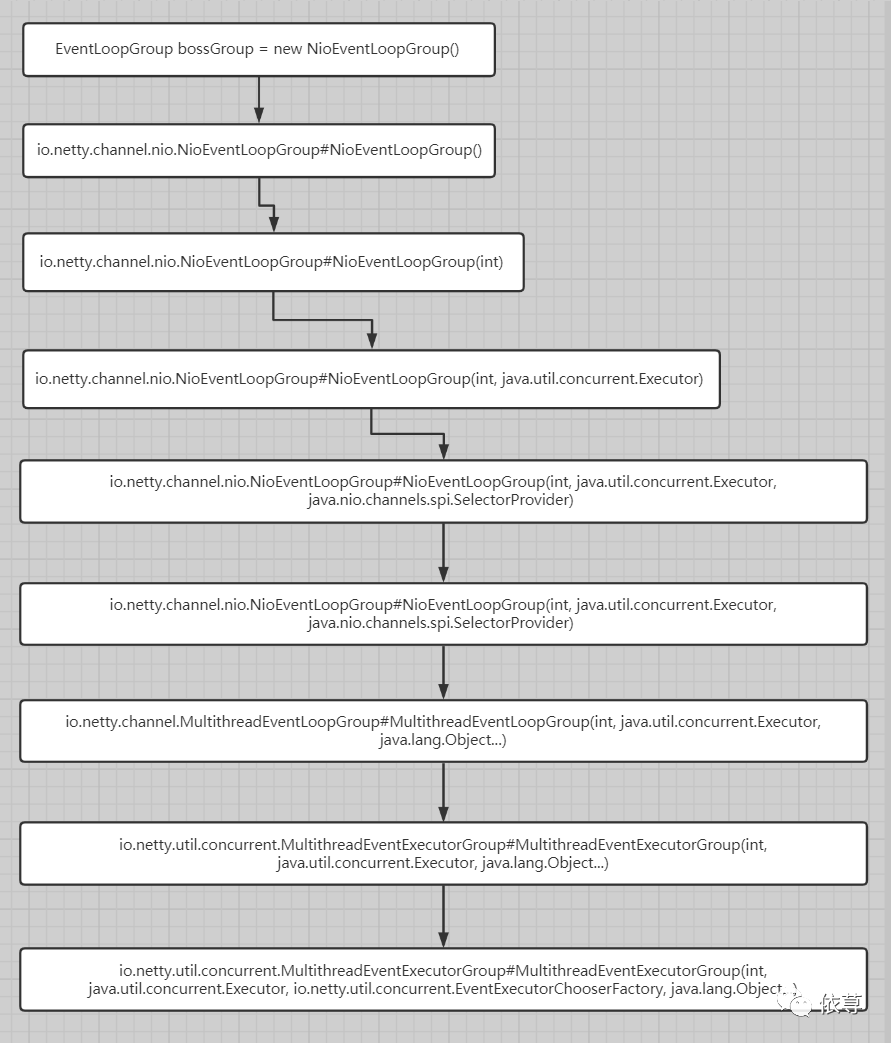
底層逐步初始化調(diào)用程序如下圖:
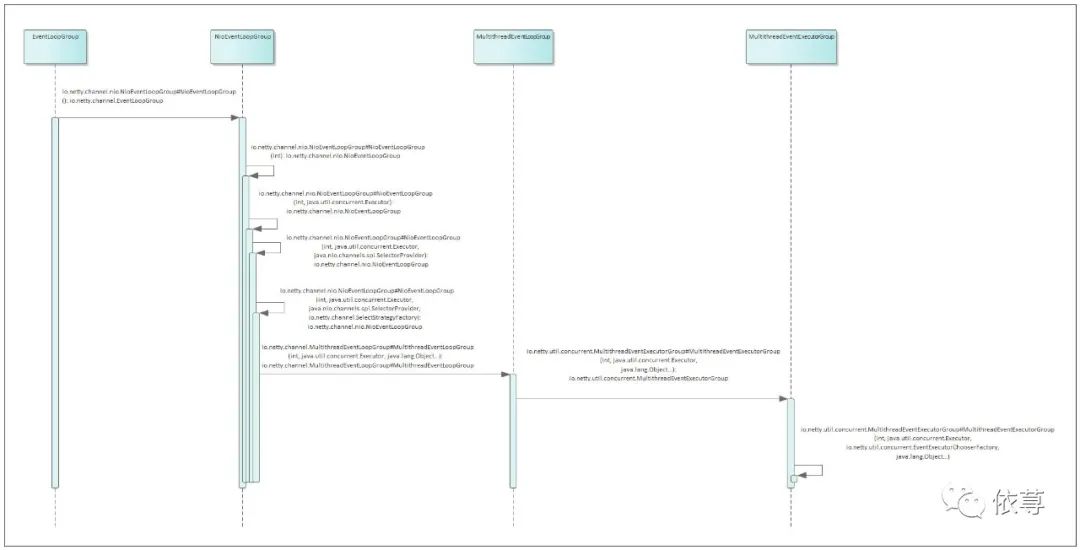
其類(lèi)調(diào)用時(shí)序圖如下所示
這里,需要重點(diǎn)看下
io.netty.util.concurrent.MultithreadEventExecutorGroup#MultithreadEventExecutorGroup
(int,?
java.util.concurrent.Executor,
io.netty.util.concurrent.EventExecutorChooserFactory, java.lang.Object...
)方法
源碼如下:
protected MultithreadEventExecutorGroup(int nThreads, Executor executor,EventExecutorChooserFactory chooserFactory, Object... args) {????????????????//當(dāng)線程數(shù)沒(méi)有的時(shí)候,拋出異常,根據(jù)前面分析,這里的線程數(shù)為服務(wù)器內(nèi)核數(shù)量*2if (nThreads <= 0) {throw new IllegalArgumentException(String.format("nThreads: %d (expected: > 0)", nThreads));}????????//這里的Executor是null,所以初始化一個(gè)if (executor == null) {//初始化一個(gè)類(lèi)型是io.netty.util.concurrent.ThreadPerTaskExecutor的線程池//線程池類(lèi)型為io.netty.util.concurrent.DefaultThreadFactoryexecutor = new ThreadPerTaskExecutor(newDefaultThreadFactory());}// 設(shè)置事件驅(qū)動(dòng)數(shù)組,大小根據(jù)設(shè)定或者默認(rèn)的來(lái)children = new EventExecutor[nThreads];for (int i = 0; i < nThreads; i ++) {boolean success = false;try {????????????????//設(shè)定每個(gè)事件驅(qū)動(dòng)數(shù)組為io.netty.channel.nio.NioEventLoop????????????????//這里調(diào)用的newChild,下面會(huì)有詳細(xì)解釋children[i] = newChild(executor, args);success = true;} catch (Exception e) {// TODO: Think about if this is a good exception typethrow new IllegalStateException("failed to create a child event loop", e);} finally {if (!success) {for (int j = 0; j < i; j ++) {//如果添加失敗,則關(guān)閉每一個(gè)io.netty.channel.nio.NioEventLoopchildren[j].shutdownGracefully();}for (int j = 0; j < i; j ++) {EventExecutor e = children[j];try {while (!e.isTerminated()) {e.awaitTermination(Integer.MAX_VALUE, TimeUnit.SECONDS);}} catch (InterruptedException interrupted) {// Let the caller handle the interruption.Thread.currentThread().interrupt();break;}}}}}????????//初始化io.netty.util.concurrent.EventExecutorChooserFactory.EventExecutorChooser????????//其結(jié)果值為io.netty.util.concurrent.DefaultEventExecutorChooserFactory.PowerOfTwoEventExecutorChooser#PowerOfTwoEventExecutorChooser????????//或者io.netty.util.concurrent.DefaultEventExecutorChooserFactory.GenericEventExecutorChooser#GenericEventExecutorChooserchooser = chooserFactory.newChooser(children);final FutureListenerpublic void operationComplete(Future throws Exception {if (terminatedChildren.incrementAndGet() == children.length) {terminationFuture.setSuccess(null);}}};for (EventExecutor e: children) {????????????//?循環(huán)為每一個(gè)事件驅(qū)動(dòng)器實(shí)例添加監(jiān)聽(tīng)????????????//這里的e.terminationFuture()實(shí)質(zhì)調(diào)用????????????//io.netty.util.concurrent.SingleThreadEventExecutor#terminationFuture????????????//因?yàn)榍懊嫖覀冋f(shuō)到每一個(gè)children數(shù)組的實(shí)例是io.netty.channel.nio.NioEventLoop????????????//這里io.netty.channel.nio.NioEventLoop繼承自????????????//io.netty.util.concurrent.SingleThreadEventExecutor#terminationFuturee.terminationFuture().addListener(terminationListener);}????????//這里將children復(fù)制出來(lái)一份給到readonlyChildren????????//Collections.unmodifiableSet返回的Set集合不可修改,即readonlySetchildrenSet = new LinkedHashSet (children.length); Collections.addAll(childrenSet, children);readonlyChildren = Collections.unmodifiableSet(childrenSet);}
如上所示為netty-all-4.1.50.final源碼,其大致意義,在上面代碼中也有添加注釋?zhuān)偨Y(jié)一下就是這里設(shè)定了事件驅(qū)動(dòng)數(shù)組,并設(shè)定事件輪詢線程組
上面的給每一個(gè)EventExecutor數(shù)組賦值的代碼
這里可以發(fā)現(xiàn)
io.netty.util.concurrent.MultithreadEventExecutorGroup
類(lèi)中,該方法是靜態(tài)方法
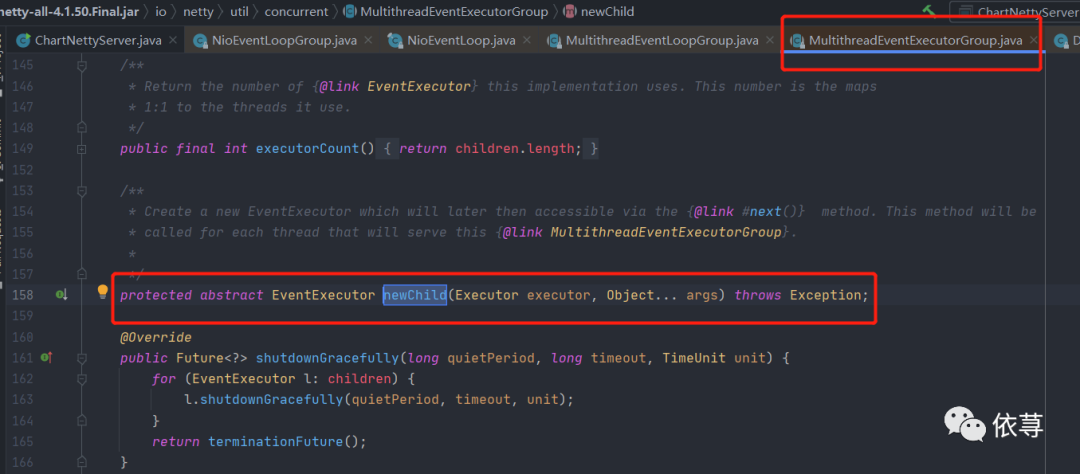
方法是由子類(lèi)
io.netty.channel.nio.NioEventLoopGroup
調(diào)用而來(lái),所以這里實(shí)質(zhì)調(diào)用的是
io.netty.channel.nio.NioEventLoopGroup#newChild
源碼如下:
protected EventLoop newChild(Executor executor, Object... args) throws Exception {EventLoopTaskQueueFactory queueFactory = args.length == 4 ? (EventLoopTaskQueueFactory) args[3] : null;return new NioEventLoop(this, executor, (SelectorProvider) args[0],((SelectStrategyFactory) args[1]).newSelectStrategy(), (RejectedExecutionHandler) args[2], queueFactory);}
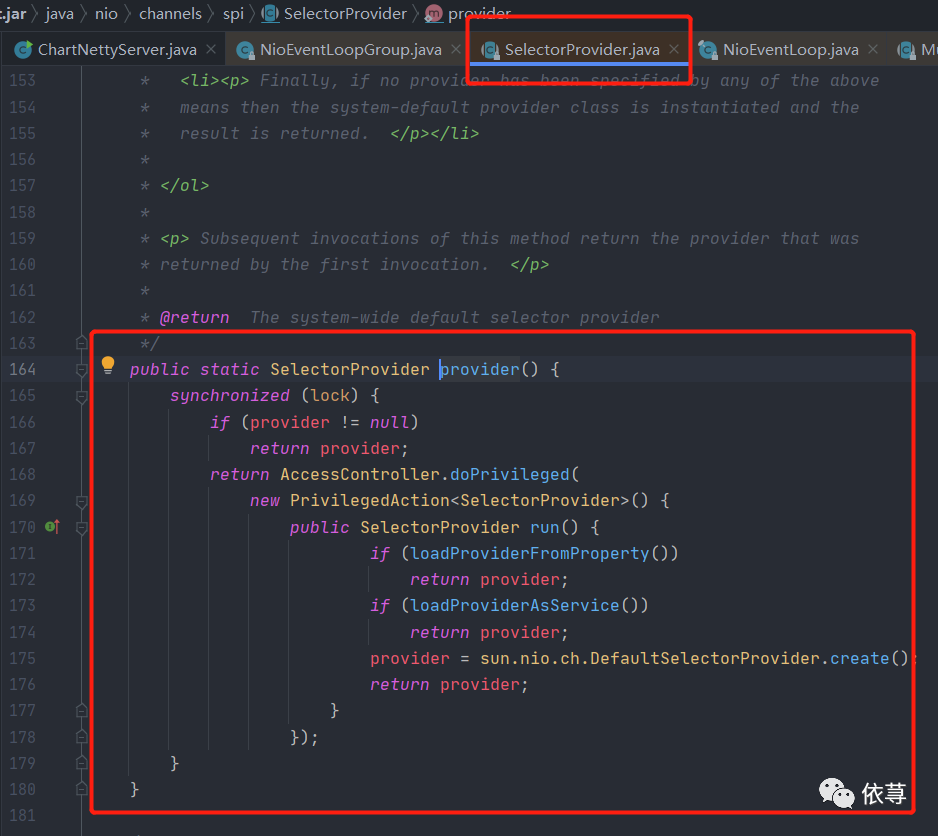
這里的args數(shù)組,在根據(jù)以上配置的情況下,是3,第一個(gè)是選擇器:
args[0]?=?SelectorProvider.provider()
即:
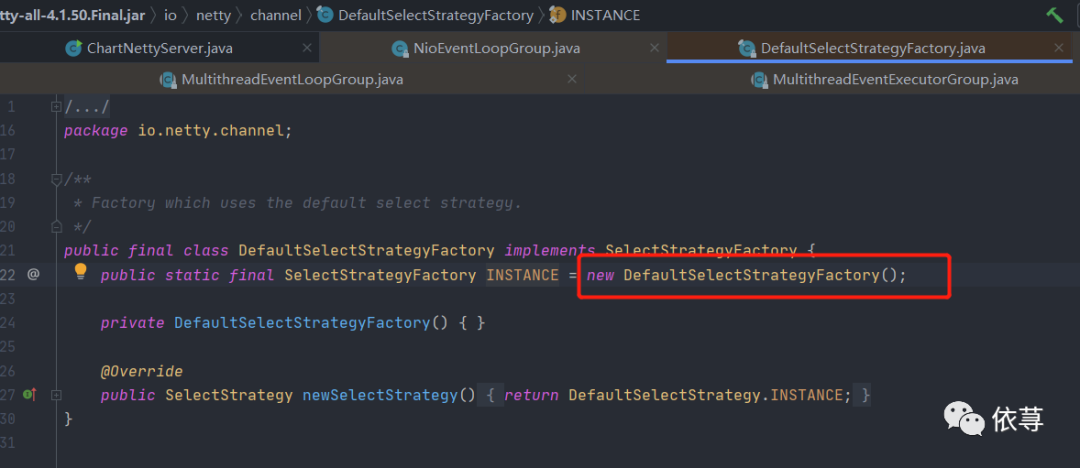
數(shù)組第二個(gè)元素是默認(rèn)選擇器策略
args[1]?=?DefaultSelectStrategyFactory.INSTANCE;
即:
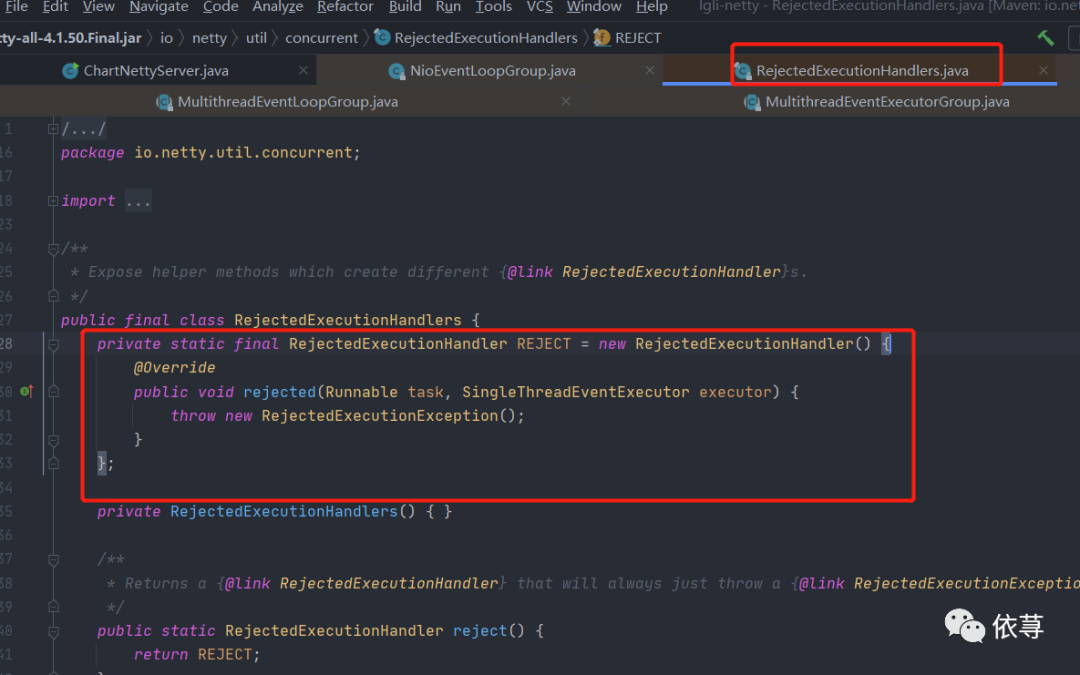
第三個(gè)是默認(rèn)異常
args[2]?=?RejectedExecutionHandlers.reject();
下面主要看下
io.netty.channel.nio.NioEventLoopGroup#newChild
方法
該方法上面源代碼已說(shuō)明,返回了一個(gè)
io.netty.channel.nio.NioEventLoop#NioEventLoop
對(duì)象
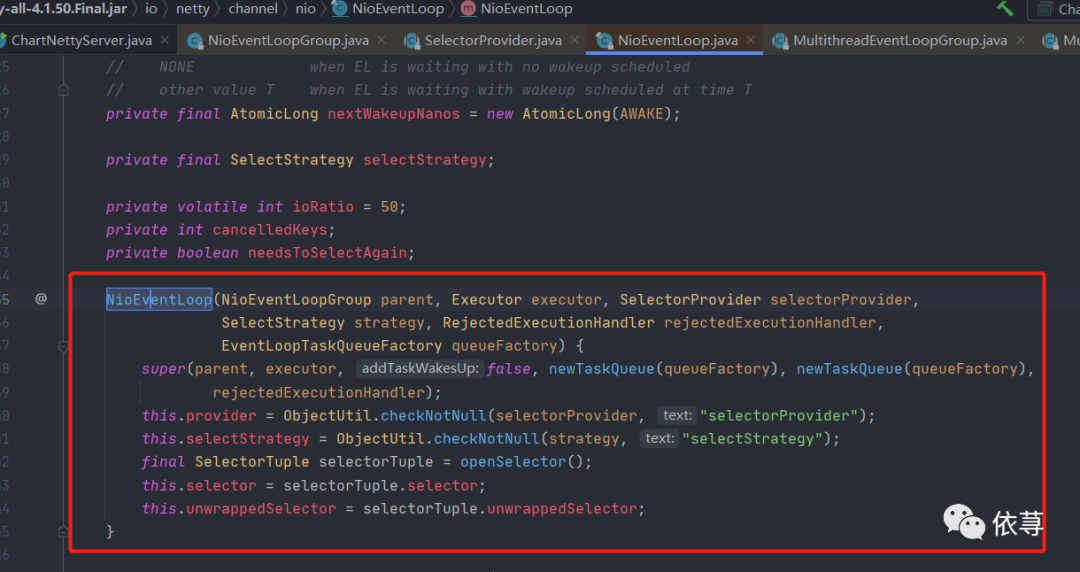
構(gòu)造方法調(diào)用明細(xì)如下所示:

io.netty.channel.nio.NioEventLoop?
的構(gòu)造方法,通過(guò)逐層super,為父級(jí)類(lèi)參數(shù)賦值,同時(shí)創(chuàng)建了
NioEventLoop的多路復(fù)用選擇器
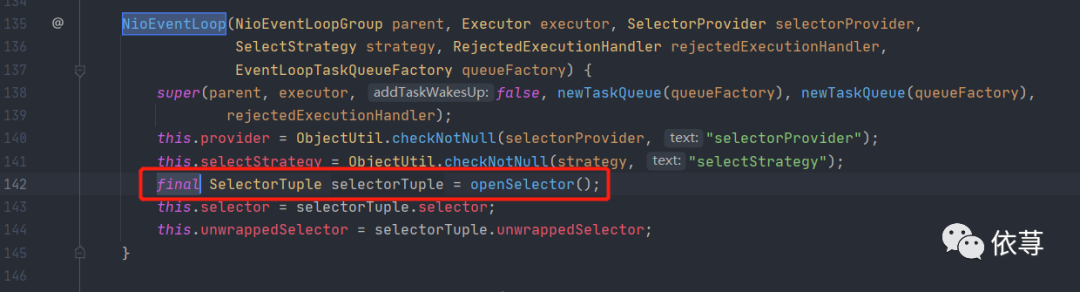
這里可以看下Netty的多路復(fù)用選擇器是如何構(gòu)建的:
源碼如下:
private SelectorTuple openSelector() {final Selector unwrappedSelector;try {????????????//首先直接打開(kāi)選擇器unwrappedSelector = provider.openSelector();} catch (IOException e) {throw new ChannelException("failed to open a new selector", e);}if (DISABLE_KEY_SET_OPTIMIZATION) {????????????//這里選擇是否不需要優(yōu)化多路復(fù)用選擇器的key????????????//默認(rèn)是false,即默認(rèn)需要優(yōu)化????????????//可以通過(guò)properties文件中io.netty.noKeySetOptimization設(shè)定true或者falsereturn new SelectorTuple(unwrappedSelector);}????????//AccessController?是Java安全策略機(jī)制的一種方式,這里表示的是,????????//不管是否設(shè)定安全策略,這里臨時(shí)擴(kuò)大訪問(wèn)權(quán)限,強(qiáng)制執(zhí)行方法??????????????//有需要了解更詳細(xì)的,可以自行查閱資料Object maybeSelectorImplClass = AccessController.doPrivileged(new PrivilegedActionpublic Object run() {try {????????????????????//嘗試返回sun.nio.ch.SelectorImpl實(shí)例,可能會(huì)拋出異常return Class.forName("sun.nio.ch.SelectorImpl",false,PlatformDependent.getSystemClassLoader());} catch (Throwable cause) {return cause;}}});if (!(maybeSelectorImplClass instanceof Class) ||// ensure the current selector implementation is what we can instrument.!((Class) maybeSelectorImplClass).isAssignableFrom(unwrappedSelector.getClass())) {????????????if?(maybeSelectorImplClass?instanceof?Throwable)?{Throwable t = (Throwable) maybeSelectorImplClass;logger.trace("failed to instrument a special java.util.Set into: {}", unwrappedSelector, t);}//當(dāng)嘗試獲取的sun.nio.ch.SelectorImpl實(shí)例是異常時(shí)候,則直接返回return new SelectorTuple(unwrappedSelector);}final Class selectorImplClass = (Class) maybeSelectorImplClass;final SelectedSelectionKeySet selectedKeySet = new SelectedSelectionKeySet();Object maybeException = AccessController.doPrivileged(new PrivilegedActionpublic Object run() {try {//這里利用反射,獲取到selectedKeys和publicSelectedKeysField selectedKeysField = selectorImplClass.getDeclaredField("selectedKeys");Field publicSelectedKeysField = selectorImplClass.getDeclaredField("publicSelectedKeys");????????????????????//當(dāng)java版本在9或者以上,并且sun.misc.Unsafe可以在classpath下找到????????????????????//這里如果java版本在1.9及其以上,一般來(lái)說(shuō),都是可以的if (PlatformDependent.javaVersion() >= 9 && PlatformDependent.hasUnsafe()) {// Let us try to use sun.misc.Unsafe to replace the SelectionKeySet.// This allows us to also do this in Java9+ without any extra flags.????????????????????????//這里原始注釋也比較好理解了:嘗試用sun.misc.Unsafe替換SelectionKeySetlong selectedKeysFieldOffset = PlatformDependent.objectFieldOffset(selectedKeysField);long publicSelectedKeysFieldOffset =PlatformDependent.objectFieldOffset(publicSelectedKeysField);if (selectedKeysFieldOffset != -1 && publicSelectedKeysFieldOffset != -1) {PlatformDependent.putObject(unwrappedSelector, selectedKeysFieldOffset, selectedKeySet);PlatformDependent.putObject(unwrappedSelector, publicSelectedKeysFieldOffset, selectedKeySet);return null;}// We could not retrieve the offset, lets try reflection as last-resort.}Throwable cause = ReflectionUtil.trySetAccessible(selectedKeysField, true);if (cause != null) {return cause;}cause = ReflectionUtil.trySetAccessible(publicSelectedKeysField, true);if (cause != null) {return cause;}????????????????????//給屬性設(shè)置值selectedKeysField.set(unwrappedSelector, selectedKeySet);publicSelectedKeysField.set(unwrappedSelector, selectedKeySet);return null;} catch (NoSuchFieldException e) {return e;} catch (IllegalAccessException e) {return e;}}});if (maybeException instanceof Exception) {selectedKeys = null;Exception e = (Exception) maybeException;logger.trace("failed to instrument a special java.util.Set into: {}", unwrappedSelector, e);return new SelectorTuple(unwrappedSelector);}selectedKeys = selectedKeySet;logger.trace("instrumented a special java.util.Set into: {}", unwrappedSelector);return new SelectorTuple(unwrappedSelector,new SelectedSelectionKeySetSelector(unwrappedSelector, selectedKeySet));}
上面代碼,需要注意的地方:
各種賦值,打開(kāi)的多路復(fù)用器

賦值到了
io.netty.channel.nio.NioEventLoop.SelectorTuple
屬性中
同時(shí)這個(gè)多路復(fù)用器的父級(jí)類(lèi)
sun.nio.ch.SelectorImpl
屬性被做出了優(yōu)化,
即針對(duì)多路復(fù)用選擇器實(shí)現(xiàn)類(lèi)
sun.nio.ch.SelectorImpl
進(jìn)行了優(yōu)化
這里為何需要做這種優(yōu)化呢?
首先需要知道,原本的sun.nio.ch.SelectorImpl
結(jié)構(gòu)是什么樣子的?
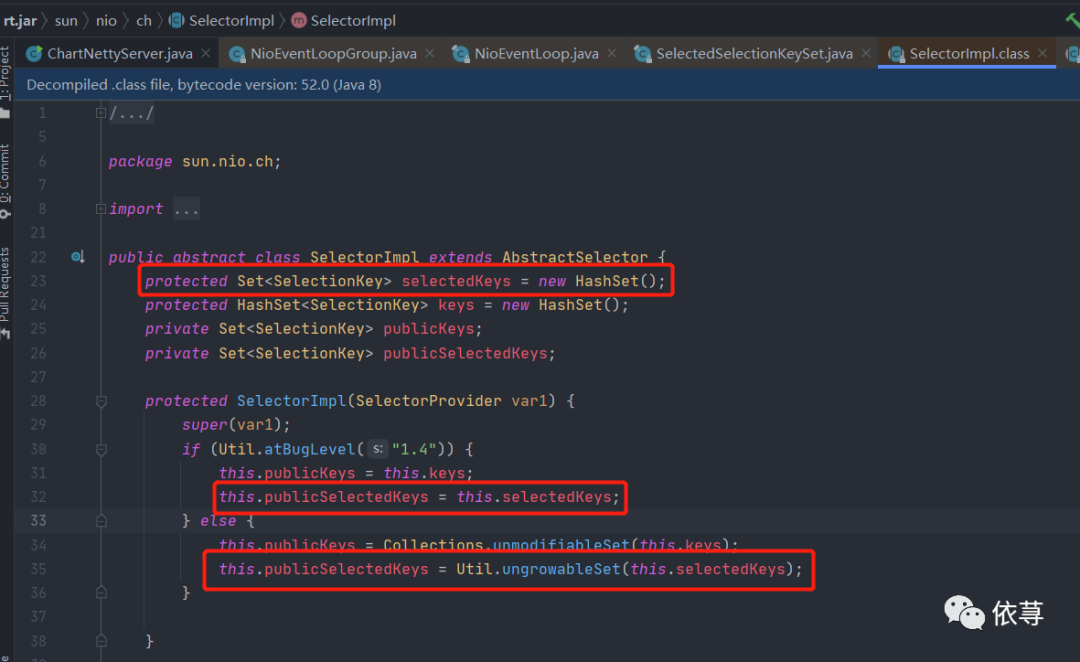
如上圖所示,原本的
sun.nio.ch.SelectorImpl#selectedKeys
和
sun.nio.ch.SelectorImpl#publicSelectedKeys
屬性是一個(gè)HashSet,而HashSet底層其實(shí)也就是一個(gè)HashMap,所以,其數(shù)據(jù)結(jié)構(gòu)主要是由鏈表組成,鏈表就是一個(gè)不連續(xù)的內(nèi)存存儲(chǔ),方便插入和刪除,但是不利于查詢
所以這里替換了一個(gè)
io.netty.channel.nio.SelectedSelectionKeySet
其構(gòu)造方法為:
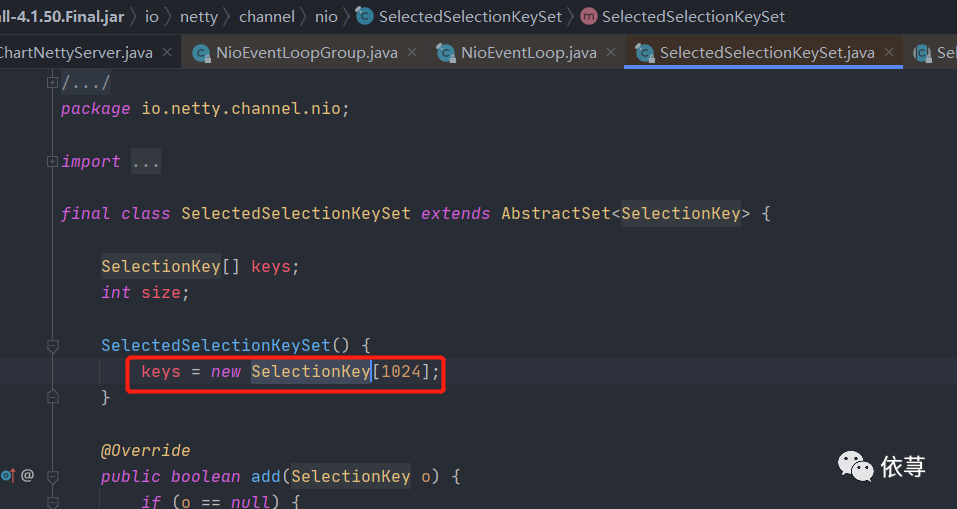
即是一個(gè)數(shù)組,我們知道數(shù)組在內(nèi)存是一個(gè)連續(xù)的過(guò)程,有一個(gè)連續(xù)的內(nèi)存地址,數(shù)組不利于新增和刪除,但是利于查詢
而這里
sun.nio.ch.SelectorImpl#selectedKeys
和
sun.nio.ch.SelectorImpl#publicSelectedKeys
主要存儲(chǔ)的是和事件感興趣的key值,即前面NIO中說(shuō)到的可連接、可讀、可寫(xiě)等狀態(tài):
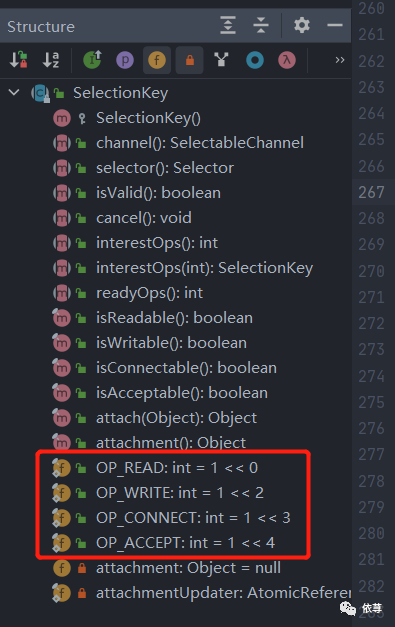
所以這里主要是在輪詢的時(shí)候方便獲取這種狀態(tài)值,即快速查詢,所以這里用數(shù)組替換鏈表
最終返回了一個(gè)優(yōu)化后的
io.netty.channel.nio.NioEventLoop.SelectorTuple
這里的
io.netty.channel.nio.NioEventLoop.SelectorTuple
也是較之前NIO中所得到的
java.nio.channels.Selector
多路復(fù)用器不同,看下它的結(jié)構(gòu):
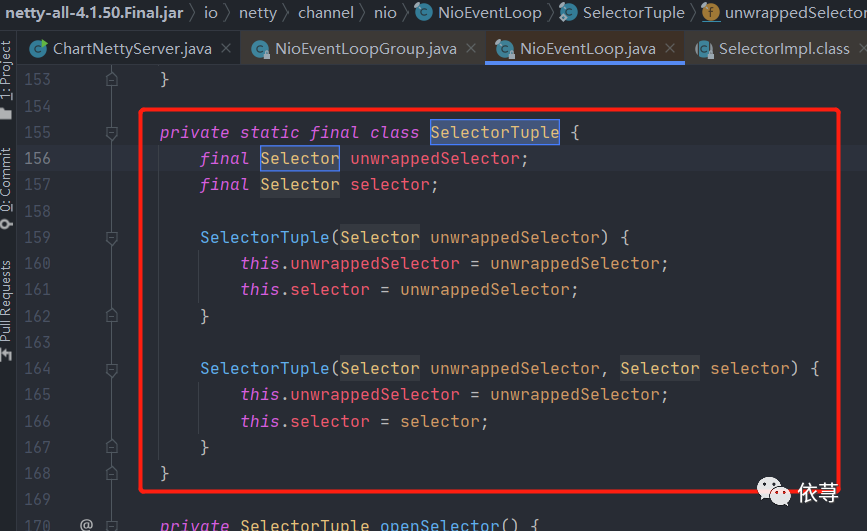
io.netty.channel.nio.NioEventLoop.SelectorTuple
是
io.netty.channel.nio.NioEventLoop的一個(gè)內(nèi)部類(lèi),包含2個(gè)多路復(fù)用器,根據(jù)構(gòu)造函數(shù),這里返回的
io.netty.channel.nio.NioEventLoop.SelectorTuple
屬性值分別是:
io.netty.channel.nio.NioEventLoop.SelectorTuple#unwrappedSelector
值為
java.nio.channels.Selector
io.netty.channel.nio.NioEventLoop.SelectorTuple#selector
值為
io.netty.channel.nio.SelectedSelectionKeySetSelector#SelectedSelectionKeySetSelector
為此,在經(jīng)歷這一系列的關(guān)聯(lián)調(diào)用之后(具體源碼邏輯請(qǐng)見(jiàn)《剖析Netty之底層原理(一)》),其主要源碼類(lèi)的主要參數(shù)變化,這里總結(jié)了一張圖表,
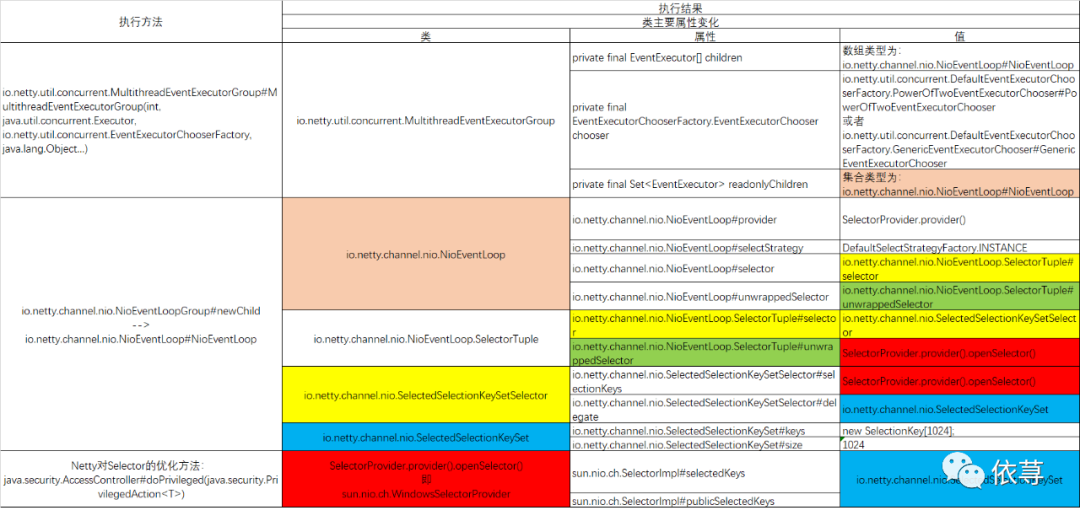
其中上圖中,具有相似顏色的類(lèi),是同一個(gè)類(lèi),
針對(duì)此,可以初步了解完
EventLoopGroup bossGroup = new NioEventLoopGroup();
和
EventLoopGroup workerGroup = new NioEventLoopGroup();
方法所執(zhí)行的所有邏輯<兩者邏輯一樣>
這里簡(jiǎn)單做出一個(gè)小結(jié):
初始化NioEventLoopGroup的結(jié)果,實(shí)質(zhì)是構(gòu)建了一個(gè)EventExecutor數(shù)組,其數(shù)組類(lèi)型是NioEventLoop。
由于篇幅已經(jīng)夠長(zhǎng)了,所以,后續(xù)將接著分享,這里先簡(jiǎn)單告一段落。
有喜歡的,歡迎點(diǎn)贊關(guān)注,謝謝
麻煩給個(gè)再看呢!