終于有人把 Spring 循環(huán)依賴講清楚了!

Java技術(shù)棧
www.javastack.cn
關(guān)注閱讀更多優(yōu)質(zhì)文章
網(wǎng)上關(guān)于Spring循環(huán)依賴的博客太多了,有很多都分析的很深入,寫的很用心,甚至還畫了時序圖、流程圖幫助讀者理解,我看了后,感覺自己是懂了,但是閉上眼睛,總覺得還沒有完全理解,總覺得還有一兩個坎過不去,對我這種有點笨的人來說,真的好難。
當(dāng)時,我就在想,如果哪一天,我理解了Spring循環(huán)依賴,一定要用自己的方式寫篇博客,幫助大家更好的理解,等我理解后,一直在構(gòu)思,到底怎么應(yīng)該寫,才能更通俗易懂,就在前幾天,我想通了,這么寫應(yīng)該更通俗易懂。在寫本篇博客之前,我翻閱了好多關(guān)于Spring循環(huán)依賴的博客,網(wǎng)上應(yīng)該還沒有像我這樣講解的,現(xiàn)在就讓我們開始把。
什么是循環(huán)依賴
一言以蔽之:兩者相互依賴。
在開發(fā)中,可能經(jīng)常出現(xiàn)這種情況,只是我們平時并沒有注意到原來我們寫的兩個類、甚至多個類相互依賴了,為什么注意不到呢?
當(dāng)然是因為沒有報錯,而且一點問題都木有,如果報錯了,或者產(chǎn)生了問題,我們還會注意不到嗎?
這一切都是Spring的功勞,它在后面默默的為我們解決了循環(huán)依賴的問題。大家可以關(guān)注公眾號Java技術(shù)棧回復(fù)spring閱讀系列Spring教程。
如下所示:
@Configuration
@ComponentScan
public?class?AppConfig?{
}
@Service
public?class?AuthorService?{
????@Autowired
????BookService?bookService;
}
@Service
public?class?BookService?{
????@Autowired
????AuthorService?authorService;
}
public?class?Main?{
????public?static?void?main(String[]?args)?{
????????ApplicationContext?annotationConfigApplicationContext?=?new?AnnotationConfigApplicationContext(AppConfig.class);

????????BookService?bookService?=?(BookService)?annotationConfigApplicationContext.getBean("bookService");
????????System.out.println(bookService.authorService);

????????AuthorService?authorService?=?(AuthorService)?annotationConfigApplicationContext.getBean("authorService");
????????System.out.println(authorService.bookService);
????}
}
運行結(jié)果:
com.codebear.springcycle.AuthorService@63376bed
com.codebear.springcycle.BookService@4145bad8
可以看到BookService中需要AuthorService,AuthorService中需要BookService,類似于這樣的就叫循環(huán)依賴,但是神奇的是竟然一點問題沒有。
當(dāng)然有些小伙伴可能get不到它的神奇之處,至于它的神奇之處在哪里,我們放到后面再說。
任何循環(huán)依賴,Spring都能解決嗎
不行。
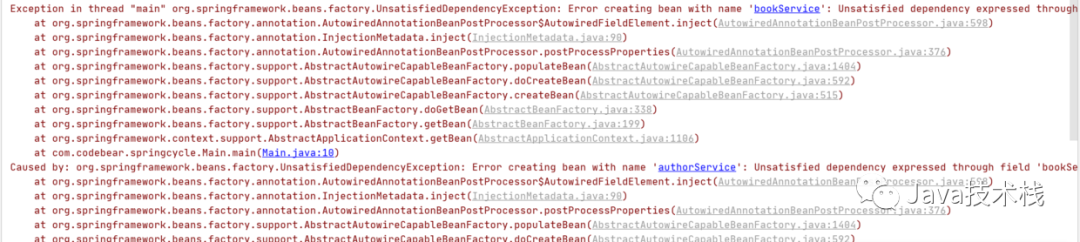
如果是原型 bean的循環(huán)依賴,Spring無法解決:
@Service
@Scope(BeanDefinition.SCOPE_PROTOTYPE)
public?class?BookService?{????
????@Autowired
????AuthorService?authorService;
}
@Service
@Scope(BeanDefinition.SCOPE_PROTOTYPE)
public?class?AuthorService?{????
????@Autowired
????BookService?bookService;
}
啟動后,令人恐懼的紅色字體在控制臺出現(xiàn)了:
如果是構(gòu)造參數(shù)注入的循環(huán)依賴,Spring無法解決:
@Service
public?class?AuthorService?{
????BookService?bookService;

????public?AuthorService(BookService?bookService)?{
????????this.bookService?=?bookService;
????}
}
@Service
public?class?BookService?{

????AuthorService?authorService;

????public?BookService(AuthorService?authorService)?{
????????this.authorService?=?authorService;
????}
}
還是討厭的紅色字體:

循環(huán)依賴可以關(guān)閉嗎
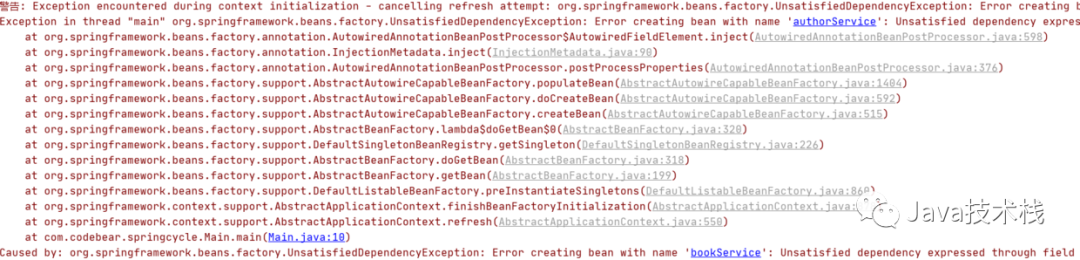
可以,Spring提供了這個功能,我們需要這么寫:
public?class?Main?{
????public?static?void?main(String[]?args)?{
????????AnnotationConfigApplicationContext?applicationContext?=?new?AnnotationConfigApplicationContext();
????????applicationContext.setAllowCircularReferences(false);
????????applicationContext.register(AppConfig.class);
????????applicationContext.refresh();
????}
}
再次運行,就報錯了:
需要注意的是,我們不能這么寫:
AnnotationConfigApplicationContext?applicationContext?=?new?AnnotationConfigApplicationContext(AppConfig.class);
applicationContext.setAllowCircularReferences(false);
如果你這么寫,程序執(zhí)行完第一行代碼,整個Spring容器已經(jīng)初始化完成了,你再設(shè)置不允許循環(huán)依賴,也于事無補了。bean 實例化原理,推薦看下。關(guān)注公眾號Java技術(shù)棧回復(fù)spring閱讀系列Spring教程。
可以循環(huán)依賴的神奇之處在哪
有很多小伙伴可能并不覺得可以循環(huán)依賴有多么神奇,那是因為不知道矛盾點在哪,接下來就來說說這個問題:
當(dāng)beanA,beanB循環(huán)依賴:
創(chuàng)建beanA,發(fā)現(xiàn)依賴beanB;
創(chuàng)建beanB,發(fā)現(xiàn)依賴beanA;
創(chuàng)建beanA,發(fā)現(xiàn)依賴beanB;
創(chuàng)建beanB,發(fā)現(xiàn)依賴beanA。
...
好了,死循環(huán)了。
循環(huán)依賴的矛盾點就在于要創(chuàng)建beanA,它需要beanB,而創(chuàng)建beanB,又需要beanA,然后兩個bean都創(chuàng)建不出來。
如何簡單的解決循環(huán)依賴
如果你曾經(jīng)看過Spring循環(huán)依賴依賴的博客(比如這篇:圖解Spring循環(huán)依賴),應(yīng)該知道它其中有好幾個Map,一個Map放的是最完整的對象,稱為singletonObjects,一個Map放的是提前暴露出來的對象,稱為earlySingletonObjects。
在這里,先要解釋下這兩個東西:
singletonObjects:單例池,其中存放的是經(jīng)歷了Spring完整生命周期的bean,這里面的bean的依賴都已經(jīng)填充完畢了。
earlySingletonObjects:提前暴露出來的對象的map,其中存放的是剛剛創(chuàng)建出來的對象,沒有經(jīng)歷Spring完整生命周期的bean,這里面的bean的依賴還未填充完畢。
我們可以這么做:
當(dāng)我們創(chuàng)建完beanA,就把自己放到earlySingletonObjects,發(fā)現(xiàn)自己需要beanB,然后就去屁顛屁顛創(chuàng)建beanB;
當(dāng)我們創(chuàng)建完beanB,就把自己放到earlySingletonObjects,發(fā)現(xiàn)自己需要beanA,然后就去屁顛屁顛創(chuàng)建beanA;
創(chuàng)建beanA前,先去earlySingletonObjects看一下,發(fā)現(xiàn)自己已經(jīng)被創(chuàng)建出來了,把自己返回出去;
beanB拿到了beanA,beanB創(chuàng)建完畢,把自己放入singletonObjects;
beanA可以去singletonObjects拿到beanB了,beanA也創(chuàng)建完畢,把自己放到singletonObjects。
整個過程結(jié)束。
下面讓我們來實現(xiàn)這個功能:
首先,自定義一個注解,字段上打上這個注解的,說明需要被Autowired:
@Retention(RetentionPolicy.RUNTIME)
public?@interface?CodeBearAutowired?{
}
再創(chuàng)建兩個循環(huán)依賴的類:
public?class?OrderService?{
????@CodeBearAutowired
????public?UserService?userService;
}
public?class?UserService?{
????@CodeBearAutowired
????public?OrderService?orderService;
}
然后就是核心,創(chuàng)建對象,填充屬性,并解決Spring循環(huán)依賴的問題:
public?class?Cycle?{
????//?單例池,里面放的是完整的bean,已完成填充屬性
????private?final?Map?singletonObjects?=?new?ConcurrentHashMap<>();

????//?存放的是提前暴露出來的bean,沒有經(jīng)歷過spring完整的生命周期,沒有填充屬性
????private?final?Map?earlySingletonObjects?=?new?HashMap<>();

????//?在Spring中,這個map存放的是beanNam和beanDefinition的映射關(guān)系
????static?Map>?map?=?new?HashMap<>();
????static?{
????????map.put("orderService",?OrderService.class);
????????map.put("userService",?UserService.class);
????}
????//?如果先調(diào)用init方法,就是預(yù)加載,如果直接調(diào)用getBean就是懶加載,兩者的循環(huán)依賴問題都解決了
????public?void?init()?{
????????for?(Map.Entry>?stringClassEntry?:?map.entrySet())?{
????????????createBean(stringClassEntry.getKey());
????????}
????}

????public?Object?getBean(String?beanName)?{
????????//?嘗試從singletonObjects中取,
????????Object?singletonObject?=?this.singletonObjects.get(beanName);
????????if?(singletonObject?!=?null)?{
????????????return?singletonObject;
????????}

????????//?嘗試從earlySingletonObjects取
????????singletonObject?=?this.earlySingletonObjects.get(beanName);
????????if?(singletonObject?!=?null)?{
????????????return?singletonObject;
????????}

????????return?createBean(beanName);
????}

????private?Object?createBean(String?beanName)?{
????????Object?singletonObject;

????????try?{
????????????//?創(chuàng)建對象
????????????singletonObject?=?map.get(beanName).getConstructor().newInstance();

????????????//?把沒有完成填充屬性的半成品?bean?放入earlySingletonObjects
????????????earlySingletonObjects.put(beanName,?singletonObject);

????????????//?填充屬性
????????????populateBean(singletonObject);

????????????//?bean創(chuàng)建成功,放入singletonObjects
????????????this.singletonObjects.put(beanName,?singletonObject);

????????????return?singletonObject;
????????}?catch?(Exception?ignore)?{
????????}
????????return?null;
????}

????private?void?populateBean(Object?object)?{
????????Field[]?fields?=?object.getClass().getDeclaredFields();
????????for?(Field?field?:?fields)?{
????????????if?(field.getAnnotation(CodeBearAutowired.class)?!=?null)?{
????????????????Object?value?=?getBean(field.getName());
????????????????try?{
????????????????????field.setAccessible(true);
????????????????????field.set(object,?value);
????????????????}?catch?(IllegalAccessException?ignored)?{
????????????????}
????????????}
????????}
????}
}
預(yù)加載調(diào)用:
public?class?Main?{
????public?static?void?main(String[]?args)?{
????????Cycle?cycle?=?new?Cycle();
????????cycle.init();
????????UserService?userService?=?(UserService)?cycle.getBean("userService");
????????OrderService?orderService?=?(OrderService)?cycle.getBean("orderService");
????????System.out.println(userService.orderService);
????????System.out.println(orderService.userService);
????}
}
運行結(jié)果:
com.codebear.cycleeasy.OrderService@61baa894
com.codebear.cycleeasy.UserService@b065c63
懶加載調(diào)用:
public?class?Main?{
????public?static?void?main(String[]?args)?{
????????Cycle?cycle?=?new?Cycle();
????????UserService?userService?=?(UserService)?cycle.getBean("userService");
????????OrderService?orderService?=?(OrderService)?cycle.getBean("orderService");
????????System.out.println(userService.orderService);
????????System.out.println(orderService.userService);
????}
}
運行結(jié)果:
com.codebear.cycleeasy.OrderService@61baa894
com.codebear.cycleeasy.UserService@b065c63
為什么無法解決原型、構(gòu)造方法注入的循環(huán)依賴
在上面,我們自己手寫了解決循環(huán)依賴的代碼,可以看到,核心是利用一個map,來解決這個問題的,這個map就相當(dāng)于緩存。
為什么可以這么做,因為我們的bean是單例的,而且是字段注入(setter注入)的,單例意味著只需要創(chuàng)建一次對象,后面就可以從緩存中取出來,字段注入,意味著我們無需調(diào)用構(gòu)造方法進行注入。
如果是原型bean,那么就意味著每次都要去創(chuàng)建對象,無法利用緩存;
如果是構(gòu)造方法注入,那么就意味著需要調(diào)用構(gòu)造方法注入,也無法利用緩存。
需要aop怎么辦?
我們上面的方案看起來很美好,但是還有一個問題,如果我們的bean創(chuàng)建出來,還要做一點加工,怎么辦?也許,你沒有理解這句話的意思,再說的明白點,如果beanA和【beanB的代理對象】循環(huán)依賴,或者【beanA的代理對象】和beanB循環(huán)依賴,再或者【beanA的代理對象】和【beanB的代理對象】循環(huán)依賴,怎么辦?
這里說的創(chuàng)建代理對象僅僅是“加工”的其中一種可能。
遇到這種情況,我們總不能把創(chuàng)建完的對象直接扔到緩存把?我們這么做的話,如果【beanA的代理對象】和【beanB的代理對象】循環(huán)依賴,我們最終獲取的beanA中的beanB還是beanB,并非是beanB的代理對象。
聰明的你,一定在想,這還不簡單嗎:
我們創(chuàng)建完對象后,判斷這個對象是否需要代理,如果需要代理,創(chuàng)建代理對象,然后把代理對象放到earlySingletonObjects不就OJ8K了?
就像這樣:
private?Object?createBean(String?beanName)?{
????Object?singletonObject;

????try?{
????????//?創(chuàng)建對象
????????singletonObject?=?map.get(beanName).getConstructor().newInstance();

????????//?創(chuàng)建bean的代理對象
????????/**
?????????*?if(?需要代理){
?????????*?????singletonObject=創(chuàng)建代理對象;
?????????*
?????????*?}
?????????*/

????????//?把沒有完成填充屬性的半成品?bean?放入earlySingletonObjects
????????earlySingletonObjects.put(beanName,?singletonObject);

????????//?填充屬性
????????populateBean(singletonObject);

????????//?bean創(chuàng)建成功,放入singletonObjects
????????this.singletonObjects.put(beanName,?singletonObject);

????????return?singletonObject;
????}?catch?(Exception?ignore)?{
????
????}
????return?null;
}
這確實可以,但是,這違反了Spring的初衷,Spring的初衷是希望在bean生命周期的最后幾步才去aop,如果像上面說的這么做,就意味著一旦創(chuàng)建完對象,Spring就會去aop了,這就違反了Spring的初衷,所以Spring并沒有這么做。
但是如果真的出現(xiàn)了aop bean循環(huán)依賴,就沒辦法了,只能先去aop,但是如果沒有出現(xiàn)循環(huán)依賴,Spring并不希望在這里就進行aop,所以Spring引入了Map
下面直接放出代碼:
public?class?Cycle?{
????//?單例池,里面放的是完整的bean,已完成填充屬性
????private?final?Map?singletonObjects?=?new?ConcurrentHashMap<>();

????//?存放的是?加工bean的工廠方法
????private?final?Map>?singletonFactories?=?new?HashMap<>();

????//?存放的是提前暴露出來的bean,沒有經(jīng)歷過spring完整的生命周期,沒有填充屬性
????private?final?Map?earlySingletonObjects?=?new?HashMap<>();

????private?final?Set?singletonsCurrentlyInCreation?=?new?HashSet<>();

????static?Map>?map?=?new?HashMap<>();

????static?{
????????map.put("orderService",?OrderService.class);
????????map.put("userService",?UserService.class);
????}

????public?void?init()?{
????????for?(Map.Entry>?stringClassEntry?:?map.entrySet())?{
????????????createBean(stringClassEntry.getKey());
????????}
????}

????private?Object?createBean(String?beanName)?{
????????Object?instance?=?null;
????????try?{
????????????instance?=?map.get(beanName).getConstructor().newInstance();
????????}?catch?(Exception?ex)?{
????????}


????????Object?finalInstance?=?instance;
????????this.singletonFactories.put(beanName,?()?->?{
????????????//?創(chuàng)建代理對象
????????????return?finalInstance;
????????});

????????populateBean(instance);

????????this.singletonObjects.put(beanName,?instance);
????????return?instance;
????}

????public?Object?getBean(String?beanName)?{
????????//?嘗試從singletonObjects中取,
????????Object?singletonObject?=?this.singletonObjects.get(beanName);
????????if?(singletonObject?!=?null)?{
????????????return?singletonObject;
????????}

????????//?嘗試從earlySingletonObjects取
????????singletonObject?=?this.earlySingletonObjects.get(beanName);
????????if?(singletonObject?!=?null)?{
????????????return?singletonObject;
????????}

????????//?嘗試從singletonFactories取出工廠方法
????????ObjectFactory?objectFactory?=?this.singletonFactories.get(beanName);
????????if?(objectFactory?!=?null)?{
????????????singletonObject?=?objectFactory.getObject();
????????????this.earlySingletonObjects.put(beanName,?singletonObject);
????????????return?singletonObject;
????????}

????????return?createBean(beanName);
????}

????private?void?populateBean(Object?object)?{
????????Field[]?fields?=?object.getClass().getDeclaredFields();
????????for?(Field?field?:?fields)?{
????????????if?(field.getAnnotation(CodeBearAutowired.class)?!=?null)?{
????????????????Object?value?=?getBean(field.getName());
????????????????try?{
????????????????????field.setAccessible(true);
????????????????????field.set(object,?value);
????????????????}?catch?(IllegalAccessException?ignored)?{
????????????????}
????????????}
????????}
????}
}
調(diào)用方法:
?public?static?void?main(String[]?args)?{
????Cycle?cycle?=?new?Cycle();
????cycle.init();
????System.out.println(((UserService)?cycle.getBean("userService")).orderService);
????System.out.println(((OrderService)?cycle.getBean("orderService")).userService);
}
運行結(jié)果:
com.codebear.cycles.OrderService@49e4cb85
com.codebear.cycles.UserService@2133c8f8
二級緩存能不能解決循環(huán)依賴,三級循環(huán)到底有什么用?
我的觀點可能和網(wǎng)上的主流觀點有很大的出入,至于我的觀點是對是錯,請各位自行判斷。
二級緩存可以解決循環(huán)依賴,哪怕aop bean循環(huán)依賴,上面我們已經(jīng)提到了,我們可以創(chuàng)建完對象,直接創(chuàng)建代理對象,把代理對象放入二級緩存,這樣我們從二級緩存獲得的一定是aop bean,并非是bean本身。
三級緩存有什么用?網(wǎng)上的主流觀點是為了解決循環(huán)依賴,還有就是為了效率,為了解決循環(huán)依賴,我們上面已經(jīng)討論過了,我的觀點是二級緩存已經(jīng)可以解決循環(huán)依賴了,下面就讓我們想想,和效率是否有關(guān)系?
我的觀點是沒有關(guān)系,理由如下:
我們把【獲得對象的工廠方法】放入了map
如果沒有循環(huán)依賴,這個map根本沒有用到,和效率沒有關(guān)系;
如果是普通bean循環(huán)依賴,三級緩存直接返回了bean,和效率還是沒有關(guān)系;
如果是aop bean循環(huán)依賴,如果沒有三級緩存,直接創(chuàng)建代理對象,放入二級緩存,如果有三級緩存,還是需要創(chuàng)建代理對象,只是兩者的時機不同,和效率還是沒有關(guān)系。
有了這篇博客的基礎(chǔ),當(dāng)你再看其他關(guān)于Spring循環(huán)依賴的博客,應(yīng)該會輕松的多,因為我們畢竟自己解決了循環(huán)依賴,Spring的循環(huán)依賴只是在我們之上做了進一步的封裝與改進。




關(guān)注Java技術(shù)棧看更多干貨