
把你的朋友變成表情包?So easy
閱讀本文大概需要 3 分鐘。

源自:Python學(xué)習(xí)與數(shù)據(jù)挖掘

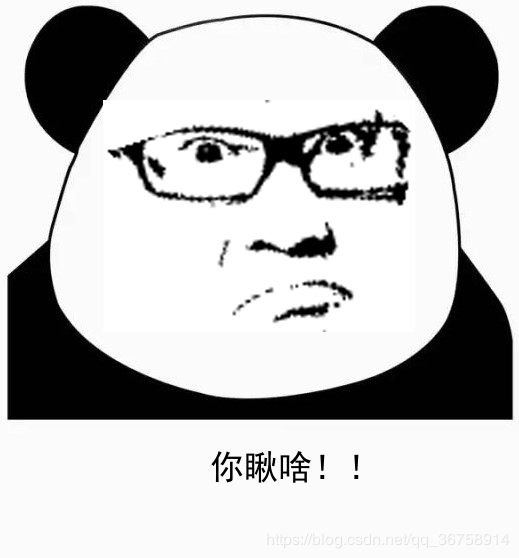
實現(xiàn)步驟
導(dǎo)入朋友的照片(前景照片);
處理前景照片(縮放、旋轉(zhuǎn),填充);
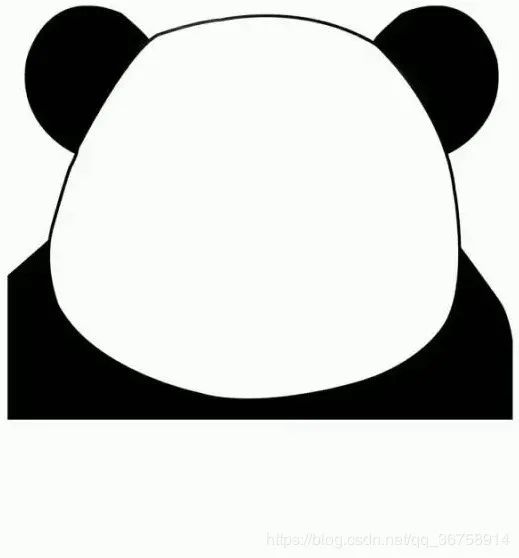
導(dǎo)入熊貓頭照片(背景照片);
將前景和背景拼接起來形成表情包;
在表情包下面添加文字。
1、導(dǎo)入需要的庫
import cv2import numpy as mpimport matplotlib.pyplot as pltfrom?PIL?import?Image,?ImageDraw,?ImageFont
這個項目主要是通過 opencv 完成,但如果要在表情包下面寫中文的話,PIL(pillow)庫是必不可少的。
2、繪圖函數(shù)
這里寫一個繪圖函數(shù),方便繪圖操作。
def plt_show(img):imageRGB = cv2.cvtColor(img, cv2.COLOR_BGR2RGB)plt.imshow(imageRGB)????plt.show()
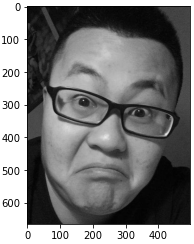
3、導(dǎo)入前景照片
image = cv2.imread('SXC.jpg', 0) # 導(dǎo)入灰度圖即可plt_show(image)
4、等比例縮放前景照片
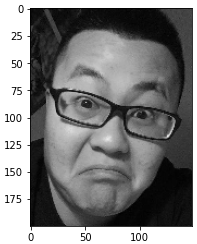
因為我們發(fā)現(xiàn)前景照片的尺寸比背景尺寸還要大,這顯然是不合適的,所以要先對其進(jìn)行等比例(0.3)縮放。
image_resize = cv2.resize(image, None, fx=0.3, fy=0.3, interpolation = cv2.INTER_CUBIC)plt_show(image_resize)
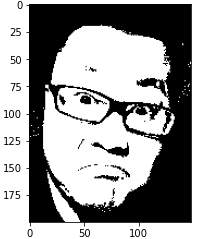
5、對前景照片進(jìn)行二值化處理
在這里,我們將像素值大于 80 的區(qū)域設(shè)置為 255;小于 80 的區(qū)域設(shè)置成 0。
ret, image_binary = cv2.threshold(image_resize, 80, 255, cv2.THRESH_BINARY)plt_show(image_binary)
6、提取出感興趣區(qū)域
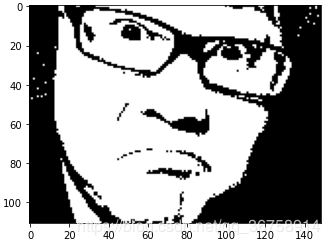
image_roi = image_binary[74: 185, 0: 150]plt_show(image_roi)
7、旋轉(zhuǎn)圖片
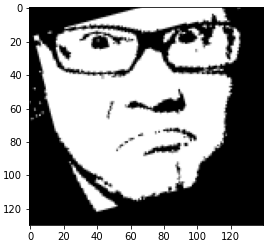
因為我們的背景圖片(熊貓頭)是正的,而前景圖片有些向右傾斜,所以要先對其進(jìn)行旋轉(zhuǎn)操作(大概逆時針旋轉(zhuǎn) 15 度即可)。
rows, cols = image_roi.shapeM = cv2.getRotationMatrix2D(((cols-1)/2.0, (rows-1)/2.0), 15, 1) # (旋轉(zhuǎn)中心,逆時針旋轉(zhuǎn)角度,各個方向同等擴(kuò)大比例)image_rotate = cv2.warpAffine(image_roi, M, (140, 130)) # (140, 130) 是指旋轉(zhuǎn)后的畫布大小plt_show(image_rotate)
8、將一些不需要的黑色區(qū)域刪除掉
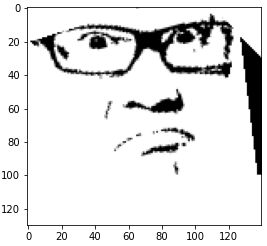
在這里我們使用?cv2.fillPoly?函數(shù)對不需要的區(qū)域用白色進(jìn)行填充。
h, w = image_rotate.shapeimage_rotate_copy = image_rotate.copy()pts1 = np.array([[0, 20], [64, 0], [0, 0]], np.int32)pts2 = np.array([[0, 18], [0, h], [80, h]], np.int32)pts3 = np.array([[0, 100], [0, h], [w, h], [w, 100]], np.int32)pts4 = np.array([[111, 0], [w, 0], [w, 30]], np.int32)pts5 = np.array([[124, 0], [115, h], [w, h]], np.int32)pts6 = np.array([[120, 40], [95, 100], [120, 100]], np.int32)foreground = cv2.fillPoly(image_rotate_copy, [pts1], (255, 255, 255)) # (圖片,填充區(qū)域,填充顏色)foreground = cv2.fillPoly(image_rotate_copy, [pts2], (255, 255, 255))foreground = cv2.fillPoly(image_rotate_copy, [pts3], (255, 255, 255))foreground = cv2.fillPoly(image_rotate_copy, [pts4], (255, 255, 255))foreground = cv2.fillPoly(image_rotate_copy, [pts5], (255, 255, 255))foreground = cv2.fillPoly(image_rotate_copy, [pts6], (255, 255, 255))plt_show(foreground)
9、再次提取感興趣區(qū)域并縮放
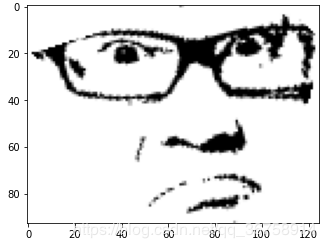
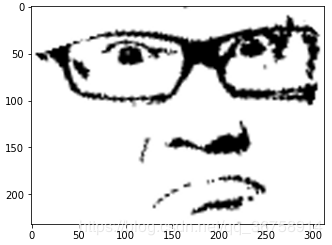
foreground_roi = foreground[0: 93, 0: 125]plt_show(foreground_roi)foreground_roi_resize = cv2.resize(foreground_roi, None, fx=2.5, fy=2.5, interpolation = cv2.INTER_CUBIC)plt_show(foreground_roi_resize)
10、導(dǎo)入背景圖片
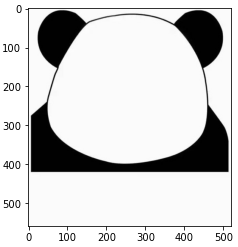
background = cv2.imread('back.jpg', 0)plt_show(background)
11、組合兩張圖片成表情包
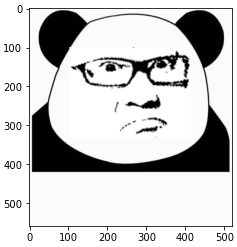
h_f, w_f = foreground.shapeh_b, w_b = background.shapeleft = (w_b - w_f)//2 # 前景圖片在背景圖片中的左邊的橫坐標(biāo)right = left + w_f # 前景圖片在背景圖片中的右邊的橫坐標(biāo)top = 100 # 前景圖片在背景圖片中的上邊的縱坐標(biāo)bottom = top + h_f # 前景圖片在背景圖片中的下邊的縱坐標(biāo)emoji = backgroundemoji[top: bottom, left: right] = foregroundplt_show(emoji)
12、在表情包下面添加文本
12.1 添加英文文本
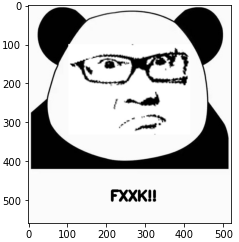
如果只是要添加英文文本,用 opencv 就可以解決:
emoji_copy = emoji.copy()# (圖片,文本,位置,字體,文本大小,文本顏色,文本粗細(xì))cv2.putText(emoji_copy, "FXXK!!", (210, 500), cv2.FONT_HERSHEY_SIMPLEX, 1.2, (0, 0, 0), 5)plt_show(emoji_copy)
12.2 添加中文文本
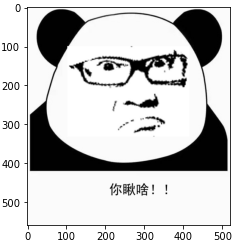
如果要添加中文文本,我們需要借助 PIL 庫來實現(xiàn)。
PilImg = Image.fromarray(emoji) # cv2 轉(zhuǎn) PILdraw = ImageDraw.Draw(PilImg) # 創(chuàng)建畫筆ttfront = ImageFont.truetype('simhei.ttf', 34) # 設(shè)置字體draw.text((210, 450),"你瞅啥!!",fill=0, font=ttfront) # (位置,文本,文本顏色,字體)emoji_text = cv2.cvtColor(np.array(PilImg),cv2.COLOR_RGB2BGR) # PIL 轉(zhuǎn)回 cv2plt_show(emoji_text)
13、保存表情包
cv2.imwrite('./emoji.png',?np.array(emoji_text))這樣一個表情包就完成了,是不是很簡單呢?
評論
圖片
表情