
虛擬DOM到底是什么?
是什么?
虛擬 DOM (Virtual DOM )這個(gè)概念相信大家都不陌生,從 React 到 Vue ,虛擬 DOM 為這兩個(gè)框架都帶來了跨平臺(tái)的能力(React-Native 和 Weex)。因?yàn)楹芏嗳耸窃趯W(xué)習(xí) React 的過程中接觸到的虛擬 DOM ,所以為先入為主,認(rèn)為虛擬 DOM 和 JSX 密不可分。其實(shí)不然,虛擬 DOM 和 JSX 固然契合,但 JSX 只是虛擬 DOM 的充分不必要條件,Vue 即使使用模版,也能把虛擬 DOM 玩得風(fēng)生水起,同時(shí)也有很多人通過 babel 在 Vue 中使用 JSX。
很多人認(rèn)為虛擬 DOM 最大的優(yōu)勢(shì)是 diff 算法,減少 JavaScript 操作真實(shí) DOM 的帶來的性能消耗。雖然這一個(gè)虛擬 DOM 帶來的一個(gè)優(yōu)勢(shì),但并不是全部。虛擬 DOM 最大的優(yōu)勢(shì)在于抽象了原本的渲染過程,實(shí)現(xiàn)了跨平臺(tái)的能力,而不僅僅局限于瀏覽器的 DOM,可以是安卓和 IOS 的原生組件,可以是近期很火熱的小程序,也可以是各種GUI。
回到最開始的問題,虛擬 DOM 到底是什么,說簡(jiǎn)單點(diǎn),就是一個(gè)普通的 JavaScript 對(duì)象,包含了 tag、props、children 三個(gè)屬性。
<div id="app">
  <p class="text">hello world!!!</p>
</div>
上面的 HTML 轉(zhuǎn)換為虛擬 DOM 如下:
{
  tag: 'div',
  props: {
    id: 'app'
  },
  chidren: [
    {
      tag: 'p',
      props: {
        className: 'text'
      },
      chidren: [
        'hello world!!!'
      ]
    }
  ]
}
該對(duì)象就是我們常說的虛擬 DOM 了,因?yàn)?DOM 是樹形結(jié)構(gòu),所以使用 JavaScript 對(duì)象就能很簡(jiǎn)單的表示。而原生 DOM 因?yàn)闉g覽器廠商需要實(shí)現(xiàn)眾多的規(guī)范(各種 HTML5 屬性、DOM事件),即使創(chuàng)建一個(gè)空的 div 也要付出昂貴的代價(jià)。虛擬 DOM 提升性能的點(diǎn)在于 DOM 發(fā)生變化的時(shí)候,通過 diff 算法比對(duì) JavaScript 原生對(duì)象,計(jì)算出需要變更的 DOM,然后只對(duì)變化的 DOM 進(jìn)行操作,而不是更新整個(gè)視圖。
那么我們到底該如何將一段 HTML 轉(zhuǎn)換為虛擬 DOM 呢?
從 h 函數(shù)說起
觀察主流的虛擬 DOM 庫(snabbdom、virtual-dom),通常都有一個(gè) h 函數(shù),也就是 React 中的 React.createElement,以及 Vue 中的 render 方法中的 createElement,另外 React 是通過 babel 將 jsx 轉(zhuǎn)換為 h 函數(shù)渲染的形式,而 Vue 是使用 vue-loader 將模版轉(zhuǎn)為 h 函數(shù)渲染的形式(也可以通過 babel-plugin-transform-vue-jsx 插件在 vue 中使用 jsx,本質(zhì)還是轉(zhuǎn)換為 h 函數(shù)渲染形式)。
我們先使用 babel,將一段 jsx 代碼,轉(zhuǎn)換為一段 js 代碼:
安裝 babel 依賴
npm i -D @babel/cli @babel/core @babel/plugin-transform-react-jsx
配置 .babelrc
{
    "plugins": [
        [
            "@babel/plugin-transform-react-jsx",
            {
                "pragma": "h", // default pragma is React.createElement
            }
        ]
    ]
}
轉(zhuǎn)譯 jsx
在目錄下新建一個(gè) main.jsx
function getVDOM() {
  return (
    <div id="app">
      <p className="text">hello world!!!</p>
    </div>
  )
}
使用如下命令進(jìn)行轉(zhuǎn)譯:
npx babel main.jsx --out-file main-compiled.js
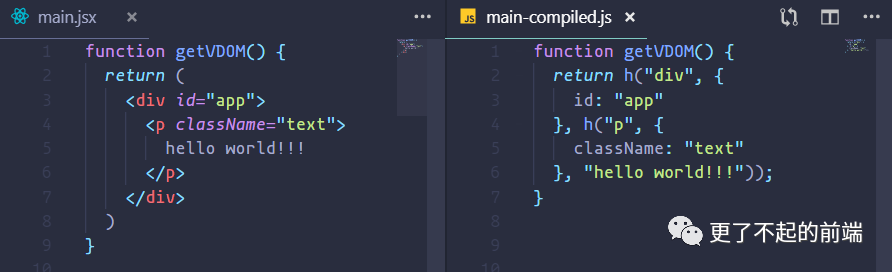
可以看到,最終 HTML 代碼會(huì)被轉(zhuǎn)譯成 h 函數(shù)的渲染形式。h 函數(shù)接受是三個(gè)參數(shù),分別代表是 DOM 元素的標(biāo)簽名、屬性、子節(jié)點(diǎn),最終返回一個(gè)虛擬 DOM 的對(duì)象。
function h(tag, props, ...children) {
  return {
    tag,
    props: props || {},
    children: children.flat()
  }
}
渲染虛擬 DOM
雖然虛擬 DOM 可以渲染到多個(gè)平臺(tái),但是這里講一下在瀏覽器環(huán)境下如何渲染虛擬 DOM。
function render(vdom) {
  // 如果是字符串或者數(shù)字,創(chuàng)建一個(gè)文本節(jié)點(diǎn)
  if (typeof vdom === 'string' || typeof vdom === 'number') {
    return document.createTextNode(vdom)
  }
  const { tag, props, children } = vdom
  // 創(chuàng)建真實(shí)DOM
  const element = document.createElement(tag)
  // 設(shè)置屬性
  setProps(element, props)
  // 遍歷子節(jié)點(diǎn),并獲取創(chuàng)建真實(shí)DOM,插入到當(dāng)前節(jié)點(diǎn)
  children
    .map(render)
    .forEach(element.appendChild.bind(element))

  // 虛擬 DOM 中緩存真實(shí) DOM 節(jié)點(diǎn)
  vdom.dom = element

  // 返回 DOM 節(jié)點(diǎn)
  return element
}

function setProps (element, props) {
  Object.entries(props).forEach(([key, value]) => {
    setProp(element, key, value)
  })
}

function setProp (element, key, vlaue) {
  element.setAttribute(
    // className使用class代替
    key === 'className' ? 'class' : key,
    vlaue
  )
}
將虛擬 DOM 渲染成真實(shí) DOM 后,只需要插入到對(duì)應(yīng)的根節(jié)點(diǎn)即可。
const vdom = <div>hello world!!!</div> // h('div', {}, 'hello world!!!')
const app = document.getElementById('app')
const ele = render(vdom)
app.appendChild(ele)
當(dāng)然在現(xiàn)代化的框架中,一般會(huì)有一個(gè)組件文件專門用來構(gòu)造虛擬 DOM,我們模仿 React 使用 class 的方式編寫組件,然后渲染到頁面中。
class Component {
  vdom = null // 組件的虛擬DOM表示
  $el  = null // 虛擬DOM生成的真實(shí)節(jié)點(diǎn)

  state = {
    text: 'Initialize the Component'
  }

  render() {
    const { text } = this.state
    return (
      <div>{ text }</div>
    )
  }
}

function createElement (app, component) {
  const vdom = component.render()
  component.vdom = vdom
  component.$el = render(vdom) // 將虛擬 DOM 轉(zhuǎn)換為真實(shí) DOM
  app.appendChild(component.$el)
}

const app = document.getElementById('app')
const component = new Component
createElement(app, component)
diff 算法
diff 算法,顧名思義,就是比對(duì)新老 VDOM 的變化,然后將變化的部分更新到視圖上。對(duì)應(yīng)到代碼上,就是一個(gè) diff 函數(shù),返回一個(gè) patches (補(bǔ)丁)。
const before  = h('div', {}, 'before text')
const after   = h('div', {}, 'after text')

const patches = diff(before, after)
修改我們之前的組件,增加 setState 方法,用于修改組件的內(nèi)部狀態(tài)。
class Component {
  vdom = null // 組件的虛擬DOM表示
  $el = null // 虛擬DOM生成的真實(shí)節(jié)點(diǎn)

  state = {
    text: 'Initialize the Component'
  }

  // 手動(dòng)修改組件state
  setState(newState) {
    this.state = {
      ...this.state,
      ...newState
    }
    const newVdom = this.render()
    const patches = diff(this.vdom, newVdom)
    patch(this.$el, patches)
  }

  changeText(text) {
    this.setState({
      text
    })
  }

  render() {
    const { text } = this.state
    return (
      <div>{ text }</div>
    )
  }
}
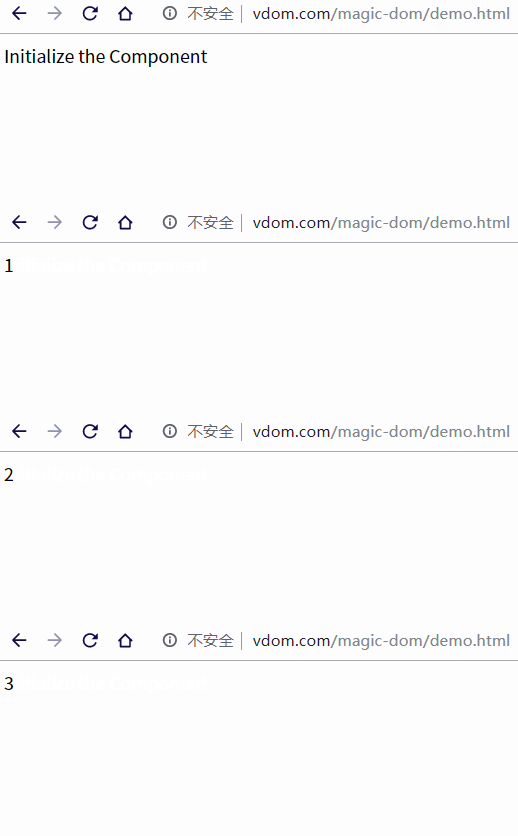
當(dāng)我們調(diào)用 setState 時(shí),state 內(nèi)部狀態(tài)發(fā)生變動(dòng),再次調(diào)用 render 方法就會(huì)生成一個(gè)新的虛擬 DOM 樹,這樣我們就能使用 diff 方法計(jì)算出新老虛擬 DOM 發(fā)送變化的部分,最后使用 patch 方法,將變動(dòng)渲染到視圖中。
const app = document.getElementById('app')
const component = new Component
createElement(app, component)

// 將文本更改為數(shù)字,每秒 +1
let count = 0
setInterval(() => {
  component.changeText(++count)
}, 1000);
diff 算法的進(jìn)化
關(guān)于 diff 算法的最經(jīng)典的就是 Matt Esch 的 virtual-dom,以及 snabbdom(被整合進(jìn) vue 2.0中)。
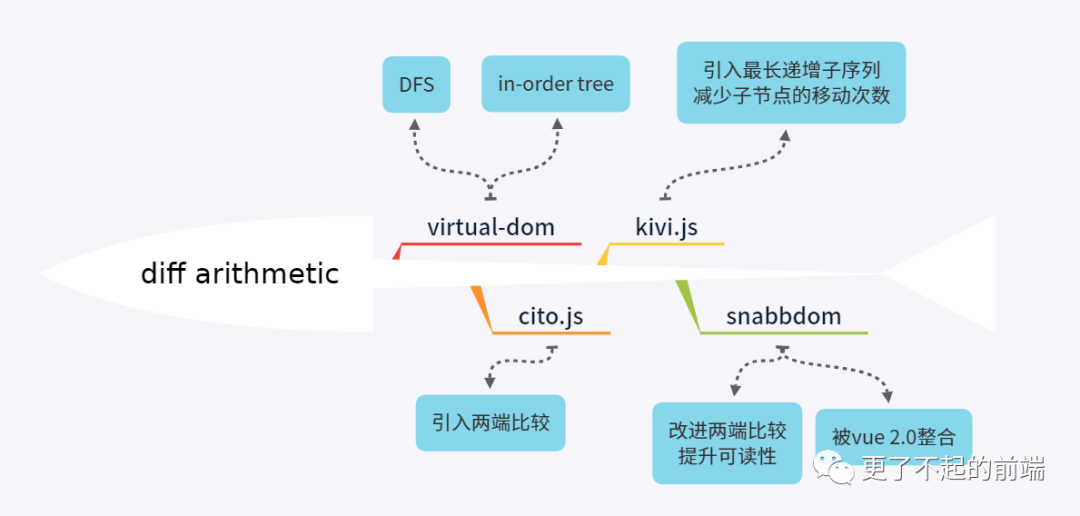
“最開始出現(xiàn)的是 virtual-dom 這個(gè)庫,是大家好奇 React 為什么這么快而搞鼓出來的。它的實(shí)現(xiàn)是非常學(xué)院風(fēng)格,通過深度優(yōu)先搜索與 in-order tree 來實(shí)現(xiàn)高效的 diff 。它與 React 后來公開出來的算法是很不一樣。然后是 cito.js 的橫空出世,它對(duì)今后所有虛擬 DOM 的算法都有重大影響。它采用兩端同時(shí)進(jìn)行比較的算法,將 diff 速度拉高到幾個(gè)層次。緊隨其后的是 kivi.js,在 cito.js 的基出提出兩項(xiàng)優(yōu)化方案,使用 key 實(shí)現(xiàn)移動(dòng)追蹤以及及基于 key 的最長(zhǎng)自增子序列算法應(yīng)用(算法復(fù)雜度 為O(n^2))。但這樣的 diff 算法太過復(fù)雜了,于是后來者 snabbdom 將 kivi.js 進(jìn)行簡(jiǎn)化,去掉編輯長(zhǎng)度矩離算法,調(diào)整兩端比較算法。速度略有損失,但可讀性大大提高。再之后,就是著名的vue2.0 把sanbbdom整個(gè)庫整合掉了。
“引用自司徒正美的文章 去哪兒網(wǎng)迷你React的研發(fā)心得
下面我們就來講講這幾個(gè)虛擬 DOM 庫 diff 算法的具體實(shí)現(xiàn):
1?? virtual-dom
virtual-dom 作為虛擬 DOM 開天辟地的作品,采用了對(duì) DOM 樹進(jìn)行了深度優(yōu)先的遍歷的方法。
DOM 樹的遍歷
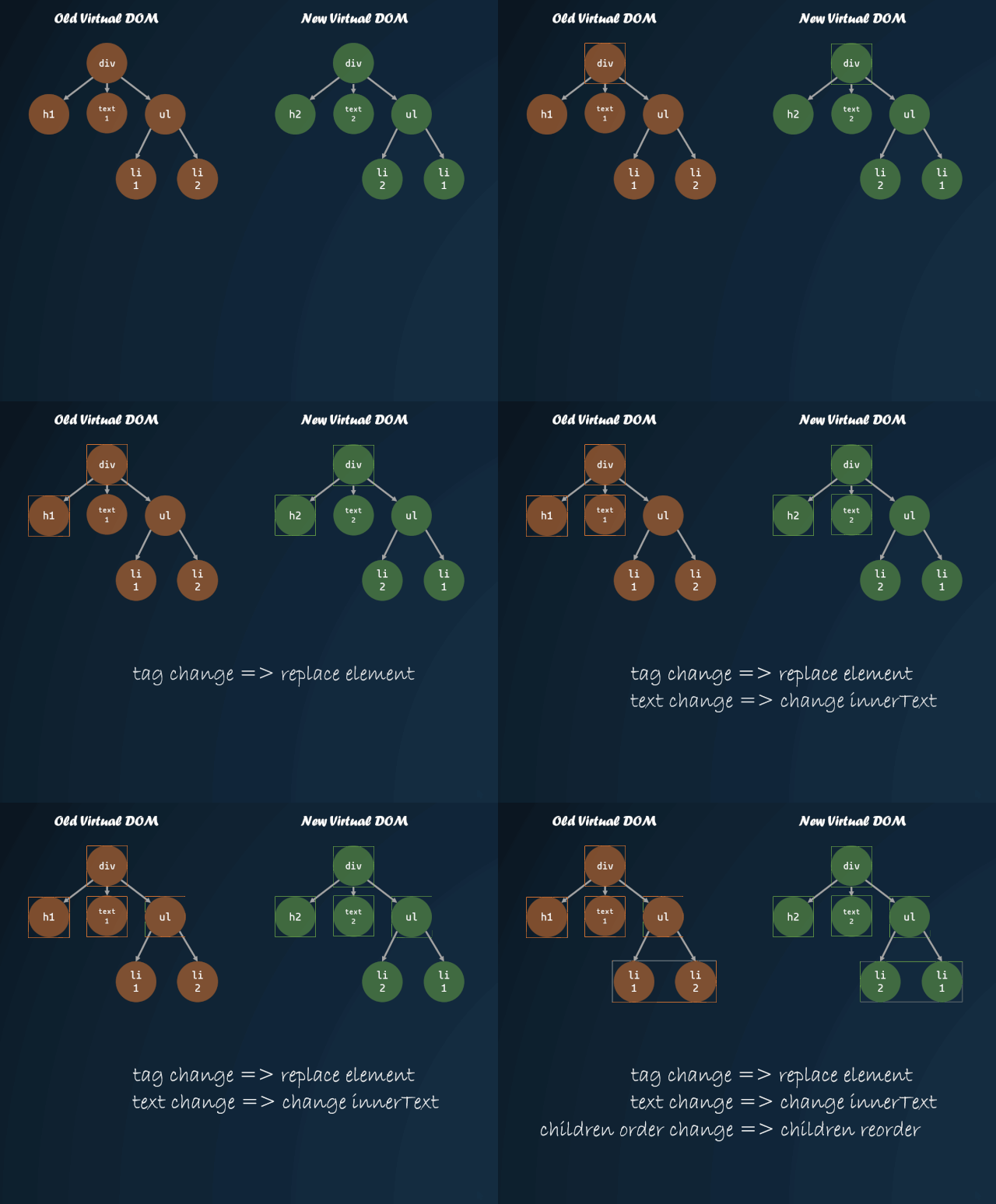
體現(xiàn)到代碼上:
function diff (oldNode, newNode) {
  const patches = []
  walk(oldNode, newNode, patches, 0) // 進(jìn)行深度優(yōu)先遍歷
  return patches
}

function walk(oldNode, newNode, patches, index) {
  if (newNode === oldNode) {
    return
  }

  const patch = { type: 'update', vNode: newNode }

  const oldChildren = oldNode.children
  const newChildren = newNode.children
  const oldLen = oldChildren.length
  const newLen = newChildren.length
  const len = oldLen > newLen ? oldLen : newLen
  // 找到對(duì)應(yīng)位置的子節(jié)點(diǎn)進(jìn)行比對(duì)
  for (let i = 0; i < len; i++) {
    const oldChild = oldChildren[i]
    const newChild = newChildren[i]
    index++
    // 相同節(jié)點(diǎn)進(jìn)行比對(duì)
    walk(oldChild, newChild, patches, index)
    if (isArray(oldChild.children)) {
      index += oldChild.children.length
    }
  }

  if (patch) {
    patches[index] = patch
  }
}
VDOM 節(jié)點(diǎn)的對(duì)比
上面代碼只是對(duì) VDOM 進(jìn)行了簡(jiǎn)單的深度優(yōu)先遍歷,在遍歷中,還需要對(duì)每個(gè) VDOM 進(jìn)行一些對(duì)比,具體分為以下幾種情況:
舊節(jié)點(diǎn)不存在,插入新節(jié)點(diǎn);新節(jié)點(diǎn)不存在,刪除舊節(jié)點(diǎn) 新舊節(jié)點(diǎn)如果都是 VNode,且新舊節(jié)點(diǎn) tag 相同 對(duì)比新舊節(jié)點(diǎn)的屬性 對(duì)比新舊節(jié)點(diǎn)的子節(jié)點(diǎn)差異,通過 key 值進(jìn)行重排序,key 值相同節(jié)點(diǎn)繼續(xù)向下遍歷 新舊節(jié)點(diǎn)如果都是 VText,判斷兩者文本是否發(fā)生變化 其他情況直接用新節(jié)點(diǎn)替代舊節(jié)點(diǎn)
import { isVNode, isVText, isArray } from '../utils/type'

function walk(oldNode, newNode, patches, index) {
  if (newNode === oldNode) {
    return
  }

  let patch = patches[index]

  if (!oldNode) {
    // 舊節(jié)點(diǎn)不存在,直接插入
    patch = appendPatch(patch, {
      type: PATCH.INSERT,
      vNode: newNode,
    })
  } else if (!newNode) {
    // 新節(jié)點(diǎn)不存在,刪除舊節(jié)點(diǎn)
    patch = appendPatch(patch, {
      type: PATCH.REMOVE,
      vNode: null,
    })
  } else if (isVNode(newNode)) {
    if (isVNode(oldNode)) {
      // 相同類型節(jié)點(diǎn)的 diff
      if (newNode.tag === oldNode.tag && newNode.key === oldNode.key) {
        // 新老節(jié)點(diǎn)屬性的對(duì)比
        const propsPatch = diffProps(newNode.props, oldNode.props)
        if (propsPatch && propsPatch.length > 0) {
          patch = appendPatch(patch, {
            type: PATCH.PROPS,
            patches: propsPatch,
          })
        }
        // 新老節(jié)點(diǎn)子節(jié)點(diǎn)的對(duì)比
        patch = diffChildren(oldNode, newNode, patches, patch, index)
      }
    } else {
      // 新節(jié)點(diǎn)替換舊節(jié)點(diǎn)
      patch = appendPatch(patch, {
        type: PATCH.REPLACE,
        vNode: newNode,
      })
    }
  } else if (isVText(newNode)) {
    if (!isVText(oldNode)) {
      // 將舊節(jié)點(diǎn)替換成文本節(jié)點(diǎn)
      patch = appendPatch(patch, {
        type: PATCH.VTEXT,
        vNode: newNode,
      })
    } else if (newNode.text !== oldNode.text) {
      // 替換文本
      patch = appendPatch(patch, {
        type: PATCH.VTEXT,
        vNode: newNode,
      })
    }
  }

  if (patch) {
    // 將補(bǔ)丁放入對(duì)應(yīng)位置
    patches[index] = patch
  }
}

// 一個(gè)節(jié)點(diǎn)可能有多個(gè) patch
// 多個(gè)patch時(shí),使用數(shù)組進(jìn)行存儲(chǔ)
function appendPatch(patch, apply) {
  if (patch) {
    if (isArray(patch)) {
      patch.push(apply)
    } else {
      patch = [patch, apply]
    }

    return patch
  } else {
    return apply
  }
}
屬性的對(duì)比
function diffProps(newProps, oldProps) {
  const patches = []
  const props = Object.assign({}, newProps, oldProps)

  Object.keys(props).forEach(key => {
    const newVal = newProps[key]
    const oldVal = oldProps[key]
    if (!newVal) {
      patches.push({
        type: PATCH.REMOVE_PROP,
        key,
        value: oldVal,
      })
    }

    if (oldVal === undefined || newVal !== oldVal) {
      patches.push({
        type: PATCH.SET_PROP,
        key,
        value: newVal,
      })
    }
  })

  return patches
}
子節(jié)點(diǎn)的對(duì)比
這一部分可以說是 diff 算法中,變動(dòng)最多的部分,因?yàn)榍懊娴牟糠郑鱾€(gè)庫對(duì)比的方向基本一致,而關(guān)于子節(jié)點(diǎn)的對(duì)比,各個(gè)倉庫都在前者基礎(chǔ)上不斷得進(jìn)行改進(jìn)。
首先需要明白,為什么需要改進(jìn)子節(jié)點(diǎn)的對(duì)比方式。如果我們直接按照深度優(yōu)先遍歷的方式,一個(gè)個(gè)去對(duì)比子節(jié)點(diǎn),子節(jié)點(diǎn)的順序發(fā)生改變,那么就會(huì)導(dǎo)致 diff 算法認(rèn)為所有子節(jié)點(diǎn)都需要進(jìn)行 replace,重新將所有子節(jié)點(diǎn)的虛擬 DOM 轉(zhuǎn)換成真實(shí) DOM,這種操作是十分消耗性能的。
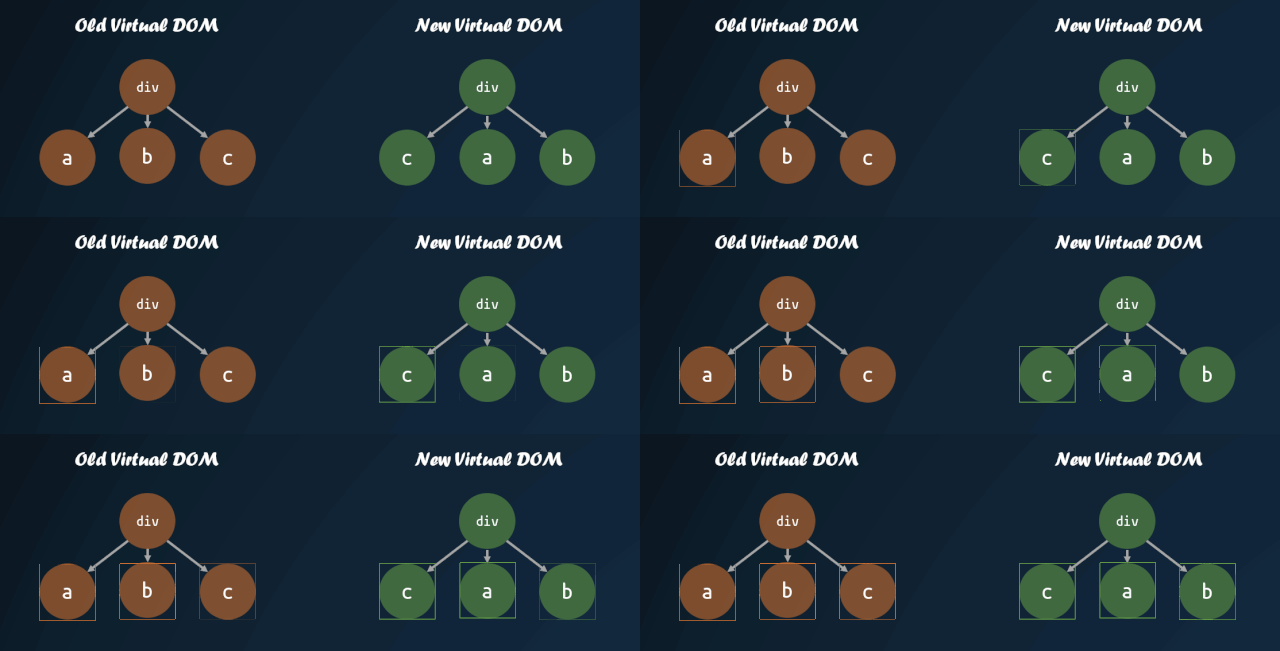
但是,如果我們能夠找到新舊虛擬 DOM 對(duì)應(yīng)的位置,然后進(jìn)行移動(dòng),那么就能夠盡量減少 DOM 的操作。
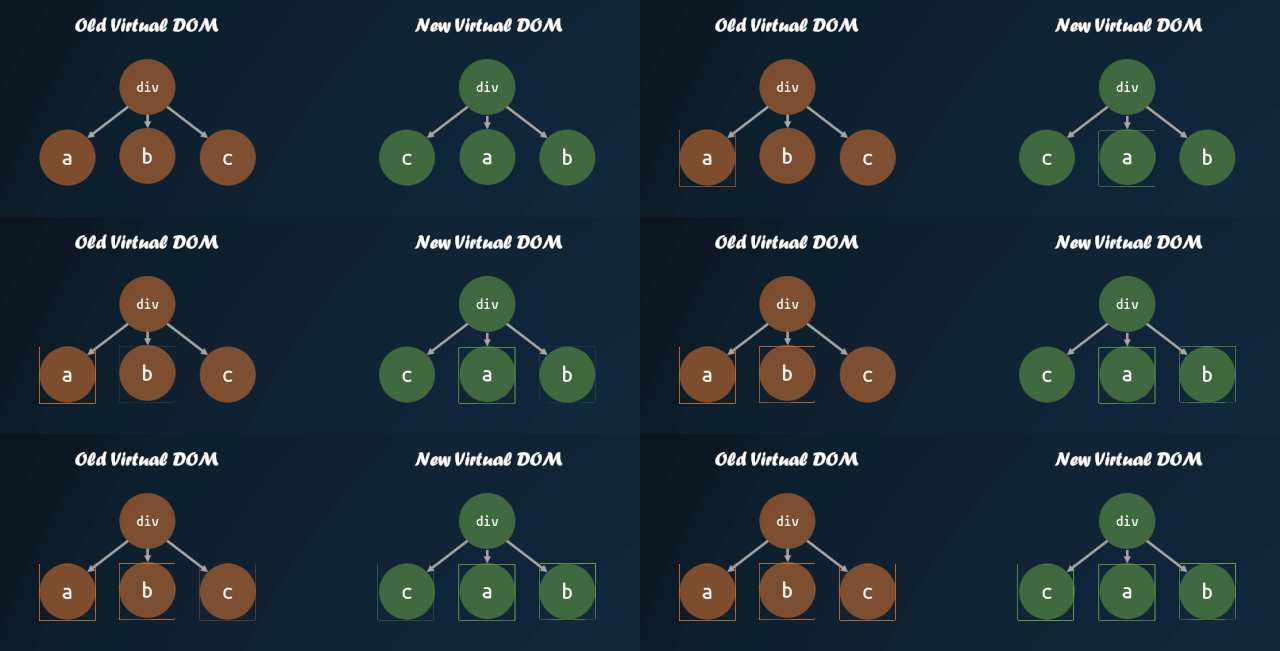
virtual-dom 在一開始就進(jìn)行了這方面的嘗試,對(duì)子節(jié)點(diǎn)添加 key 值,通過 key 值的對(duì)比,來判斷子節(jié)點(diǎn)是否進(jìn)行了移動(dòng)。通過 key 值對(duì)比子節(jié)點(diǎn)是否移動(dòng)的模式,被各個(gè)庫沿用,這也就是為什么主流的視圖庫中,子節(jié)點(diǎn)如果缺失 key 值,會(huì)有 warning 的原因。

具體是怎么對(duì)比的,我們先看代碼:
function diffChildren(oldNode, newNode, patches, patch, index) {
  const oldChildren = oldNode.children
  // 新節(jié)點(diǎn)按舊節(jié)點(diǎn)的順序重新排序
  const sortedSet = sortChildren(oldChildren, newNode.children)
  const newChildren = sortedSet.children
  const oldLen = oldChildren.length
  const newLen = newChildren.length
  const len = oldLen > newLen ? oldLen : newLen
  for (let i = 0; i < len; i++) {
    var leftNode = oldChildren[i]
    var rightNode = newChildren[i]
    index++

    if (!leftNode) {
      if (rightNode) {
        // 舊節(jié)點(diǎn)不存在,新節(jié)點(diǎn)存在,進(jìn)行插入操作
        patch = appendPatch(patch, {
          type: PATCH.INSERT,
          vNode: rightNode,
        })
      }
    } else {
      // 相同節(jié)點(diǎn)進(jìn)行比對(duì)
      walk(leftNode, rightNode, patches, index)
    }
    if (isVNode(leftNode) && isArray(leftNode.children)) {
      index += leftNode.children.length
    }
  }

  if (sortedSet.moves) {
    // 最后進(jìn)行重新排序
    patch = appendPatch(patch, {
      type: PATCH.ORDER,
      moves: sortedSet.moves,
    })
  }

  return patch
}
這里首先需要對(duì)新的子節(jié)點(diǎn)進(jìn)行重排序,先進(jìn)行相同節(jié)點(diǎn)的 diff ,最后把子節(jié)點(diǎn)按照新的子節(jié)點(diǎn)順序重新排列。

這里有個(gè)較復(fù)雜的部分,就是對(duì)子節(jié)點(diǎn)的重新排序。
function sortChildren(oldChildren, newChildren) {
// 找出變化后的子節(jié)點(diǎn)中帶 key 的 vdom (keys),和不帶 key 的 vdom (free)
const newChildIndex = keyIndex(newChildren)
const newKeys = newChildIndex.keys
const newFree = newChildIndex.free
// 所有子節(jié)點(diǎn)無 key 不進(jìn)行對(duì)比
if (newFree.length === newChildren.length) {
return {
children: newChildren,
moves: null,
}
}
// 找出變化前的子節(jié)點(diǎn)中帶 key 的 vdom (keys),和不帶 key 的 vdom (free)
const oldChildIndex = keyIndex(oldChildren)
const oldKeys = oldChildIndex.keys
const oldFree = oldChildIndex.free
// 所有子節(jié)點(diǎn)無 key 不進(jìn)行對(duì)比
if (oldFree.length === oldChildren.length) {
return {
children: newChildren,
moves: null,
}
}
// O(MAX(N, M)) memory
const shuffle = []
const freeCount = newFree.length
let freeIndex = 0
let deletedItems = 0
// 遍歷變化前的子節(jié)點(diǎn),對(duì)比變化后子節(jié)點(diǎn)的 key 值
// 并按照對(duì)應(yīng)順序?qū)⒆兓笞庸?jié)點(diǎn)的索引放入 shuffle 數(shù)組中
for (let i = 0; i < oldChildren.length; i++) {
const oldItem = oldChildren[i]
let itemIndex
if (oldItem.key) {
if (newKeys.hasOwnProperty(oldItem.key)) {
// 匹配到變化前節(jié)點(diǎn)中存在的 key
itemIndex = newKeys[oldItem.key]
shuffle.push(newChildren[itemIndex])
} else {
// 移除變化后節(jié)點(diǎn)不存在的 key 值
deletedItems++
shuffle.push(null)
}
} else {
if (freeIndex < freeCount) {
// 匹配變化前后的無 key 子節(jié)點(diǎn)
itemIndex = newFree[freeIndex++]
shuffle.push(newChildren[itemIndex])
} else {
// 如果變化后子節(jié)點(diǎn)中已經(jīng)不存在無 key 項(xiàng)
// 變化前的無 key 項(xiàng)也是多余項(xiàng),故刪除
deletedItems++
shuffle.push(null)
}
}
}
const lastFreeIndex =
freeIndex >= newFree.length ? newChildren.length : newFree[freeIndex]
// 遍歷變化后的子節(jié)點(diǎn),將所有之前不存在的 key 對(duì)應(yīng)的子節(jié)點(diǎn)放入 shuffle 數(shù)組中
for (let j = 0; j < newChildren.length; j++) {
const newItem = newChildren[j]
if (newItem.key) {
if (!oldKeys.hasOwnProperty(newItem.key)) {
// 添加所有新的 key 值對(duì)應(yīng)的子節(jié)點(diǎn)
// 之后還會(huì)重新排序,我們會(huì)在適當(dāng)?shù)牡胤讲迦胄略龉?jié)點(diǎn)
shuffle.push(newItem)
}
} else if (j >= lastFreeIndex) {
// 添加剩余的無 key 子節(jié)點(diǎn)
shuffle.push(newItem)
}
}
const simulate = shuffle.slice()
const removes = []
const inserts = []
let simulateIndex = 0
let simulateItem
let wantedItem
for (let k = 0; k < newChildren.length; ) {
wantedItem = newChildren[k] // 期待元素: 表示變化后 k 的子節(jié)點(diǎn)
simulateItem = simulate[simulateIndex] // 模擬元素: 表示變化前 k 位置的子節(jié)點(diǎn)
// 刪除在變化后不存在的子節(jié)點(diǎn)
while (simulateItem === null && simulate.length) {
removes.push(remove(simulate, simulateIndex, null))
simulateItem = simulate[simulateIndex]
}
if (!simulateItem || simulateItem.key !== wantedItem.key) {
// 期待元素的 key 值存在
if (wantedItem.key) {
if (simulateItem && simulateItem.key) {
// 如果一個(gè)帶 key 的子元素沒有在合適的位置,則進(jìn)行移動(dòng)
if (newKeys[simulateItem.key] !== k + 1) {
removes.push(remove(simulate, simulateIndex, simulateItem.key))
simulateItem = simulate[simulateIndex]
// if the remove didn't put the wanted item in place, we need to insert it
if (!simulateItem || simulateItem.key !== wantedItem.key) {
inserts.push({ key: wantedItem.key, to: k })
}
// items are matching, so skip ahead
else {
simulateIndex++
}
} else {
inserts.push({ key: wantedItem.key, to: k })
}
} else {
inserts.push({ key: wantedItem.key, to: k })
}
k++
}
// 該位置期待元素的 key 值不存在,且模擬元素存在 key 值
else if (simulateItem && simulateItem.key) {
// 變化前該位置的元素
removes.push(remove(simulate, simulateIndex, simulateItem.key))
}
} else {
// 如果期待元素和模擬元素 key 值相等,跳到下一個(gè)子節(jié)點(diǎn)比對(duì)
simulateIndex++
k++
}
}
// 移除所有的模擬元素
while (simulateIndex < simulate.length) {
simulateItem = simulate[simulateIndex]
removes.push(
remove(simulate, simulateIndex, simulateItem && simulateItem.key)
)
}
// 如果只有刪除選項(xiàng)中有值
// 將操作直接交個(gè) delete patch
if (removes.length === deletedItems && !inserts.length) {
return {
children: shuffle,
moves: null,
}
}
return {
children: shuffle,
moves: {
removes: removes,
inserts: inserts,
},
}
}
function keyIndex(children) {
const keys = {}
const free = []
const length = children.length
for (let i = 0; i < length; i++) {
const child = children[i]
if (child.key) {
keys[child.key] = i
} else {
free.push(i)
}
}
return {
keys: keys, // 子節(jié)點(diǎn)中所有存在的 key 對(duì)應(yīng)的索引
free: free, // 子節(jié)點(diǎn)中不存在 key 值的索引
}
}
function remove(arr, index, key) {
arr.splice(index, 1) // 移除數(shù)組中指定元素
return {
from: index,
key: key,
}
}
這一部分比較復(fù)雜,具體可以查看 virtual-dom 的兩個(gè) pr ,這兩個(gè) pr 里面討論了關(guān)于 diff 子節(jié)點(diǎn)重新排序的優(yōu)化邏輯。
Rewrite reorder Rewrite reorder (part 2)
更新 DOM
在拿到了 VDOM 的 diff 結(jié)果后,需要將得到的 patches 更新到視圖上。
function patch(rootNode, patches) {
  if (!patches || patches.length === 0) return
  // 取得對(duì)應(yīng) index 的真實(shí) DOM
  const nodes = domIndex(rootNode)
  patches.forEach((patch, index) => {
    patch && applyPatch(nodes[index], patch)
  })
}

function domIndex(rootNode) {
  const nodes = [rootNode]
  const children = rootNode.childNodes
  if (children.length) {
    for (let child of children) {
      if (child.nodeType === 1 || child.nodeType === 3) {
        if (child.nodeType === 1) {
          nodes.push(...domIndex(child))
        } else if (child.nodeType === 3) {
          nodes.push(child)
        }
      }
    }
  }
  return nodes
}
遍歷patches,然后得到每個(gè)真實(shí) DOM 和其對(duì)應(yīng)的 patch,然后在真實(shí) DOM 上進(jìn)行更新:
function applyPatch(node, patchList) {
  for (let patch of patchList) {
    patchOp(node, patch)
  }
}
function patchOp(node, patch) {
  const { type, vNode } = patch
  const parentNode = node.parentNode
  let newNode = null
  switch (type) {
    case PATCH.INSERT:
      // 插入新節(jié)點(diǎn)
      break
    case PATCH.REMOVE:
      // 刪除舊新節(jié)點(diǎn)
      break
    case PATCH.REPLACE:
      // 替換節(jié)點(diǎn)
      break
    case PATCH.ORDER:
      // 子節(jié)點(diǎn)重新排序
      break
    case PATCH.VTEXT:
      // 替換文本節(jié)點(diǎn)
      break
    case PATCH.PROPS:
      // 更新節(jié)點(diǎn)屬性
      break
    default:
      break
  }
}
這里每一步操作,不進(jìn)行具體展開,感興趣的話可以在我的 github 查看完整代碼。
2?? cito.js
cito 其他步驟與 virtual-dom 類似,最大的差異點(diǎn)就在子節(jié)點(diǎn)的對(duì)比上,而且 cito 移除了 patch 更新,在 diff 的過程中,直接更新真實(shí) DOM ,這樣省去了 patch 的存儲(chǔ),一定程度上節(jié)省了內(nèi)存,后面其他的 VDOM 庫基本使用這種方式。
我們?cè)賮砜纯?cito 在子節(jié)點(diǎn)的對(duì)比上,到底有何優(yōu)化?
其實(shí)前面我們已經(jīng)介紹過了,cito 主要變化就是引入了兩端對(duì)比,將 diff 算法的速度提升了幾個(gè)量級(jí)。

/**
 * 子節(jié)點(diǎn)對(duì)比
 * @param {Element} domNode   父節(jié)點(diǎn)的真實(shí)DOM
 * @param {Array} oldChildren 舊的子節(jié)點(diǎn)
 * @param {Array} children    新的子節(jié)點(diǎn)
 */
function updateChildren(domNode, oldChildren, children) {
  const oldChildrenLength = oldChildren.length
  const childrenLength = children.length

  let oldEndIndex = oldChildrenLength - 1
  let endIndex = childrenLength - 1
  let oldStartIndex = 0
  let startIndex = 0
  let successful = true
  let nextChild

  // 兩端對(duì)比算法
  outer: while (
    successful &&
    oldStartIndex <= oldEndIndex &&
    startIndex <= endIndex
  ) {
    successful = false
    let oldStartChild = oldChildren[oldStartIndex]
    let startChild = children[startIndex]
    while (oldStartChild.key === startChild.key) {
      // 子節(jié)點(diǎn)對(duì)比
      updateNode(oldStartChild, startChild, domNode)
      oldStartIndex++
      startIndex++
      if (oldStartIndex > oldEndIndex || startIndex > endIndex) {
        break outer
      }
      oldStartChild = oldChildren[oldStartIndex]
      startChild = children[startIndex]
      successful = true
    }
    let oldEndChild = oldChildren[oldEndIndex]
    let endChild = children[endIndex]
    while (oldEndChild.key === endChild.key) {
      // 子節(jié)點(diǎn)對(duì)比
      updateNode(oldEndChild, endChild, domNode)
      oldEndIndex--
      endIndex--
      if (oldStartIndex > oldEndIndex || startIndex > endIndex) {
        break outer
      }
      oldEndChild = oldChildren[oldEndIndex]
      endChild = children[endIndex]
      successful = true
    }

    while (oldStartChild.key === endChild.key) {
      nextChild = endIndex + 1 < childrenLength ? children[endIndex + 1] : null
      // 子節(jié)點(diǎn)對(duì)比
      updateNode(oldStartChild, endChild, domNode)
      // 移動(dòng)子節(jié)點(diǎn)
      moveChild(domNode, endChild, nextChild)
      oldStartIndex++
      endIndex--
      if (oldStartIndex > oldEndIndex || startIndex > endIndex) {
        break outer
      }
      oldStartChild = oldChildren[oldStartIndex]
      endChild = children[endIndex]
      successful = true
    }
    while (oldEndChild.key === startChild.key) {
      nextChild = oldStartIndex < oldChildrenLength ? oldChildren[oldStartIndex] : null
      // 子節(jié)點(diǎn)對(duì)比
      updateNode(oldEndChild, startChild, domNode)
      // 移動(dòng)子節(jié)點(diǎn)
      moveChild(domNode, startChild, nextChild)
      oldEndIndex--
      startIndex++
      if (oldStartIndex > oldEndIndex || startIndex > endIndex) {
        break outer
      }
      oldEndChild = oldChildren[oldEndIndex]
      startChild = children[startIndex]
      successful = true
    }
  }
}
子節(jié)點(diǎn)對(duì)比:
function updateNode(oldNode, node, domParent) {
  if (node === oldNode) {
    return
  }

  const tag = node.tag

  if (oldNode.tag !== tag) {
    // 標(biāo)簽不一致,創(chuàng)建新節(jié)點(diǎn)
    createNode(node, domParent, oldNode, true)
  } else {
    const oldChildren = oldNode.children
    const children = node.children
    const domNode = oldNode.dom
    node.dom = domNode // 真實(shí) DOM 掛在到 虛擬 DOM 上
    // 子節(jié)點(diǎn)對(duì)比
    if (children !== oldChildren) {
      updateChildren(domNode, node, oldChildren, children)
    }

    const oldProps = oldNode.props
    const props = node.props
    // 屬性對(duì)比
    if (props !== oldProps) {
      updateAttributes(domNode, props, oldProps)
    }
  }
}
移動(dòng)子節(jié)點(diǎn):
function moveChild(domNode, child, nextChild) {
  const domRefChild = nextChild && nextChild.dom
  let domChild = child.dom
  if (domChild !== domRefChild) {
    if (domRefChild) {
      domNode.insertBefore(domChild, domRefChild)
    } else {
      domNode.appendChild(domChild)
    }
  }
}
3?? kivi.js
kivi 的 diff 算法在 cito 的基礎(chǔ)上,引入了最長(zhǎng)增長(zhǎng)子序列,通過子序列找到最小的 DOM 操作數(shù)。
算法思想
“翻譯自 kivi/lib/reconciler.ts
該算法用于找到最小的 DOM 操作數(shù),可以分為以下幾步:
1. 找到數(shù)組中首部和尾部公共的節(jié)點(diǎn),并在兩端移動(dòng)
該方法通過比對(duì)兩端的 key 值,找到舊節(jié)點(diǎn)(A) 和新節(jié)點(diǎn)(B)中索引相同的節(jié)點(diǎn)。
  A: -> [a b c d e f g] <-
  B:    [a b f d c g]
這里我們可以跳過首部的 a 和 b,以及尾部的 g。
  A: -> [c d e f] <-
  B:    [f d c]
此時(shí),將嘗試對(duì)邊進(jìn)行比較,如果在對(duì)邊有一個(gè) key 值相同的節(jié)點(diǎn),將執(zhí)行簡(jiǎn)單的移動(dòng)操作,將 c 節(jié)點(diǎn)移動(dòng)到
右邊緣,將 f 節(jié)點(diǎn)移動(dòng)到左邊緣。
  A: -> [d e] <-
  B:    [d]
現(xiàn)在將再次嘗試查找公共的首部與尾部,發(fā)現(xiàn) d 節(jié)點(diǎn)是相同的,我們跳過它。
  A: -> [e] <-
  B:    [ ]
然后檢查各個(gè)列表的長(zhǎng)度是否為0,如果舊節(jié)點(diǎn)列表長(zhǎng)度為0,將插入新節(jié)點(diǎn)列表的剩余節(jié)點(diǎn),或者新節(jié)點(diǎn)列表長(zhǎng)度為0,將刪除所有舊節(jié)點(diǎn)列表中的元素。
這個(gè)簡(jiǎn)單的算法適用于大多數(shù)的實(shí)際案例,比如僅僅反轉(zhuǎn)了列表。
當(dāng)列表無法利用該算法找到解的時(shí)候,會(huì)使用下一個(gè)算法,例如:
  A: -> [a b c d e f g] <-
  B:    [a c b h f e g]
邊緣的 a 和 g 節(jié)點(diǎn)相同,跳過他們。
  A: -> [b c d e f] <-
  B:    [c b h f e]
然后上面的算法行不通了,我們需要進(jìn)入下一步。
2. 查找需要?jiǎng)h除或者插入的節(jié)點(diǎn),并且某個(gè)節(jié)點(diǎn)是否需要移動(dòng)
我們先創(chuàng)建一個(gè)數(shù)組 P,長(zhǎng)度為新子節(jié)點(diǎn)列表的長(zhǎng)度,并為數(shù)組每個(gè)元素賦值 -1 ,它表示新子節(jié)點(diǎn)應(yīng)該插入的位置。稍后,我們將把舊子節(jié)點(diǎn)中的節(jié)點(diǎn)位置分配給這個(gè)數(shù)組。
  A: [b c d e f]
  B: [c b h f e]
  P: [. . . . .] // . == -1
然后,我們構(gòu)建一個(gè)對(duì)象 I,它的鍵表示新子節(jié)點(diǎn)的 key 值,值為子節(jié)點(diǎn)在剩余節(jié)點(diǎn)數(shù)組中的位置。
  A: [b c d e f]
  B: [c b h f e]
  P: [. . . . .] // . == -1
  I: {
    c: 0,
    b: 1,
    h: 2,
    f: 3,
    e: 4,
  }
  last = 0
我們開始遍歷舊子節(jié)點(diǎn)列表的剩余節(jié)點(diǎn),并檢查是否可以在 I 對(duì)象的索引中找到具有相同 key 值的節(jié)點(diǎn)。如果找不到任何節(jié)點(diǎn),則將它刪除,否則,我們將節(jié)點(diǎn)在舊節(jié)點(diǎn)列表位置分配給數(shù)組 P。
  A: [b c d e f]
      ^
  B: [c b h f e]
  P: [. 0 . . .] // . == -1
  I: {
    c: 0,
    b: 1, <-
    h: 2,
    f: 3,
    e: 4,
  }
  last = 1
當(dāng)我們?yōu)閿?shù)組 P 分配節(jié)點(diǎn)位置時(shí),我們會(huì)保留上一個(gè)節(jié)點(diǎn)在新子節(jié)點(diǎn)列表中的位置,如果當(dāng)一個(gè)節(jié)點(diǎn)的位置大于當(dāng)前節(jié)點(diǎn)的位置,那么我們將 moved 變量置為 true。
  A: [b c d e f]
        ^
  B: [c b h f e]
  P: [1 0 . . .] // . == -1
  I: {
    c: 0, <-
    b: 1,
    h: 2,
    f: 3,
    e: 4,
  }
  last = 1 // last > 0; moved = true
上一個(gè)節(jié)點(diǎn) b位置為 “1”,當(dāng)前節(jié)點(diǎn) c 的位置 “0”,所以將 moved 變量置為 true。
  A: [b c d e f]
          ^
  B: [c b h f e]
  P: [1 0 . . .] // . == -1
  I: {
    c: 0,
    b: 1,
    h: 2,
    f: 3,
    e: 4,
  }
  moved = true
對(duì)象 I 索引中不存在 d,則刪除該節(jié)點(diǎn)
  A: [b c d e f]
            ^
  B: [c b h f e]
  P: [1 0 . . 3] // . == -1
  I: {
    c: 0,
    b: 1,
    h: 2,
    f: 3,
    e: 4, <-
  }
  moved = true
為節(jié)點(diǎn) e 分配位置。
  A: [b c d e f]
              ^
  B: [c b h f e]
  P: [1 0 . 4 3] // . == -1
  I: {
    c: 0,
    b: 1,
    h: 2,
    f: 3, <-
    e: 4,
  }
  moved = true
為節(jié)點(diǎn) f 分配位置。
此時(shí),我們檢查 moved 標(biāo)志是否被打開,或者舊子節(jié)點(diǎn)列表的長(zhǎng)度減去已刪除節(jié)點(diǎn)的數(shù)量不等于新子節(jié)點(diǎn)列表的長(zhǎng)度。如果其中任何一個(gè)條件為真,我們則進(jìn)入下一步。
3. 如果 moved 為真,查找最小移動(dòng)數(shù),如果長(zhǎng)度發(fā)送變化,則插入新節(jié)點(diǎn)。
如果 moved 為真,我們需要在 P 數(shù)組中找到 最長(zhǎng)自增子序列,并移動(dòng)不屬于這個(gè)子序列的所有節(jié)點(diǎn)。
  A: [b c d e f]
  B: [c b h f e]
  P: [1 0 . 4 3] // . == -1
  LIS:     [1 4]
  moved = true
現(xiàn)在我們需要同時(shí)從尾端遍歷新的子節(jié)點(diǎn)列表以及最長(zhǎng)自增子序列(后面簡(jiǎn)稱 LIS),并檢查當(dāng)前位置是否等于 LIS 的值。
  A: [b c d e f]
  B: [c b h f e]
              ^  // new_pos == 4
  P: [1 0 . 4 3] // . == -1
  LIS:     [1 4]
              ^  // new_pos == 4
  moved = true
節(jié)點(diǎn) e 保持當(dāng)前位置
  A: [b c d e f]
  B: [c b h f e]
            ^    // new_pos == 3
  P: [1 0 . 4 3] // . == -1
  LIS:     [1 4]
            ^    // new_pos != 1
  moved = true
移動(dòng)節(jié)點(diǎn) f,移動(dòng)到下一個(gè)節(jié)點(diǎn) e 前面它。
  A: [b c d e f]
  B: [c b h f e]
          ^      // new_pos == 2
  P: [1 0 . 4 3] // . == -1
          ^      // old_pos == -1
  LIS:     [1 4]
            ^
  moved = true
節(jié)點(diǎn) h 在數(shù)組 P 中為 -1 ,則表示插入新節(jié)點(diǎn) h。
  A: [b c d e f]
  B: [c b h f e]
        ^        // new_pos == 1
  P: [1 0 . 4 3] // . == -1
  LIS:     [1 4]
            ^    // new_pos == 1
  moved = true
節(jié)點(diǎn) b 保持當(dāng)前位置
  A: [b c d e f]
  B: [c b h f e]
      ^          // new_pos == 0
  P: [1 0 . 4 3] // . == -1
  LIS:     [1 4]
          ^      // new_pos != undefined
  moved = true
移動(dòng)節(jié)點(diǎn) c ,移動(dòng)到下一個(gè)節(jié)點(diǎn) b 前面它。
如果 moved 為 false 時(shí),我們不需要查找LIS,我們只需遍歷新子節(jié)點(diǎn)列表,并檢查它在數(shù)組 P 中的位置,如果是 -1 ,則插入新節(jié)點(diǎn)。
關(guān)于 kivi
kivi 是作者對(duì)虛擬 DOM 性能提升的一些猜想,一開始它就向著性能出發(fā),所有它在實(shí)現(xiàn)上代碼可能并不優(yōu)雅,而且它的 api 也十分不友好。而接下來的 snabbdom 就在 kivi 的基礎(chǔ)上,大大提升了代碼的可讀性,很多講述虛擬 DOM 的文章也將 snabbdom 作為案例。
另外,kivi 的作者也創(chuàng)建了另一個(gè) 源碼以及 api 更友好的倉庫:ivi,感興趣可以了解一下。
4?? snabbdom
snabbdom 的優(yōu)勢(shì)就是代碼的可讀性大大提升,并且也引入了兩端對(duì)比,diff 速度也不慢。
我們可以簡(jiǎn)單看下 snabbdom 的兩端對(duì)比算法的核心代碼:
/**
 * 子節(jié)點(diǎn)對(duì)比
 * @param {Element} parentElm   父節(jié)點(diǎn)的真實(shí)DOM
 * @param {Array} oldCh 舊的子節(jié)點(diǎn)
 * @param {Array} newCh 新的子節(jié)點(diǎn)
 */
function updateChildren(parentElm, oldCh, newCh) {
  let oldStartIdx = 0
  let newStartIdx = 0
  let oldEndIdx = oldCh.length - 1
  let oldStartVnode = oldCh[0]
  let oldEndVnode = oldCh[oldEndIdx]
  let newEndIdx = newCh.length - 1
  let newStartVnode = newCh[0]
  let newEndVnode = newCh[newEndIdx]
  let oldKeyToIdx
  let idxInOld
  let elmToMove
  let before

  while (oldStartIdx <= oldEndIdx && newStartIdx <= newEndIdx) {
    // 跳過兩端不存在的舊節(jié)點(diǎn)
    if (oldStartVnode == null) {
      oldStartVnode = oldCh[++oldStartIdx]
    } else if (oldEndVnode == null) {
      oldEndVnode = oldCh[--oldEndIdx]
    }
    // 跳過兩端不存在的新節(jié)點(diǎn)
    else if (newStartVnode == null) {
      newStartVnode = newCh[++newStartIdx]
    } else if (newEndVnode == null) {
      newEndVnode = newCh[--newEndIdx]
    }
    /*
    ** 進(jìn)行兩端對(duì)比,分為四種狀況:
    ** 1. oldStart <=>  newStart
    ** 2. oldEnd   <=>  newEnd
    ** 3. oldStart <=>  newEnd
    ** 4. oldEnd   <=>  newStart
    */
    else if (sameVnode(oldStartVnode, newStartVnode)) {
      patchVnode(oldStartVnode, newStartVnode)
      oldStartVnode = oldCh[++oldStartIdx]
      newStartVnode = newCh[++newStartIdx]
    } else if (sameVnode(oldEndVnode, newEndVnode)) {
      patchVnode(oldEndVnode, newEndVnode)
      oldEndVnode = oldCh[--oldEndIdx]
      newEndVnode = newCh[--newEndIdx]
    } else if (sameVnode(oldStartVnode, newEndVnode)) {
      patchVnode(oldStartVnode, newEndVnode)
      insertBefore(parentElm, oldStartVnode.dom, oldEndVnode.dom.nextSibling)
      oldStartVnode = oldCh[++oldStartIdx]
      newEndVnode = newCh[--newEndIdx]
    } else if (sameVnode(oldEndVnode, newStartVnode)) {
      // Vnode moved left
      patchVnode(oldEndVnode, newStartVnode)
      insertBefore(parentElm, oldEndVnode.dom, oldStartVnode.dom)
      oldEndVnode = oldCh[--oldEndIdx]
      newStartVnode = newCh[++newStartIdx]
    }
    // 上面四種情況都不存在,通過 key 值查找對(duì)應(yīng) VDOM 進(jìn)行對(duì)比
    else {
      // 構(gòu)造舊子節(jié)點(diǎn)的 map 表 (key => vdom)
      if (oldKeyToIdx === undefined) {
        oldKeyToIdx = createKeyToOldIdx(oldCh, oldStartIdx, oldEndIdx)
      }
      idxInOld = oldKeyToIdx[newStartVnode.key]
      // 如果新的子節(jié)點(diǎn)在舊子節(jié)點(diǎn)不存在,進(jìn)行插入操作
      if (idxInOld === undefined) {
        insertBefore(parentElm, render(newStartVnode), oldStartVnode.dom)
        newStartVnode = newCh[++newStartIdx]
      }
      // 如果新的子節(jié)點(diǎn)在舊子節(jié)點(diǎn)存在,進(jìn)行對(duì)比
      else {
        elmToMove = oldCh[idxInOld]
        if (elmToMove.sel !== newStartVnode.sel) {
          // key 值相同,但是 tag 不同,重新生成節(jié)點(diǎn)并替換
          insertBefore(parentElm, render(newStartVnode), oldStartVnode.dom)
        } else {
          patchVnode(elmToMove, newStartVnode)
          oldCh[idxInOld] = undefined // 該位置已經(jīng)對(duì)比,進(jìn)行置空
          insertBefore(parentElm, elmToMove.dom, oldStartVnode.dom)
        }
        newStartVnode = newCh[++newStartIdx]
      }
    }
  }
  // 處理一些未處理到的節(jié)點(diǎn)
  if (oldStartIdx <= oldEndIdx || newStartIdx <= newEndIdx) {
    if (oldStartIdx > oldEndIdx) {
      before = newCh[newEndIdx + 1] == null ? null : newCh[newEndIdx + 1].dom
      addVnodes(parentElm, before, newCh, newStartIdx, newEndIdx)
    } else {
      removeVnodes(parentElm, oldCh, oldStartIdx, oldEndIdx)
    }
  }
}
關(guān)于 snabbdom ,網(wǎng)上有太多教程來分析它的 diff 過程了,不管是虛擬 DOM 的教程,還是 Vue 的源碼分析,這里就不再詳細(xì)講述了。但是可以明顯的看到,snabbdom 的 diff 算法是有 cito 和 kivi 的影子在的。
總結(jié)
毋庸置疑虛擬 DOM 帶給前端的意義是非凡的,虛擬 DOM 在現(xiàn)如今還有更多新鮮的玩法。比如 omi 將虛擬 DOM 與 Web Component 的結(jié)合,還有 Taro 和 Chameleon 帶來的多端統(tǒng)一的能力。
另外,文中相關(guān)的代碼都可以在我的 github 查看,這篇文章更多是對(duì)自己學(xué)習(xí)的一個(gè)記錄,如果有什么錯(cuò)誤的觀點(diǎn),歡迎進(jìn)行指正。