
無需編程,基于甲骨文oracle數(shù)據(jù)庫零代碼生成CRUD增刪改查RESTful API接口
甲骨文oracle數(shù)據(jù)庫
回顧
通過之前一篇文章?多數(shù)據(jù)庫支持?的介紹,采用抽象工廠設(shè)計(jì)模式,已經(jīng)支持了大象數(shù)據(jù)庫PostgreSQL。之前通過字符串拼接生成DDL SQL語句,比較繁瑣。本文開始,引入了FreeMarker模版引擎,通過配置模版實(shí)現(xiàn)創(chuàng)建和修改物理表結(jié)構(gòu)SQL語句,簡(jiǎn)化了大量代碼,提高了效率,并且通過配置oracle數(shù)據(jù)庫SQL模版,基于oracle數(shù)據(jù)庫,零代碼實(shí)現(xiàn)crud增刪改查。
FreeMarker簡(jiǎn)介
FreeMarker是一款模板引擎: 即一種基于模板和要改變的數(shù)據(jù),并用來生成輸出文本(HTML網(wǎng)頁,電子郵件,配置文件,源代碼等)的通用工具。 它不是面向最終用戶的,而是一個(gè)Java類庫,是一款程序員可以嵌入他們所開發(fā)產(chǎn)品的組件。模板編寫為FreeMarker Template Language (FTL)。它是簡(jiǎn)單的,專用的語言, 不是像PHP那樣成熟的編程語言。 那就意味著要準(zhǔn)備數(shù)據(jù)在真實(shí)編程語言中來顯示,比如數(shù)據(jù)庫查詢和業(yè)務(wù)運(yùn)算,之后模板顯示已經(jīng)準(zhǔn)備好的數(shù)據(jù)。在模板中,你可以專注于如何展現(xiàn)數(shù)據(jù),而在模板之外可以專注于要展示什么數(shù)據(jù)。
UI界面
通過產(chǎn)品對(duì)象為例,無需編程,基于Oracle數(shù)據(jù)庫,通過配置零代碼實(shí)現(xiàn)CRUD增刪改查RESTful API接口和管理UI。
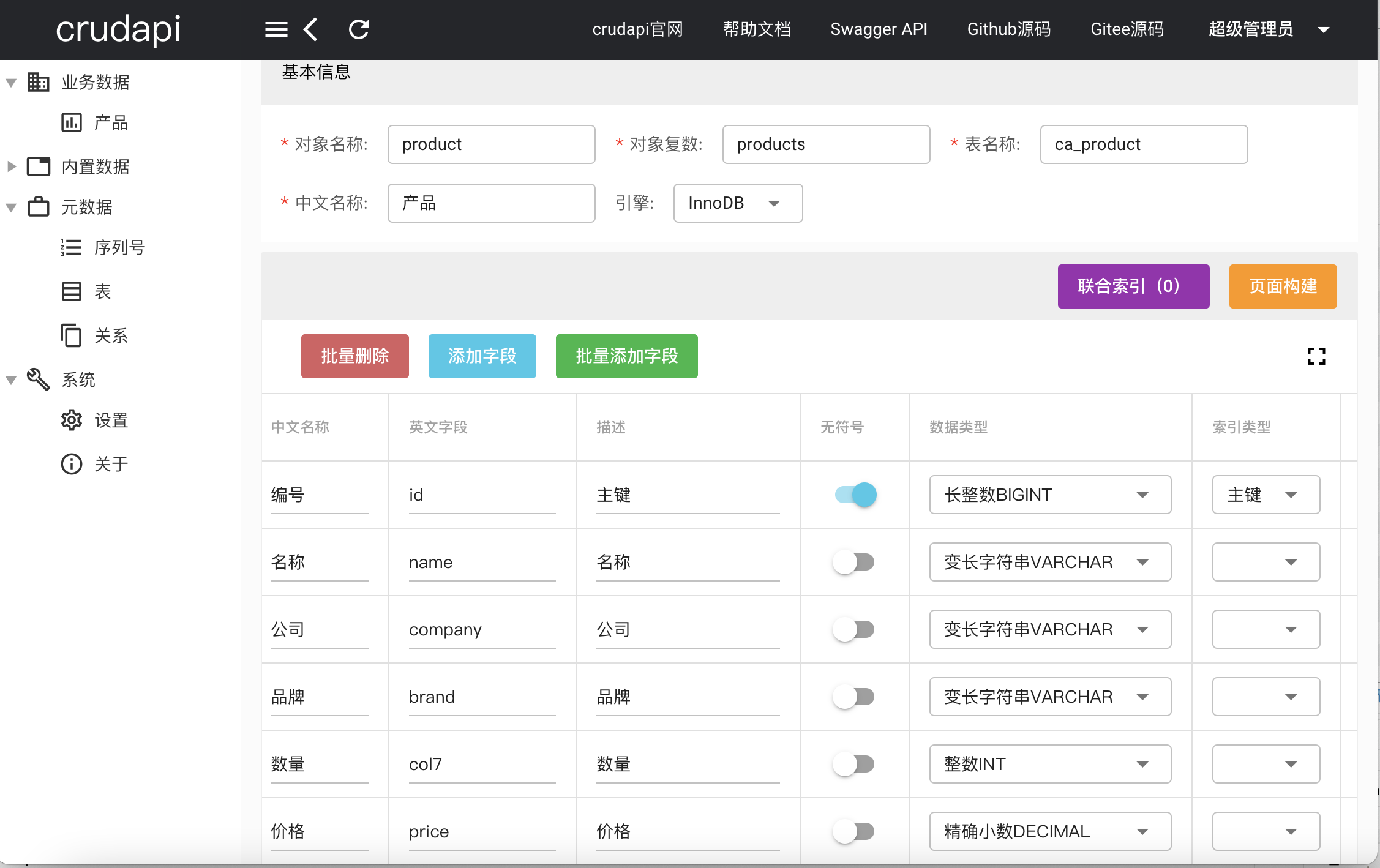 ?創(chuàng)建產(chǎn)品
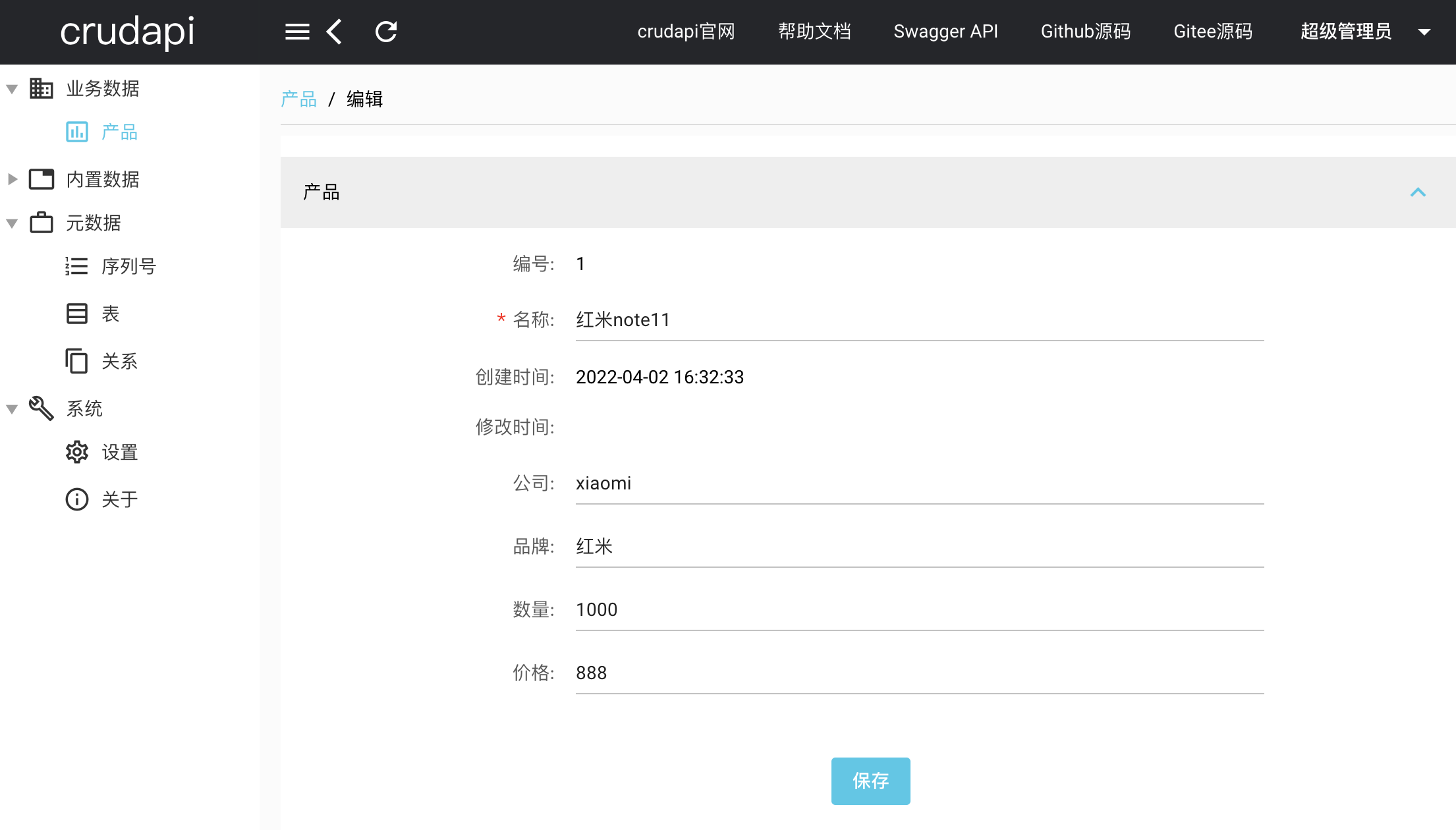 ?編輯產(chǎn)品數(shù)據(jù)
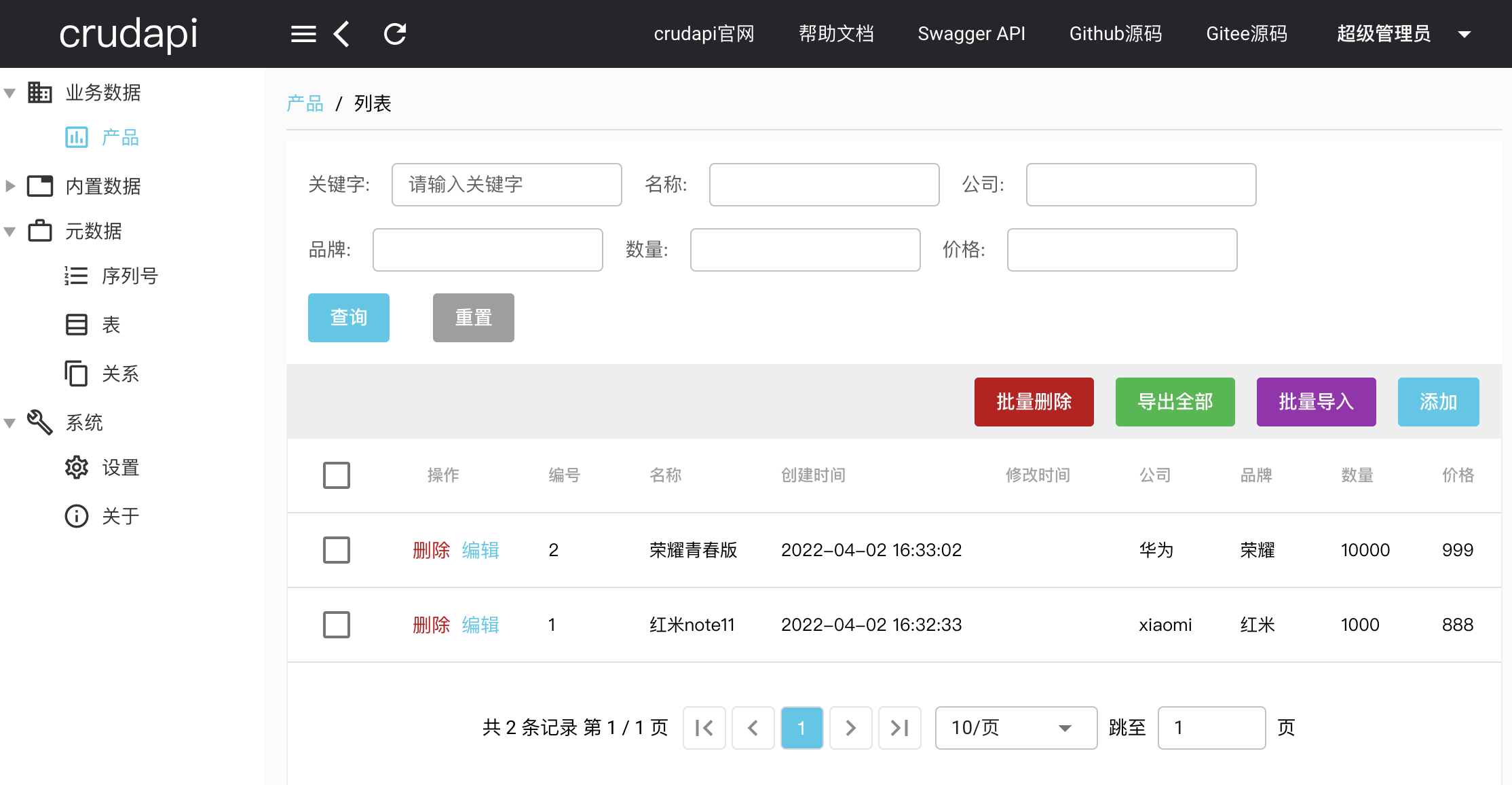 ?產(chǎn)品數(shù)據(jù)列表
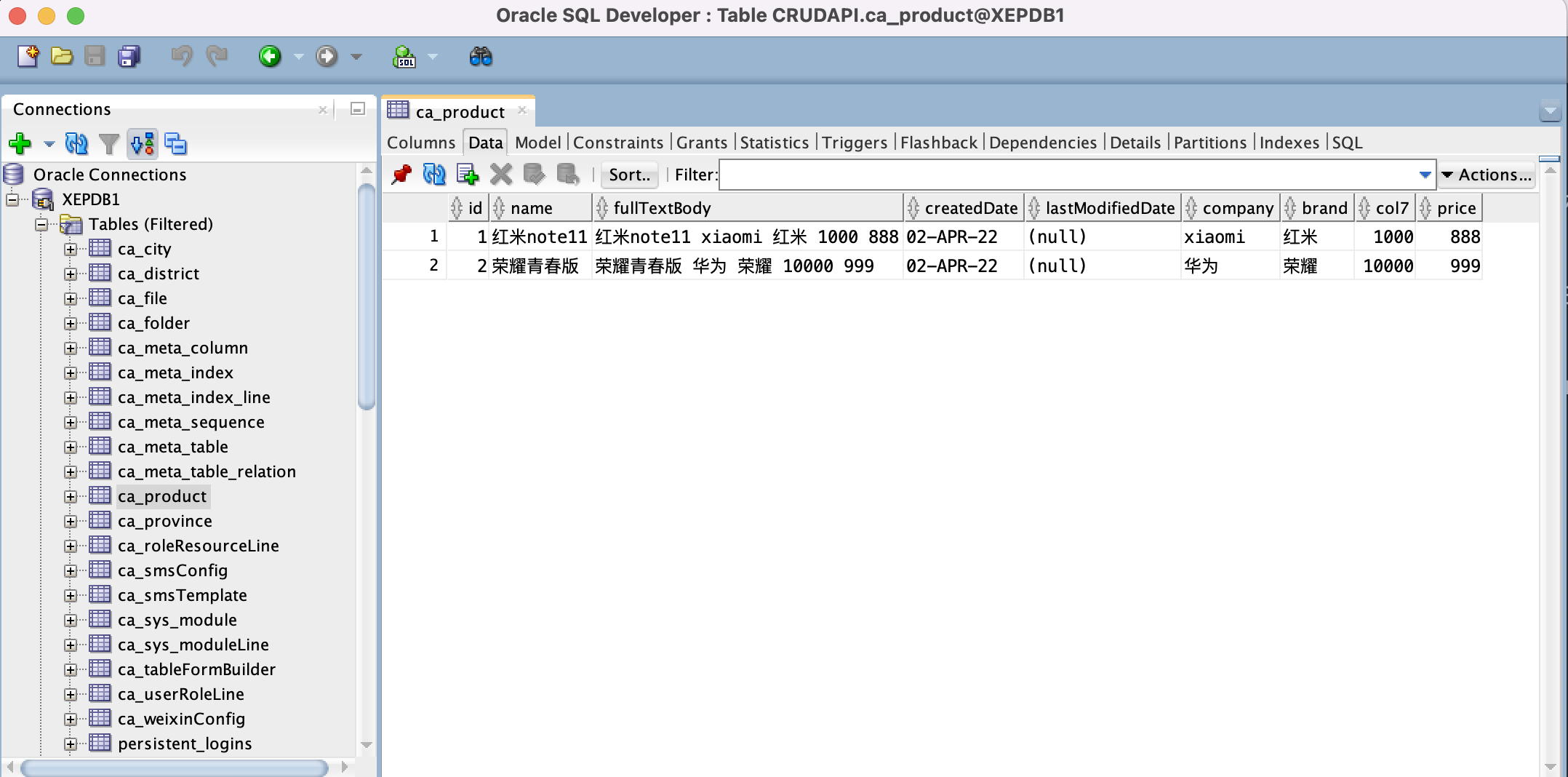 ?通過Oracle SQL Developer查詢Oracle數(shù)據(jù)
定義元數(shù)據(jù)對(duì)象模型
元數(shù)據(jù)表ca_meta_table
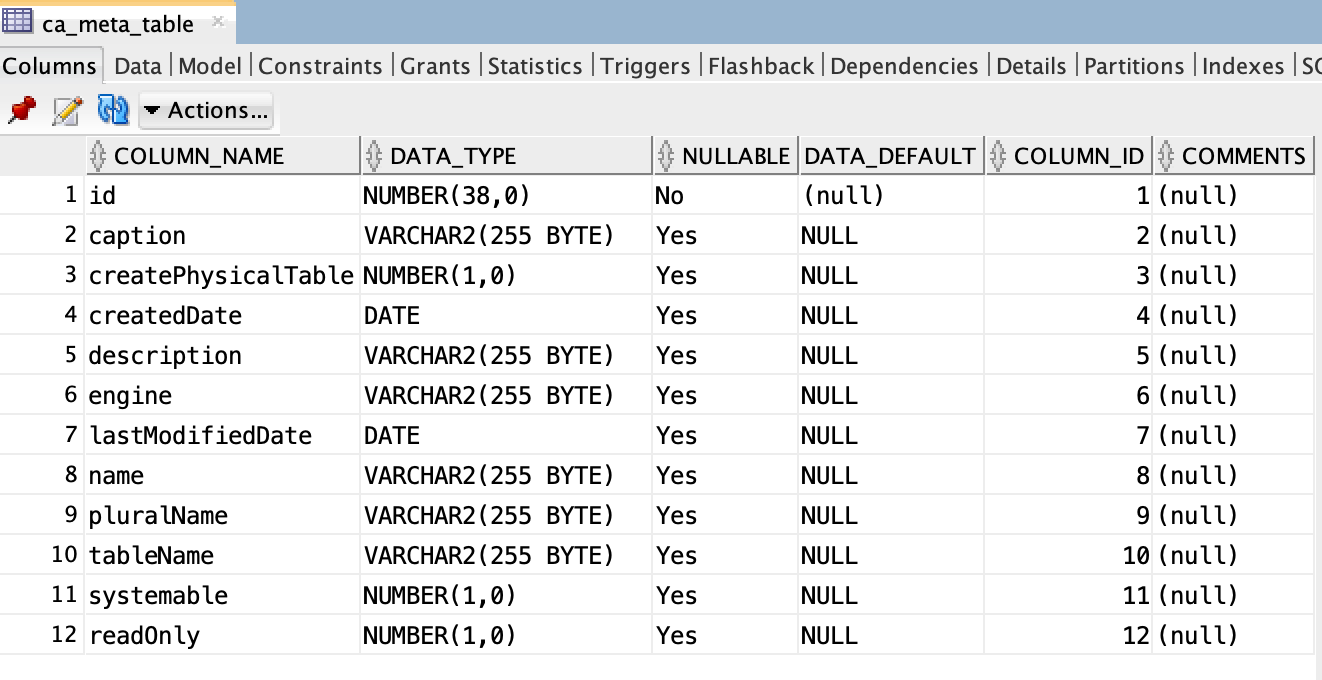 ?元數(shù)據(jù)表ca_meta_table,用于記錄表的基本信息。
#
TableEntity對(duì)象
TableEntity為“元數(shù)據(jù)表”對(duì)象,和ca_meta_table字段對(duì)應(yīng)
public class TableEntity {
    private Long id;

    private String name;

    private String caption;

    private String description;

    private Timestamp createdDate;

    private Timestamp lastModifiedDate;

    private String pluralName;

    private String tableName;

    private EngineEnum engine;

    private Boolean createPhysicalTable;

    private Boolean reverse;

    private Boolean systemable;

    private Boolean readOnly;

    private List<ColumnEntity> columnEntityList;

    private List<IndexEntity> indexEntityList;
}
#
元數(shù)據(jù)列ca_meta_column
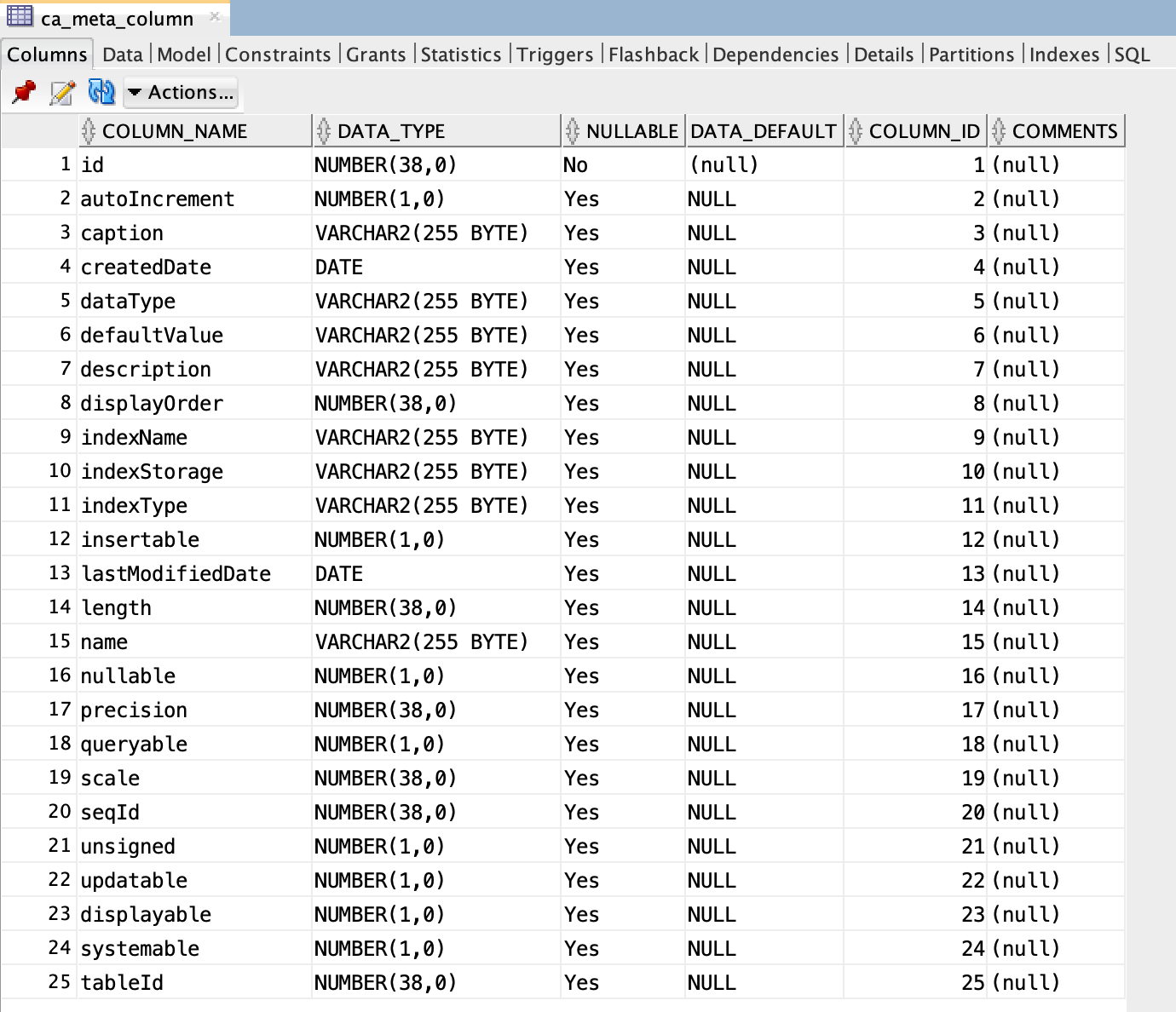 ?元數(shù)據(jù)列ca_meta_column,用于記錄表字段信息,比如類型,長(zhǎng)度,默認(rèn)值等。
#
ColumnEntity對(duì)象
ColumnEntity為“元數(shù)據(jù)列”對(duì)象,和ca_meta_column字段對(duì)應(yīng)
public class ColumnEntity {
  private Long id;

  private String name;

  private String caption;

  private String description;

  private Timestamp createdDate;

  private Timestamp lastModifiedDate;

  private Integer displayOrder;

  private DataTypeEnum dataType;

  private IndexTypeEnum indexType;

  private IndexStorageEnum indexStorage;

  private String indexName;

  private Integer length;

  private Integer precision;

  private Integer scale;

  private String defaultValue;

  private Long seqId;

  private Boolean unsigned;

  private Boolean autoIncrement;

  private Boolean nullable;

  private Boolean insertable;

  private Boolean updatable;

  private Boolean queryable;

  private Boolean displayable;

  private Boolean systemable;

  private Long tableId;
}
#
元數(shù)據(jù)索引ca_meta_index
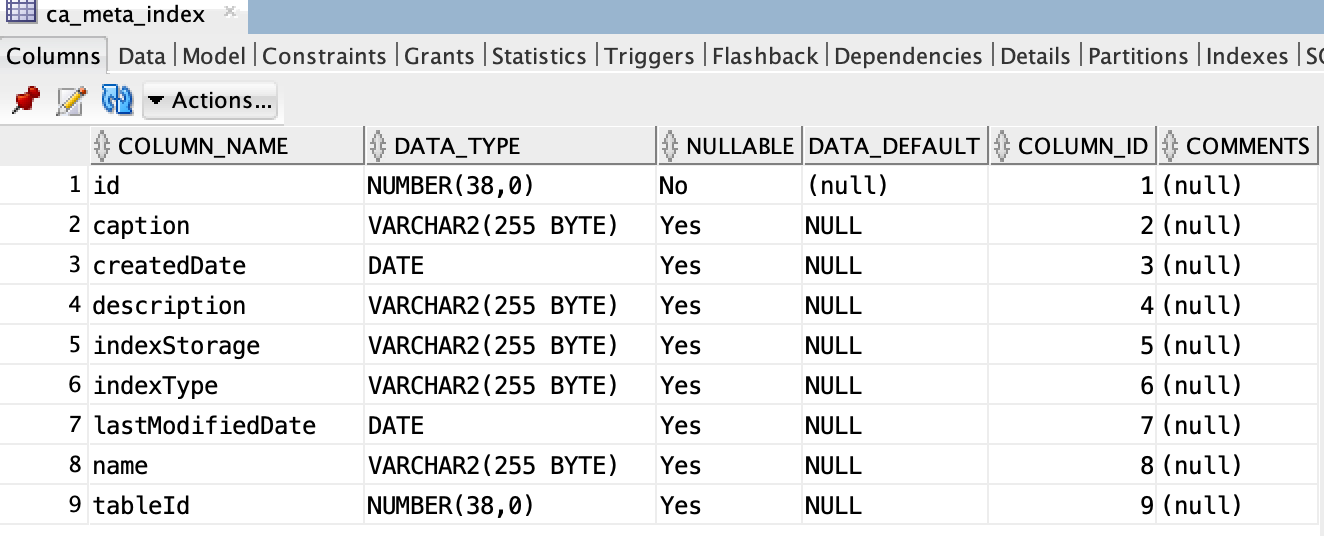 ?元數(shù)據(jù)索引ca_meta_index,用于記錄表聯(lián)合索引信息,比如索引類型,名稱等。
IndexEntity對(duì)象
IndexEntity為“元數(shù)據(jù)索引”對(duì)象,和ca_meta_index字段對(duì)應(yīng)
public class IndexEntity {
  private Long id;

  private String name;

  private String caption;

  private String description;

  private Timestamp createdDate;

  private Timestamp lastModifiedDate;

  private IndexTypeEnum indexType;

  private IndexStorageEnum indexStorage;

  private Long tableId;

  private List<IndexLineEntity> indexLineEntityList;
}
元數(shù)據(jù)索引行ca_meta_index_line
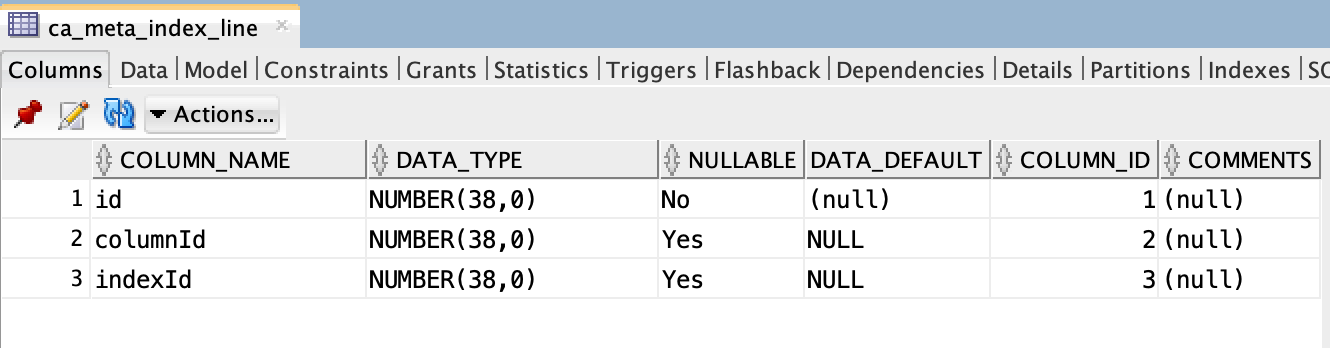 ?元數(shù)據(jù)索引行ca_meta_index_line,用于記錄表聯(lián)合索引行信息,一個(gè)聯(lián)合索引可以對(duì)應(yīng)多個(gè)聯(lián)合索引行,表示由多個(gè)字段組成。
IndexLineEntity對(duì)象
IndexLineEntity“元數(shù)據(jù)索行”對(duì)象,和ca_meta_index_line字段對(duì)應(yīng)
public class IndexLineEntity {
  private Long id;

  private Long columnId;

  private ColumnEntity columnEntity;

  private Long indexId;
}
定義FreeMarker模版
創(chuàng)建表create-table.sql.ftl
CREATE TABLE "${tableName}" (
<#list columnEntityList as columnEntity>
  <#if columnEntity.dataType == "BOOL">
    "${columnEntity.name}" NUMBER(1)<#if columnEntity.defaultValue??> DEFAULT <#if columnEntity.defaultValue == "true">1<#else>0</#if></#if><#if columnEntity.nullable != true> NOT NULL</#if><#if columnEntity_has_next>,</#if>
  <#elseif columnEntity.dataType == "INT">
    "${columnEntity.name}" INT<#if columnEntity.defaultValue??> DEFAULT ${columnEntity.defaultValue}</#if><#if columnEntity.nullable != true> NOT NULL</#if><#if columnEntity.indexType?? && columnEntity.indexType == "PRIMARY"> PRIMARY KEY</#if><#if columnEntity_has_next>,</#if>
  <#elseif columnEntity.dataType == "BIGINT">
    "${columnEntity.name}" INT<#if columnEntity.defaultValue??> DEFAULT ${columnEntity.defaultValue}</#if><#if columnEntity.nullable != true> NOT NULL</#if><#if columnEntity.indexType?? && columnEntity.indexType == "PRIMARY"> PRIMARY KEY</#if><#if columnEntity_has_next>,</#if>
  <#elseif columnEntity.dataType == "FLOAT">
    "${columnEntity.name}" FLOAT<#if columnEntity.defaultValue??> DEFAULT ${columnEntity.defaultValue}</#if><#if columnEntity.nullable != true> NOT NULL</#if><#if columnEntity_has_next>,</#if>
  <#elseif columnEntity.dataType == "DOUBLE">
    "${columnEntity.name}" REAL<#if columnEntity.defaultValue??> DEFAULT ${columnEntity.defaultValue}</#if><#if columnEntity.nullable != true> NOT NULL</#if><#if columnEntity_has_next>,</#if>
  <#elseif columnEntity.dataType == "DECIMAL">
    "${columnEntity.name}" DECIMAL<#if columnEntity.defaultValue??> DEFAULT ${columnEntity.defaultValue}</#if><#if columnEntity.nullable != true> NOT NULL</#if><#if columnEntity_has_next>,</#if>
  <#elseif columnEntity.dataType == "DATE">
    "${columnEntity.name}" DATE<#if columnEntity.defaultValue??> DEFAULT ${columnEntity.defaultValue}</#if><#if columnEntity.nullable != true> NOT NULL</#if><#if columnEntity_has_next>,</#if>
  <#elseif columnEntity.dataType == "TIME">
    "${columnEntity.name}" CHAR(8)<#if columnEntity.defaultValue??> DEFAULT ${columnEntity.defaultValue}</#if><#if columnEntity.nullable != true> NOT NULL</#if><#if columnEntity_has_next>,</#if>
  <#elseif columnEntity.dataType == "DATETIME">
    "${columnEntity.name}" DATE<#if columnEntity.defaultValue??> DEFAULT ${columnEntity.defaultValue}</#if><#if columnEntity.nullable != true> NOT NULL</#if><#if columnEntity_has_next>,</#if>
  <#elseif columnEntity.dataType == "TIMESTAMP">
    "${columnEntity.name}" TIMESTAMP<#if columnEntity.defaultValue??> DEFAULT ${columnEntity.defaultValue}</#if><#if columnEntity.nullable != true> NOT NULL</#if><#if columnEntity_has_next>,</#if>
  <#elseif columnEntity.dataType == "CHAR">
    "${columnEntity.name}" CHAR(${columnEntity.length})<#if columnEntity.defaultValue??> DEFAULT '${columnEntity.defaultValue}'</#if><#if columnEntity.nullable != true> NOT NULL</#if><#if columnEntity.indexType?? && columnEntity.indexType == "PRIMARY"> PRIMARY KEY</#if><#if columnEntity_has_next>,</#if>
  <#elseif columnEntity.dataType == "VARCHAR">
    "${columnEntity.name}" VARCHAR(${columnEntity.length})<#if columnEntity.defaultValue??> DEFAULT '${columnEntity.defaultValue}'</#if><#if columnEntity.nullable != true> NOT NULL</#if><#if columnEntity.indexType?? && columnEntity.indexType == "PRIMARY"> PRIMARY KEY</#if><#if columnEntity_has_next>,</#if>
  <#elseif columnEntity.dataType == "PASSWORD">
    "${columnEntity.name}" VARCHAR(200)<#if columnEntity.defaultValue??> DEFAULT '${columnEntity.defaultValue}'</#if><#if columnEntity.nullable != true> NOT NULL</#if><#if columnEntity_has_next>,</#if>
  <#elseif columnEntity.dataType == "ATTACHMENT">
    "${columnEntity.name}" VARCHAR(4000)<#if columnEntity.defaultValue??> DEFAULT '${columnEntity.defaultValue}'</#if><#if columnEntity.nullable != true> NOT NULL</#if><#if columnEntity_has_next>,</#if>
  <#elseif columnEntity.dataType == "TEXT">
    "${columnEntity.name}" VARCHAR(4000)<#if columnEntity.defaultValue??> DEFAULT '${columnEntity.defaultValue}'</#if><#if columnEntity.nullable != true> NOT NULL</#if><#if columnEntity_has_next>,</#if>
  <#elseif columnEntity.dataType == "LONGTEXT">
    "${columnEntity.name}" LONG<#if columnEntity.defaultValue??> DEFAULT ${columnEntity.defaultValue}</#if><#if columnEntity.nullable != true> NOT NULL</#if><#if columnEntity_has_next>,</#if>
  <#elseif columnEntity.dataType == "BLOB">
    "${columnEntity.name}" BLOB<#if columnEntity.defaultValue??> DEFAULT ${columnEntity.defaultValue}</#if><#if columnEntity.nullable != true> NOT NULL</#if><#if columnEntity_has_next>,</#if>
  <#elseif columnEntity.dataType == "LONGBLOB">
    "${columnEntity.name}" BLOB<#if columnEntity.defaultValue??> DEFAULT ${columnEntity.defaultValue}</#if><#if columnEntity.nullable != true> NOT NULL</#if><#if columnEntity_has_next>,</#if>
  <#else>
    "${columnEntity.name}" VARCHAR(200)<#if columnEntity.defaultValue??> DEFAULT ${columnEntity.defaultValue}</#if><#if columnEntity.nullable != true> NOT NULL</#if><#if columnEntity.indexType?? && columnEntity.indexType == "PRIMARY"> PRIMARY KEY</#if><#if columnEntity_has_next>,</#if>
  </#if>
</#list>
);

<#list columnEntityList as columnEntity>
  <#if columnEntity.indexType?? && columnEntity.indexType == "UNIQUE">
    ALTER TABLE "${tableName}" ADD CONSTRAINT "${columnEntity.indexName}" UNIQUE("${columnEntity.name}");
  </#if>

  <#if columnEntity.indexType?? && (columnEntity.indexType == "INDEX" || columnEntity.indexType == "FULLTEXT")>
    CREATE INDEX "${columnEntity.indexName}" ON "${tableName}" ("${columnEntity.name}");
  </#if>
</#list>

<#if indexEntityList??>
  <#list indexEntityList as indexEntity>
    <#if indexEntity.indexType?? && indexEntity.indexType == "UNIQUE">
      ALTER TABLE "${tableName}" ADD CONSTRAINT "${indexEntity.name}" UNIQUE(<#list indexEntity.indexLineEntityList as indexLineEntity>"${indexLineEntity.columnEntity.name}"<#if indexLineEntity_has_next>,</#if></#list>);
    </#if>

    <#if indexEntity.indexType?? && (indexEntity.indexType == "INDEX" || indexEntity.indexType == "FULLTEXT")>
      CREATE INDEX "${indexEntity.name}" ON "${tableName}" (<#list indexEntity.indexLineEntityList as indexLineEntity>"${indexLineEntity.columnEntity.name}"<#if indexLineEntity_has_next>,</#if></#list>);
    </#if>
  </#list>
</#if>

COMMENT ON TABLE "${tableName}" IS '${caption}';

<#list columnEntityList as columnEntity>
  COMMENT ON COLUMN "${tableName}"."${columnEntity.name}" IS '${columnEntity.caption}';
</#list>
#
模版解析SQL
首先保存元數(shù)據(jù)信息,下一步傳遞模版名稱和元數(shù)據(jù)model,動(dòng)態(tài)解析成創(chuàng)建表SQL語句,然后創(chuàng)建物理表,這樣元數(shù)據(jù)和物理表就關(guān)聯(lián)上了。運(yùn)行時(shí)通過解析元數(shù)據(jù)動(dòng)態(tài)生成insert,select,update,delete等SQL語句,零代碼實(shí)現(xiàn)業(yè)務(wù)數(shù)據(jù)crud功能。
public String processTemplateToString(String database, String templateName, Object dataModel) {
    String str = null;
    StringWriter stringWriter = new StringWriter();
    try {
        Configuration config = new Configuration(Configuration.VERSION_2_3_31);
        config.setNumberFormat("#");
        String templateValue = getTemplate(database, templateName);
        if (templateValue == null) {
          return str;
        }

        Template template = new Template(templateName, templateValue, config);
        template.process(dataModel, stringWriter);

        str = stringWriter.getBuffer().toString().trim();
        log.info(str);
    } catch (Exception e) {
        e.printStackTrace();
        throw new BusinessException(ApiErrorCode.DEFAULT_ERROR, e.getMessage());
    }

    return str;
}

public List<String> toCreateTableSql(TableEntity tableEntity) {
  String createTableSql = processTemplateToString("create-table.sql.ftl", tableEntity);

  if (createTableSql == null) {
    throw new BusinessException(ApiErrorCode.DEFAULT_ERROR, "create-table.sql is empty!");
  }

  List<String> sqls = new ArrayList<String>();
  String[] subSqls = createTableSql.split(";");
  for (String t : subSqls) {
    String subSql = t.trim();
    if (!subSql.isEmpty()) {
      sqls.add(t);
    }
  }

  return sqls;
}

public Long create(TableDTO tableDTO) {
  TableEntity tableEntity = tableMapper.toEntity(tableDTO);
  //TODO
  Long tableId = crudService.create(TABLE_TABLE_NAME, tableEntity);
  List<String> sqlList = crudService.toCreateTableSql(tableEntity);
  for (String sql: sqlList) {
    execute(sql);
  }
  //TODO
  return tableId;
}
#
修改表
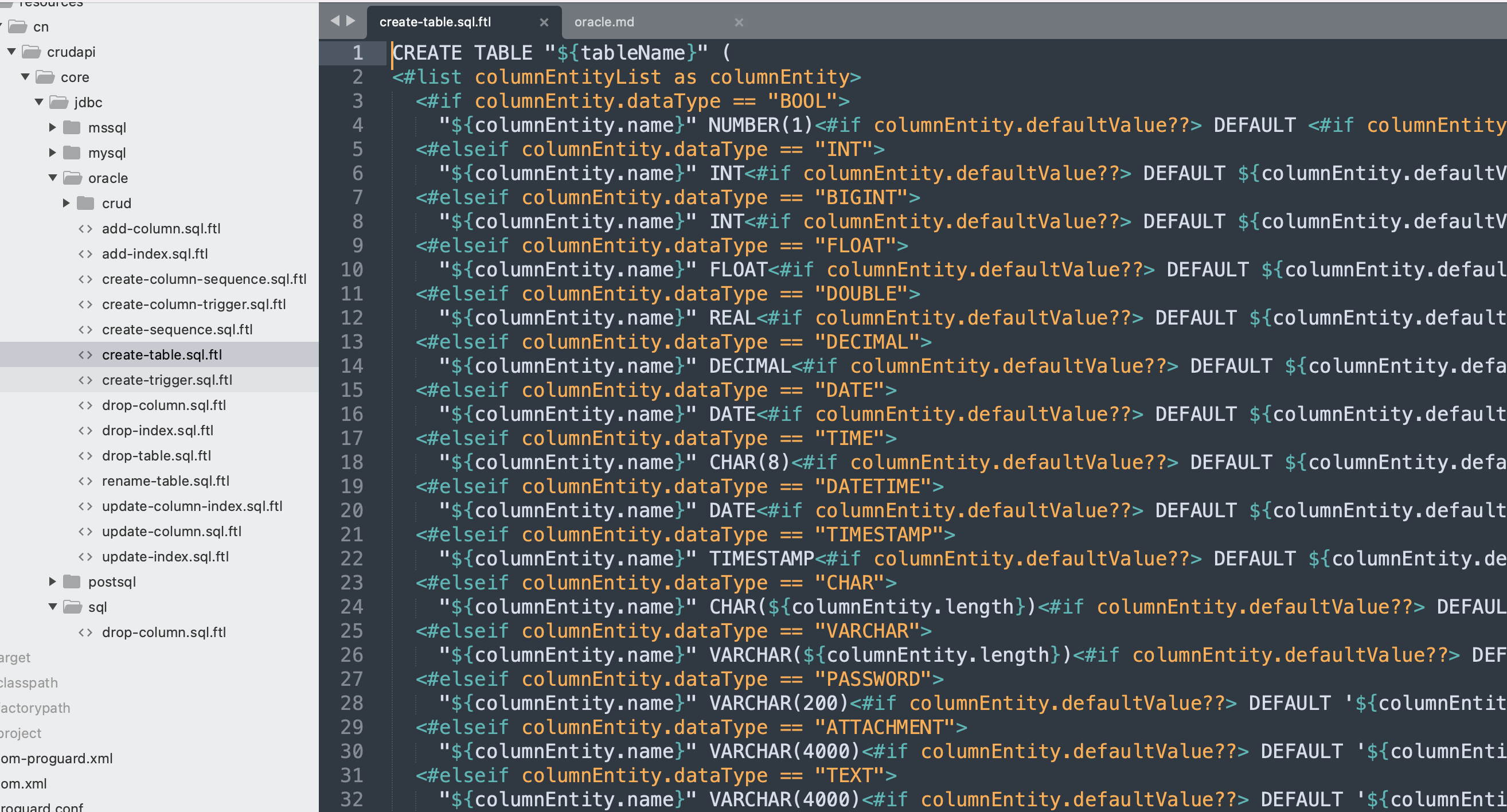 ?包括表結(jié)構(gòu)和索引的修改,刪除等,和創(chuàng)建表原理類似。
application.properties
需要根據(jù)需要配置數(shù)據(jù)庫連接驅(qū)動(dòng),無需重新發(fā)布,就可以切換不同的數(shù)據(jù)庫。
#oracle
spring.datasource.url=jdbc:oracle:thin:@//localhost:1521/XEPDB1
spring.datasource.driverClassName=oracle.jdbc.OracleDriver
spring.datasource.username=crudapi
spring.datasource.password=crudapi
spring.datasource.initialization-mode=always
spring.datasource.schema=classpath:schema.sql
#
小結(jié)
本文主要介紹了crudapi支持oracle數(shù)據(jù)庫實(shí)現(xiàn)原理,并且以產(chǎn)品對(duì)象為例,零代碼實(shí)現(xiàn)了CRUD增刪改查RESTful API,后續(xù)介紹更多的數(shù)據(jù)庫,比如MSSQL Server,Mongodb等。
實(shí)現(xiàn)方式代碼量時(shí)間穩(wěn)定性傳統(tǒng)開發(fā)1000行左右2天/人5個(gè)bug左右crudapi系統(tǒng)0行1分鐘基本為0
綜上所述,利用crudapi系統(tǒng)可以極大地提高工作效率和節(jié)約成本,讓數(shù)據(jù)處理變得更簡(jiǎn)單!
crudapi簡(jiǎn)介
crudapi是crud+api組合,表示增刪改查接口,是一款零代碼可配置的產(chǎn)品。使用crudapi可以告別枯燥無味的增刪改查代碼,讓您更加專注業(yè)務(wù),節(jié)約大量成本,從而提高工作效率。 crudapi的目標(biāo)是讓處理數(shù)據(jù)變得更簡(jiǎn)單,所有人都可以免費(fèi)使用! 無需編程,通過配置自動(dòng)生成crud增刪改查RESTful API,提供后臺(tái)UI管理業(yè)務(wù)數(shù)據(jù)。基于主流的開源框架,擁有自主知識(shí)產(chǎn)權(quán),支持二次開發(fā)。
demo演示
crudapi屬于產(chǎn)品級(jí)的零代碼平臺(tái),不同于自動(dòng)代碼生成器,不需要生成Controller、Service、Repository、Entity等業(yè)務(wù)代碼,程序運(yùn)行起來就可以使用,真正0代碼,可以覆蓋基本的和業(yè)務(wù)無關(guān)的CRUD RESTful API。
官網(wǎng)地址:https://crudapi.cn
測(cè)試地址:https://demo.crudapi.cn/crudapi/login
附源碼地址
GitHub地址
https://github.com/crudapi/crudapi-admin-web
Gitee地址
https://gitee.com/crudapi/crudapi-admin-web
由于網(wǎng)絡(luò)原因,GitHub可能速度慢,改成訪問Gitee即可,代碼同步更新。