如何更優(yōu)雅地關(guān)閉流(Stream)?

在日常開發(fā)中,我們會經(jīng)常用到流(Stream),比如InputStream/OutPutStream、FileInputStream/FileOutPutStream等,你是不是經(jīng)常像下面展示的這樣手動關(guān)閉流,或者甚至都不關(guān)閉流呢?今天我們就來探討下關(guān)于流關(guān)閉的問題。
通常的關(guān)閉方式
我們先看一段代碼:
?/**
?????*?讀取文件
?????*/
private?static?void?readFile()?{
????FileInputStream?fileInputStream?=?null;
????try?{
????????fileInputStream?=?new?FileInputStream("target/classes/test.txt");
????????byte[]?bytes?=?new?byte[1024];
????????//?讀取文件
????????while?(fileInputStream.read(bytes)?!=?-1)?{
????????????System.out.println(new?String(bytes));
????????}
????????System.out.println(1/0);
????????System.out.println(fileInputStream.available());
????}?catch?(FileNotFoundException?e)?{
????????e.printStackTrace();
????}?catch?(IOException?e)?{
????????e.printStackTrace();
????}?finally?{
????????//?關(guān)閉資源
????????if?(Objects.nonNull(fileInputStream))?{
????????????try?{
????????????????fileInputStream.close();
????????????}?catch?(IOException?e)?{
????????????????e.printStackTrace();
????????????}
????????}
????}
????System.out.println("結(jié)束");
}
不符合代碼質(zhì)量規(guī)范
上面這段代碼,從邏輯上將是ok的,但是從代碼質(zhì)量的角度來說是不合格的,如果你用sonar或者sonarLint插件掃描你的項(xiàng)目的話,它會提示你存在Code smell,也就是合理的寫法:
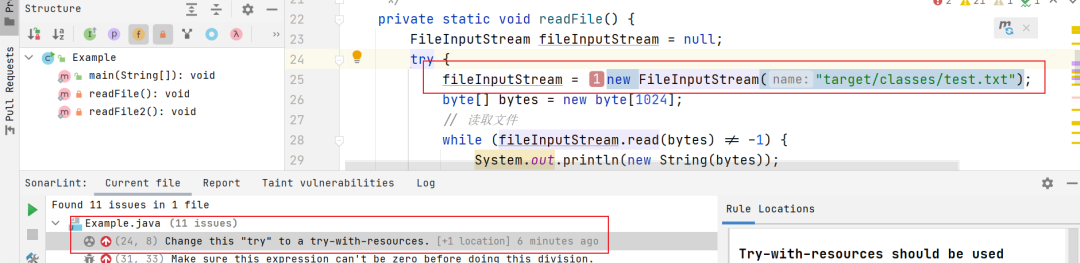
提示信息的意思是,你應(yīng)該把第24行的代碼改成try-with-resources的形式。這里簡單補(bǔ)充一下,try-with-resouces是JDK1.7引入的,目的是優(yōu)化資源關(guān)閉問題,將之前try-catch-finally優(yōu)化成try-catch,之前你需要手動在finally中關(guān)閉,通過try-with-resouces的方式,你再也不用手動關(guān)閉你的各種流了。
try-with-resources方式
上面的代碼優(yōu)化后,是這樣的:
private?static?void?readFile2()?{
????try?(FileInputStream?fileInputStream?=?new?FileInputStream("target/classes/test.txt"))?{
????????byte[]?bytes?=?new?byte[1024];
????????//?讀取文件
????????while?(fileInputStream.read(bytes)?!=?-1)?{
????????????System.out.println(new?String(bytes));
????????}
?????????throw?new?FileNotFoundException("");
????}?catch?(FileNotFoundException?e)?{
????????e.printStackTrace();
????}?catch?(IOException?e)?{
????????e.printStackTrace();
????}
}
區(qū)別
相比之前代碼更簡潔,唯一的區(qū)別是:
try?(FileInputStream?fileInputStream?=?new?FileInputStream("target/classes/test.txt"))?{
就是將你需要在try代碼塊中用到的資源,都放進(jìn)try()中,這樣你的資源就會自動被關(guān)閉。這種方式其實(shí)就是一種語法糖(對用戶更更友好),從代碼底層來說和前面手動關(guān)閉的方式區(qū)別不大,只是之前由你寫關(guān)閉,現(xiàn)在jdk在編譯的時(shí)候,會自己加,下面反編譯的代碼,很好地說明了這一點(diǎn):
private?static?void?readFile2()?{
????try?{
??????FileInputStream?fileInputStream?=?new?FileInputStream("target/classes/test.txt");
??????Throwable?throwable?=?null;
??????try?{
????????byte[]?bytes?=?new?byte[1024];
????????while?(fileInputStream.read(bytes)?!=?-1)
??????????System.out.println(new?String(bytes));?
????????throw?new?FileNotFoundException("");
??????}?catch?(Throwable?throwable1)?{
????????throwable?=?throwable1?=?null;
????????throw?throwable1;
??????}?finally?{
????????if?(throwable?!=?null)?{
??????????try?{
????????????fileInputStream.close();
??????????}?catch?(Throwable?throwable1)?{
????????????throwable.addSuppressed(throwable1);
??????????}?
????????}?else?{
??????????fileInputStream.close();
????????}?
??????}?
????}?catch?(FileNotFoundException?e)?{
??????e.printStackTrace();
????}?catch?(IOException?e)?{
??????e.printStackTrace();
????}?
??}
發(fā)現(xiàn)新大陸
本來事情到這里應(yīng)該結(jié)束了,但是我為了搞清楚本質(zhì)區(qū)別,我在close()方法上打了斷點(diǎn),我想看下是不是我不關(guān)閉流,它就不自己關(guān)閉。
我先試了try-with-resouces的方式,close方法被調(diào)用,這是OK的;我又試了第一段的傳統(tǒng)寫法,close也被調(diào)用了。
但是我發(fā)現(xiàn),close方法都被調(diào)用了兩次,而且在第一段傳統(tǒng)寫法那里,是先調(diào)了close方法,然后再進(jìn)入finally執(zhí)行關(guān)閉。我已經(jīng)有點(diǎn)困惑了,但我還是想再看下不手動關(guān)閉的情況,這次比前兩次更神奇,close方法竟然也被調(diào)用了,太神奇了吧!
我還在想,JDK什么時(shí)候有這個(gè)新特性的,不竟然不知道,難道和我用JDK9有關(guān),但查了資料,發(fā)現(xiàn)jdk9只是支持在try-with-resources中使用final修飾的變量,也沒有這個(gè)呀,這時(shí)候我看了FileInputStream的源碼,發(fā)現(xiàn)在FileInputStream的構(gòu)造方法中,這樣幾行代碼:
?fd?=?new?FileDescriptor();
?fd.attach(this);
也就是在創(chuàng)建流的時(shí)候,會把當(dāng)前流加入到FileDescriptor中,FileDescriptor有一個(gè)closeAll方法,會循環(huán)關(guān)閉加入其中的流,但是這個(gè)方法也只有在FileInputStream的close中調(diào)用呀。
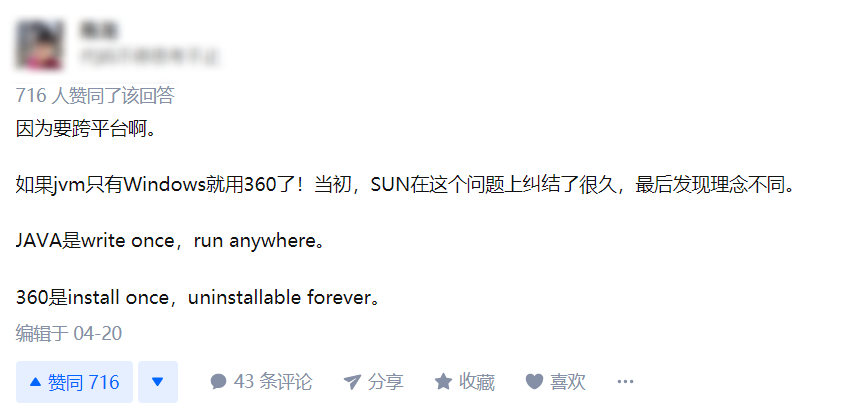
我還覺得是不是正常情況下會自動關(guān)閉,但是異常情況下不會關(guān)閉,但是試了異常情況下也會走到close方法,我裂了 ,難道是360替我關(guān)閉了
 ?
?
這個(gè)問題我得再好好研究下,今天就到這里吧,溫馨提示,假期余額不足
以下內(nèi)容來源網(wǎng)絡(luò),侵刪