
還在使用Future輪詢獲取結(jié)果嗎?CompletionService快來(lái)了解下。
同步入庫(kù)
二胖拿到任務(wù),三下五除二就把任務(wù)完成了。
 public static void main(String[] args) throws InterruptedException {
        String mouZhuFlightPrice = getMouZhuFlightPrice();
        String mouXieFlightPrice = getMouXieFlightPrice();
        String mouTuanFlightPrice = getMouTuanFlightPrice();
        saveDb(mouZhuFlightPrice);
        saveDb(mouXieFlightPrice);
        saveDb(mouTuanFlightPrice);
    }


    /**
     * 模擬請(qǐng)求某豬網(wǎng)站 爬取機(jī)票信息
     *
     *
     * @return
     * @throws InterruptedException
     */
    public static String getMouZhuFlightPrice() throws InterruptedException {
        // 模擬請(qǐng)求某豬網(wǎng)站 爬取機(jī)票信息
        Thread.sleep(10000);
        return "獲取到某豬網(wǎng)站的機(jī)票信息了";
    }

    /**
     * 模擬請(qǐng)求某攜網(wǎng)站 爬取機(jī)票信息
     *
     * @return
     * @throws InterruptedException
     */
    public static String getMouXieFlightPrice() throws InterruptedException {
        // 模擬請(qǐng)求某攜網(wǎng)站 爬取機(jī)票信息
        Thread.sleep(5000);
        return "獲取到某攜網(wǎng)站的機(jī)票信息了";
    }


    /**
     * 模擬請(qǐng)求團(tuán)網(wǎng)站 爬取機(jī)票信息
     *
     * @return
     * @throws InterruptedException
     */
    public static String getMouTuanFlightPrice() throws InterruptedException {
        // 模擬請(qǐng)求某團(tuán)網(wǎng)站 爬取機(jī)票信息
        Thread.sleep(3000);
        return "獲取到某團(tuán)網(wǎng)站的機(jī)票信息了";
    }

    /**
     * 保存DB
     *
     * @param flightPriceList
     */
    public static void saveDb(String flightPriceList) {
            // 解析字符串 進(jìn)行異步入庫(kù)
    }
這次二胖學(xué)乖了,任務(wù)完成了先去找下坐他對(duì)面的技術(shù)大拿(看他那發(fā)際線就知道了)同事“二狗”讓二狗大拿幫忙指點(diǎn)一二,看看代碼是否還能有優(yōu)化的地方。畢竟領(lǐng)導(dǎo)對(duì)代碼的性能、以及代碼的優(yōu)雅是有要求的。領(lǐng)導(dǎo)多次在部門的周會(huì)上提到讓我們多看看“二狗”寫的代碼,學(xué)習(xí)下人家寫代碼的優(yōu)雅、抽象、封裝等等。二狗大概的瞄了下二胖寫的代碼,提出了個(gè)小小的建議“這個(gè)代碼可以采用多線程來(lái)優(yōu)化下哦,你看某豬這個(gè)網(wǎng)站耗時(shí)是拿到結(jié)果需要10s,其他的耗時(shí)都比它短,先有結(jié)果的我們可以先處理的,不需要等到大家都返回了再來(lái)處理的”。
輪循futureList獲取結(jié)果
幸好二胖對(duì)多線程了解一點(diǎn)點(diǎn),于是乎采用future的方式來(lái)實(shí)現(xiàn)。二胖使用一個(gè)List來(lái)保存每個(gè)任務(wù)返回的Future,然后去輪詢這些Future,直到每個(gè)Future都已完成。由于需要先完成的任務(wù)需要先執(zhí)行,且不希望出現(xiàn)因?yàn)榕旁谇懊娴娜蝿?wù)阻塞導(dǎo)致后面先完成的任務(wù)的結(jié)果沒(méi)有及時(shí)獲取的情況,所以在調(diào)用get方式時(shí),需要將超時(shí)時(shí)間設(shè)置為0。
  public static void main(String[] args) {
        int taskSize = 3;
        Future<String> mouZhuFlightPriceFuture = executor.submit(() -> getMouZhuFlightPrice());
        Future<String> mouXieFlightPriceFuture = executor.submit(() -> getMouXieFlightPrice());
        Future<String> mouTuanFlightPriceFuture = executor.submit(() -> getMouTuanFlightPrice());
        List<Future<String>> futureList = new ArrayList<>();
        futureList.add(mouZhuFlightPriceFuture);
        futureList.add(mouXieFlightPriceFuture);
        futureList.add(mouTuanFlightPriceFuture);
        // 輪詢,獲取完成任務(wù)的返回結(jié)果
        while (taskSize > 0) {
            for (Future<String> future : futureList) {
                String result = null;
                try {
                    result = future.get(0, TimeUnit.SECONDS);
                } catch (InterruptedException e) {
                    taskSize--;
                    e.printStackTrace();
                } catch (ExecutionException e) {
                    taskSize--;
                    e.printStackTrace();
                } catch (TimeoutException e) {
                    // 超時(shí)異常需要忽略,因?yàn)槲覀冊(cè)O(shè)置了等待時(shí)間為0,只要任務(wù)沒(méi)有完成,就會(huì)報(bào)該異常
                }
                // 任務(wù)已經(jīng)完成
                if (result != null) {
                    System.out.println("result=" + result);
                    // 從future列表中刪除已經(jīng)完成的任務(wù)
                    futureList.remove(future);
                    taskSize--;
                    // 此處必須break,否則會(huì)拋出并發(fā)修改異常。(也可以通過(guò)將futureList聲明為CopyOnWriteArrayList類型解決)
                    break; // 進(jìn)行下一次while循環(huán)
                }
            }
        }
    }
上述代碼有兩個(gè)小細(xì)節(jié)需要注意下:
如采用
ArrayList的話futureList刪除之后需要break進(jìn)行下一次while循環(huán),否則會(huì)產(chǎn)生我們意想不到的ConcurrentModificationException異常。具體原因可看下《ArrayList的刪除姿勢(shì)你都掌握了嗎》這個(gè)文章,里面有詳細(xì)的介紹。在捕獲了
InterruptedException和ExecutionException異常后記得taskSize--否則就會(huì)發(fā)生死循環(huán)。如果生產(chǎn)發(fā)生了死循環(huán)你懂的,cpu被你打滿,程序假死等。你離被開(kāi)除也不遠(yuǎn)了。上面輪詢
future列表非常的復(fù)雜,而且還有很多異常需要處理,還有很多細(xì)節(jié)需要考慮,還有被開(kāi)除的風(fēng)險(xiǎn)。所以這種方案也被pass了。
自定義BlockingQueue實(shí)現(xiàn)
上述方案被 pass之后,二胖就在思考可以借用哪種數(shù)據(jù)來(lái)實(shí)現(xiàn)下先進(jìn)先出的功能,貌似隊(duì)列可以實(shí)現(xiàn)下這個(gè)功能。所以二胖又寫了一版采用隊(duì)列來(lái)實(shí)現(xiàn)的功能。
  final static ExecutorService executor = new ThreadPoolExecutor(6, 6,
            0L, TimeUnit.MILLISECONDS, new LinkedBlockingQueue<>());

    public static void main(String[] args) throws InterruptedException, ExecutionException {
        Future<String> mouZhuFlightPriceFuture = executor.submit(() -> getMouZhuFlightPrice());
        Future<String> mouXieFlightPriceFuture = executor.submit(() -> getMouXieFlightPrice());
        Future<String> mouTuanFlightPriceFuture = executor.submit(() -> getMouTuanFlightPrice());

        // 創(chuàng)建阻塞隊(duì)列
        BlockingQueue<String> blockingQueue = new LinkedBlockingQueue<>(3);
        executor.execute(() -> run(mouZhuFlightPriceFuture, blockingQueue));
        executor.execute(() -> run(mouXieFlightPriceFuture, blockingQueue));
        executor.execute(() -> run(mouTuanFlightPriceFuture, blockingQueue));
        // 異步保存所有機(jī)票價(jià)格
        for (int i = 0; i < 3; i++) {
            String result = blockingQueue.take();
            System.out.println(result);
            saveDb(result);
        }
    }

    private static void run(Future<String> flightPriceFuture, BlockingQueue<String> blockingQueue) {
        try {
            blockingQueue.put(flightPriceFuture.get());
        } catch (InterruptedException e) {
            e.printStackTrace();
        } catch (ExecutionException e) {
            e.printStackTrace();
        }
    }
這次比上個(gè)版本好多了,代碼也簡(jiǎn)潔多了。不過(guò)按理說(shuō)這種需求應(yīng)該是大家經(jīng)常遇到的,應(yīng)該不需要自己來(lái)實(shí)現(xiàn)把, JAVA這么貼心的語(yǔ)言應(yīng)該會(huì)有api可以直接拿來(lái)用吧。
CompletionService實(shí)現(xiàn)
二胖現(xiàn)在畢竟也是對(duì)代碼的簡(jiǎn)潔性有追求的人了。于是乎二胖去翻翻自己躺在書柜里吃灰的并發(fā)相關(guān)的書籍,看看是否有解決方案。 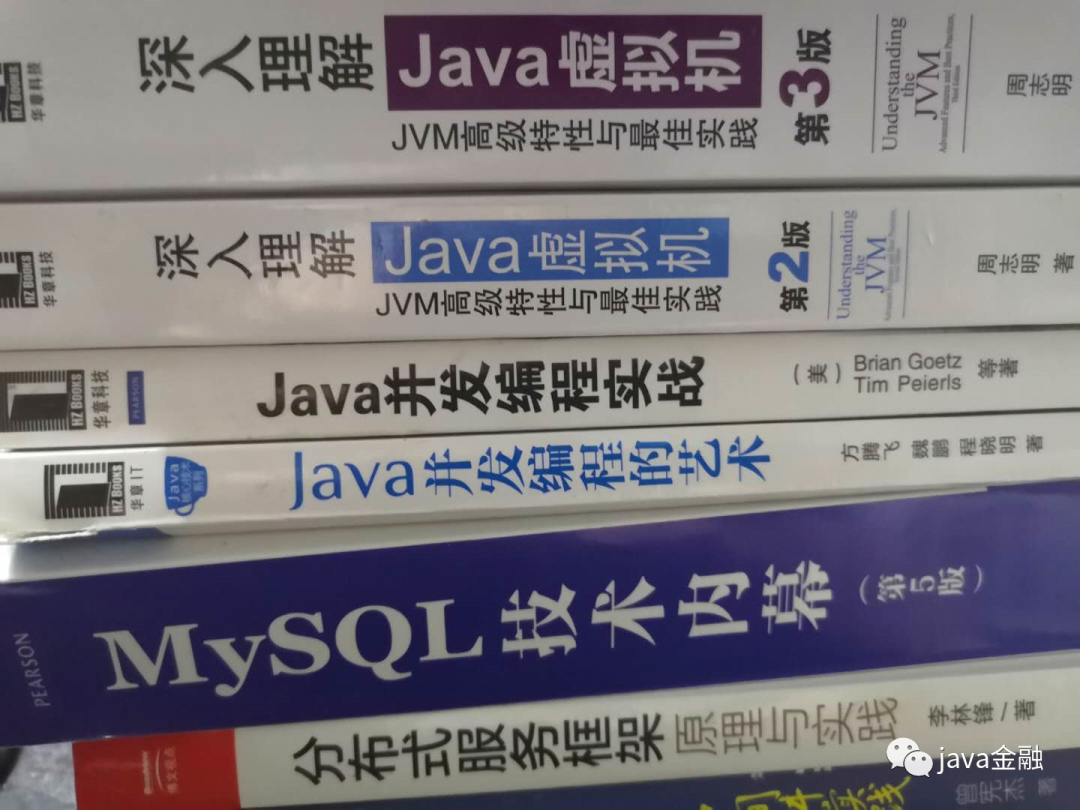 終于皇天不負(fù)有心人在二胖快要放棄的時(shí)候突然發(fā)現(xiàn)了新大陸。 《Java并發(fā)編程實(shí)戰(zhàn)》一書6.3.5節(jié)
CompletionService:Executor和BlockingQueue,有這樣一段話:
如果向Executor提交了一組計(jì)算任務(wù),并且希望在計(jì)算完成后獲得結(jié)果,那么可以保留與每個(gè)任務(wù)關(guān)聯(lián)的Future,然后反復(fù)使用get方法,同時(shí)將參數(shù)timeout指定為0,從而通過(guò)輪詢來(lái)判斷任務(wù)是否完成。這種方法雖然可行,但卻有些繁瑣。幸運(yùn)的是,還有一種更好的方法:完成服務(wù)CompletionService。
  final static ExecutorService executor = new ThreadPoolExecutor(6, 6,
            0L, TimeUnit.MILLISECONDS, new LinkedBlockingQueue<>());

    public static void main(String[] args) throws ExecutionException, InterruptedException {
        CompletionService completionService = new ExecutorCompletionService(executor);
        completionService.submit(() -> getMouZhuFlightPrice());
        completionService.submit(() -> getMouXieFlightPrice());
        completionService.submit(() -> getMouTuanFlightPrice());
        for (int i = 0; i < 3; i++) {
            String result = (String)completionService.take().get();
            System.out.println(result);
            saveDb(result);
        }
    }
當(dāng)我們使用了CompletionService不用遍歷future列表,也不需要去自定義隊(duì)列了,代碼變得簡(jiǎn)潔了。下面我們就來(lái)分析下CompletionService實(shí)現(xiàn)的原理吧。
CompletionService 介紹
我們可以先看下 JDK源碼中CompletionService的javadoc說(shuō)明吧
/**
 * A service that decouples the production of new asynchronous tasks
 * from the consumption of the results of completed tasks.  Producers
 * {@code submit} tasks for execution. Consumers {@code take}
 * completed tasks and process their results in the order they
 * complete.
大概意思是CompletionService實(shí)現(xiàn)了生產(chǎn)者提交任務(wù)和消費(fèi)者獲取結(jié)果的解耦,生產(chǎn)者和消費(fèi)者都不用關(guān)心任務(wù)的完成順序,由CompletionService來(lái)保證,消費(fèi)者一定是按照任務(wù)完成的先后順序來(lái)獲取執(zhí)行結(jié)果。
成員變量
既然需要按照任務(wù)的完成順序獲取結(jié)果,那內(nèi)部應(yīng)該也是通過(guò)隊(duì)列來(lái)實(shí)現(xiàn)的吧。打開(kāi)源碼我們可以看到,里面有三個(gè)成員變量
public class ExecutorCompletionService<V> implements CompletionService<V> {
 // 執(zhí)行task的線程池,創(chuàng)建CompletionService必須指定;
    private final Executor executor;
    //主要用于創(chuàng)建待執(zhí)行task;
    private final AbstractExecutorService aes;
    //存儲(chǔ)已完成狀態(tài)的task,默認(rèn)是基于鏈表結(jié)構(gòu)的阻塞隊(duì)列LinkedBlockingQueue。
    private final BlockingQueue<Future<V>> completionQueue;
任務(wù)提交
ExecutorCompletionService任務(wù)的提交和執(zhí)行都是委托給Executor來(lái)完成。當(dāng)提交某個(gè)任務(wù)時(shí),該任務(wù)首先將被包裝為一個(gè)QueueingFuture
public Future<V> submit(Callable<V> task) {
        if (task == null) throw new NullPointerException();
        RunnableFuture<V> f = newTaskFor(task);
        executor.execute(new QueueingFuture(f));
        return f;
    }
任務(wù)完成后何時(shí)進(jìn)入隊(duì)列
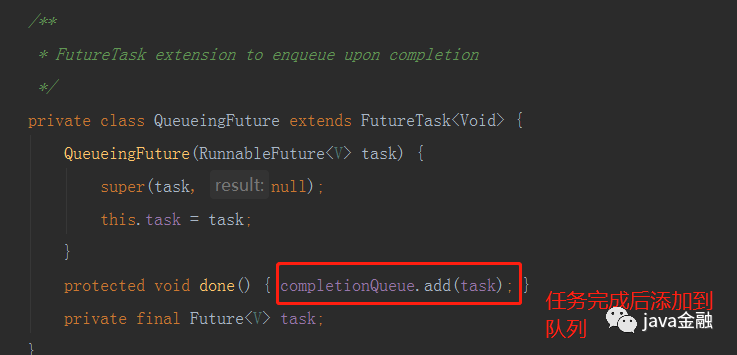 從源碼可以看出,
QueueingFuture是FutureTask的子類,實(shí)現(xiàn)了done方法,在task執(zhí)行完成之后將當(dāng)前task添加到completionQueue,將返回結(jié)果加入到阻塞隊(duì)列中,加入的順序就是任務(wù)完成的先后順序。done方法的具體調(diào)用在FutureTask的finishCompletion方法。
獲取已完成任務(wù)
 public Future<V> take() throws InterruptedException {
        return completionQueue.take();
    }

    public Future<V> poll() {
        return completionQueue.poll();
    }

    public Future<V> poll(long timeout, TimeUnit unit)
            throws InterruptedException {
        return completionQueue.poll(timeout, unit);
    }
take和poll都是調(diào)用BlockingQueue提供的方法。
take()獲取任務(wù)阻塞,直到可以拿到任務(wù)為止。poll()獲取任務(wù)不阻塞,如果沒(méi)有獲取到任務(wù)直接返回null。poll(long timeout, TimeUnit unit)帶超時(shí)時(shí)間等待的獲取任務(wù)方法(一般推薦使用這種)
總結(jié)
CompletionService把線程池Executor和阻塞隊(duì)列BlockingQueue融合在一起,能夠讓批異步任務(wù)的管理更簡(jiǎn)單,將生產(chǎn)者提交任務(wù)和消費(fèi)者獲取結(jié)果的解耦。CompletionService能夠讓異步任務(wù)的執(zhí)行結(jié)果有序化,先執(zhí)行完的先進(jìn)入阻塞隊(duì)列,利用這個(gè)特性,我們可以輕松實(shí)現(xiàn)后續(xù)處理的有序性,避免無(wú)謂的等待。
結(jié)束
由于自己才疏學(xué)淺,難免會(huì)有紕漏,假如你發(fā)現(xiàn)了錯(cuò)誤的地方,還望留言給我指出來(lái),我會(huì)對(duì)其加以修正。 如果你覺(jué)得文章還不錯(cuò),你的轉(zhuǎn)發(fā)、分享、贊賞、點(diǎn)贊、留言就是對(duì)我最大的鼓勵(lì)。 感謝您的閱讀,十分歡迎并感謝您的關(guān)注。
參考 《java并發(fā)編程實(shí)戰(zhàn)》 https://www.jianshu.com/p/19093422dd57 https://blog.csdn.net/cbjcry/article/details/84222853 https://www.jianshu.com/p/493ae1b107e4
-End-
最近有一些小伙伴,讓我?guī)兔φ乙恍?nbsp;面試題 資料,于是我翻遍了收藏的 5T 資料后,匯總整理出來(lái),可以說(shuō)是程序員面試必備!所有資料都整理到網(wǎng)盤了,歡迎下載!
面試題】即可獲取 好文分享給更多人↓↓