
【Python】Pandas+Numpy+Sklearn隨機(jī)取數(shù)
公眾號(hào):尤而小屋
作者:Peter
編輯:Peter
大家好,我是Peter~
本文記錄的是如何使用Python、pandas、numpy、scikit-learn來(lái)實(shí)現(xiàn)隨機(jī)打亂、抽取和切割數(shù)據(jù)。主要的方法包含:
sample shuffle np.random.permutation train_test_split

導(dǎo)入數(shù)據(jù)
In [1]:
import?pandas?as?pd
import?numpy?as?np
import?random??#?隨機(jī)模塊

import?plotly_express?as?px??#?可視化庫(kù)
import?plotly.graph_objects?as?go
內(nèi)置數(shù)據(jù)
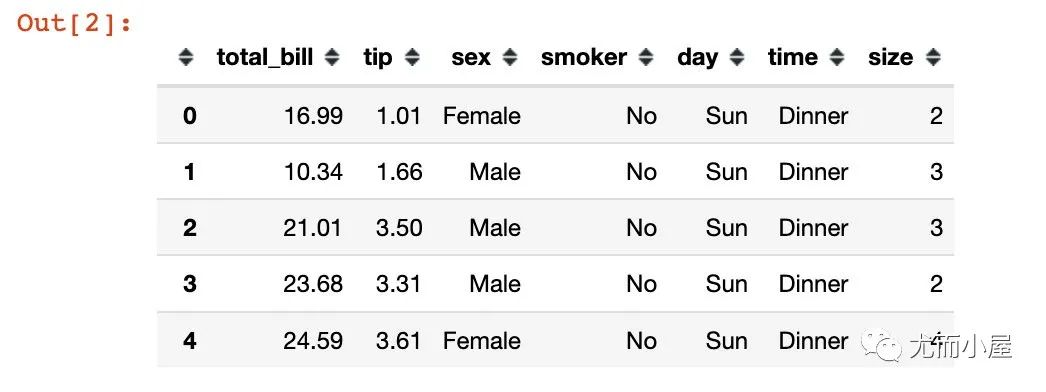
采用的是plotly庫(kù)中內(nèi)置的一份消費(fèi)數(shù)據(jù)集:
In [2]:
df?=?px.data.tips()
df.head()
基本信息
In [3]:
df.shape
Out[3]:
(244,?7)
In [4]:
columns?=?df.columns
columns
Out[4]:
Index(['total_bill',?'tip',?'sex',?'smoker',?'day',?'time',?'size'],?dtype='object')
sample實(shí)現(xiàn)
行方向
In [5]:
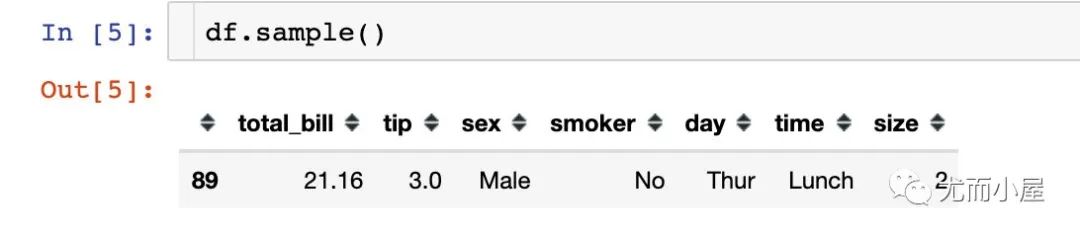
隨機(jī)抽取一行記錄:
df.sample()??#?隨機(jī)抽取一行記錄
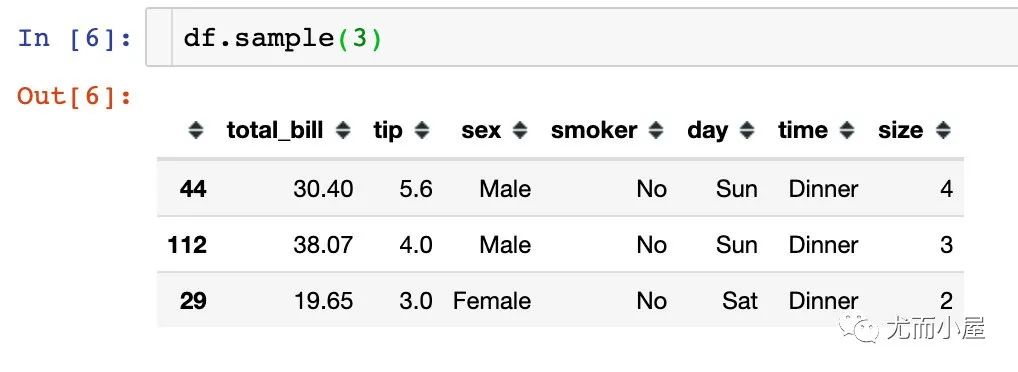
隨機(jī)抽取多行數(shù)據(jù):
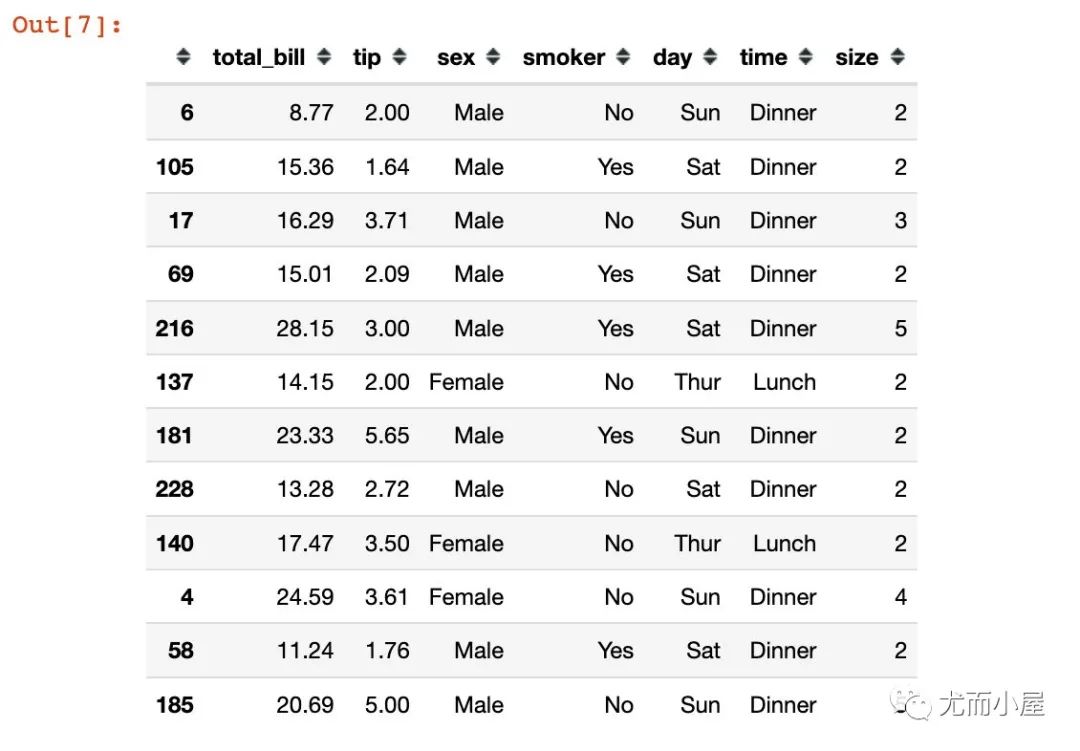
通過參數(shù)frac實(shí)現(xiàn)按照比例隨機(jī)抽樣:
df.sample(frac=0.05)
列方向
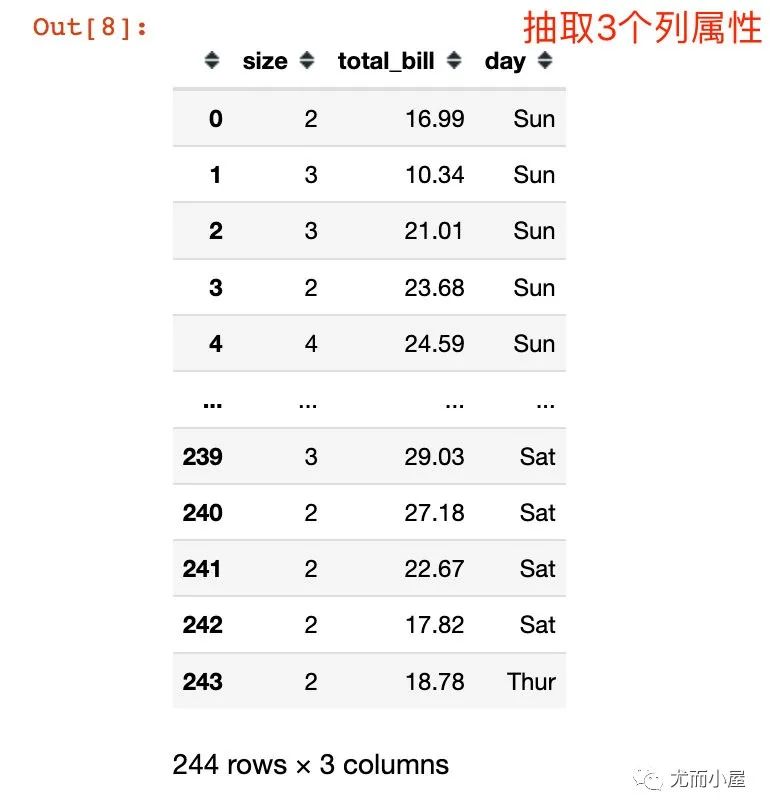
主要是選擇不同數(shù)量或者比例的屬性;整體的行數(shù)量是不變的
In [8]:
df.sample(3,?axis=1)??#?在列屬性上抽取
shuffle實(shí)現(xiàn)
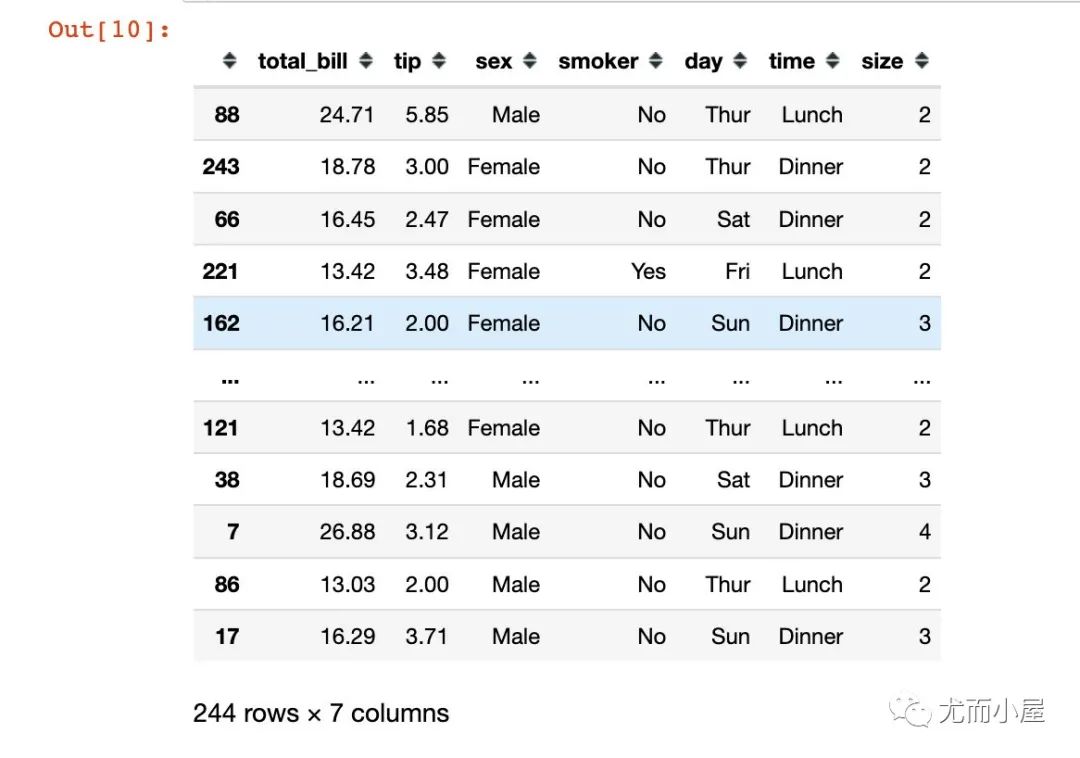
scikit-Learn的shuffle
In [9]:
from?sklearn.utils?import?shuffle
In [10]:
shuffle(df)??#?打亂數(shù)據(jù)
random模塊的shuffle
In [11]:
length?=?list(range(len(df)))??#?原始的長(zhǎng)度作為索引
length[:5]
Out[11]:
[0,?1,?2,?3,?4]
In [12]:
random.shuffle(length)??#?打亂索引
In [13]:
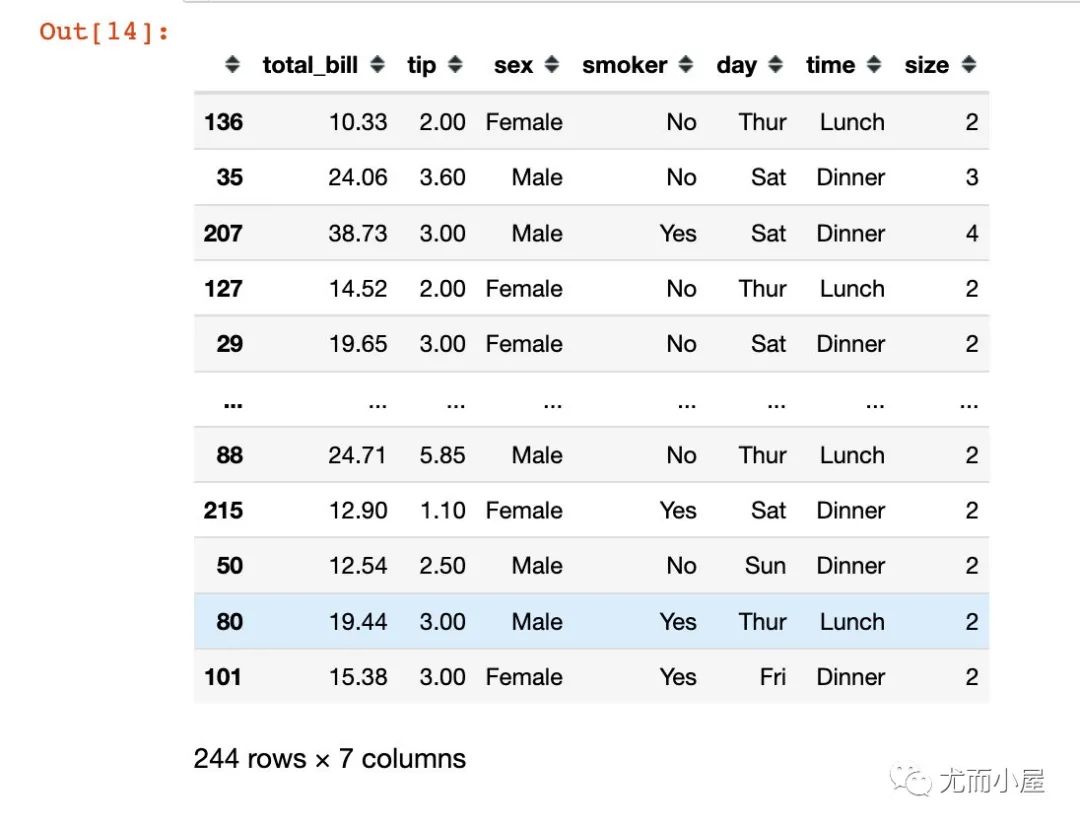
length[:5]
Out[13]:
[136,?35,?207,?127,?29]??#?打亂后的結(jié)果
In [14]:
df.iloc[length]???#?通過打亂后的索引獲取數(shù)據(jù)
numpy實(shí)現(xiàn)
In [15]:
#?先打亂每個(gè)索引
np.random.permutation(len(df))
Out[15]:
array([223,??98,?238,??17,?101,??26,?122,?212,??27,??79,?210,?147,?176,
????????82,?164,?142,?141,?219,???6,??63,?185,?112,?158,?188,?242,?207,
????????45,??55,?178,?150,?217,??32,??16,?160,?157,?234,??95,?174,??93,
????????52,??57,?220,?216,?230,??35,??86,?125,?114,?100,??73,??83,??88,
????????34,???7,??40,?115,??97,?165,??84,??18,?197,?151,?135,?121,??72,
???????173,?228,?143,?227,???9,?183,??56,??23,?237,?136,?106,?133,?189,
???????139,???0,?208,??74,?166,???4,??68,??12,??71,??85,?172,?138,?149,
???????144,?232,?186,??99,?130,??41,?201,?204,??10,?167,?195,??66,?159,
???????213,??87,?103,?117,??31,?211,?190,??24,?243,?127,??48,?218,?233,
???????113,??81,?235,?229,?206,??96,??46,?222,??50,?156,?180,?214,?124,
???????240,?140,??89,?225,???2,?120,??58,?169,?193,??39,?102,?104,?148,
???????184,?170,?152,?153,?146,?179,?137,?129,??64,???3,??65,?128,??90,
???????110,??14,?226,?181,?131,?203,?221,??80,??51,??94,?231,??44,?108,
????????43,?145,??47,??75,?162,?163,??69,?126,?200,???1,?123,??37,?205,
???????111,??25,??91,??11,??42,??67,?118,?196,?161,??28,?116,?105,??33,
????????38,??78,??76,?224,??20,?202,?171,?177,?107,???8,?209,?239,??77,
???????241,?154,???5,?198,??92,??61,?182,??36,??70,??22,??54,?187,?175,
???????119,?215,??49,?134,??21,??60,??62,?168,??59,?155,?194,?109,?132,
????????19,?199,??29,?191,??13,??30,?192,?236,??15,??53])
In [16]:
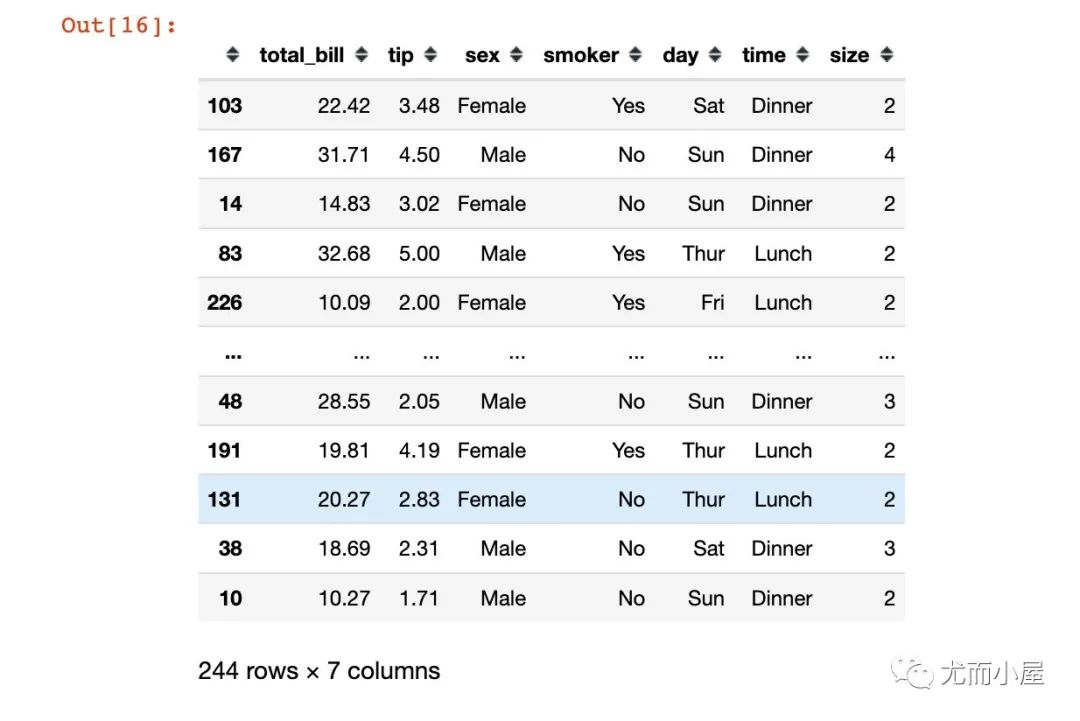
#?通過打亂后的索引來(lái)選擇數(shù)據(jù)

df.iloc[np.random.permutation(len(df))]
train_test_split實(shí)現(xiàn)
from?sklearn.model_selection?import?train_test_split

data?=?[]

for?i?in?train_test_split(df,?test_size=0.2):
????data.append(i)
In [18]:
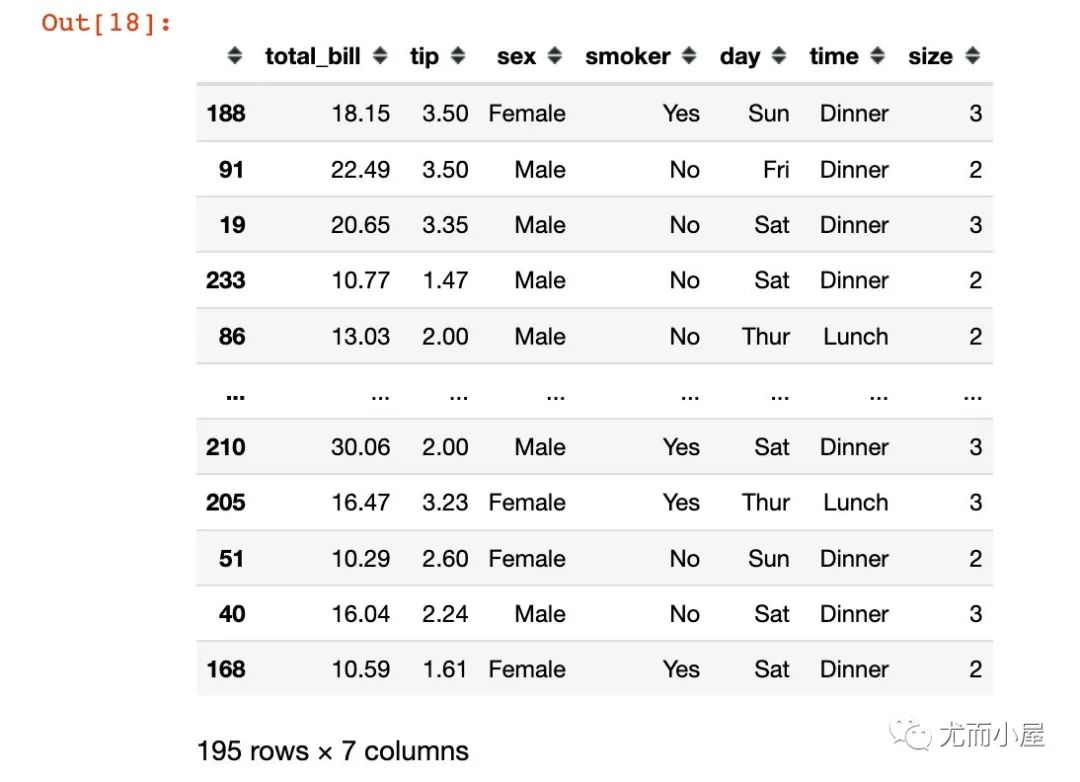
第一份數(shù)據(jù)是80%的:
data[0]???#?80%的數(shù)據(jù)
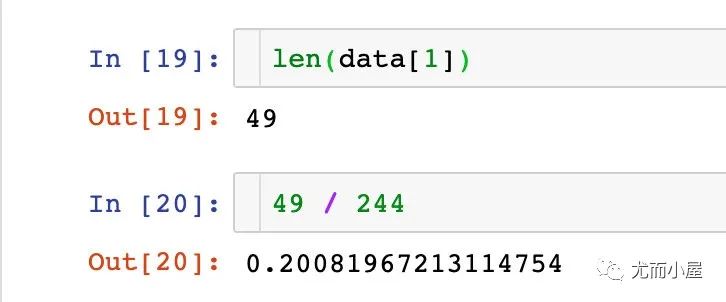
剩余的20%的數(shù)據(jù):
往期精彩回顧
適合初學(xué)者入門人工智能的路線及資料下載 (圖文+視頻)機(jī)器學(xué)習(xí)入門系列下載 中國(guó)大學(xué)慕課《機(jī)器學(xué)習(xí)》(黃海廣主講) 機(jī)器學(xué)習(xí)及深度學(xué)習(xí)筆記等資料打印 《統(tǒng)計(jì)學(xué)習(xí)方法》的代碼復(fù)現(xiàn)專輯 機(jī)器學(xué)習(xí)交流qq群955171419,加入微信群請(qǐng)掃碼
評(píng)論
圖片
表情